Why uniform producers need stable, repeatable print output
Uniform orders are usually not one-off jobs. You may be producing 20 chef jackets for a restaurant in Sandton, 150 retail polos for a store rollout in Pretoria, or workwear tees for a promotions company in Durban. The pressure is on consistency. Logos must sit in the same position, colours must match from one batch to the next, and the print must handle washing without looking tired after a few cycles.
For that reason, uniform production is less about flashy effects and more about dependable daily output. A direct-to-fabric setup lets you print on the cloth before cutting, or on cut panels where the layout is already fixed. That helps with placement on pockets, sleeves and yokes, and it gives you better control over repeat jobs. In humid coastal areas like Durban and Cape Town, drying space and storage matter too, because damp fabric can affect handling and finishing.
Typical equipment setup for a small uniform workshop
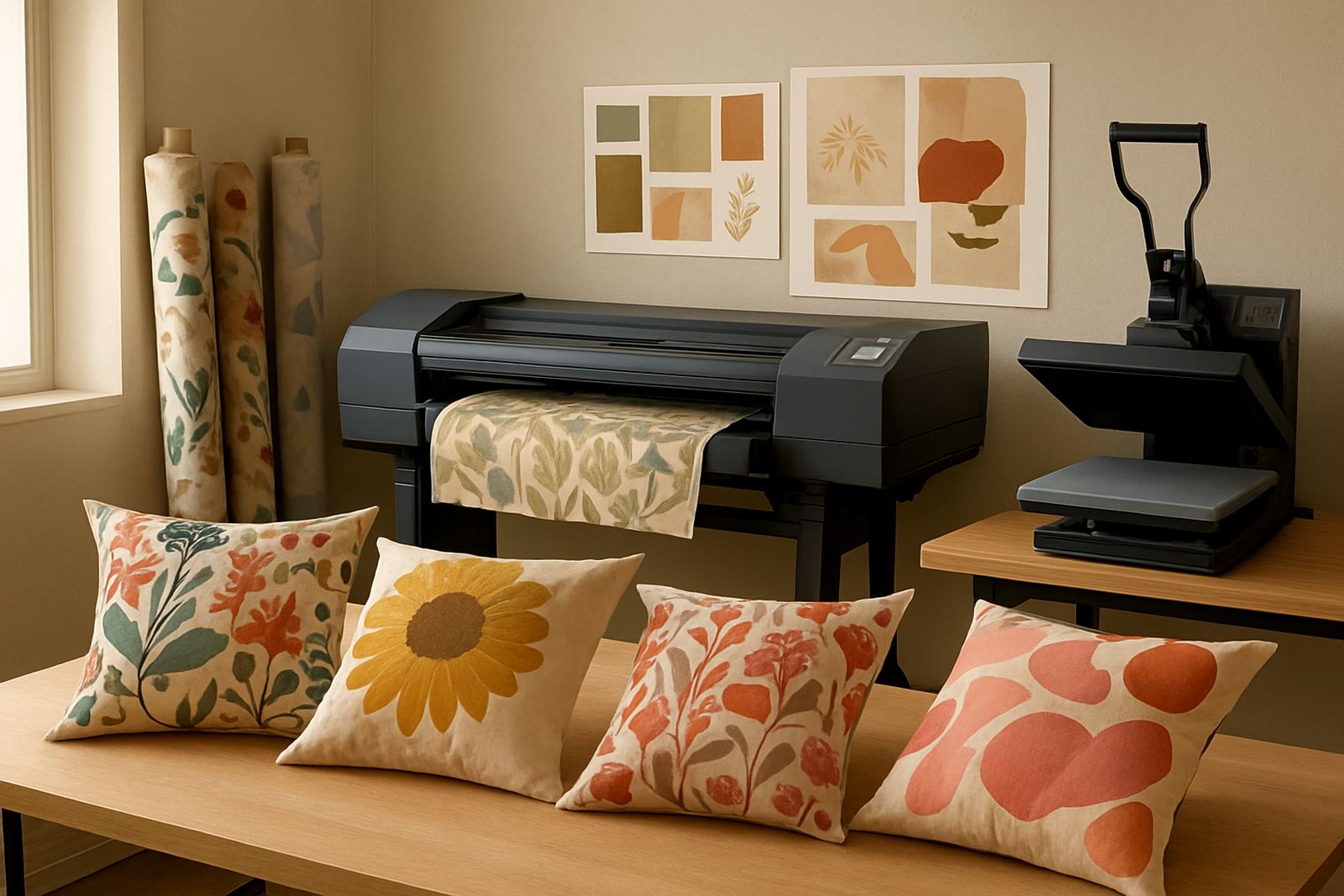
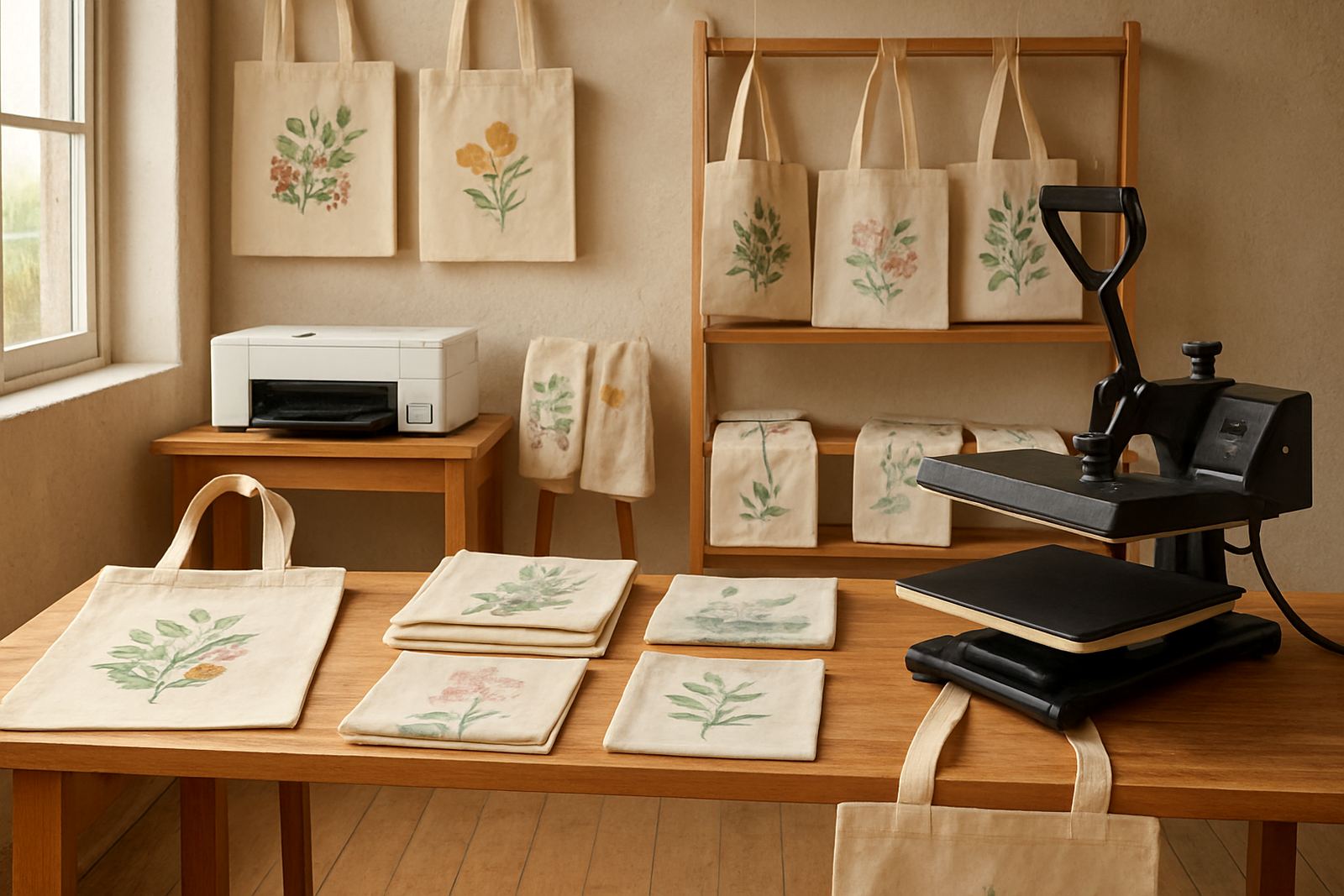
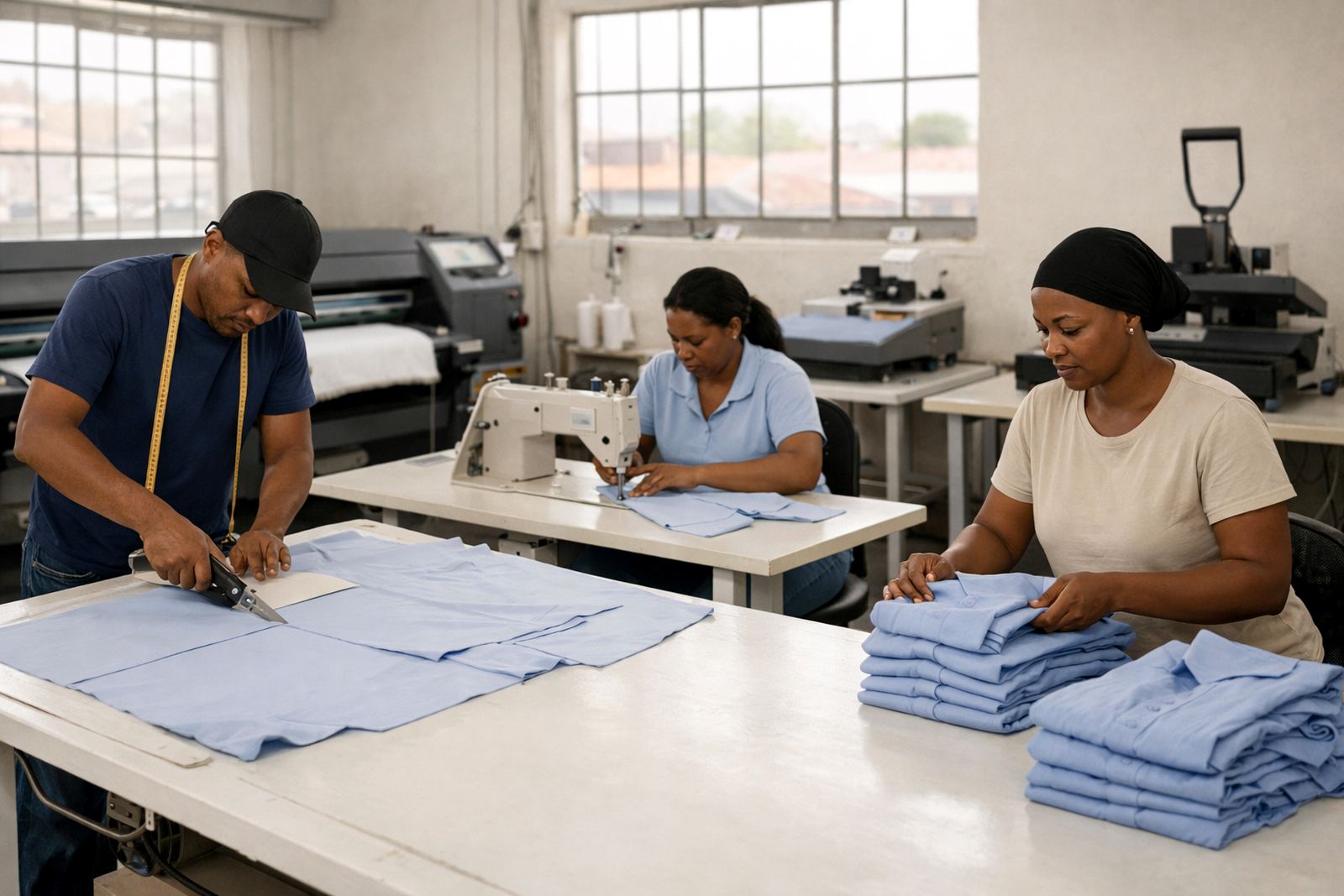
A practical starter line for uniform work usually includes a direct-to-fabric inkjet printer, a heat press for curing or transfer finishing, and a clean worktable for checking prints and alignment. Some businesses also add a small steaming or drying area, depending on the fabric type and production volume. If you are printing blends, cottons or coated textile panels, the ink choice and finishing method must suit the substrate, otherwise wash fastness suffers.
- Direct-to-fabric inkjet printer for logos, name marks and panel printing
- Flat heat press for curing, transfer work or post-press finishing
- Ink set matched to the fabric type and production requirement
- Media and pretreatment support where required
- Simple storage racks for prepared rolls, cut panels and finished jobs
For a small operation in Germiston or Midrand, a compact setup can fit into a modest production room without needing a full factory floor. The key is to allow enough space for fabric flow in one direction, from incoming cloth to print, dry, inspect and pack.
Planning your workshop layout for fast uniform runs
Uniform production goes smoother when the room is planned around movement, not just machine placement. Keep raw cloth away from the finishing area, and keep printed goods separate from cutting tables. If the printer sits too close to a doorway or open dust source, lint can become a real problem. In Johannesburg and Pretoria where many factories share industrial space, dust control and clear walkways are often overlooked until the first quality complaint arrives.
A good layout should support short reprint jobs, colour checks and batch segregation. Label shelves for client work, size runs and urgent orders. If you handle multiple corporate accounts, store approved artwork and colour references together so the next repeat order does not need fresh guesswork. This saves time and avoids expensive mistakes on reorders.
- Place the printer near power, ventilation and easy access for loading fabric
- Keep the heat press close enough for short handling times but not in the printer path
- Allow room for operator movement around the machine on all sides
- Use separate zones for raw fabric, printed stock and packed uniforms
- Plan for load-shedding with backup power for the printer, lighting and drying stage
Where uniform businesses lose money on avoidable mistakes
The most common mistake is underestimating how much proofing is needed before a full run. A logo that looks fine on screen can print too dark on navy fabric or too pale on black workwear. Another problem is poor pre-treatment or the wrong ink for the cloth. That leads to faded washes, blurred detail or uneven edges. Once a corporate client notices it on 80 shirts, the cost of rework climbs fast.
Another issue is poor maintenance. Printheads need regular cleaning, ink systems must stay stable, and fabric dust should be kept out of the machine area. In inland towns the problem is often dust, while on the coast it is humidity and storage. If a business ignores preventive servicing, breakdown repairs usually happen at the busiest time, right when a school, hotel or retail group needs stock delivered. A small maintenance contract can cost far less than losing a repeat order.
Budget ranges for uniform printing equipment in Rand
Budget depends on output speed, print width, fabric range and how much automation you want. A small entry setup for a start-up uniform maker can begin around R180 000 to R350 000, especially if the business is focused on smaller runs and owner-operator production. Mid-range workshops that need better throughput and more consistent colour control often plan between R350 000 and R850 000.
For businesses supplying multiple sites, hospitality groups or promotional uniform programmes, a fuller production setup can run from R850 000 to well over R1,5 million depending on capacity, finishing equipment and support needs. It is also wise to budget for installation, operator training, spare parts, inks, media, and ongoing servicing. A machine on its own does not build a production line. The layout, consumables and support matter just as much.
If you are working on contract uniforms in Johannesburg, Durban, Cape Town, Pretoria or Bloemfontein, it makes sense to balance purchase price with uptime. A cheaper machine that stops often can cost more over a year than a properly matched setup with training and after-sales support.
Support that helps keep production moving
Fabric Printer works with small garment and textile businesses that need practical support, not vague advice. From Wadeville in Germiston, the team assists with machine installation, operator training, colour profiling, preventive servicing and breakdown repairs. Remote troubleshooting can help with smaller issues before they interrupt the whole day, and relocation support is available if your workshop moves or expands.
The team includes a sales consultant, installation technician, training coordinator, service technician, ink and media specialist and customer success lead, so setup and aftercare are handled by people who understand day-to-day production pressures. If you are building a uniform line for hospitality, retail or promotions, the aim is to get the machine working properly, keep it working, and help your operators use it with confidence. That saves time, reduces waste and keeps the orders flowing.