

2011: A practical start in Wadeville
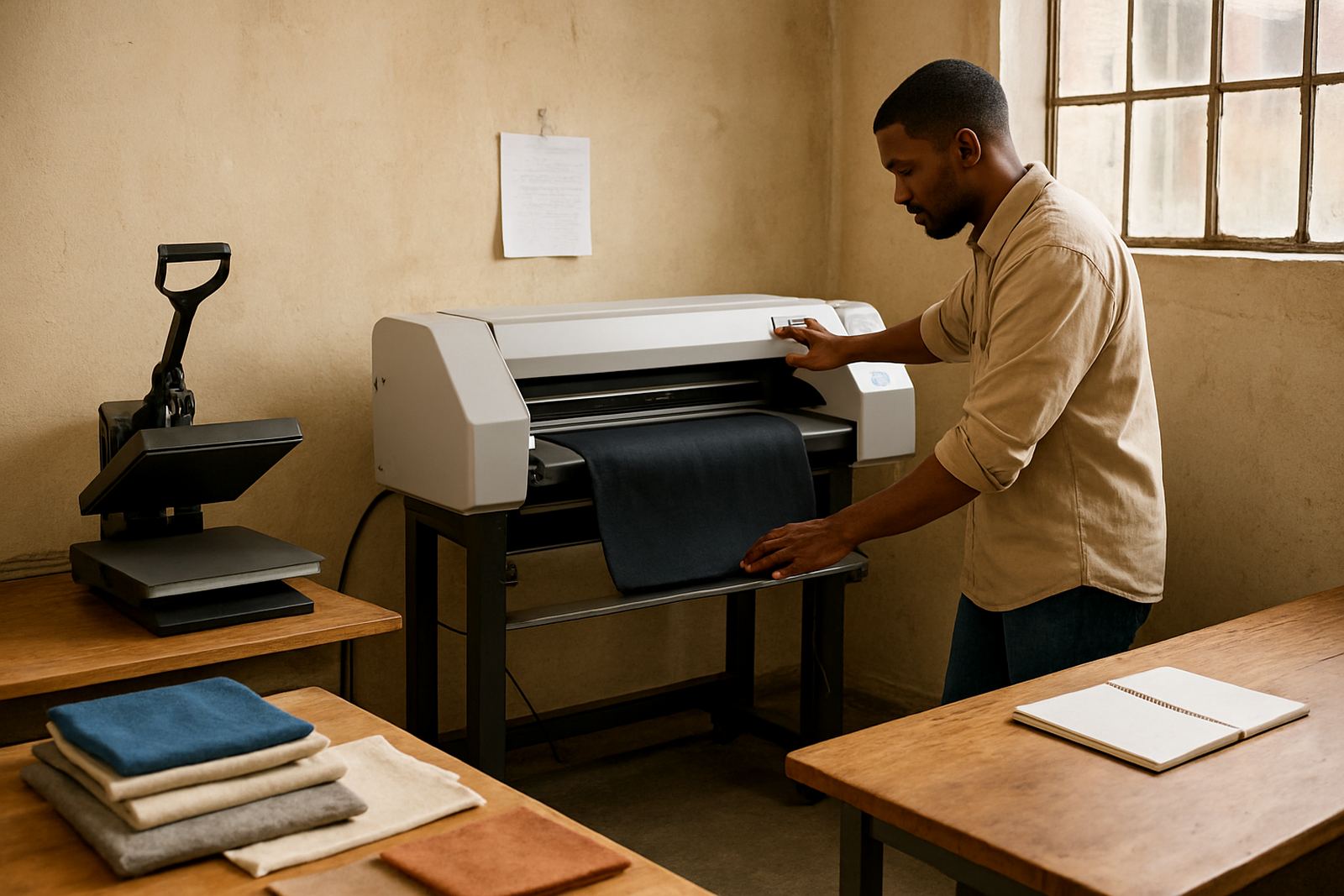
Fabric Printer began trading in 2011 in Wadeville, Germiston, serving small garment makers, sign and textile workshops, and home-grown clothing labels that needed a better way to print short runs. At the time, many businesses were working with expensive outsourcing, inconsistent colour and long turnaround times. The first step was to supply direct-to-fabric inkjet printers and heat presses that could handle day-to-day production without needing a large factory floor.
The early years were hands-on from the start. Machines had to be unpacked, installed, tested and explained properly, because most clients did not want a box dropped off and left to figure things out. From the first year, the business built its reputation on showing people how to use the equipment, how to keep it running and how to avoid costly mistakes with fabric, ink and heat settings. That approach helped small operators keep control of their production and their cash flow.
- First sales focused on compact production units for start-up garment businesses
- Installation support was built into the process from day one
- Training started with the basics: loading fabric, setting heat and checking colour
2012 to 2014: Growing with local workshops
As more small businesses came on board, the team refined its support around what South African operators actually needed. Workshops in Johannesburg, Boksburg and Midrand often had limited space, mixed power supply conditions and staff who had to learn quickly between orders. The business responded with clearer setup guidance, better colour matching support and more practical maintenance advice for busy print rooms.
These were also the years when preventive servicing started becoming a regular part of the offering. Instead of waiting for a breakdown, clients began asking for scheduled checks, printhead cleaning and ink system flushing. That shift mattered because many small firms cannot afford a day of lost production, especially when they are working towards market dates, school uniform deadlines or boutique delivery schedules. A missed print run is not just an inconvenience, it can affect the whole week. The team learned to work around real-world constraints, including load-shedding and limited floor space.
- Preventive servicing became a standard part of support
- Remote troubleshooting helped clients keep going between visits
- Colour profiling support improved consistency across repeat orders
2015 to 2017: Expanding support beyond Gauteng
By 2015, enquiries were coming from further afield, especially from Durban, Cape Town and Bloemfontein where textile and clothing businesses were looking for dependable equipment support without having to deal with long delays. Fabric Printer began structuring support around regions, so clients outside Germiston could still get help with machine installation, operator training, servicing and repairs. This changed the way the business worked because it was no longer only about supplying a machine, it was about backing the customer after the sale.
During this period the company also became more active in spare parts supply and maintenance contracts. For businesses working near the coast, humidity could affect print quality and storage conditions. Inland, dust and dry air could cause different problems. The support team adjusted advice accordingly, from ink handling to storage, machine cleaning and power protection. It was a useful reminder that South African conditions are not all the same, and equipment care needs to suit the location.
- Support structures were extended to major centres across South Africa
- Spare parts supply reduced downtime for busy production teams
- Maintenance contracts gave owners a clearer monthly plan for servicing
2018 to 2020: Building a stronger service team
As the customer base grew, Fabric Printer added more specialised roles so the business could respond faster and more accurately. The service side became more structured, with installation, repairs, training and print support handled by people who focus on those tasks every day. That included Johan van der Merwe on installation work, Ayesha Patel on training coordination, Thabo Nkosi on service, Megan Naidoo on inks and media, and Lerato Molefe on customer success. The team setup made it easier to guide new owners from first setup through to stable production.
These years also saw more attention given to production audits. Some clients had machines but were not getting the output they expected. Others had colour variation between batches or too much waste on media and ink. Audits helped identify where the bottlenecks were, whether it was operator technique, heat press settings, file preparation or maintenance routines. It was never about selling more than the customer needed, it was about getting the line working properly and keeping it that way. In many cases, one small adjustment could save a lot of money over a month.
- Dedicated roles improved response times and follow through
- Production audits helped reduce waste and rework
- Training became more structured for new operators and supervisors
2021 to 2023: Standing firm through harder trading conditions
Like many South African businesses, textile operators faced tougher trading conditions in the early 2020s. Load-shedding, higher input costs and tighter delivery schedules made reliability even more important. Fabric Printer focused on practical help that could keep production moving, including remote troubleshooting, printhead cleaning, ink system flushing and relocation support for businesses moving to new premises or expanding into larger spaces. These were not luxury extras, they were the kind of support that helps a workshop stay open and keep orders moving.
During this time, the company also put more attention into helping clients protect their equipment. Power interruptions can interrupt print quality, and poor shutdowns can lead to avoidable damage. The advice became more detailed around surge protection, proper warm-up routines and end-of-day cleaning. Customers in Germiston, Pretoria and Durban often needed different support rhythms based on their building setup and production hours, so the team worked around actual operating conditions rather than forcing a one size fits all plan.
- Remote troubleshooting became more valuable during power interruptions
- Relocation support helped businesses move without losing production time
- Equipment care guidance was adapted for local power and building conditions
2024 to today: A supplier built around support
Today Fabric Printer serves small garment and textile businesses across Johannesburg, Pretoria, Durban, Cape Town and Bloemfontein, while staying rooted in Wadeville, Germiston. The business continues to supply direct-to-fabric inkjet printers, heat presses, inks and setup training, with the same practical approach that shaped the early years. Clients use the Germiston Demo Centre and regional support areas to get help that feels close to home, even when they are operating from another province.
The company story is really a story of steady growth through useful service. From the first machine sold in 2011 to the current support network, the aim has stayed the same: help South African businesses print better fabric, avoid unnecessary downtime and build a repeatable production process. That means clear guidance, proper servicing and honest support when something needs attention. It is not about fancy talk, it is about helping people make good work, on time and with less waste.
- Current support includes installation, training, servicing and repairs
- Clients can reach the team through the enquiry form on the contact page
- The focus remains on practical output for small and growing businesses