What print on demand shops usually need day to day
A typical print on demand shop handles short runs, one-off pieces and repeat orders with different artwork, sizes and fabric types. In places like Germiston, Johannesburg, Pretoria and Durban, the pressure is often on turnaround times, not massive volume, so the right setup must be quick to switch over and easy to keep clean.
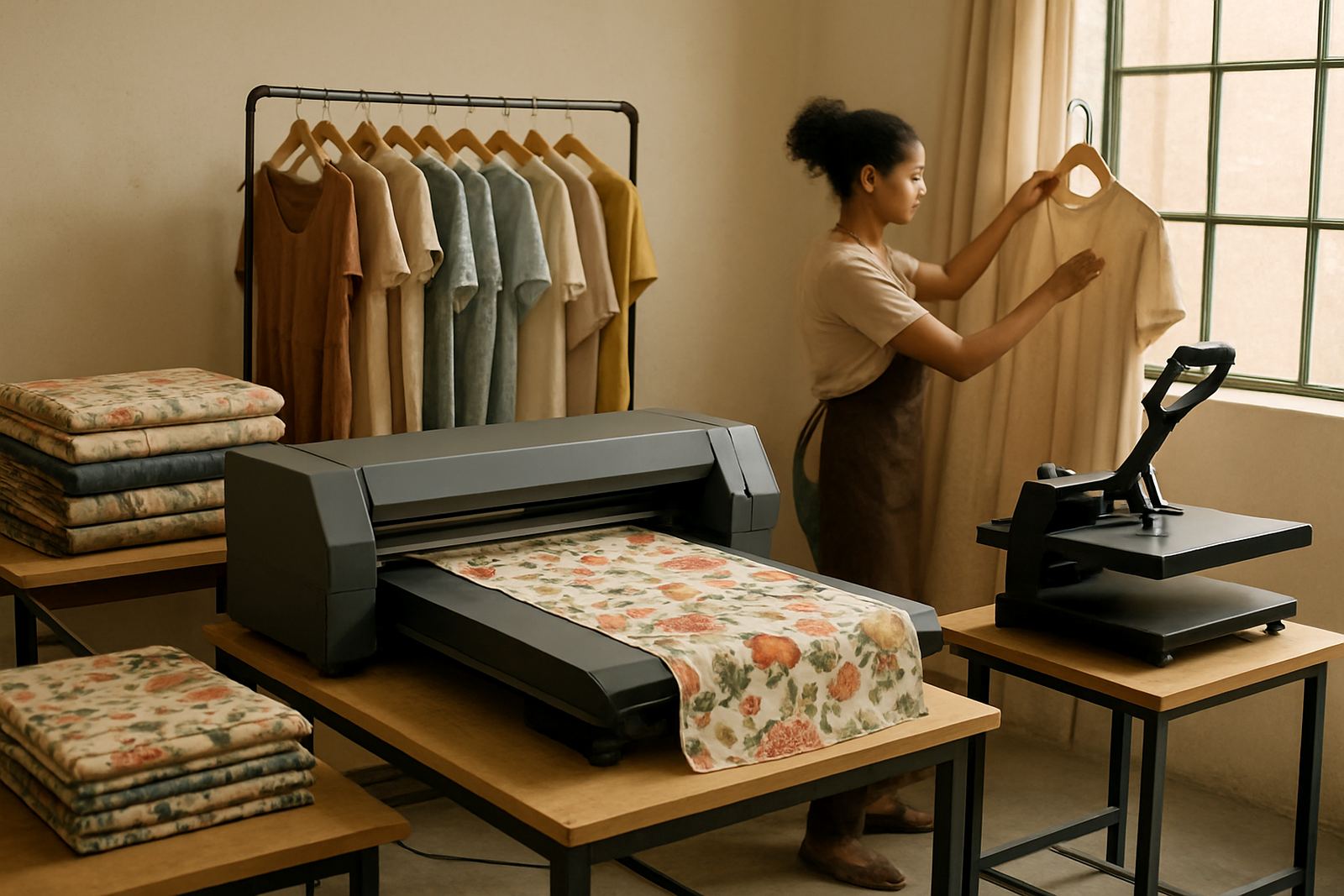
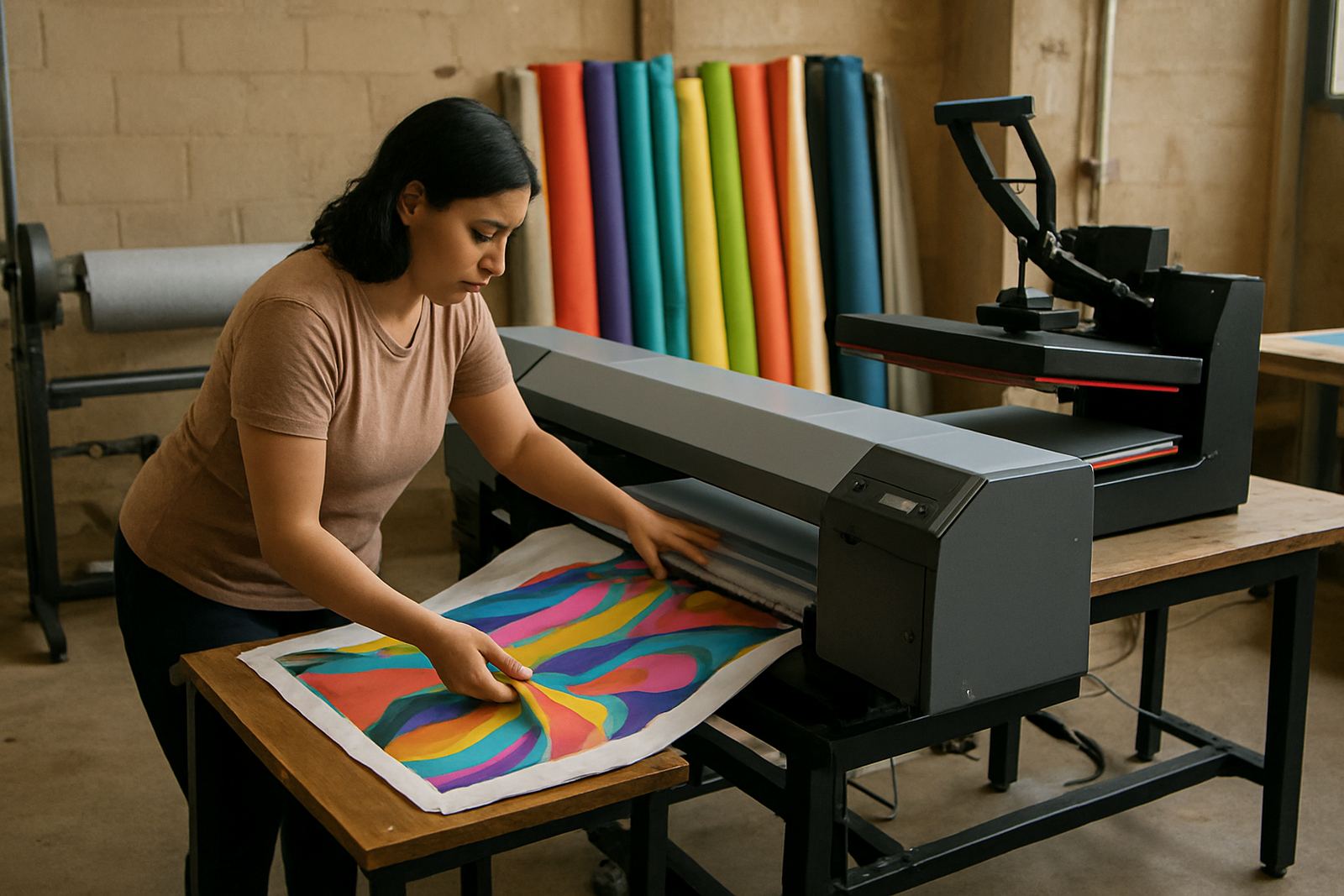
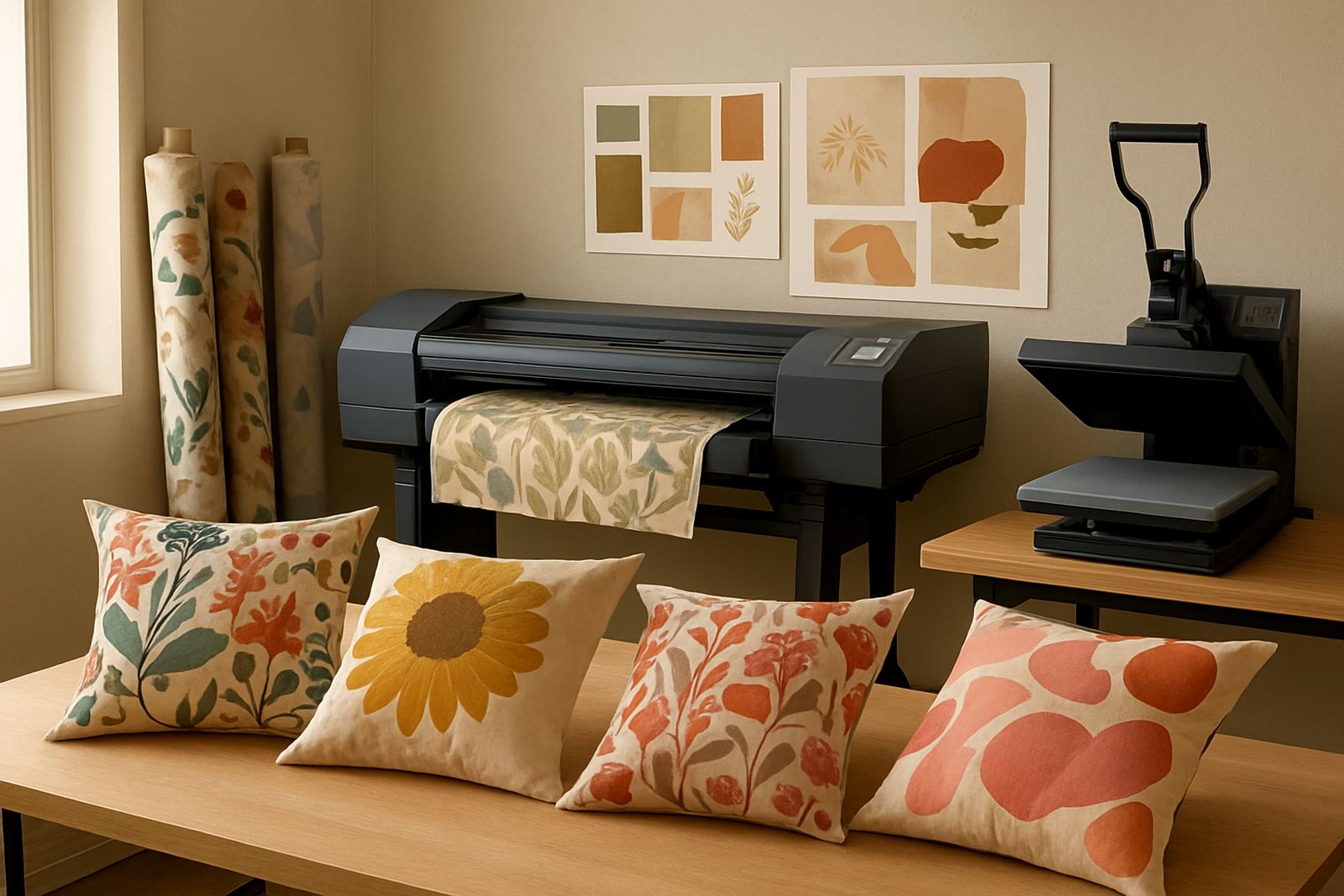
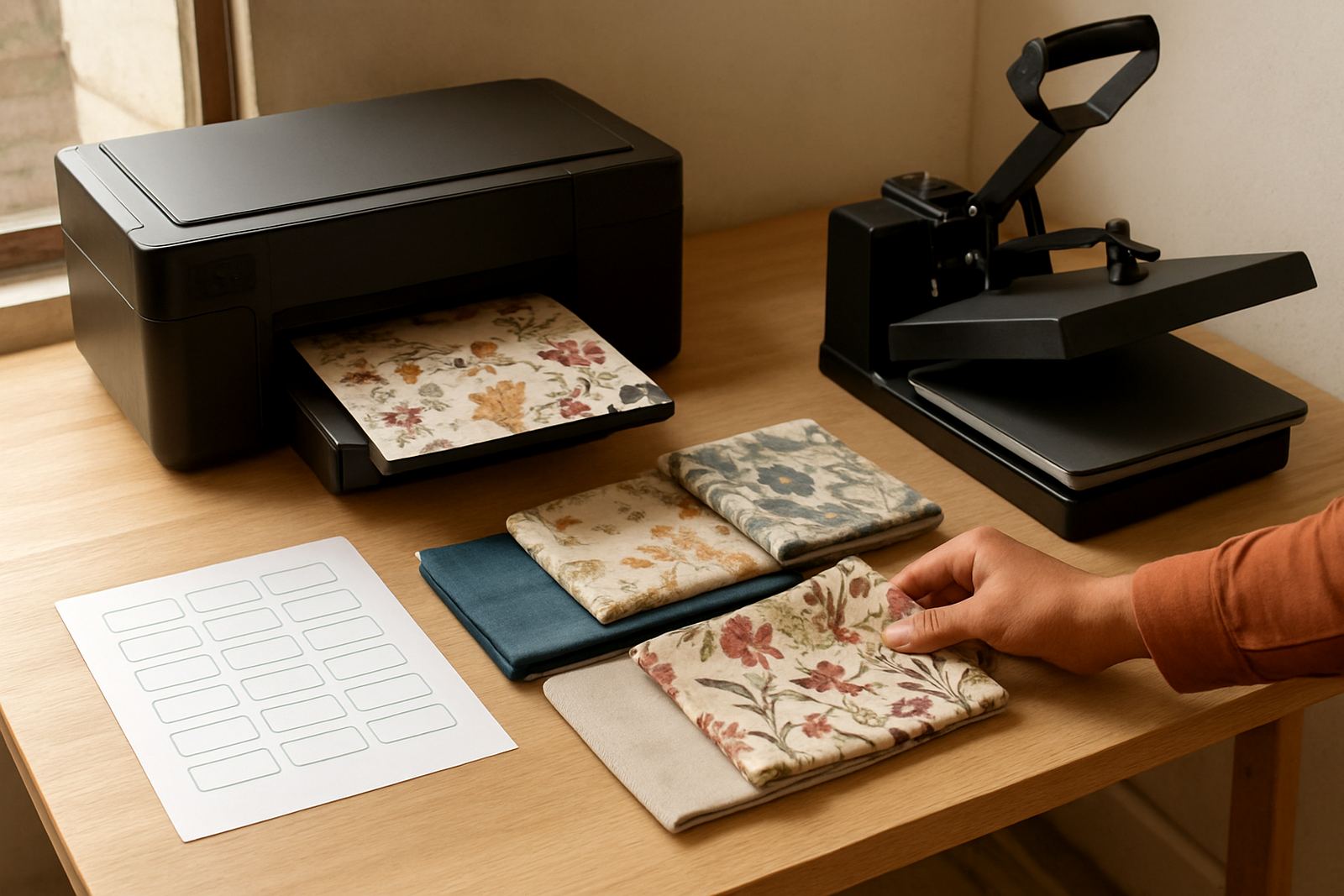
The most useful setup is usually a direct-to-fabric inkjet printer matched with a heat press and a proper colour workflow. That gives you a practical way to print samples, test new designs and produce customer orders without holding too much stock. If you are dealing with cotton blends, polyester, or mixed garment lines, your process also needs to cope with changing fabrics during the week.
- Short-run garment printing with frequent artwork changes
- Sampling for boutique labels and online sellers
- Custom print jobs for events, gifts and small fashion drops
- Fast reprints when a customer wants a revised colour or size
Equipment set that suits low-volume custom work
For this type of business, a lean setup is usually better than buying more machine than you need. A direct-to-fabric printer gives you the flexibility to produce vivid prints with detail, while a heat press helps with fixing, finishing and transfer work depending on your material and workflow. Add good inks, media, and a stable power plan so load-shedding does not interrupt jobs halfway through.
Businesses in coastal areas such as Durban should also think about humidity and storage. Inks, media and printed rolls need to be kept dry and away from dust. In inland areas like Johannesburg and Pretoria, dust control and steady cleaning routines matter just as much. For small teams, a simple set-up that the operator can learn quickly is often more valuable than a complicated line that needs constant supervision.
- Direct-to-fabric inkjet printer for short runs and sample work
- Heat press for finishing and transfer applications
- Colour profiling tools for repeatable results
- Starter ink packs and the correct media for your fabric range
Layout and planning advice for a small production room
When space is tight, layout makes a real difference. Leave enough room around the printer for loading fabric, cleaning access and safe handling of rolls or cut pieces. A cramped room slows you down and increases mistakes, especially when the same operator is printing, checking colour and packing orders.
We usually advise shops to separate three areas: printing, pressing and packing. Even if you only have one room in Wadeville, Boksburg or Midrand, clear zones help prevent fabric contamination and mix-ups. Keep your press near a stable work table, and place consumables where the team can reach them without crossing through the print path. If you plan to relocate later, choose a layout that can be broken down and reinstalled without major changes.
- Allow space for operator movement and maintenance access
- Keep inks, media and finished goods in dry storage
- Use a clean table for inspection before packing
- Plan for power sockets, surge protection and backup power options
Common mistakes print on demand shops make
One common mistake is buying equipment only on price and not on fit. A shop that prints small batches every day needs reliability and service support more than a bargain machine that keeps going out of calibration. Another mistake is skipping operator training, which usually leads to wasted ink, poor colour matching and avoidable printhead problems.
Some owners also underestimate maintenance. If you are running frequent design changes, your machine needs regular cleaning, flushing and inspection, not just a repair when something fails. We see this a lot when businesses try to stretch one printer across too many jobs without preventive servicing. It looks cheaper at first, but downtime gets expensive very quickly.
- Choosing a machine that is too small or too complex for the team
- Ignoring colour profiling and repeatability
- Running without a maintenance plan
- Storing inks or media badly in heat or damp conditions
Budget ranges that make sense in Rand
Budget depends on your print volume, fabric range and how much of the process you want to keep in-house. For a small print on demand shop, a practical entry setup can start from around R80 000 to R180 000 for a basic printer and finishing equipment, before installation and training. A more serious production setup with better throughput, colour control and a stronger finishing line can move into the R200 000 to R450 000 range.
If you add maintenance cover, spare parts planning and proper operator training, you protect the investment and reduce waste. It is also worth budgeting for backup power, especially if you are operating through load-shedding in Johannesburg, Durban or Bloemfontein. A little planning now saves a lot of panic later when orders are due and the machine has to keep running.
- Starter setup: R80 000 to R180 000
- Growing shop setup: R200 000 to R450 000
- Installation, training and profiling: budget separately
- Ongoing consumables and servicing: keep a monthly allowance
Support for shops in Germiston and across South Africa
Fabric Printer works with small garment and textile businesses from our Wadeville base in Germiston, with support across Johannesburg, Pretoria, Durban, Cape Town and Bloemfontein. We help with machine installation, operator training, colour profiling, preventive servicing, breakdown repairs and remote troubleshooting, so your team is not left guessing when a job needs attention.
For print on demand shops, that kind of support matters because your work changes often. One week you may be printing samples for a new range, the next week you are handling a rush of small custom orders. Having a local team that understands setup, maintenance and production flow keeps the business moving and helps avoid unnecessary stoppages.
- Machine installation and relocation support
- Operator training and production audits
- Spare parts supply and ink system flushing
- Maintenance contracts for ongoing peace of mind