When a boutique needs more than off-the-shelf stock
Most boutique clothing shops start with a clear style point of view, then need a way to turn that into sellable garments without holding too much stock. That is where direct-to-fabric printing becomes useful. Instead of waiting on imported rolls or taking the same artwork to a third party, you can print shorter runs for house ranges, special drops, event wear and personalised pieces in your own colour palette.
For boutiques in Germiston, Johannesburg, Pretoria, Durban, Cape Town and Bloemfontein, the biggest gain is control. You decide what prints are released, how many metres are produced and when the work is done. That matters when a client asks for a small re-cut of a best seller, or when you want to test a new print on viscose, polyester blends or cotton without committing to a large order. It also helps with quick turnarounds, which can be the difference between a sale and a missed fitting.
Most boutique owners also want better margins. A printed fabric range can be priced as a signature collection instead of a generic garment, and that can support higher average basket values. The setup does need planning though, because fabric handling, drying and colour consistency all affect the final result.
A practical equipment set for small fashion production
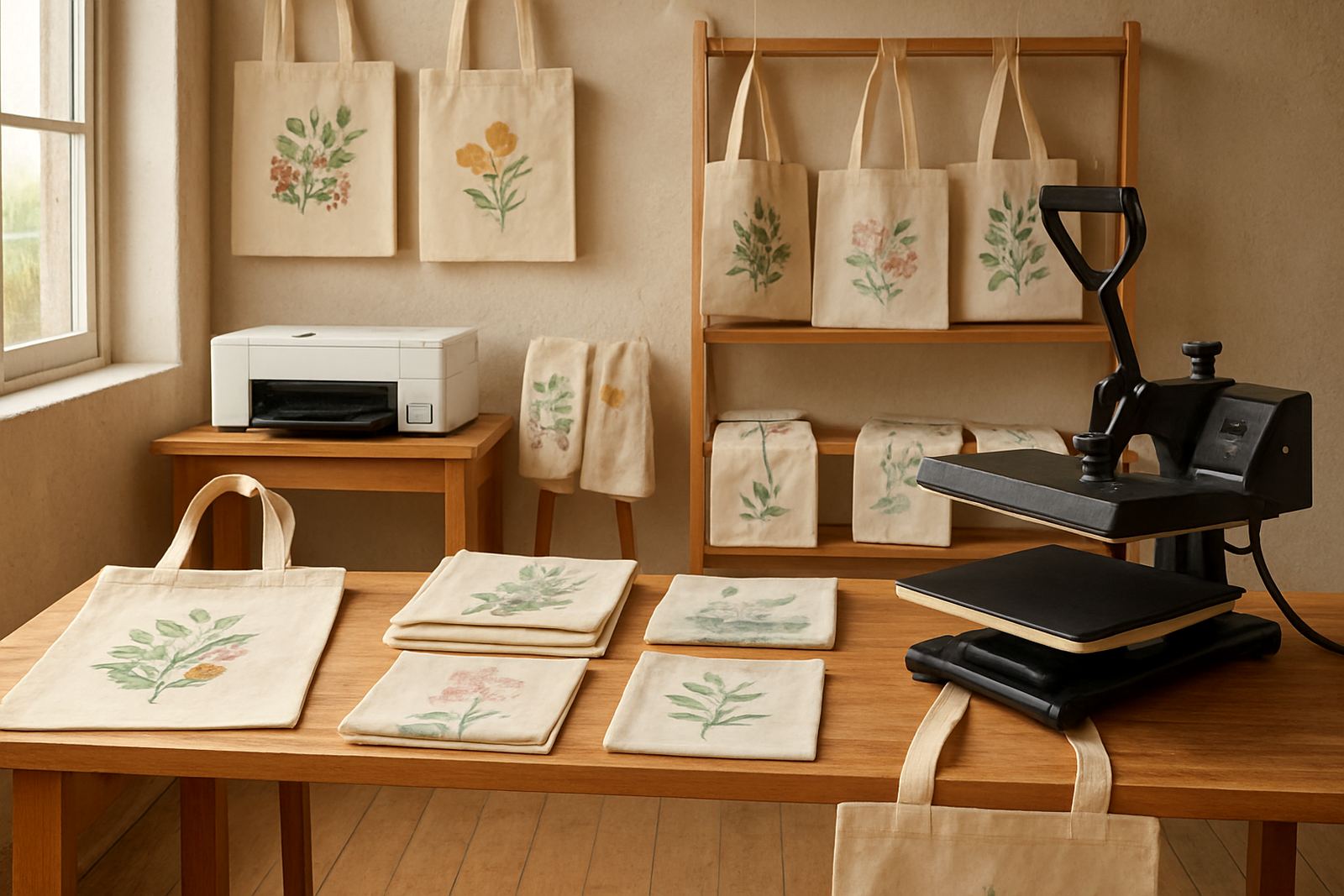
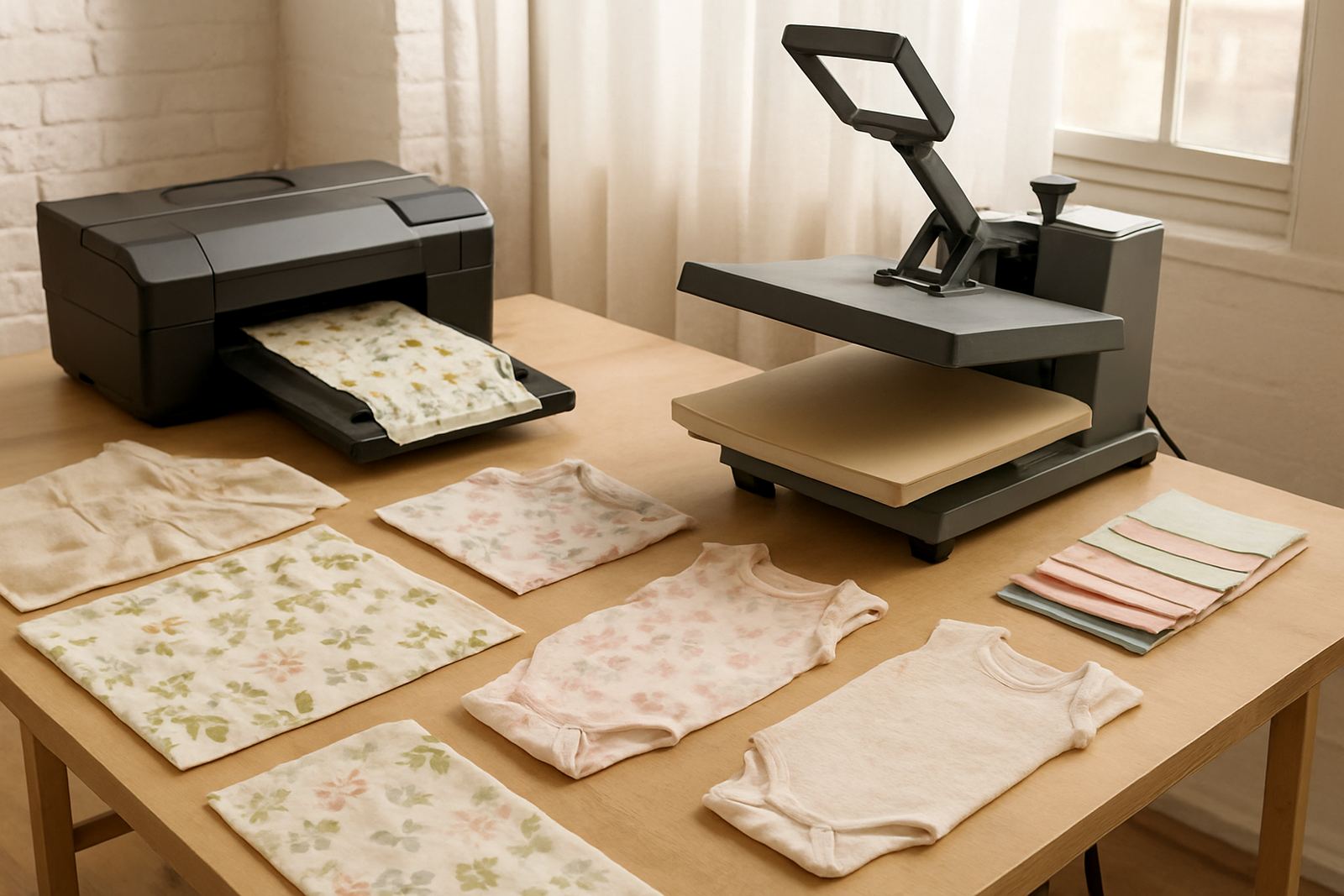
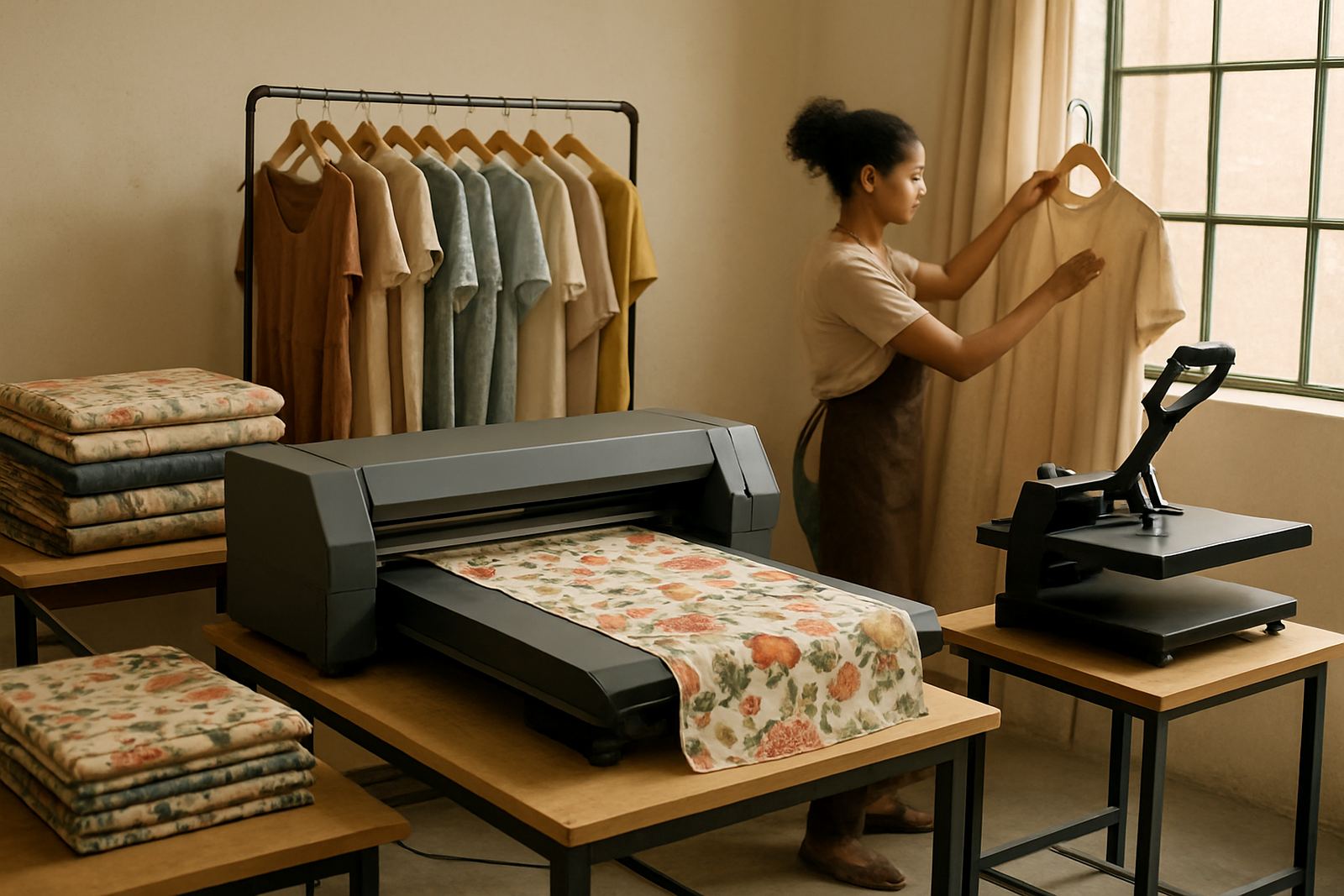
For a boutique, the usual starting point is a direct-to-fabric inkjet printer matched to the kind of fabric you use most often. If your range leans towards fashion prints, light home textile work or personalised panels, a compact production printer is often enough. If you are working with more metres per week, a larger unit with better throughput may suit you better. Heat presses are also common for finishing, curing and transfer work, depending on the print method and the fabric type.
At minimum, many boutique clients look at the following:
- A direct-to-fabric inkjet printer sized for your weekly metre count
- A heat press for curing, transfer finishing or garment application
- Ink set matched to your fabric mix and washing requirements
- Media handling tables or racks for feeding, drying and sorting
- Colour management tools for repeatable shades across reorders
- Spare parts and cleaning supplies for routine upkeep
Our team works with the realities of South African fashion production, where power cuts, warm summer humidity and limited floor space can all affect output. A machine that looks ideal on paper can become awkward in a shop if it cannot fit through a doorway, or if you have no safe place to dry printed fabric before cutting. Johan van der Merwe handles installation, while Megan Naidoo assists with inks and media so the machine, fabric and finish all work together.
Layout planning for a boutique production room
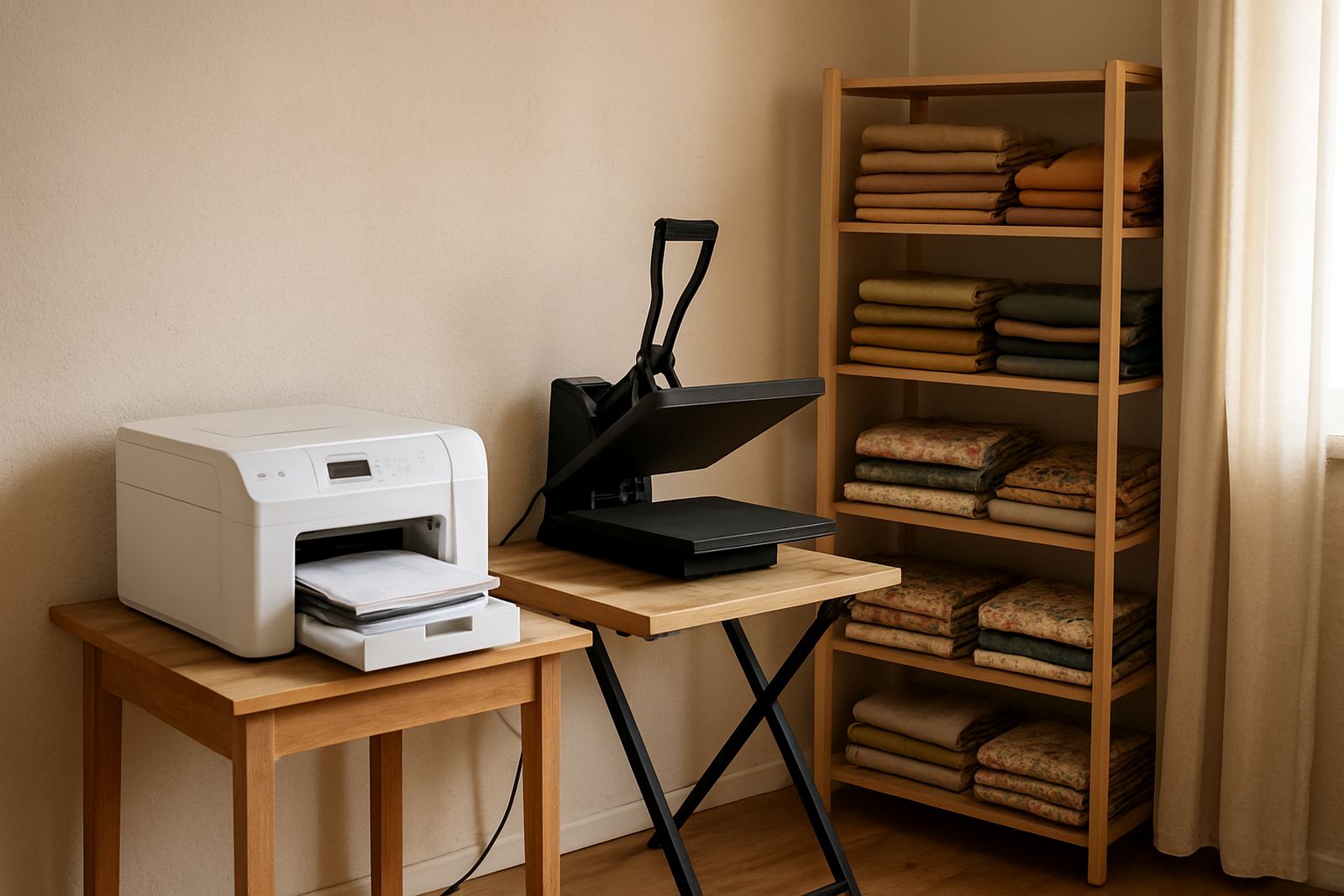
A boutique print room does not need to be large, but it does need to flow properly. The best layouts separate receiving, printing, drying, pressing and packing. If those stages are mixed together, fabric gets handled too much and marks are easier to miss. In smaller spaces, even a few square metres saved by smart placement can make daily work smoother.
Before buying equipment, measure the room carefully and check the access route. That includes door widths, staircases, lift access and floor loading if the machine is going upstairs. In places like Sandton, Rosebank or central Johannesburg where space is tight, or in coastal areas where moisture is higher, ventilation matters as much as footprint. Printed fabric should not sit in a damp corner, because the finish can be affected and the room can start feeling cluttered fast.
- Keep incoming fabric separate from printed output
- Allow space for drying and inspection before cutting
- Place the heat press near an extraction or open-air point where possible
- Use shelving for inks, spare parts and labelled jobs
- Plan for load-shedding with a backup power option or managed print schedule
Relocation support is also useful if a boutique moves from a shared retail space into its own production room. We often see people underestimate cable runs, ventilation and how much walking space is needed around the printer. A neat room is easier to train staff in and quicker to maintain.
Common mistakes that slow boutique production
One of the most common mistakes is buying equipment before confirming the fabric mix. A printer set up for one type of textile may not give the same results on every substrate, so it helps to know whether your line is mostly cotton, polyester, stretch or mixed fibre. Another issue is expecting full production output on day one without giving time for setup, colour profiling and operator training. That can lead to wasted metres and avoidable frustration.
Another mistake is ignoring cleaning and preventive servicing. Small businesses often focus on new orders and skip daily care, then the printhead clogs or the ink system needs flushing at the worst possible time. In a boutique, that can mean missing a launch date or leaving a client waiting for a sample. Thabo Nkosi handles service work and breakdown repairs, while remote troubleshooting can often solve smaller issues before they become a day-long stoppage.
A few mistakes to avoid:
- Choosing a machine that is too large for the room or monthly volume
- Not testing fabric compatibility before a full run
- Using untrained staff on colour-sensitive jobs
- Skipping regular cleaning because output seems fine for now
- Leaving no plan for power interruptions or backup scheduling
Colour inconsistency is another problem we see often. A print that looks fine on screen can shift once it is on fabric and washed. Proper profiling and test runs save money, especially when a boutique sells matching items in sets or repeat orders must match a previous batch exactly.
Budget ranges for boutique clothing shops
Budgets vary depending on how much you want to produce in-house and how quickly you need to scale. A small boutique doing limited runs and personalised items may start with a modest setup, while a shop aiming for regular house-range production will need more capacity and a stronger maintenance plan. In Rand terms, it helps to think in stages rather than one lump sum.
As a broad guide, a lean starter setup for a boutique can begin around R180 000 to R350 000, depending on printer size, heat press choice and the support package. A more capable setup for regular production and multiple fabric types can range from R350 000 to R750 000 or more. That does not only cover the machine, but also the right inks, initial training, installation and the first round of consumables. If you need production audits, colour profiling or maintenance contracts, those are worth budgeting for upfront.
The cheaper option is not always the cheaper route in practice. A machine that struggles with your output, or a setup that needs repeated downtime, can cost more over a season than a better matched system. Sibusiso Mthembu and the team help clients choose a configuration that fits the room, the product line and the daily workload, not just the purchase price.
Support for growing fashion labels
Boutique clothing shops often grow in steps, not in jumps. One month you are printing a few metres for a capsule range, then a local market order comes in and suddenly you need more stable scheduling, cleaner finishing and better stock control. That is why support matters as much as the hardware. Naledi Khumalo assists with sales planning, Ayesha Patel coordinates training, and Lerato Molefe supports clients after installation so the equipment continues to fit the way the business works.
We support boutiques across South Africa through the enquiry form on our contact page, with area coverage including Germiston, Johannesburg, Pretoria, Durban, Cape Town, Bloemfontein, Boksburg and Midrand. For a fashion business, the goal is straightforward: fewer delays, better print consistency and a setup that can handle your next collection without forcing you to start over. If you are building a range that needs precise detail and repeatable colour, the right print room can make that possible.