

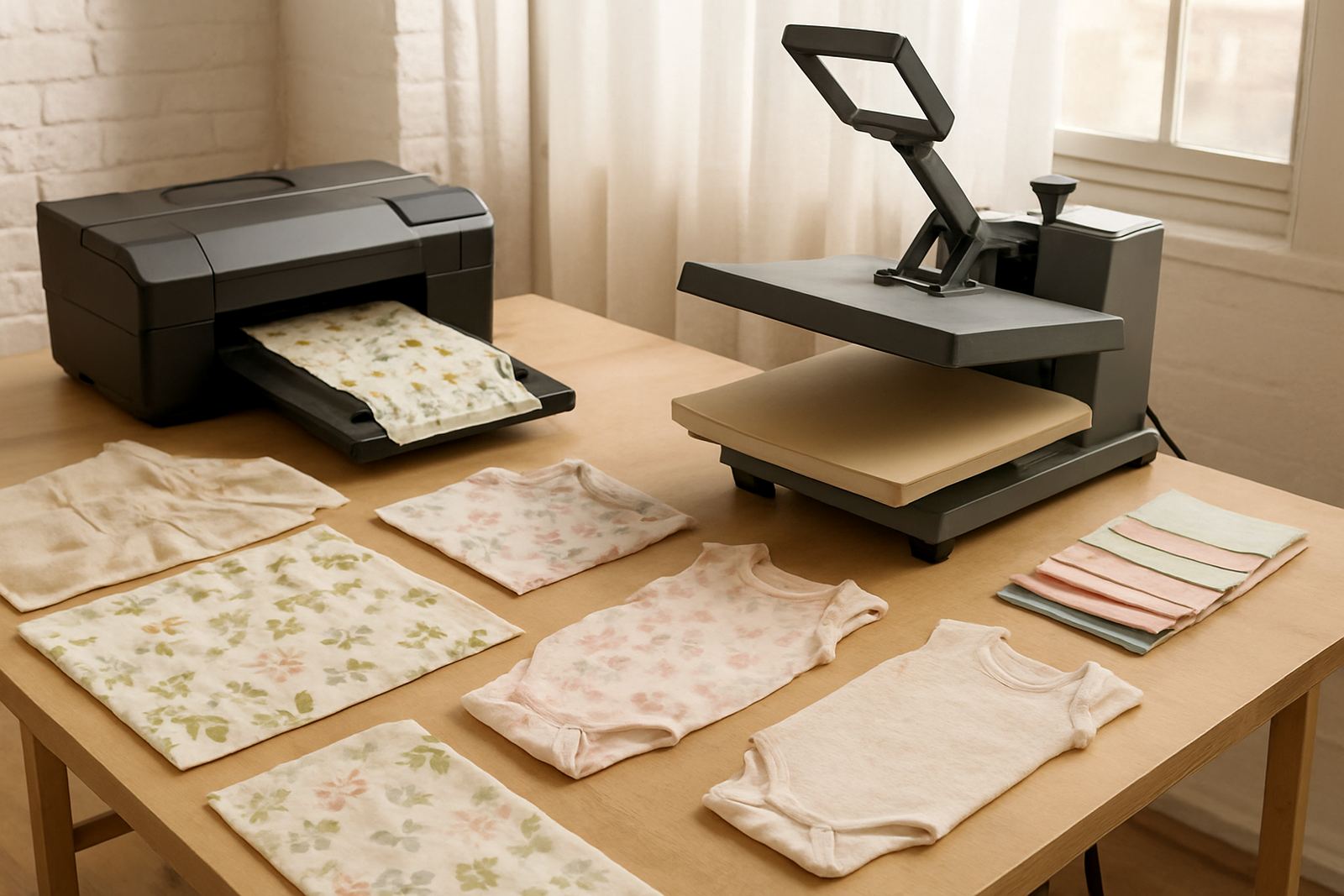
Why babywear printing needs a softer setup
Babywear is not the same as printing general fashion fabric. Parents notice rough hand feel, broken detail, off-colour pastel shades and prints that sit too heavy on fine knits. If you are making rompers, sleepsuits, bibs, swaddles or nursery textile items, the printing process must suit the fabric first, not just the artwork.
Most babywear businesses in Johannesburg, Pretoria, Durban, Cape Town and Bloemfontein are working with small batches, repeat prints and careful colour approval. That means the equipment must be easy to control and quick to repeat, especially when you are balancing school-run production, courier cut-offs and load-shedding delays. A setup that is too industrial can waste fabric, while a setup that is too basic can leave you with unstable colour and slower output.
For babywear, the key is a clean print path, good colour control and proper heat finishing. Soft-hand results matter more than heavy ink laydown. If your fabric is delicate, thin or prone to distortion, the handling system should keep tension low and feed consistent.