What a home print studio needs to do
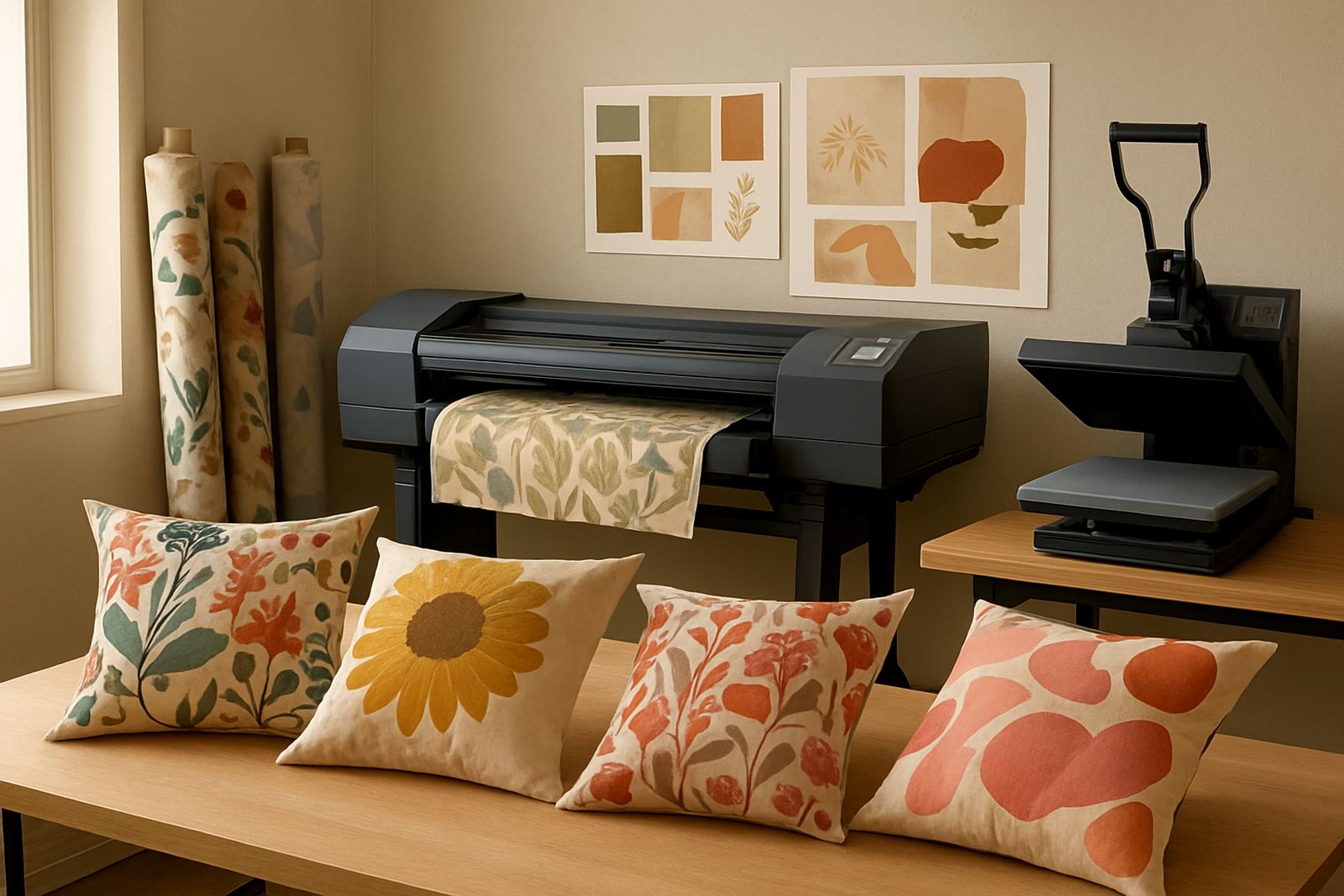
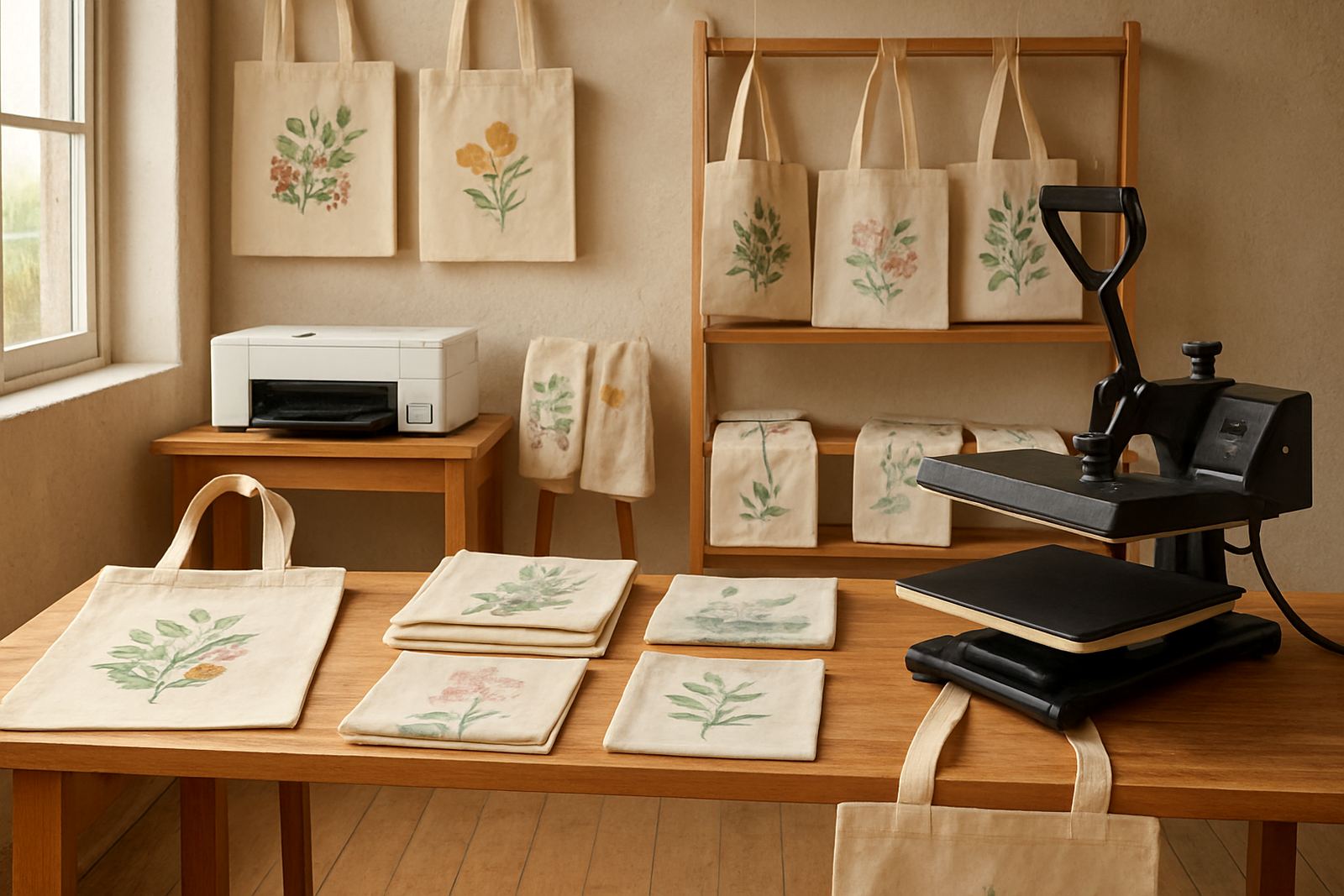
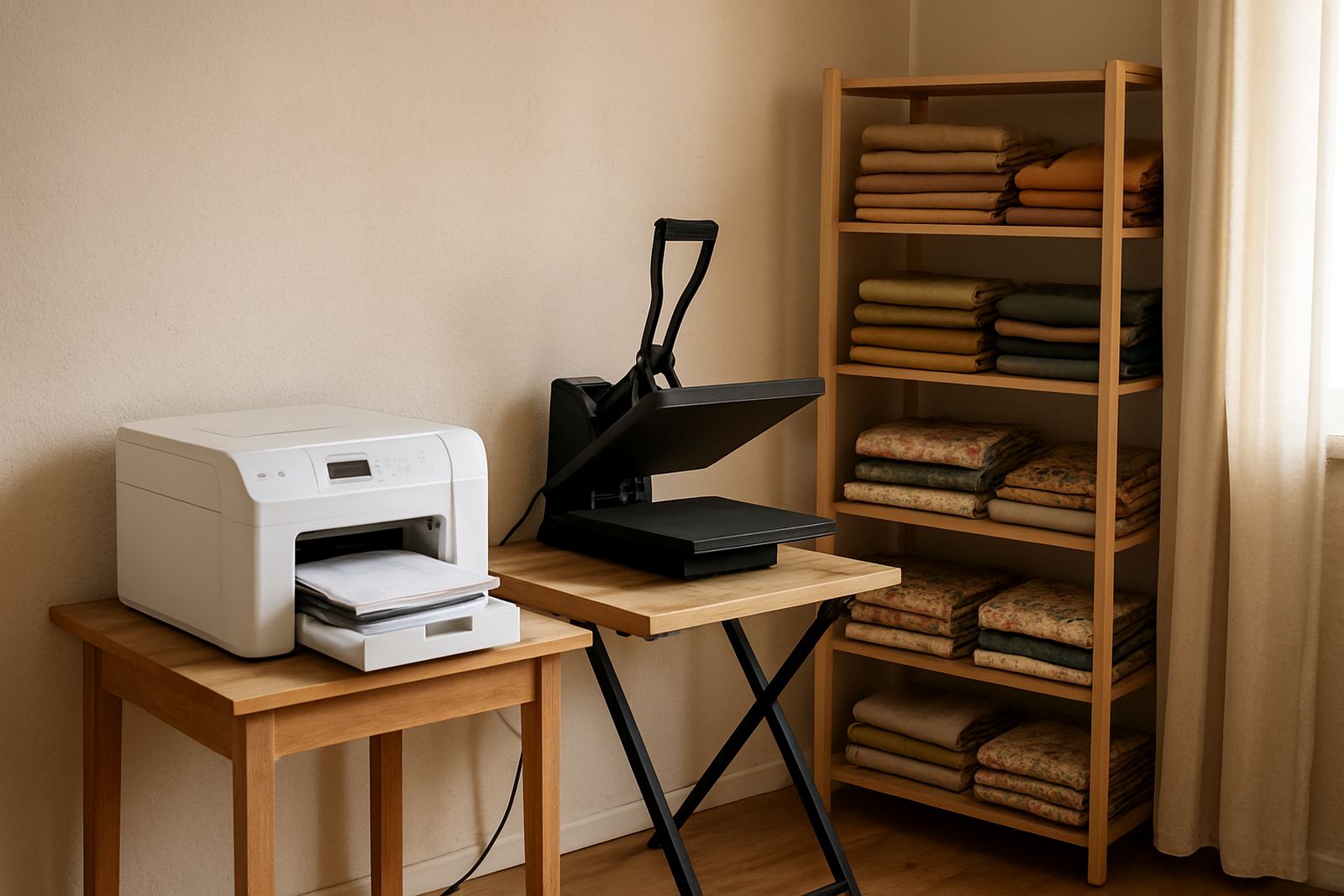
Most home-based textile businesses are not looking for a large factory line. They need a compact setup that can produce test runs, short batches and repeat orders without constant packing away. That usually means one direct-to-fabric inkjet printer, one heat press, a small drying or curing area, and space for rolls, inks and finished garments.
The right setup depends on what you print. A maker doing T-shirts, bags or small fashion drops will plan differently from someone printing scarves, flags or soft signage. In Johannesburg and Pretoria, where many businesses start in spare rooms, garages or a converted outside room, the main challenge is arranging the workflow so you can move fabric in one direction and not keep crossing paths with wet prints.
- Allow a clean intake area for fabric and media
- Keep the printer on a level surface with enough access for maintenance
- Set aside a separate pressing or finishing zone
- Store inks and consumables away from heat and direct sun
Typical equipment for a small setup
A compact home studio normally starts with a direct-to-fabric inkjet printer matched to the kind of fabric you use most often. Add a heat press for fixing or finishing, plus the correct inks, cleaning supplies and media for your work. Some businesses also need a small pre-treatment or rinsing area depending on the fabric and print method.
If you are working from Germiston, Boksburg or Midrand, it helps to choose equipment that can handle daily use without needing constant adjustment. South African power interruptions matter too, so a proper power backup plan is worth putting in place. A stable voltage supply protects print quality and helps avoid wasted stock when load-shedding hits mid-job.
- Direct-to-fabric inkjet printer
- Heat press for transfer or finishing work
- Inks suited to the fabric and print process
- Cleaning fluids and maintenance tools
- Tables, racks or shelves for prep and drying
Layout and space planning that work at home
Home print studios work best when every step has its place. Put the printer where it has fresh air and easy access for servicing. Keep the heat press close enough to cut down on walking but not so close that heat affects the printer or stored inks. If the room is small, use wall shelving and narrow trolleys to keep the floor clear.
In coastal areas such as Durban or Cape Town, humidity can affect stored media and some fabrics, so closed storage is useful. In inland areas like Bloemfontein and Johannesburg, dust control matters more. Good planning also means thinking about noise, ventilation and where waste material will go. Local municipal rules may also affect home business activity, especially if neighbours are close by or if you work from a sectional title unit.
- Leave enough clearance for loading fabric rolls and opening covers
- Keep a clean, dry storage point for inks and spare parts
- Plan for airflow around the press and any drying area
- Place cables where they will not be tripped over during production
Common mistakes that cost money
One of the biggest mistakes is buying a machine before measuring the room. Another is underestimating how much table space is needed for cutting, folding and packing. It is also common to forget that a printer needs regular cleaning and a place to do it properly. If the room is cramped, maintenance becomes difficult and print quality drops.
Another issue is skipping operator training and hoping to learn by trial and error. That can lead to blocked heads, colour mismatch or wasted fabric. We often see small businesses in Durban and Pretoria struggling after a few weeks because the setup was not planned around the real workload. A good home studio should match your monthly orders, not just the first busy weekend.
- Buying equipment that is too large for the available floor space
- Using the wrong ink or fabric combination
- Ignoring ventilation and heat build-up
- Not budgeting for setup, training and maintenance
Budget ranges for home print studios
Budget depends on output, fabric type and how much finishing equipment you need. A very small starter setup can begin from around R85 000 to R150 000 for a basic printer and heat press combination, with inks, training and first consumables adding more. A more capable home studio with better production speed, colour profiling and servicing cover can sit between R180 000 and R350 000.
If you are planning to serve boutique labels or repeat online orders, it is wise to allow extra funds for installation, spare parts and a maintenance contract. That way the business can keep moving when a printhead needs cleaning or a feed issue comes up. For many small operators, the better question is not only what the machine costs, but what each month of lost production would cost if it stops unexpectedly.
Support from setup to daily production
Fabric Printer works with small garment and textile businesses from Wadeville, Germiston and across South Africa, including Johannesburg, Pretoria, Durban, Cape Town and Bloemfontein. The support process can include machine installation, operator training, colour profiling, preventive servicing, breakdown repairs and remote troubleshooting. For a home studio, that kind of backup matters because there is usually no in-house technician on hand.
Our team also assists with printhead cleaning, ink system flushing, spare parts supply, relocation support and maintenance contracts. Whether you are running from a room at home or a small backyard unit, the aim is to help you keep production steady and keep your prints consistent from one order to the next.
- Germiston Demo Centre for equipment familiarisation
- Support areas in Johannesburg, Pretoria, Durban, Cape Town and Bloemfontein
- Service reach into Boksburg and Midrand
- Set-up guidance suited to small, space-conscious businesses