What bridal designers usually need from fabric printing
Bridal designers often work on small, high-value orders where the fabric has to look right first time. A lining, robe, sash, hem insert or ceremony accent may only use a few metres, but the finish still has to feel premium and hold up in fittings, travel and photography. In Johannesburg, Pretoria and Cape Town especially, many studios are handling mixed fabrics, tight lead times and clients who change details after the first sample.
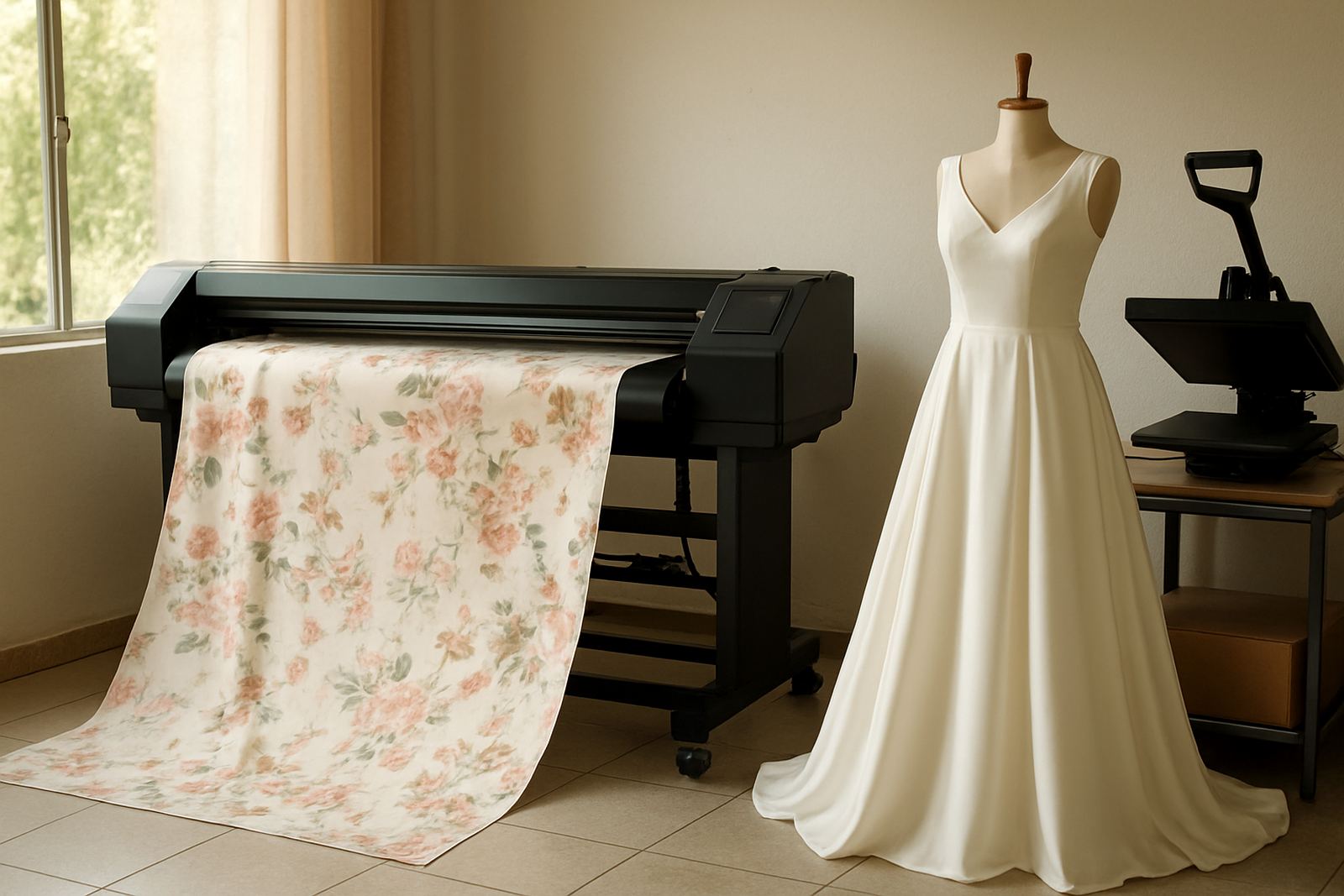
That is why direct-to-fabric printing suits this market well. It allows you to produce one-off pieces, short runs and coordinated sets without holding large stock. You can print names, dates, floral motifs, lace-style effects and subtle tone-on-tone artwork with sharp detail. For bridal use, control matters more than speed alone, because colour shifts on ivory, blush, champagne and white can change the whole garment. A good workflow keeps your colour consistent from sample to final production, even when the weather changes and humidity affects drying, which is common in Durban and coastal areas.
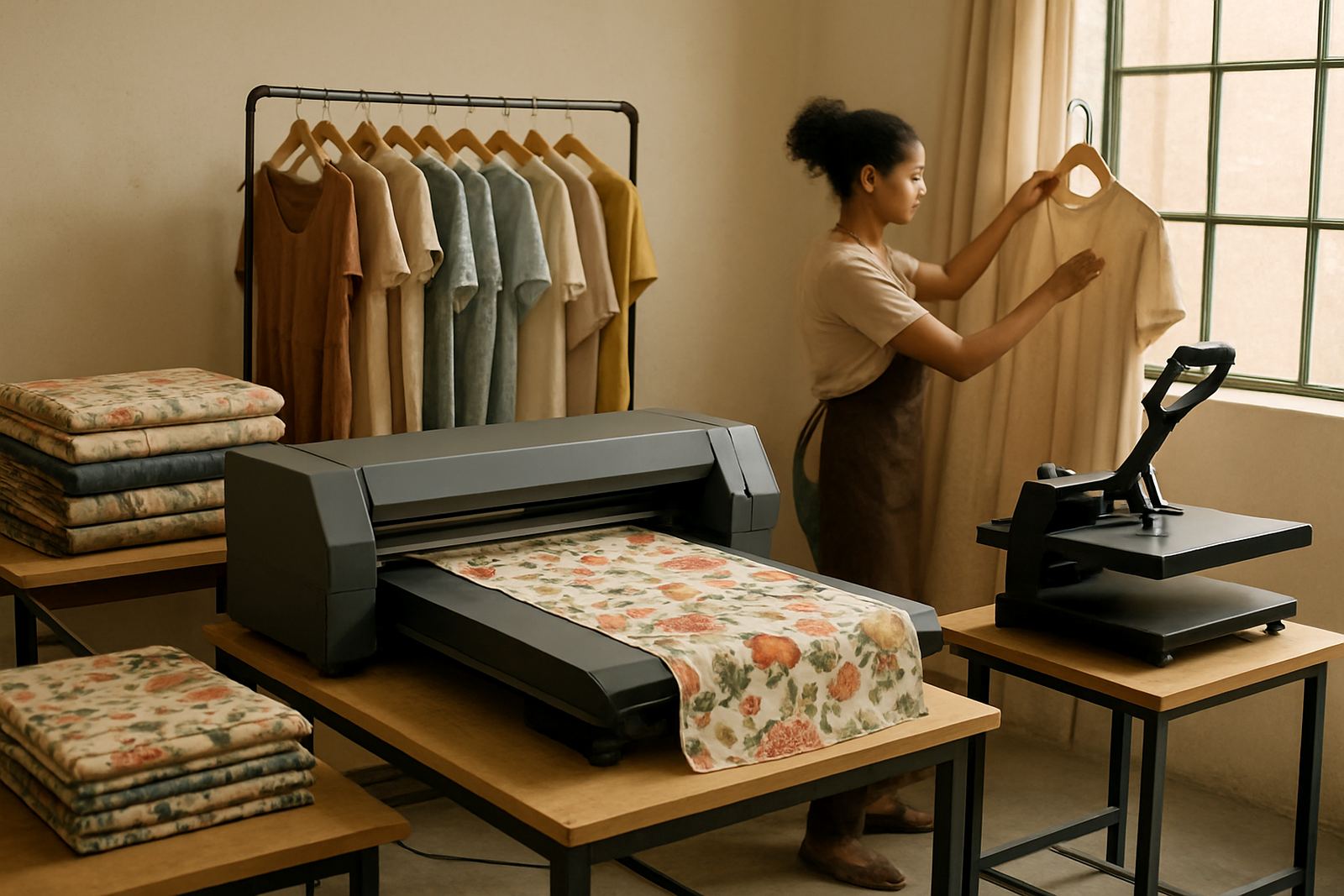
Many bridal businesses also need a machine setup that does not take over the whole studio. Space, power use and maintenance matter. If you are running from a small workroom in Germiston, Midrand or Bloemfontein, the equipment must fit around cutting tables, steaming, fitting rails and packing areas without causing delays.
Typical equipment set for bridal studios
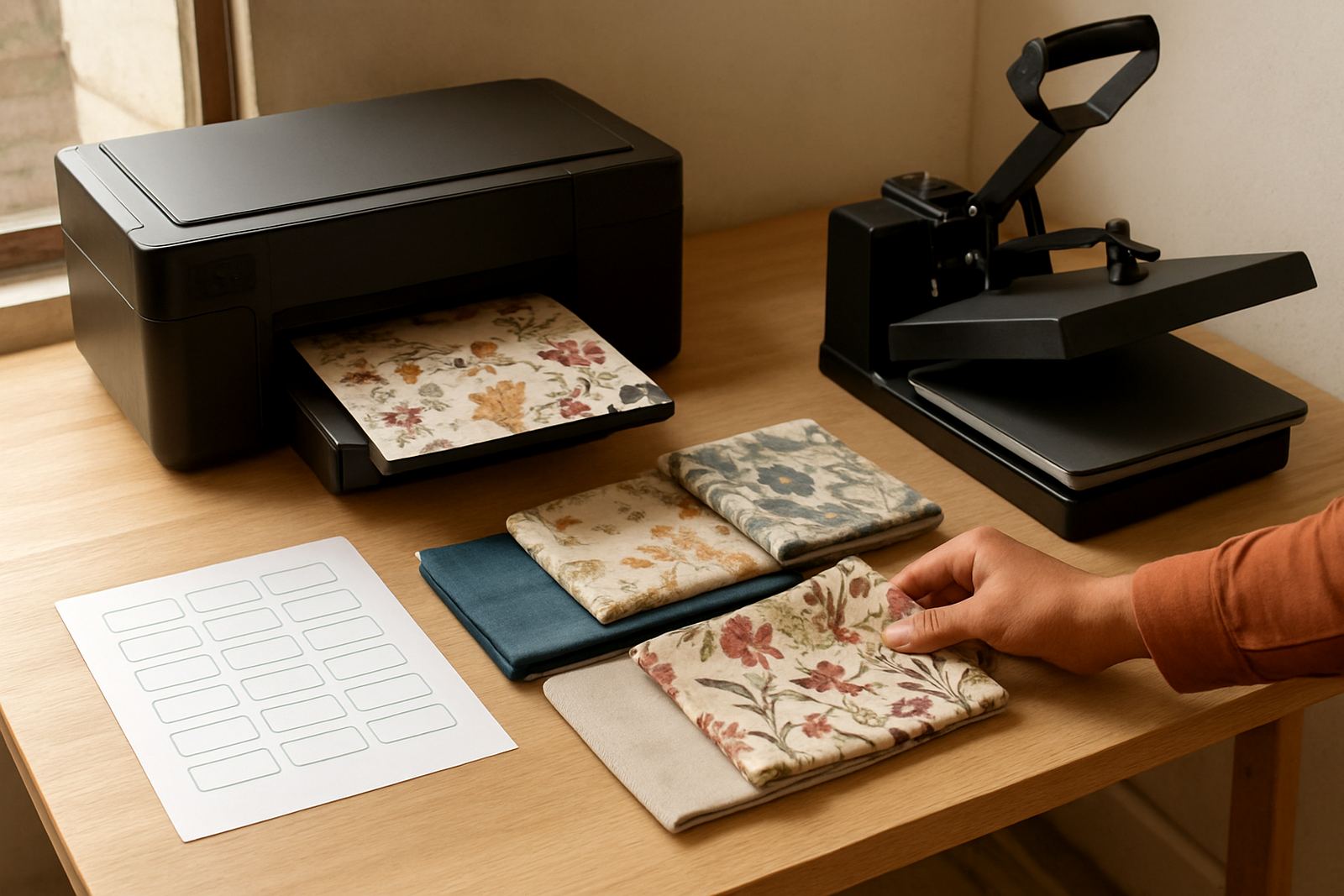
For most bridal designers, the starting point is a direct-to-fabric inkjet printer matched to the fabrics you use most often. If you are printing sample panels, robe fabric, lining lengths or decorative trims, you need clean detail, stable feed and predictable colour output. A heat press is useful for transfer work, fixing certain prints and finishing smaller textile pieces, especially when you are balancing custom orders with limited production space. We also supply inks and help with set-up training so your team knows how to prepare fabric, load media and avoid waste.
- Direct-to-fabric inkjet printer for short runs, samples and bespoke bridal accents
- Heat press for finishing, transfer work and small production pieces
- Inks matched to the fabric type and production method
- Basic colour management tools and profiling support
- Spare parts and servicing support for ongoing production
For a small studio, a practical starter setup can begin in the lower budget range and grow as orders increase. Many businesses plan around about R180 000 to R450 000 for entry to mid-level equipment, depending on width, speed and finishing needs. A more complete setup with stronger output capacity, colour profiling, training and servicing cover can reach R500 000 to R900 000 or more. The right choice depends on whether you are doing occasional bespoke pieces or regular weekly production for boutiques, bridal shops and export clients.
Layout planning for a clean bridal production flow
Bridal printing works best when the studio flow is simple. Keep receiving, fabric prep, printing, curing and packing in separate zones if possible. Even a compact Germiston or Boksburg premises can run well if you avoid crossing clean fabric with cutting offcuts and wet prints. If your team handles silk, satin, organza or blended lining fabrics, dust control and careful storage are important. A rolled print can pick up marks quickly if it is left too near a cutting area or open window.
Plan for the weight of fabric rolls, ventilation, power points and a stable surface for pre-checks. In load-shedding periods, many businesses also need backup power planning so a print job is not interrupted mid-run. If your premises is in a commercial park, check the building rules for extraction, water use and waste disposal before you install anything. Some councils and landlords are strict about machine noise, solvent handling and electrical load, so it helps to know the rules before you place the order.
- Leave enough space for fabric rolls to move without bending or creasing
- Keep print media and finished pieces in a dry, dust-free store area
- Place the printer near power backup where possible
- Allow room for inspection under natural light and colour-check lamps
- Keep cleaning and maintenance supplies close but away from finished stock
The print mistakes that cost bridal businesses money
With bridal work, small errors become expensive because the customer expects perfection. The most common problem is poor colour matching on white and ivory bases. A shade that looks soft and warm on one fabric may turn flat or grey on another. Another common issue is using the wrong fabric preparation, which can cause uneven absorption, faint lines or patchy coverage. If the material is not correctly tested first, you may waste metres before you notice the problem.
Designers also lose money by skipping sample approval. A bride may ask for a delicate botanical border, but the final print can look too busy when placed on the garment pattern. It is worth checking scale, placement and fabric drape before full production. In many cases, a 30 cm to 50 cm test piece is enough to catch problems early. If you are printing robes, lining panels or pre-wedding gifts, make sure the artwork spacing allows for sewing margins and trimming. A design that runs too close to an edge can disappear in the stitching room.
Maintenance mistakes are just as costly. Printhead cleaning, ink system flushing and preventive servicing should be done before quality drops, not after. If a studio waits until the printer is already streaking or dropping nozzles, it may miss a launch date or fitting appointment.
Budgeting for samples, stock and peak wedding season
Bridal designers in South Africa often need a budget that covers more than the printer itself. You should allow for ink, media, training, servicing and a little contingency for emergency repairs or replacement parts. A serious first-time buyer may need to set aside R20 000 to R60 000 for supporting items, consumables and setup work around the machine. If your team is new to textile printing, it is wise to include training and colour profiling from the start, because that can save fabric and time during the first few months.
For seasonal planning, remember that bridal demand can spike around holidays, year-end events and peak wedding bookings in spring and summer. If you are serving clients in Durban, Cape Town, Pretoria and Johannesburg, transport delays can also affect delivery windows, so it helps to keep key inks and media on hand. A maintenance contract may be worthwhile if your business prints every week and cannot afford downtime. For smaller boutiques, the right approach is often to start with a lean setup, then add capacity once the order flow is proven.
We work with bridal designers, garment makers and textile studios across South Africa from Wadeville, Germiston. Whether you need installation in a new workroom, operator training for your team or remote troubleshooting when production gets busy, the aim is simple: keep your fabrics moving and your output consistent.
Support for studios in Germiston and across South Africa
Fabric Printer supports bridal businesses in Johannesburg, Pretoria, Durban, Cape Town and Bloemfontein, with area support also available for Boksburg and Midrand. Our team helps with machine installation, training, colour profiling, preventive servicing, breakdown repairs, printhead cleaning, ink system flushing, spare parts supply, remote troubleshooting, production audits, relocation support and maintenance contracts.
If your bridal studio is growing, or you are moving from outsourced print work into your own production, we can help you choose equipment that matches your order size and fabric range. For many businesses, the real win is not just having a printer. It is having the right process around it, from the first sample to the final packed order.
Use the enquiry form on our contact page to ask about the best setup for your bridal work, and we will help you compare options for your fabric range, space and monthly production targets.