What the wide fabric printer does in a workshop
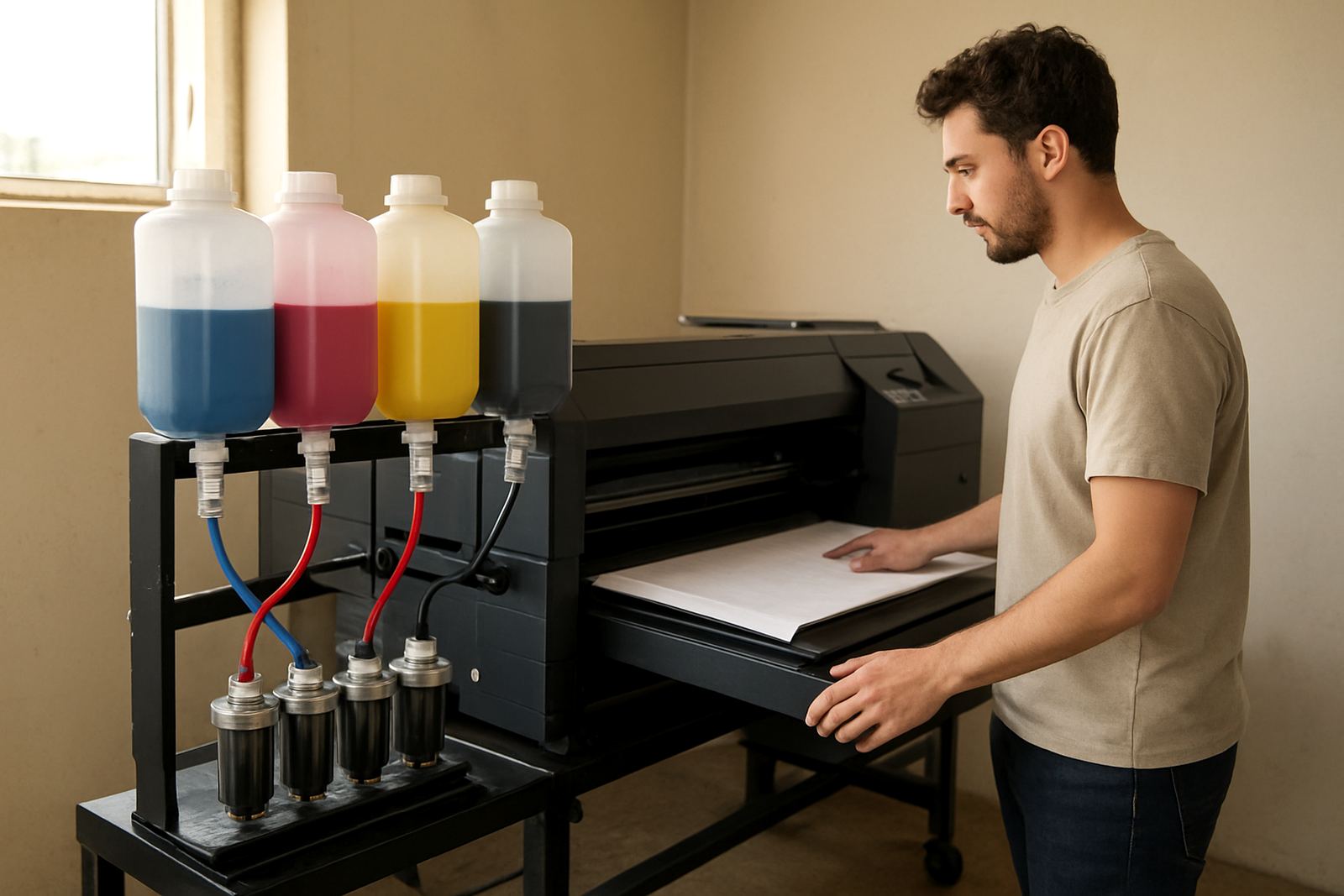
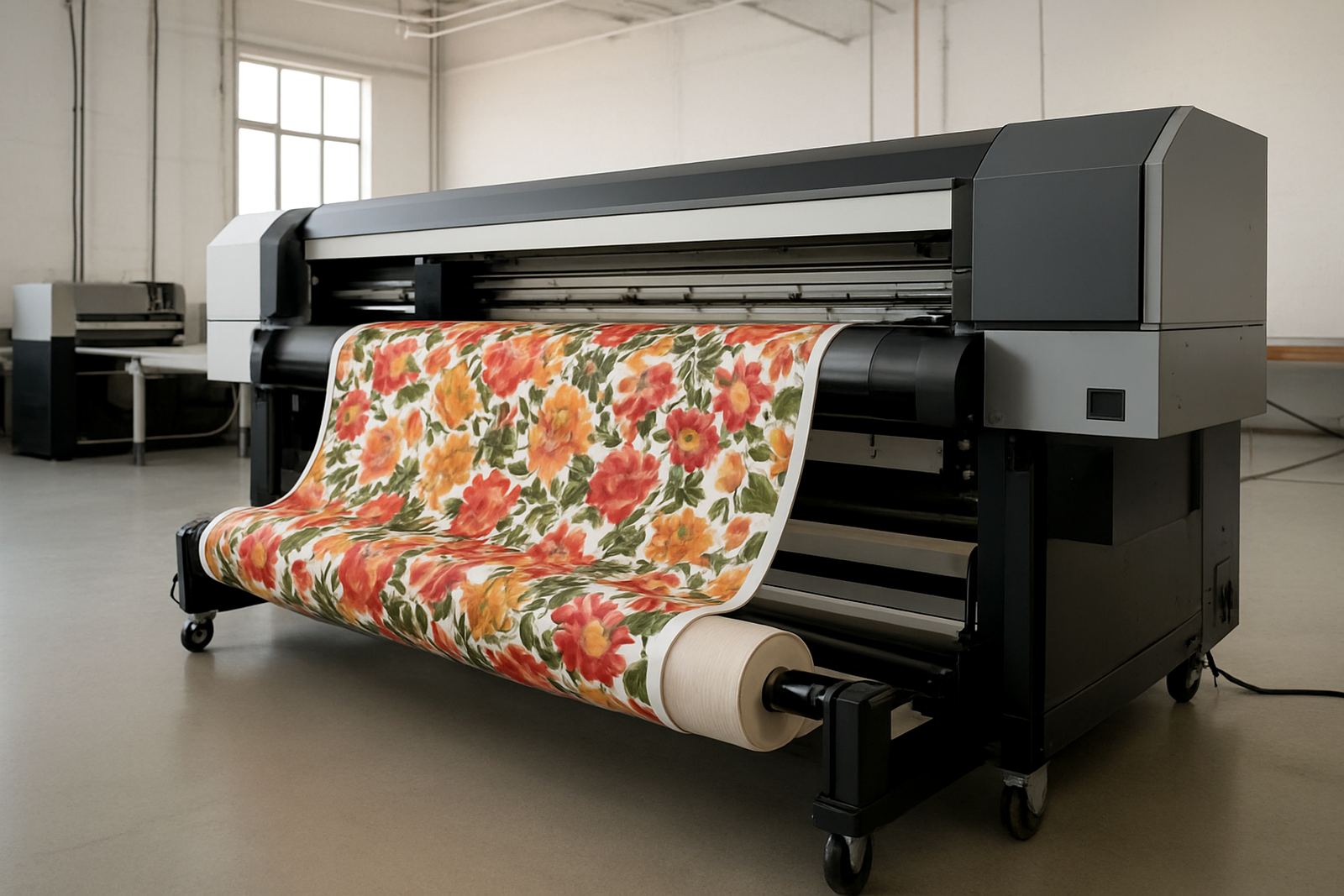
This wider-format machine is built for direct-to-fabric printing where length and repeat matter. It is used for longer garment panels, fashion yardage, home textile runs, soft signage and banner-style textile work, with enough width to handle work that would be awkward on a standard machine. The main benefit is fewer joins, less waste and more control over placement on the roll.
For small clothing brands, screen printers moving into digital work, and textile decorators taking on short runs, the machine offers a practical route to custom output without large industrial overheads. It handles detailed line work and bright colour blocks, and it is suited to shops in Germiston, Johannesburg, Pretoria, Durban, Cape Town and Bloemfontein where flexible production is often needed.
- Good for repeat yardage and longer panel layouts
- Supports short runs and custom orders
- Reduces joining, trimming and offcut waste
Sizes, print width and configuration choices
Wider-format fabric printers are commonly supplied in print widths from about 1.6 metres to 2.5 metres, depending on the amount of production space and the type of fabric work you do. A 1.6 metre unit suits many starter garment and décor workshops, while 1.8 metre, 2.2 metre and 2.5 metre options are better when you need broader repeats or larger textile panels. The actual machine footprint is larger than the print width, so the room plan should allow for feed space, take-up space and operator movement.
Options usually include one or two print heads, different ink set-ups for textile substrates, and roll handling for light to medium production. Shops that print frequently should look closely at speed versus detail, because a faster machine may be ideal for production but not always the best choice for fine repeat patterns. If you work with varied jobs, a balanced setup is often the better call.
- Typical print widths: 1.6 m, 1.8 m, 2.2 m and 2.5 m
- Roll feed and take-up system for continuous printing
- Suitable for cotton, poly blends and prepared textile media
Where it suits best in South African production
This printer suits businesses that make custom fashion panels, interior textiles, event fabric, promotional banners and small production batches for boutiques. It is useful when clients want repeatable colour across several metres of fabric, or when the job includes long panels that must align properly after cutting and sewing. That is especially relevant for dressmakers, clothing labels and small factories that need consistent output from one order to the next.
In coastal towns, humidity can affect fabric handling and ink drying, so the workspace needs decent airflow and controlled storage. In inland areas such as Johannesburg or Pretoria, dust management matters more, and a clean print area helps keep nozzles and media paths in good order. If your shop runs on municipal premises, make sure your power and ventilation setup fit the local building rules and the available single or three phase supply.
- Fashion studios and cut-make-trim businesses
- Textile decorators and small print houses
- Home décor, event and soft signage work
Installation, power and workspace requirements
Installation should be planned before the machine arrives, because a wide fabric printer needs level floor space, access for loading rolls and enough clear area for servicing. The printer itself does not need gas, but it does need reliable electrical supply and stable power protection. In South Africa, load-shedding protection is worth planning from day one, and a proper inverter or UPS arrangement may be needed for control systems and clean shutdowns.
Most workshops will require a dedicated power point, surge protection and an environment that stays reasonably clean. Depending on the machine size and heating arrangement, the electrical requirement may be single phase or three phase, so it is important to confirm this before ordering. Good ventilation also helps when working with textile inks and curing equipment. A practical installation usually includes operator orientation, alignment checks and a test print before full production starts.
- Level floor, clean room and roll handling space
- Power protection for load-shedding and surges
- No gas connection needed for the printer itself
Care, servicing and daily maintenance
Like any production printer, the machine needs regular attention to keep output clean and colour accurate. Daily nozzle checks, capped heads, correct humidity control and scheduled cleaning all help prevent downtime. On textile jobs, lint and residue can build up faster than in a standard print environment, so the feed path, wipers and ink system should be inspected often. A little prevention saves a lot of lost production.
Preventive servicing should include printhead cleaning, ink system flushing where needed, belt and carriage checks, and a review of media handling parts. If the machine stands idle for long periods, especially over long weekends or school holidays, it should be prepared correctly before and after shutdown. Many workshops also benefit from a service plan so they are not calling for urgent repairs only when production has already stopped.
- Daily nozzle checks and basic cleaning
- Scheduled preventive servicing
- Ink flushing and printhead care when required
What to check before placing an order
Before you order, confirm the type of fabric you print most often, the maximum panel width you need, the daily volume and whether your work is mostly fashion, décor or display. Ask about colour control, speed, media compatibility and the support available after installation. If you print for clients who expect exact repeats, colour profiling should be part of the plan from the start.
You should also check the supply of inks, spare parts and training. A machine is only as useful as the backup around it, especially if you are working under time pressure. Ask for a clear list of the included parts, the warranty terms, and the maintenance schedule. If your business may grow, it is worth choosing a setup that can be serviced locally and expanded without replacing the whole line later.
- Confirm fabric type, print width and expected daily output
- Check power requirements and room dimensions
- Ask about training, parts supply and service support
Key facts
| Print width | Common options from 1.6 m to 2.5 m |
|---|---|
| Media type | Prepared fabric, textile rolls and soft signage media |
| Ink system | Direct-to-fabric textile ink set |
| Use case | Garment panels, repeat designs, décor and banners |
| Power | Single phase or three phase, model dependent |
| Support | Installation, training, servicing and remote troubleshooting |