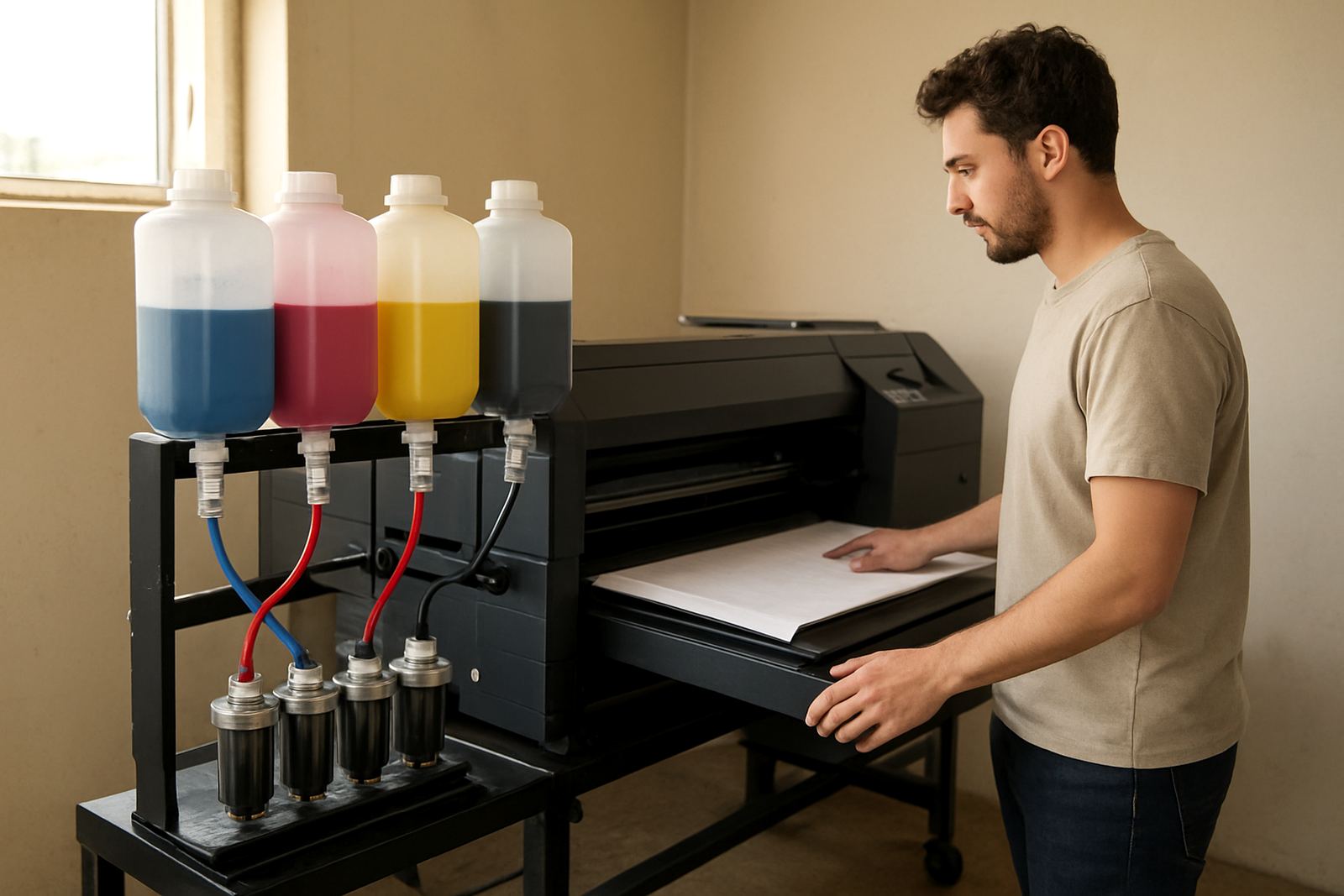
What a bulk ink system does on a fabric printer
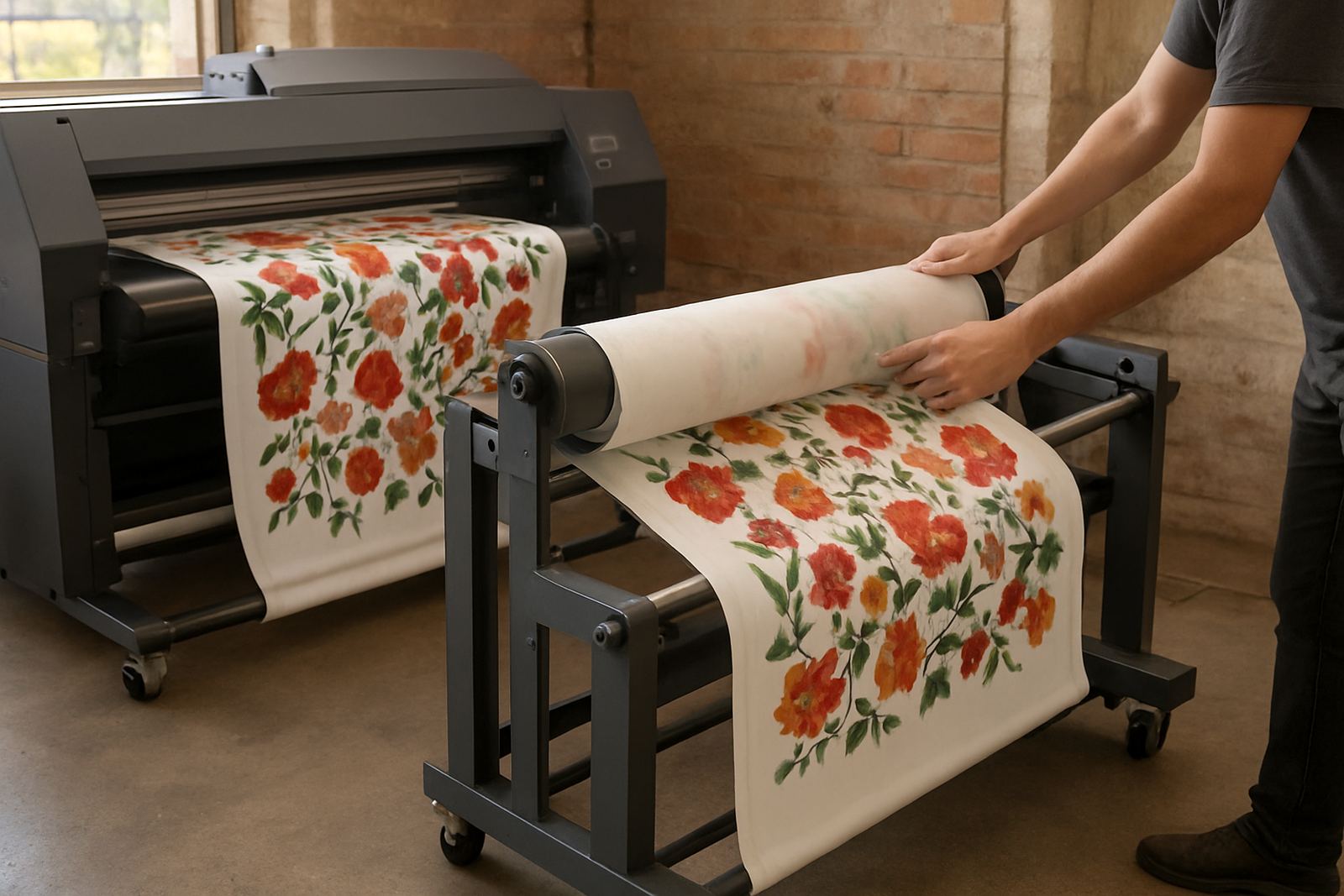
A bulk ink system replaces small cartridge style supply with larger external ink reservoirs that feed the printer continuously through ink lines. For fabric work, that means fewer stoppages for changeovers, less waste from partly used containers and more consistent supply when you are running the same design over many metres.
It suits direct-to-fabric production where colour repeatability matters, especially for shops doing small fashion ranges, sampling, schoolwear details and short commercial runs. The system is set up to match the printer heads and ink type in use, so the flow stays steady and the machine can keep printing without constant manual intervention.
- Designed for direct-to-fabric ink delivery
- Helps reduce ink changeovers during longer jobs
- Works well for repeat orders and batch production
- Supports cleaner handling than loose bottles on the floor
Sizes and supply options for different production levels
Bulk ink systems are normally supplied in different reservoir sizes so the setup can match your output. Smaller units suit start-up studios and boutique workshops that print in short bursts, while larger capacity systems are better for businesses doing daily production and running more than one shift.
Common options include 500 ml, 1 litre and larger multi-litre feed setups, depending on the machine format and the number of colours required. A 4 colour system is the usual starting point for CMYK work, while some production lines need extra channels for specialised textile printing. The right choice depends on your daily metreage, ink consumption and how often you can stop for refills.
- 500 ml systems for light to moderate use
- 1 litre reservoirs for regular daily production
- Multi-litre feed options for longer runs and busier workshops
- 4 colour and expanded colour channel arrangements available
Where this setup suits best in South African production
This product is a practical fit for businesses in Johannesburg, Pretoria, Durban, Cape Town and Bloemfontein that need dependable printing with fewer pauses. It is especially useful in places where labour needs to be managed carefully and every extra minute spent swapping supplies affects profit.
In humid coastal areas like Durban and Cape Town, clean ink handling and closed storage matter because moisture can affect media and work areas. In inland towns such as Germiston, Midrand and Boksburg, dust control and good housekeeping are just as important. If you are printing for local markets, fashion labels or contract runs, a bulk system helps keep the line moving without constant refilling.
Installation, power and setup requirements
Installation is usually done during a planned machine setup or upgrade. The ink reservoirs need to be positioned correctly, the lines routed without kinks and the whole feed checked for air locks before production starts. On some printers, the upgrade is straightforward, but on others it needs careful calibration to keep colour delivery even across the full print width.
Power needs stay tied to the printer and its connected equipment, so the bulk system itself does not usually need a separate heavy load connection. What matters more is stable power for the printer, heat press and any drying or curing equipment used nearby. In areas affected by load-shedding, a backup supply for the printer room helps protect jobs already in progress. No gas is required for the ink feed system.
- Professional installation recommended for line routing and priming
- Keep the machine on stable power during setup and operation
- No gas connection needed for the bulk ink system itself
- Allow space beside or behind the printer for reservoir placement
Care, servicing and daily checks that prevent downtime
Bulk ink systems need regular attention, but the routine is manageable. Reservoir lids should stay sealed when not in use, lines need to be checked for trapped air, and any settled pigment should be mixed as directed before long runs. If the printer stands idle for too long, maintenance printing becomes important to protect the heads and keep the feed moving properly.
Preventive care should be part of the workshop routine, not something you only think about after a blockage. A clean fill area, filtered storage and correct flushing intervals will save a lot of trouble later on, especially where staff are changing shifts or jobs are being moved between rooms. A little care now helps avoid expensive downtime later, and that is often where the real saving sits.
- Check reservoir levels before each production run
- Inspect ink lines for bubbles, cracks or loose fittings
- Keep the fill area dust free and away from heat
- Schedule printhead cleaning and ink system flushing when needed
What to confirm before you place an order
Before ordering, check the printer model, ink type, number of channels and the space available around the machine. You should also confirm whether your production work uses standard CMYK only or whether extra inks are needed for specific fabric effects. If your team is moving from small bottles to a higher-capacity feed, make sure the change matches your daily workflow not just your print wish list.
It also helps to know your average run length, the kinds of fabric you print on and whether the machine will stay in one place or need relocation support later. If you are ordering for a busy workshop in Wadeville, a schoolwear supplier in Pretoria or a fashion studio in Cape Town, the setup should be planned around real production conditions so the system can do its job properly.
- Printer model and ink channel count
- Required colour set and daily metreage
- Available floor space and service access
- Whether training or relocation support is needed
Key facts
| Product type | Higher-capacity ink feed system for direct-to-fabric printing |
|---|---|
| Reservoir sizes | 500 ml, 1 litre and multi-litre options |
| Typical colour setup | 4 colour CMYK, with expanded channel options where required |
| Compatible use | Short runs, repeat orders, sample production and daily workshop printing |
| Installation needs | Professional fitment, priming and flow check |
| Maintenance | Line inspection, cleaning cycles, flushing and routine servicing |