What a clam press does in a small workshop
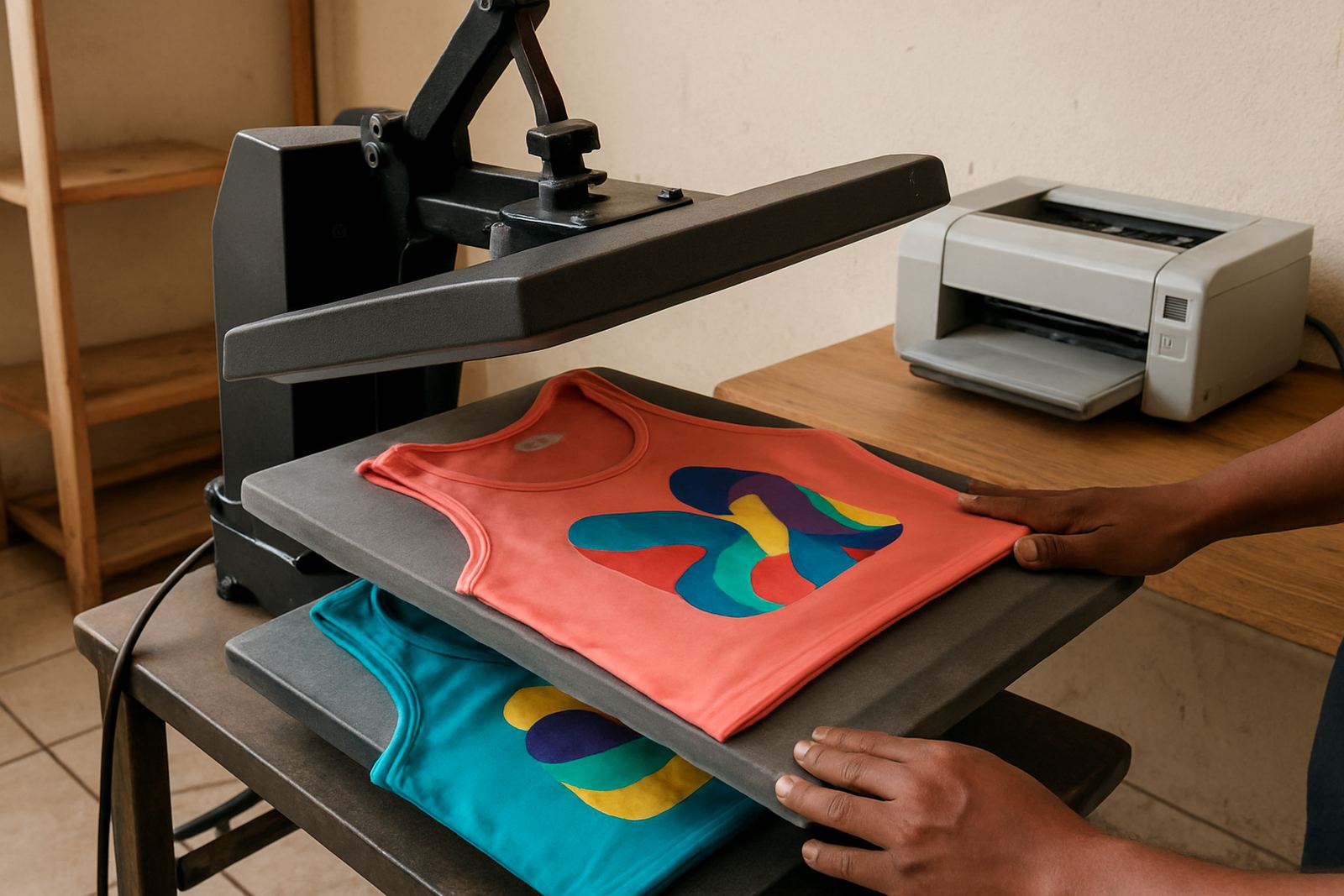
A clam press opens and closes in a simple top-and-bottom motion, which makes it easy to place garments, align transfers and apply heat evenly. It is commonly used for heat transfer vinyl, DTF finishing, sublimation on suitable blanks and general garment pressing where clean pressure and repeatable settings are important.
For a compact studio in Germiston, Soweto, Pretoria, Durban or Cape Town, the main advantage is that the press needs a small footprint and can sit on a solid table or stand without crowding the work area. It is a sensible option for start-ups, schoolwear decorators, boutique labels and side-line businesses that need dependable finishing each day. The clamping action is firm, so operators can work steadily and still keep the process simple.
- Good for T-shirts, tote bags, aprons and light textile items
- Useful where space is limited and output is steady rather than very high volume
- Helps with repeatable temperature, pressure and timing for regular jobs
Sizes and options to match your output
Clam presses are usually chosen by platen size. The most common working sizes for small businesses are 38 x 38 cm, 40 x 50 cm and 40 x 60 cm. A smaller platen is easier to place in a tight room, while a wider platen helps with larger prints, chest logos and gang sheets. If you finish a lot of adult T-shirts, a 40 x 50 cm unit is often the best middle ground.
Some workshops prefer a swingaway model for extra working room, but a clam press stays compact and generally costs less to set up. That makes it practical for businesses that are watching their Rand spend and want a machine that can do regular work without overcomplicating the process. The pressure adjustment, digital display and auto timer functions should be checked carefully before ordering, because these details affect day-to-day ease of use.
- 38 x 38 cm for smaller items and tight spaces
- 40 x 50 cm for most garment decoration work
- 40 x 60 cm for wider transfers and larger artwork
- Manual or digital pressure control depending on model
Where a clam press fits best
This type of press suits small print rooms, garment units, craft studios and retail finishing areas. It is useful for businesses in Johannesburg, Boksburg, Midrand and Pretoria that handle short runs, sample production and quick client orders. A clam press is also a good choice for home-based operations that have a proper workbench and enough ventilation.
For coastal towns such as Durban or Cape Town, the machine should be kept dry and wiped down after use because humidity can affect metal parts and stored transfers. In industrial areas such as Wadeville or Alberton, dust control matters too. A clean, level surface and a sensible workflow will help the press last longer and keep transfers consistent. If the business expects daily pressing of high numbers, it is worth checking whether the platen size and duty cycle match the workload before placing the order.
- Garment brands handling schoolwear, workwear and small custom runs
- Studio spaces with limited floor area
- Operators who need simple training and repeatable results
Installation, power and workspace needs
Most clam presses are straightforward to install. They need a stable table or stand, a nearby plug point and enough space for safe opening and closing. A dedicated circuit is a good idea where the business already runs other heat equipment, especially in areas affected by load-shedding and voltage swings. When power is unreliable, a surge protector and proper shutdown routine should be part of the setup.
Typical units run on standard single-phase electricity, usually 220 V to 240 V. The exact wattage depends on platen size and heating system, so it is important to confirm this before installation. A clear working zone around the press helps the operator move garments safely, and heat-resistant gloves can be useful for busy production periods. If the studio is being moved to another site, the press should be relocated carefully so the platen and frame stay level.
- Single-phase power for most small workshop setups
- Stable bench or stand required
- Space for loading, alignment and safe cooling after pressing
- Surge protection recommended in areas with unstable supply
Care, servicing and day-to-day upkeep
Good care starts with basic cleaning. The lower platen and silicone pad should be kept free of adhesive build-up, dust and fabric fibres. If ink or transfer material gets onto the surface, it should be removed once the press has cooled. Operators should also check the pressure adjustment regularly, because uneven pressure can leave marks or cause poor adhesion.
For busy businesses, preventive servicing is worth planning into the year. That may include checking electrical connections, thermostat accuracy, platen condition and general wear on handles or hinges. If the press is used heavily, the heating element and control system should be monitored for signs of uneven temperature. In humid areas or workshops close to the coast, storage conditions matter because moisture can shorten the life of components if the machine is left unused for long periods.
- Clean platen surfaces after each shift
- Check heat consistency and pressure settings often
- Schedule servicing before busy seasons
- Keep the machine covered when not in use
What to check before ordering your press
Before placing an order, check the platen size, power requirement, temperature range and pressure adjustment method. It is also worth asking how easy it is to replace consumable parts such as silicone pads and heating pads. If you are planning to press thicker garments, hoodies or layered items, ask whether the press has enough opening height and pressure strength for those jobs.
Also consider your daily output. A small boutique in Bloemfontein may only need occasional finishing, while a print shop in Johannesburg might need a unit that can handle repeated use through the day. Ask about setup training, operator guidance and servicing support so the team knows how to use the machine correctly from the start. If you are matching the press with a new heat transfer workflow, confirm the recommended time, temperature and pressure settings for the materials you use most often, because that can save a lot of trial and error.
- Check platen size against your most common garment sizes
- Confirm electrical requirements and plug point access
- Ask about spare parts and servicing support
- Make sure the press suits your daily output and product range
Key facts
| Product type | Clam heat press for garment finishing and transfer work |
|---|---|
| Platen sizes | 38 x 38 cm, 40 x 50 cm, 40 x 60 cm |
| Power | Single-phase 220 V to 240 V, model dependent |
| Controls | Digital temperature and timer with pressure adjustment |
| Typical use | T-shirts, tote bags, aprons, schoolwear and short-run garments |
| Support | Installation, operator training, servicing and remote troubleshooting |