What the wash out station does on a production floor
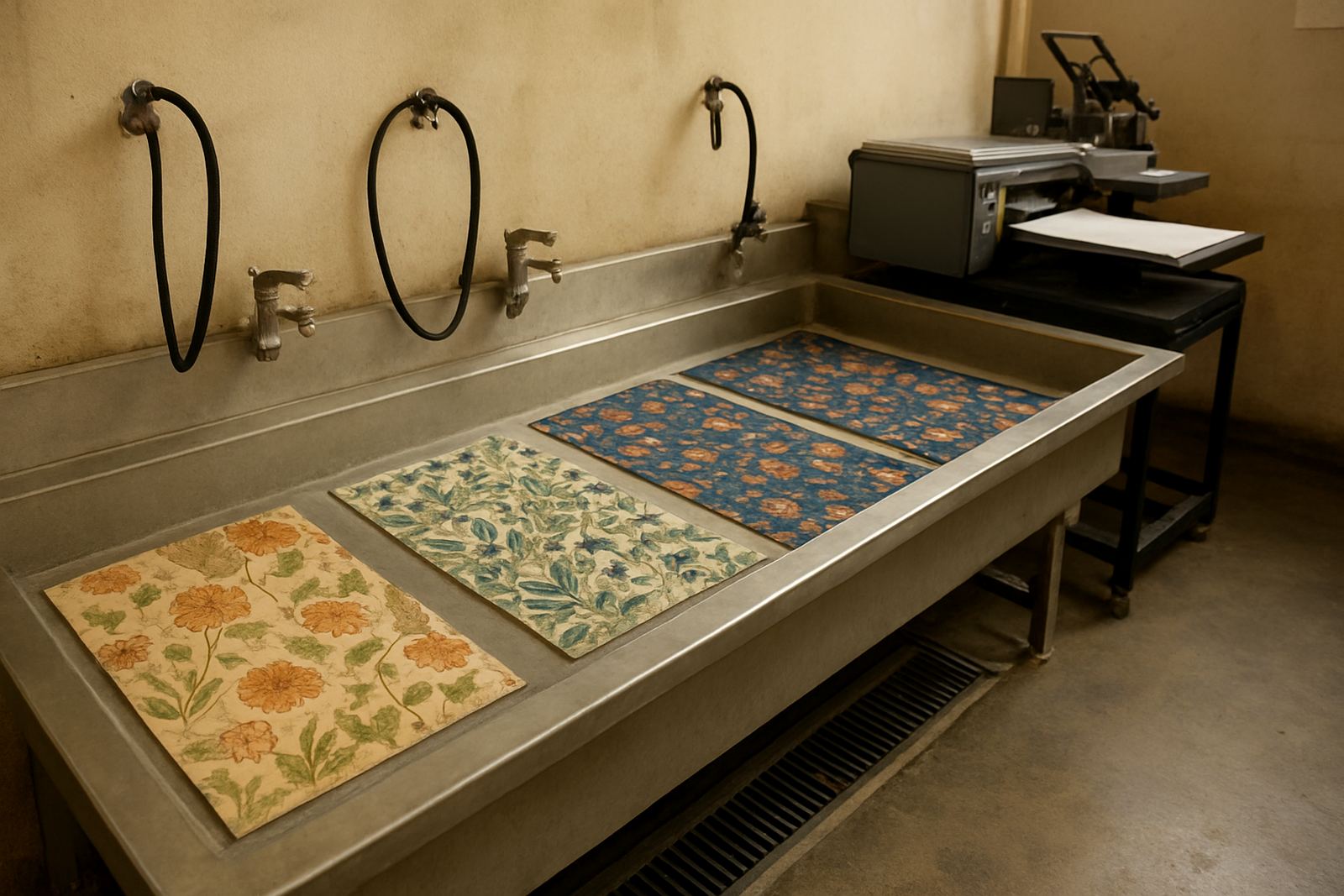
A wash out station is a purpose built utility unit used to rinse printed fabric, remove excess ink or residue and prepare material for the next stage of finishing. In a small shop it helps keep water work in one place instead of using hand basins, loose hoses or a mop up after every run. That matters when you are printing cotton, polycotton, blends or sample yardage and need a repeatable process.
The station is normally fitted with a deep sink area, splash protection and a working surface for handling wet fabric. Some setups include a drain tray or rinse rail so the cloth can be washed and guided off the station without dragging it across the floor. For shops in Germiston, Johannesburg or Durban where moisture and dust can build up, this kind of control is very useful.
- Used for rinsing printed fabric after curing or washing steps
- Helps contain overspray, drips and dye residue
- Supports cleaner hand finishing and sample preparation
- Useful in small production rooms with limited floor space
Sizes and layout options for different workspaces
Wash out stations are usually selected by the width of the fabric you handle and the space available in your print room. A compact unit suits a start up working with narrow widths and small batch orders, while a longer station is better where several people need to rinse or sort at the same time. If you are in a shared industrial unit in Wadeville or a back room in Pretoria, measure your clear wall space, drain point and access route before ordering.
Common size options include 1 200 mm, 1 500 mm and 1 800 mm working lengths, with depths that allow fabric to sit without bunching up. Height is important too. Most operators prefer a comfortable standing height that reduces back strain during repeated rinsing. We also see clients ask for shelves underneath for buckets, cloths and chemical storage, though these should be kept off the wet zone.
- Compact stations for sample rooms and small batch work
- Mid size stations for boutique garment production
- Longer stations for busier rooms with two operators
- Optional splash backs and side guards for tighter spaces
Where it suits best in South African garment and textile work
This station suits businesses that print, finish or pre wash fabric before cutting and sewing. It is a practical fit for custom T shirt shops, home textile makers, schoolwear producers, décor printers and small fashion labels. If you are serving customers across Johannesburg, Cape Town, Durban or Bloemfontein, having a proper wash area helps you keep turnaround times steady and avoid work being done in the wrong room.
It is also useful where water handling needs to stay tidy for health and housekeeping reasons. Municipal buildings and rented industrial spaces often need clear drainage and good floor management, so a fixed station can help you stay organised. In coastal areas the extra humidity can make wet fabric stay damp longer, so a planned rinse and drip off point is handy. In dry inland conditions the issue is more often dust, and a covered working area helps with that too.
- Print studios producing small runs and repeat orders
- Fashion sampling rooms and sample houses
- Textile businesses that wash or rinse dyed goods
- Workshops needing a neat wet process area
Installation, plumbing and power requirements
Installation needs depend on the exact station configuration and the building services already in place. Most units need a level floor, a water supply, a drain point and enough room for the operator to move cloth in and out safely. If the station includes a rinse pump, mixing controls or any heated component, then electrical supply should be checked before delivery. For many small businesses a standard single phase supply is fine, but the site must be tested properly before final setup.
We recommend checking water pressure, drainage capacity and floor slope before installation. If the room has frequent load shedding, plan your workflow so wet handling and final rinsing can still be completed without stopping mid cycle. In some sites a backup water container is also useful for cleaning down after a power cut. If you are in an older building in Boksburg, Midrand or central Johannesburg, it is worth confirming that the drain can handle regular discharge without backing up.
- Needs a level floor and clear operator space
- Requires access to water and reliable drainage
- Electrical requirements depend on added features
- Site checks should confirm pressure, slope and access
Care, cleaning and servicing to keep it working properly
A wash out station should be cleaned daily so residue does not build up in corners, drains or mesh areas. Rinse the sink area after use, remove trapped fibres and check that drain flow stays clear. If your business uses strong cleaning agents or heavy pigment work, a more frequent flush may be needed. This helps reduce staining and keeps the station looking professional for customer visits.
We also suggest scheduled servicing for any valves, seals or moving parts that are fitted to the unit. In shops with hard water, mineral build up can affect spray nozzles and drain fittings over time. If the station is used near other print equipment, keep ink and wash chemicals away from motors and electrics. A simple weekly check is often enough to catch early wear before it becomes a stoppage. One missed drain clean can turn into a proper headache later on.
- Wash down after each shift
- Check drain flow and remove lint regularly
- Inspect seals, fittings and splash guards
- Keep chemicals and loose tools away from the wet area
What to check before you place an order
Before ordering, confirm the fabric widths you handle, the amount of wet work done each day and the space available for installation. It also helps to know whether the station must fit next to a dryer, press or cutting table, because that affects the layout. If you plan to move premises later, ask about relocation support so the unit can be removed and installed again without damage.
Make sure you also check whether the unit needs a trap, a specific drain height or any extra plumbing parts. If your team will be using it daily, think about a work flow that allows rinsing, drip off and transfer to the next process without cross traffic. A station ordered for a small boutique in Cape Town may need different space planning from one in a larger Germiston workshop.
- Fabric widths and daily output volume
- Available floor space and drain position
- Power and water access on site
- Whether you need splash guards, shelves or extra fittings
Key facts
| Working width options | 1 200 mm, 1 500 mm or 1 800 mm |
|---|---|
| Approximate depth | 500 mm to 700 mm depending on layout |
| Height | Comfortable standing height, usually around 850 mm to 950 mm |
| Utilities needed | Water supply, drainage and floor space; electrical supply if fitted with powered extras |
| Typical use | Rinsing, draining and finishing printed or dyed fabrics |
| Placement | Print rooms, sample areas, finishing rooms and small textile workshops |