A practical press for first production jobs
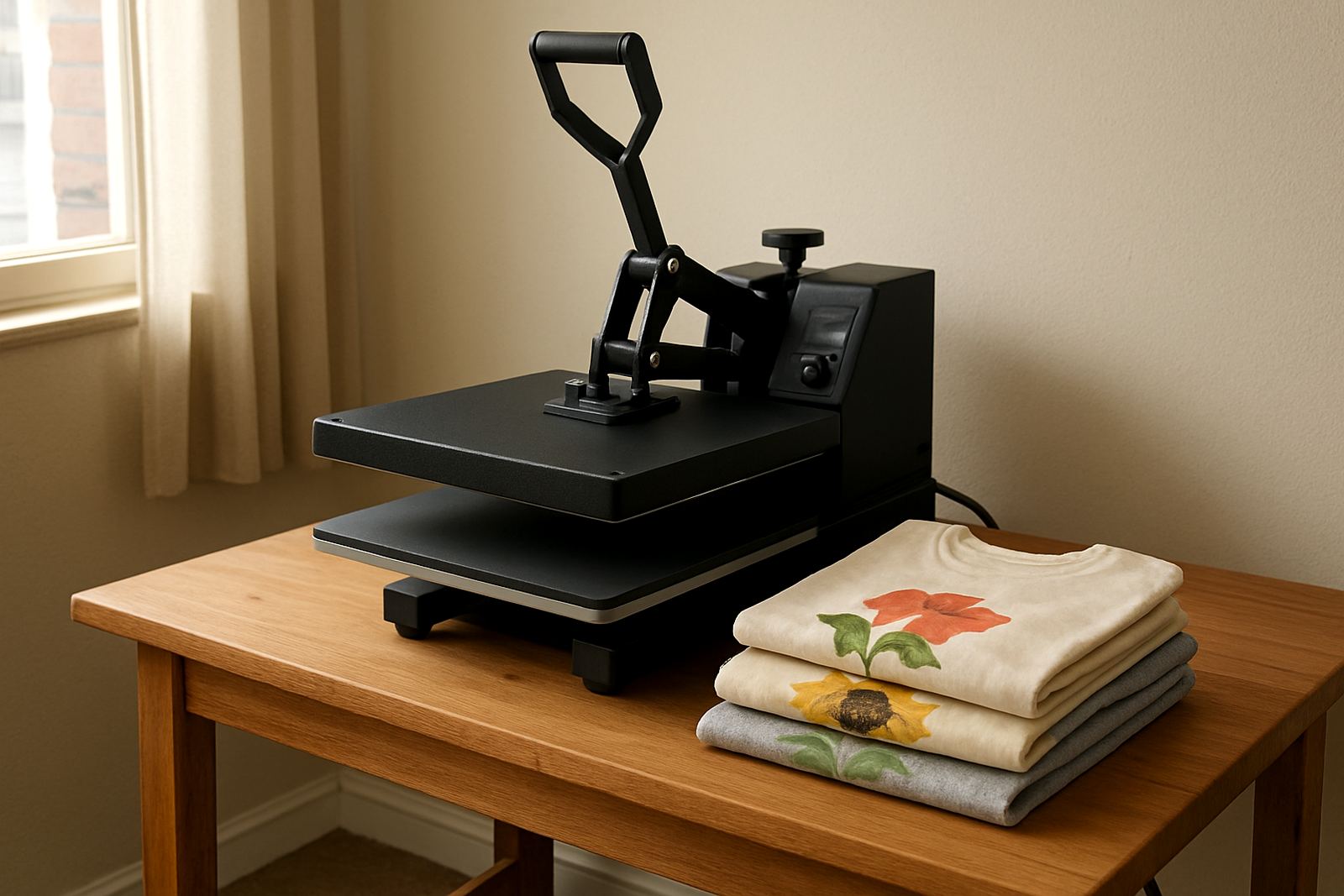
The Starter Heat Press is an easy-to-use machine for applying transfers to fabric, garments and finished items. It is commonly used for sample approval, neck labels, small logo placements, care labels and basic finishing work in a new print room. If you are setting up in Wadeville, Germiston, or working from a smaller workshop in Pretoria, Durban, Cape Town or Bloemfontein, this type of press gives you a dependable starting point without overcomplicating day-to-day production.
For many small businesses, the main value is control. You can set time, temperature and pressure, then repeat the same result across a batch. That matters when you are testing new garments or handling customer orders with mixed fabric types. It also helps when you have load-shedding interruptions and need equipment that is straightforward to switch off, restart and monitor. A good starter press should be simple enough for one operator, yet accurate enough to keep your print quality consistent.
Sizes and options to match your space
Starter heat presses are usually available in compact sizes that fit tight work areas and smaller work tables. The most common platen sizes are 38 x 38 cm, 40 x 50 cm and 40 x 60 cm. A 38 x 38 cm unit suits smaller items, labels and sample work, while the larger sizes give you more room for full-front transfers, adult T-shirts and broader textile pieces. If your shop floor is limited, a smaller platen can be easier to position near your prep table and printer.
- Manual swing-away or clamshell action, depending on your space and workflow
- Digital time and temperature control for repeatable settings
- Adjustable pressure for light transfers and heavier garment work
- Optional silicone lower pad for even contact on mixed fabric surfaces
- Stand or table-top use, depending on the model and workshop layout
When comparing options, think about the items you actually make every week. A boutique in Johannesburg may need quick sample pressing and small runs, while a schoolwear or uniform business may need a larger platen for names, badges and back prints. The right size is the one that suits your mix of jobs not just the biggest possible garment.
Where the starter heat press fits best
This press works well in businesses that are still building their production line. It is a good match for start-up clothing brands, DTF and transfer users, embroidery shops adding a finishing station, and textile businesses that want a simple heat application unit beside their printer. It is also useful for side income work from home, especially where the workshop is in a garage, spare room or shared industrial unit.
In humid coastal areas like Durban and parts of Cape Town, keeping printed media and garments dry before pressing matters. In Gauteng, dust control is just as important. If you are pressing cotton, polyester or blended fabrics, keep your storage area clean and your garments flat before application. That small bit of preparation makes a real difference to finish quality and reduces wasted stock.
- Sample approval and colour testing
- Small-batch garment decoration
- Transfer application on T-shirts, totes and aprons
- Basic finishing before dispatch
- Short-run promo work for schools, events and clubs
Installation, power and workshop setup
Most starter heat presses are installed on a sturdy table or machine stand with enough room for the platen to open fully. A level surface is important, especially for swing-away models. The machine should be placed where the operator can move garments in and out safely without reaching across hot surfaces. In a busy Germiston workshop, that means leaving clear space at the front and side of the press, plus a safe path for moving work in batches.
Power needs are usually simple. Many units run from standard single-phase mains power, but the exact supply depends on the machine size and heating element. Check that your circuit can handle the load and avoid shared plugs with other heavy equipment. If you work through load-shedding, a starter press can still be useful when it is planned around your power schedule, but you should never use unstable or undersized backup power without confirming the machine rating first. Some businesses also pair the press with a small voltage protector to help reduce risk from surges and power returns.
If your workshop uses compressed air for other equipment, note that a starter heat press usually does not need gas or air supply. That keeps installation simpler and reduces maintenance points. It also makes the machine easier to move during a relocation or shop rearrangement.
How to care for the press and keep it accurate
Heat presses work best when the platen stays clean and the pressure setting is checked often. Transfer residue, adhesive build-up and fabric fibres can affect finish quality over time. Wipe the platen when it is cool, keep the silicone pad in good condition and check that the machine closes evenly. If you hear unusual movement or notice uneven pressure across the garment, stop and inspect the mechanism before continuing.
Basic servicing should include temperature checks, hinge inspection, cable inspection and a review of the pressure adjustment. In a small production room, this kind of routine care is often enough to keep the press running well for years. A preventative servicing plan is worth considering if your team uses the machine daily. It helps catch worn parts early and reduces downtime when orders are already lined up.
- Do not place wet garments on the platen
- Keep inks, sprays and solvents away from heating surfaces
- Store transfers flat and sealed to reduce dust pickup
- Let the press cool before cleaning or moving it
- Check temperature settings against your material guide regularly
What to confirm before you order
Before you place an order, check the platen size, opening style, voltage, temperature range and pressure adjustment. It is also worth confirming what type of work you intend to do most often. If you are mainly applying small logos and samples, a compact unit may be the better fit. If you expect larger front prints or mixed garment sizes, choose the wider platen so you are not forcing the work onto a small surface.
You should also confirm what is included with the machine delivery. Ask about set-up training, operating guidance and whether your team will receive help with basic temperature and pressure settings for different fabrics. If your business is based outside Johannesburg, ask how installation support, remote troubleshooting and spare parts supply are handled for your area. A good starter press should not leave you guessing about the first few jobs, especially when customer deadlines are close.
For new print rooms, the best purchase is one that fits your workload, your power supply and your available floor space. It should be practical on day one and easy to maintain after that. If you are comparing options for a workshop in Boksburg, Midrand or elsewhere in South Africa, focus on the basics first: size, power, pressure control and support.
Key facts
| Product type | Starter heat press for sampling, finishing and transfer application |
|---|---|
| Common platen sizes | 38 x 38 cm, 40 x 50 cm, 40 x 60 cm |
| Power supply | Single-phase mains power, model dependent |
| Controls | Digital time and temperature control |
| Pressure adjustment | Manual adjustable pressure |
| Typical use | Small garment runs, labels, logos, promo items and sample work |