
What a Fabric Drying Rack Does in a Small Print Shop
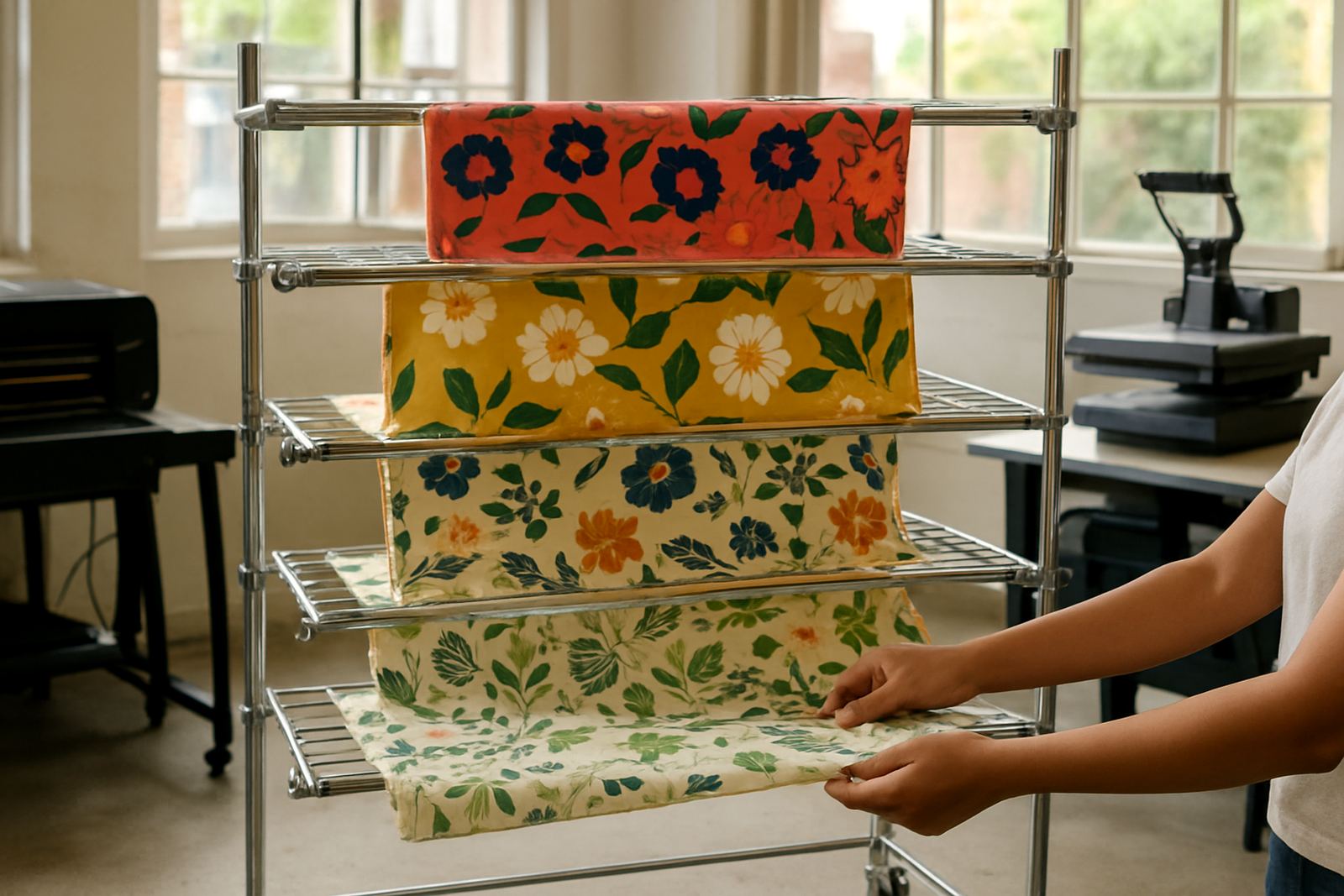
A fabric drying rack is a simple holding system for newly printed textiles that need space to dry before the next stage. In a garment room or small textile workshop, it helps keep prints off tables and away from dust, scuffs and accidental folding while the ink settles and the fabric is ready for curing, pressing or checking.
For South African shops working with direct-to-fabric printing, this matters when you are producing short runs, samples or repeat orders through the day. It keeps work moving in a tidy sequence and reduces the chance of marks caused by stacking items too soon.
- Holds fresh prints in an open, ventilated format
- Helps protect print surface detail before heat fixation
- Makes sorting by job, size or colour easier
- Useful for garments, panels, scarves, flags and similar fabric pieces
Sizes, Tray Counts and Layout Options
Drying racks are usually supplied in a floor-standing frame with multiple shelves or trays. The right size depends on how many prints you move through in a shift, the space available in Wadeville, Germiston or at a small unit in Pretoria, and whether you need to wheel the rack between printing, drying and packing areas.
Typical options suit compact studios as well as busier shops handling larger batches. A narrower rack takes up less floor space, while a taller rack gives more drying capacity without widening the footprint too much. For shops near the coast, open spacing also helps with humid conditions where fabric can take longer to settle.
- 6 tray compact rack for sample work and small daily output
- 10 tray medium rack for regular garment production
- 12 to 15 tray larger rack for higher throughput
- Tray spacing can be set wider for thicker fabric or bulky items
- Castor wheels can be added for mobile use between rooms
Where It Suits Best and How It Fits Your Workflow
This rack suits small garment businesses, schoolwear printers, promotional clothing shops and textile decorators who need a better flow between print and finish. In places like Johannesburg, Durban and Cape Town, where operators often work in tight spaces, a rack helps keep the floor clear and the production line more organised.
It is especially useful when prints need to rest before heat fixation, or when you are waiting for a quality check before packing. If your business works under load-shedding, a rack also gives you a practical holding point while heaters, presses or drying equipment are paused, so you can keep jobs separated until power is back. That helps prevent mix-ups and unnecessary handling.
- Small print rooms with limited bench space
- Sampling departments and start-up textile businesses
- Shops handling short runs, repeats and custom orders
- Workflows that need clear sorting before curing or packing
Installation Space, Power and Gas Requirements
A fabric drying rack itself does not need power or gas. It is a manual handling solution, so the main requirement is enough floor space and a level surface. For mobile racks, smooth floors and clear walkways are important so the unit can move without catching on thresholds or loose floor mats.
Allow enough room to load and offload trays comfortably. In a busy workshop, you should leave space for staff to move around the rack without brushing against fresh prints. If the rack sits near a heat press or drying area, keep it far enough away from direct heat and steam so the fabric does not crease, distort or dry unevenly.
- No electricity or gas required
- Best used on a level, clean floor
- Leave clear access on both sides where possible
- Keep away from direct heat sources and wet wash-down areas
Care, Cleaning and Ongoing Servicing
Drying racks need basic care, but that care matters. Wipe trays and frame members regularly so lint, overspray and dried ink do not build up. In coastal areas, keep an eye out for corrosion on fasteners, wheels and welded joints. In drier inland sites, dust and fibres can collect quickly on horizontal bars and tray corners.
Check wheels, locking mechanisms and shelf supports every few weeks, especially if the rack is moved often or loaded with heavier panels. If a tray starts sagging or a wheel runs stiff, sort it early rather than waiting for a small fault to affect your workflow. A quick monthly inspection is usually enough for most small businesses, though busier sites may need more frequent checks.
- Wipe after dusty or high-ink production days
- Inspect castors, brackets and tray supports monthly
- Replace worn wheels before they damage the floor
- Keep the rack away from wash water and chemical spill areas
What to Check Before You Order
Before placing an order, measure the floor space where the rack will stand and check the width of doors, gangways and lift access if the unit must move between rooms. Also think about the size of the largest print you handle, because the rack should carry your work flat without overhang. If your team dries long panels, you may need wider trays than a standard garment setup.
Ask for the tray count, overall height, footprint and weight capacity so you can match the rack to your output. If you work with soft or delicate fabrics, check whether the tray surface is smooth enough to avoid marking. It also helps to confirm whether the unit arrives assembled or in parts, and whether you need help with set-up at your site. A well chosen rack saves time every day and keeps prints moving cleanly through production.
- Available floor space and doorway width
- Largest print or fabric panel size
- Tray count, tray spacing and overall height
- Need for mobile castors or fixed feet
- Surface finish for delicate fabrics
- Whether installation or on-site guidance is needed
Key facts
| Product type | Fabric drying rack for freshly printed textiles |
|---|---|
| Typical sizes | 6, 10, 12 or 15 tray options |
| Footprint | From about 900 mm wide x 700 mm deep |
| Height | About 1 600 mm to 1 900 mm depending on tray count |
| Power or gas | None required |
| Materials | Powder-coated steel frame with smooth support trays and optional lockable castors |