Built for accurate repeats on fabric rolls
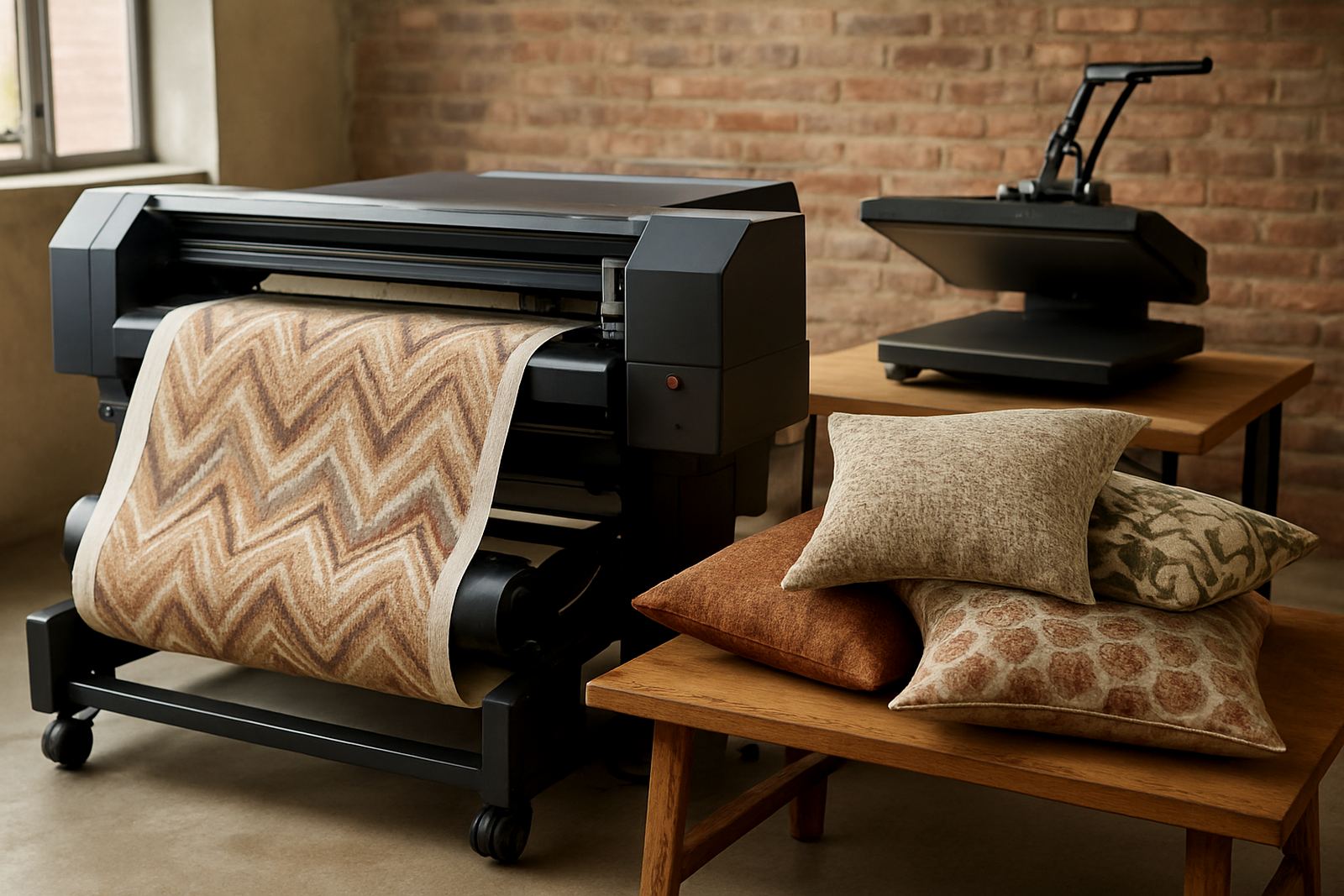
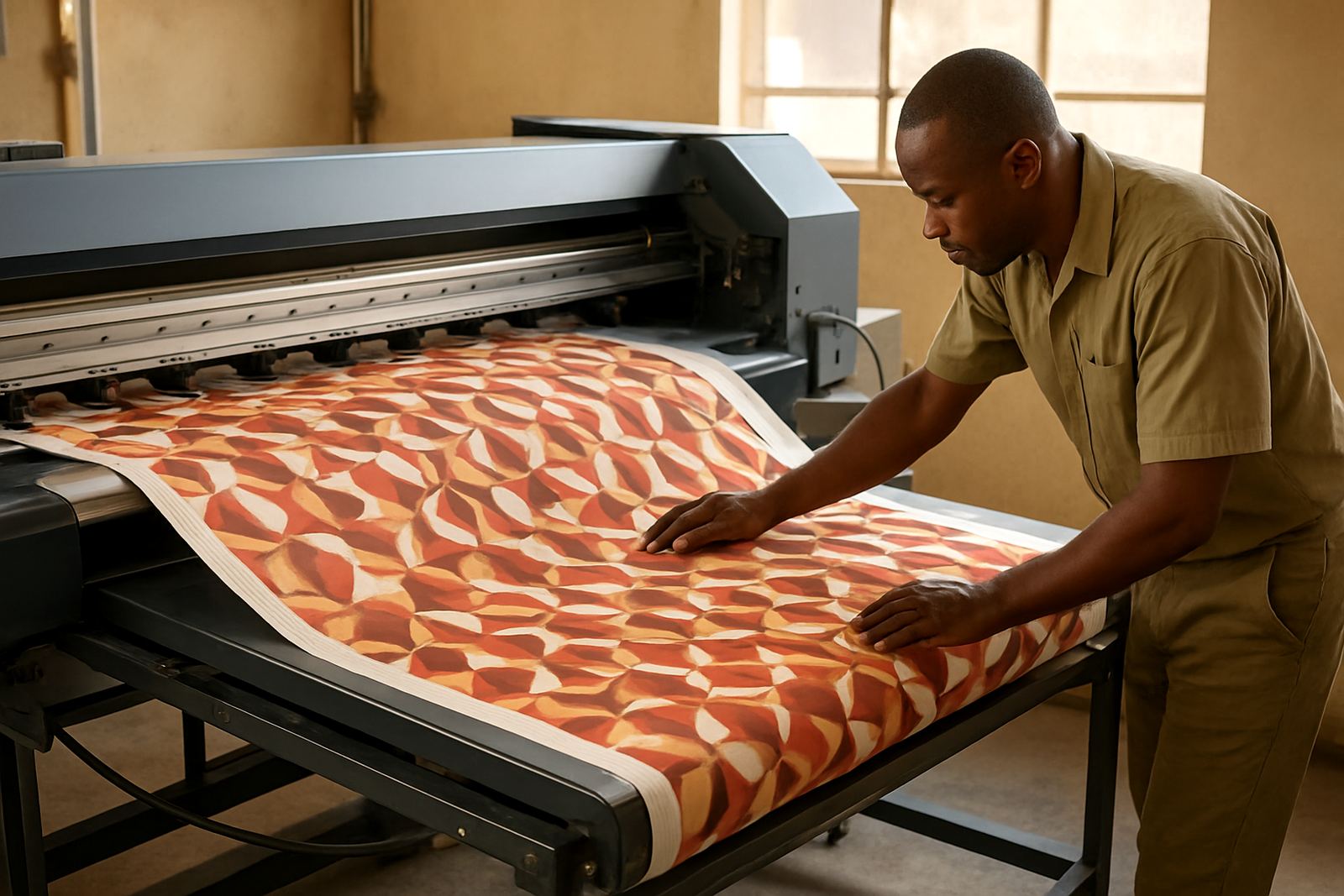
This printer is configured for repeat jobs where the design must join neatly across the width and length of the fabric. It is used for continuous artwork on cotton blends, polyester blends, poly twill, canvas, satin and other printable textile ranges, with repeat lengths set to match the design and the cloth width. For small production houses in Wadeville, Braamfontein or Montague Gardens, that means less time correcting pattern drift and more time keeping orders moving.
The key difference is consistency. Repeat printing needs steady feed, straight tracking and controlled ink delivery so the pattern lands in the same place on each pass. That matters when you are printing dress fabric, scatter cushion covers, table linen, branded scarves or a full décor range. It also helps where the fabric is being cut after printing, because the repeat remains true once the panels are stitched together.
Sizes, widths and repeat options to match your job
We supply repeat pattern printers in formats suited to smaller garment and textile workshops, from compact entry machines to wider production units. The right size depends on your monthly metre count, the widest fabric you handle and whether you print short runs or longer repeat orders. A 1.6 m class machine suits many start-up studios, while wider options are better for décor houses and businesses that want to print larger pattern layouts in one pass.
- Typical print widths: 1.3 m, 1.6 m and wider production formats
- Repeat length set by design file and fabric feed settings
- Suitable for roll-to-roll work on woven and coated textiles
- Options for single-head or higher-throughput configurations
- Ink set matched to fabric type and wash requirements
Operators should also check the fabric roll diameter, core size and whether the room allows enough space for infeed and take-up. In a busy workshop, a neat layout saves a lot of headaches. If the printer is too close to a wall or cutting table, handling becomes slower and you can damage the edge of the cloth.
Where this printer works best
This equipment suits fashion labels, curtain makers, home décor suppliers, schoolwear specialists, promotional textile shops and small cut-and-sew operations that need repeat motifs rather than one-off artwork. It works well for businesses printing in Johannesburg, Pretoria, Durban, Cape Town and Bloemfontein, where customers often want short production windows and reliable colour matching from one order to the next.
It is especially useful for recurring ranges: seasonal florals, geometric prints, branded backgrounds, border patterns, upholstery samples and themed collections. If you produce for retail shelves or client-approved swatches, repeat accuracy is important because a small shift can show up immediately once the fabric is cut or hemmed. For coastal sites in Durban and Cape Town, humidity control also matters because damp fabric can affect feeding and drying.
- Fashion repeats for dresses, shirts and accessories
- Décor repeats for cushions, drapes and table linen
- Branded textile ranges for shops, events and corporate use
- Sampling and approval work before full production runs
Installation, power and room requirements
Installation starts with site checking so the machine is placed on a level floor with enough space for loading rolls, maintenance access and finished output. Most repeat pattern printers run on standard single-phase or three-phase power depending on the model and throughput, so the workshop must be checked before delivery. In areas where load-shedding is common, a proper backup plan is important. Sudden power loss during a print run can waste fabric and disrupt registration.
You do not need gas for the printer itself, but some workshops pair it with heat pressing or curing equipment that needs separate planning. We look at extractor placement, cable runs and earthing, plus dust control if the room is near cutting or packing areas. In Germiston, Boksburg and Midrand, many clients also ask about warehouse loading access because the machine needs safe offloading and enough turning room to get into position.
- Level floor and clear access for delivery and servicing
- Dedicated power circuit and stable earthing
- Backup power planning for outages and voltage dips
- Ventilation and temperature control for better print stability
Print quality, inks and day to day care
Repeat work depends on clean nozzles, steady ink flow and the right colour profile for the cloth you are using. Inks must be matched to the substrate and the intended wash or rub performance, especially for garments and décor items that will be handled often. A regular print test at the start of the day helps catch banding, drift or blocked nozzles before a full run starts.
Basic care is simple but must be done properly. Keep the machine clean, cap the heads correctly, run nozzle checks and do scheduled printhead cleaning before faults build up. If the printer sits unused for long periods, ink can settle or dry in the system. A small amount of routine work now saves a bigger repair later, which is important when orders are due and the cutter is waiting on printed cloth. Our team can guide operators on correct flushing, storage and restart procedures.
For higher volume users, preventive servicing helps keep production stable. That includes checking pumps, dampers, capping stations, feed rollers and alignment, then confirming colour consistency across the full width of the fabric. If the room is very dry, very hot or close to sea air, the maintenance interval may need adjusting because textile equipment reacts to local conditions.
What to check before you place an order
Before ordering a repeat pattern printer, work through the actual jobs you want to print. A machine that suits fashion yardage may not be the best fit for décor rolls or larger branded pieces. We help clients in Johannesburg, Pretoria, Durban, Cape Town and Bloemfontein compare the real production needs against the machine specification, so they are not left with a unit that is too small or too slow.
- Fabric widths and the largest repeat size you use
- Monthly metre output and target turnaround times
- Type of cloth, wash needs and colour finish required
- Workshop power supply and backup arrangements
- Floor space for infeed, take-up and operator movement
- Training needs for setup, profiling and daily cleaning
It is also worth checking who will install the unit, train the operators and support you after delivery. A good printer is only part of the job. If your team does not know how to set repeats, save profiles or clear a simple fault, production can stall quickly. We work with small businesses that need practical guidance, not complicated talk, and we can also support relocation, servicing and spare parts supply when the workshop grows.
Key facts
| Print width | 1.3 m, 1.6 m and wider formats depending on model |
|---|---|
| Repeat control | Variable repeat length set in the artwork and feed system |
| Media type | Roll-to-roll textile printing on suitable woven and coated fabrics |
| Ink system | Textile-compatible inks matched to fabric and wash needs |
| Power | Single-phase or three-phase options, model dependent |
| Use case | Fashion, décor and branded textile repeat production |