
What a Flatbed Cutting Table Does in a Print Room
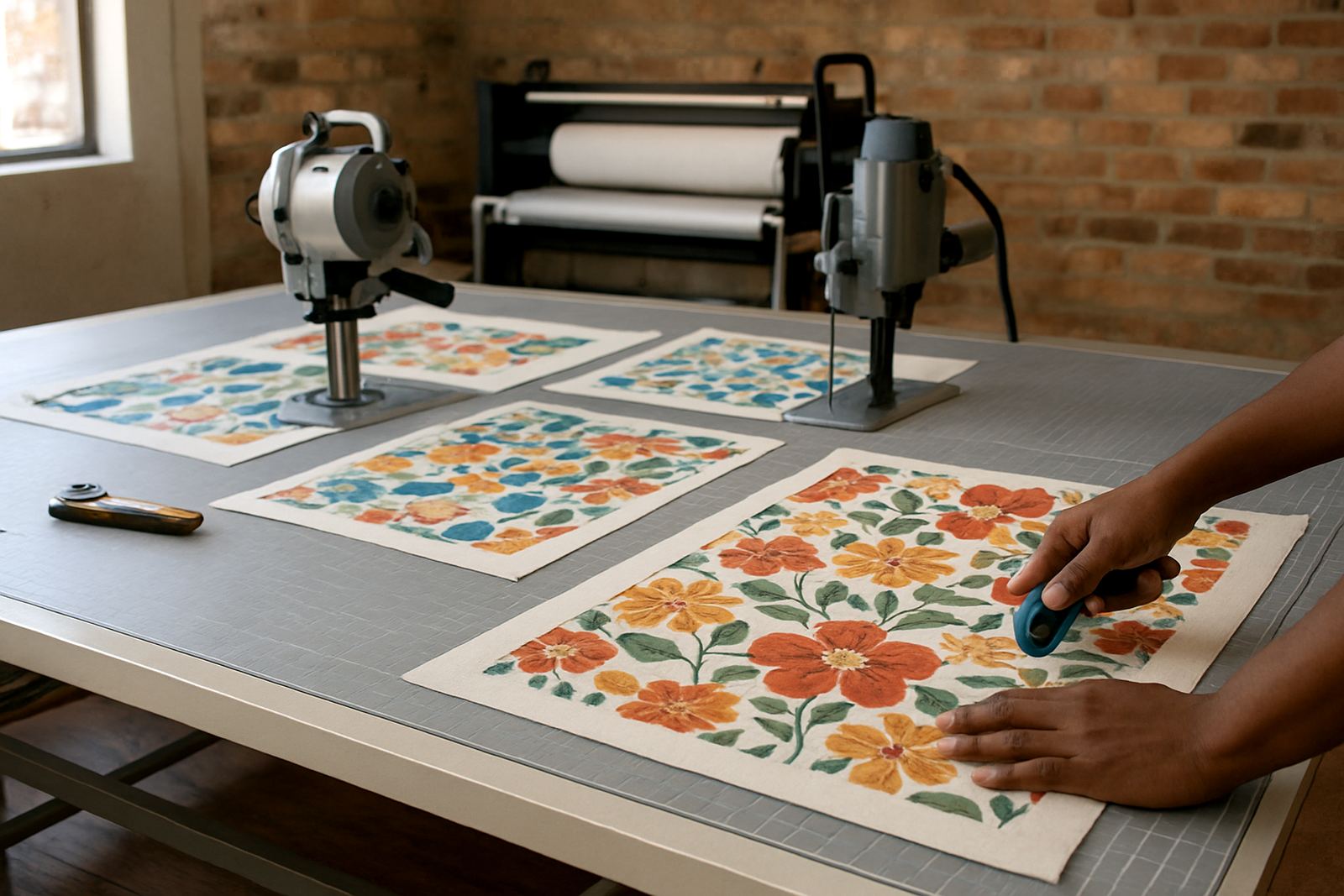
A flatbed cutting table is a firm, level work surface used to trim printed panels, align pieces and prepare material for the next stage of production. In a small garment business, it sits between printing and sewing, which means your team can check registration, cut to size and keep finished work looking tidy before it goes into packing or dispatch.
It is especially useful when you are handling sublimated panels, stretch fabrics, cotton blends or other media that need careful trimming. A proper table reduces drag on the cloth, supports the full length of the panel and gives operators room to work without folding the material over chairs or counters. That matters in busy Gauteng workrooms where time is tight and floor space is limited.
The table itself is not a powered machine. It is a work station with a flat top, strong legs and enough width for one or two operators to work side by side. Some workshops use it only for trimming, while others also use it for sorting, marking and final inspection.
Sizes and Layout Options for Small South African Workshops
Flatbed cutting tables are usually selected by the size of the panels you print and the room available in the workshop. A small setup in Wadeville or Boksburg may only need a compact table, while a growing Durban or Cape Town production room may want a longer bed for repeated jobs. The right size saves walking time and helps prevent creases on fresh prints.
Common options include single bay tables for compact spaces, longer continuous tables for production lines, and wider tables when you handle broad yardage or oversized fashion pieces. Many buyers prefer a height that lets staff work while standing for long periods without strain. If the team spends hours trimming daily, that detail makes a real difference.
- Length options commonly start at about 2.4 m and can run up to 6 m or more
- Widths often range from 1.2 m to 1.8 m depending on fabric size
- Some tables include under-shelf storage for scissors, rulers and offcuts
- Levelling feet help on uneven factory floors
- Castors can be useful if the table must move for cleaning or layout changes
Where It Suits Best in Garment and Textile Production
This table suits small print shops, boutique clothing labels, textile sample rooms and local manufacturers that cut limited runs rather than huge industrial batches. It works well after direct-to-fabric printing, heat pressing or drying, when the material needs a clean final trim before sewing. For businesses in Johannesburg, Pretoria and Germiston, it also helps keep production organised when several jobs are moving at once.
It is a practical fit for operations that do not have a dedicated cutting room but still need tidy results. You can place it near the printer, next to the heat press area or in a separate finishing corner. In coastal areas, where humidity can affect how fabric behaves, having a stable surface and enough space to spread the print flat helps reduce handling issues.
If you do school wear, promotional textiles, branded apparel or home décor items, the table helps with repeatable cutting and checking. Teams that work with municipal or contract orders often use it to keep measurements consistent from one batch to the next.
Installation, Power Needs and Workshop Setup
Most flatbed cutting tables need little more than a level floor, adequate lighting and space for operators to move around the sides. There is normally no electrical load and no gas requirement. That makes it easier to place in workshops where power supply is already under pressure from printers, heat presses and extraction equipment. During load-shedding, the table still remains useful because the work can continue by hand when the printed stock is ready.
Before installation, measure door widths, passage points and ceiling height if the table is being assembled indoors. In some Germiston and Midrand units, access is the real challenge, not the footprint of the table itself. Allow enough clearance for rolls, panel stacks and waste bins so that staff are not cramped while cutting.
- Needs a firm, level floor to prevent rocking or uneven cuts
- No dedicated power supply needed for standard manual tables
- Good overhead lighting helps with line accuracy and colour checking
- Non-slip floor space around the table improves safety
- If castors are fitted, wheel locks should be engaged during use
Care, Cleaning and Servicing in Daily Production
Care is simple, but it should be consistent. Keep the surface free from ink marks, adhesive residue, loose thread and offcuts, because any debris can catch the fabric or affect a straight cut. Wipe the top after each shift and do a proper clean before the next production run. If you are using blades or cutting tools on the table, check the surface regularly for scoring or damage.
When the table has adjustable parts, legs or storage fittings, inspect them during routine servicing so that bolts stay tight and the frame remains stable. A table that wobbles can slow the team down and make the cut line less accurate. In humid coastal conditions, it is also wise to check for rust on steel parts and treat it early. That small bit of care saves money later.
For busy shops, a preventive maintenance schedule is worth having, even if the table itself is simple. It keeps the workspace tidy and helps operators treat the table as part of the production system rather than just a flat surface.
What to Check Before You Order
Before placing an order, check the size of your printed panels, the number of operators who will use the table and the available floor space. Think about whether you need a fixed table or one that can move. It is also worth checking how close the table will sit to the printer, heat press and sewing area, because short travel paths usually mean faster work and less handling damage.
Ask about the frame material, top finish and load capacity. If your team cuts heavy fabrics or stacks several panels at once, the table should be built to stay flat and steady under pressure. For workshops in Johannesburg, Durban, Cape Town and Bloemfontein, the practical questions are often the same: will it fit, will it last and will it suit the way the team works every day.
- Confirm the table length and width against your largest print size
- Check whether assembly is needed on site
- Ask about height, storage options and wheel fittings
- Confirm the surface finish for easy cleaning
- Make sure the frame suits your floor and workflow
If you are expanding from short runs into regular production, choosing the right cutting table now can save a lot of rework later. A well set up finishing area keeps panels neat, speeds up packing and helps your output look more professional from the first cut to the last fold.
Key facts
| Table type | Manual flatbed finishing and cutting table |
|---|---|
| Typical lengths | 2.4 m to 6 m plus, depending on layout |
| Typical widths | 1.2 m to 1.8 m |
| Frame | Powder-coated steel or similar workshop frame |
| Top surface | Flat, smooth, easy-clean work surface |
| Power / gas | No power or gas required for standard manual use |