What our relocation support covers
When a textile printer or heat press moves sites, the risks are usually ink contamination, head damage, power issues, and poor alignment after reinstalling. Our relocation support is set up to protect production equipment through every stage, whether you are shifting to a bigger unit in Germiston, moving into a retail workshop in Midrand, or relocating a print room to a new industrial bay near the coast where humidity is higher.
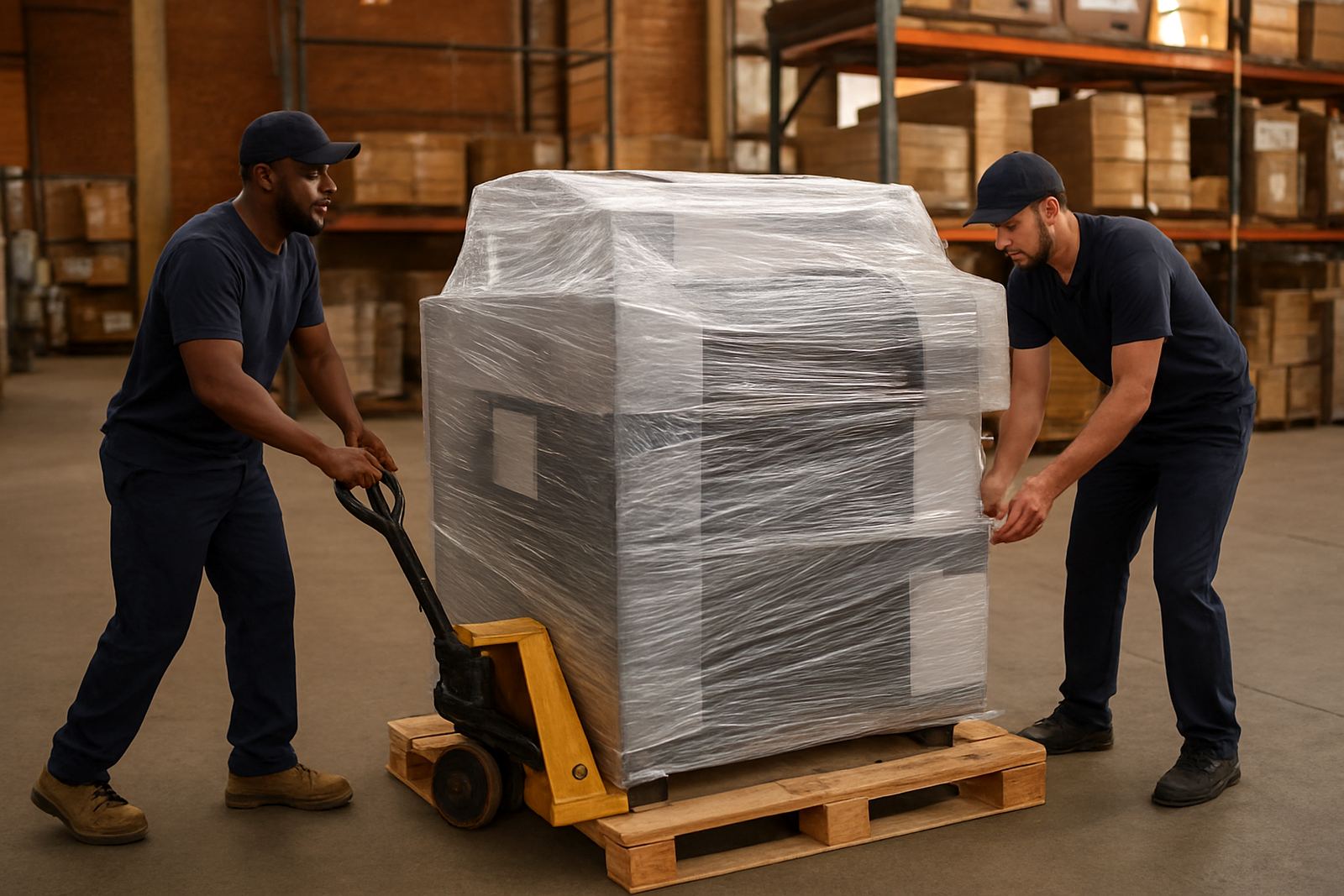
We work with direct-to-fabric inkjet printers, heat presses, ink systems, media feed units and related production equipment. The service covers safe shutdown, drain down where required, packing advice, lifting guidance, transport prep, reinstalling at the new premises, testing and operator handover. If your move is happening during load-shedding periods, we also plan around power availability so the restart is controlled and you do not end up with half-completed setup work.
- Safe decommissioning of printers and heat presses
- Ink system preparation and transport protection
- Machine positioning and levelling at the new site
- Electrical and airflow checks before recommissioning
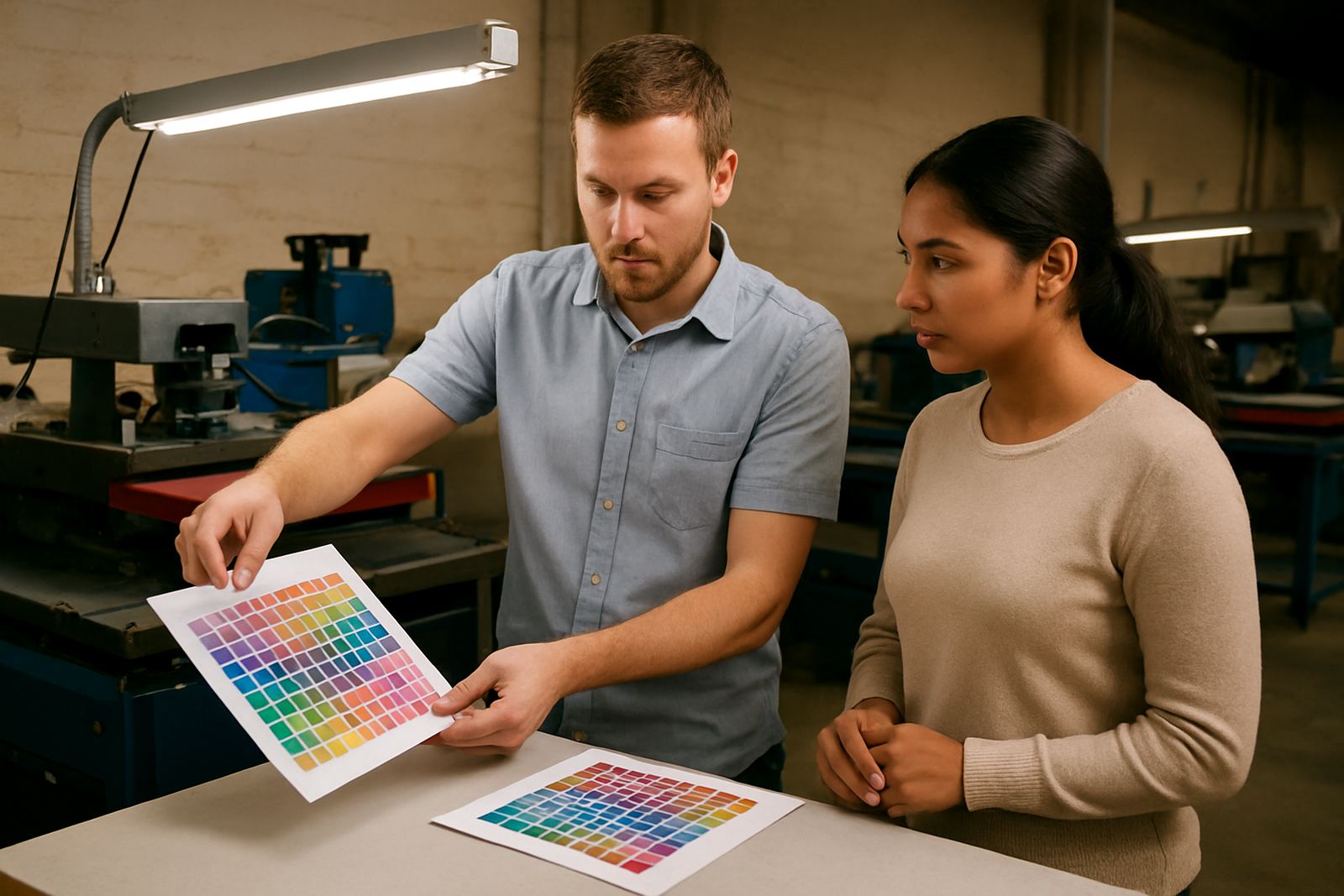
- Test printing and basic colour verification
A practical relocation process from start to finish
Every site move starts with a short assessment so we can see what equipment is going, what the new premises can support, and whether any access issues need planning. Narrow stairwells, loading bay restrictions, poor floor surfaces and shared industrial yards can all affect how a move is handled. We also check if your new premises has the correct power supply, enough workspace and suitable ventilation for ink and heat press use.
The process is usually broken into clear steps so your team knows what happens and when. We keep the workflow simple and practical, because most small businesses cannot afford long downtime or guesswork during a move. If needed, we can coordinate with your movers or facilities person and then complete the technical side ourselves.
- Site check and move planning
- Machine shutdown, cleaning and secure prep
- Transport and reinstallation at the new address
- Calibration, ink flow checks and print testing
- Operator orientation and production sign-off
For printers that have been in service for a while, we may recommend a preventive service before the move. That helps reduce the chance of a blocked line, weak nozzles or an air lock showing up after the machine has travelled. A relocation is a good time to sort out small issues before they become expensive ones.
Equipment checks before the move
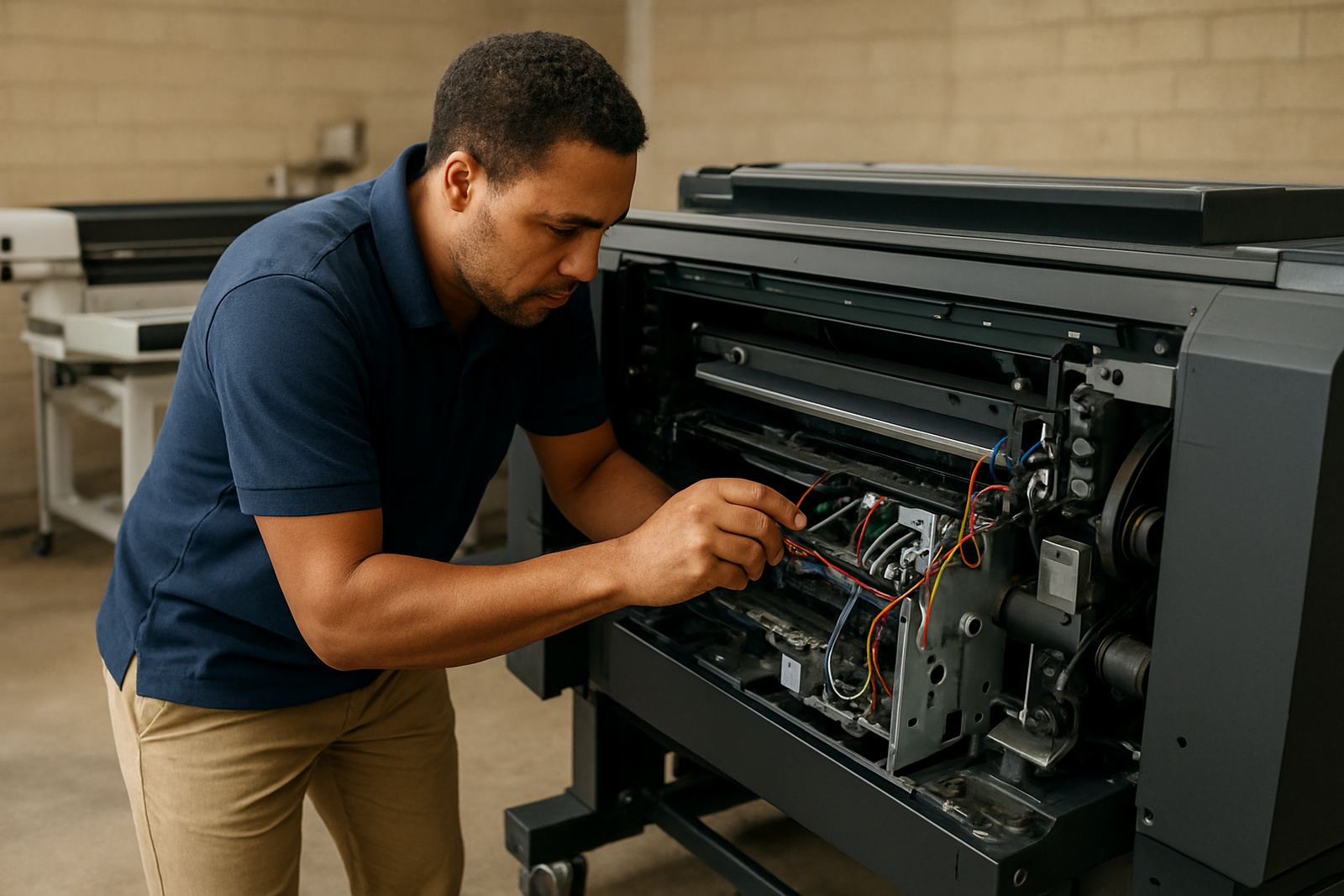
Before any relocation, we inspect the machine condition and record the settings that matter for restart. This includes carriage movement, media path condition, ink supply status, printhead health and the condition of consumables that may need replacing. On some systems we also advise on draining or securing ink lines so the equipment can travel safely without spills or pressure changes.
Heat presses are checked for plate condition, wiring, pressure adjustment and temperature controls. If the press is being moved into a coastal area like Durban or Port Elizabeth, we may also recommend storage steps that reduce corrosion risk while the unit is in transit or unpacked. Small details matter here, because moisture and rough handling can cause avoidable faults.
- Visual inspection of printer and press condition
- Review of ink age, line condition and consumables
- Verification of power needs and plug arrangements
- Protection advice for cartons, foam and lifting points
Recommissioning and testing at the new premises
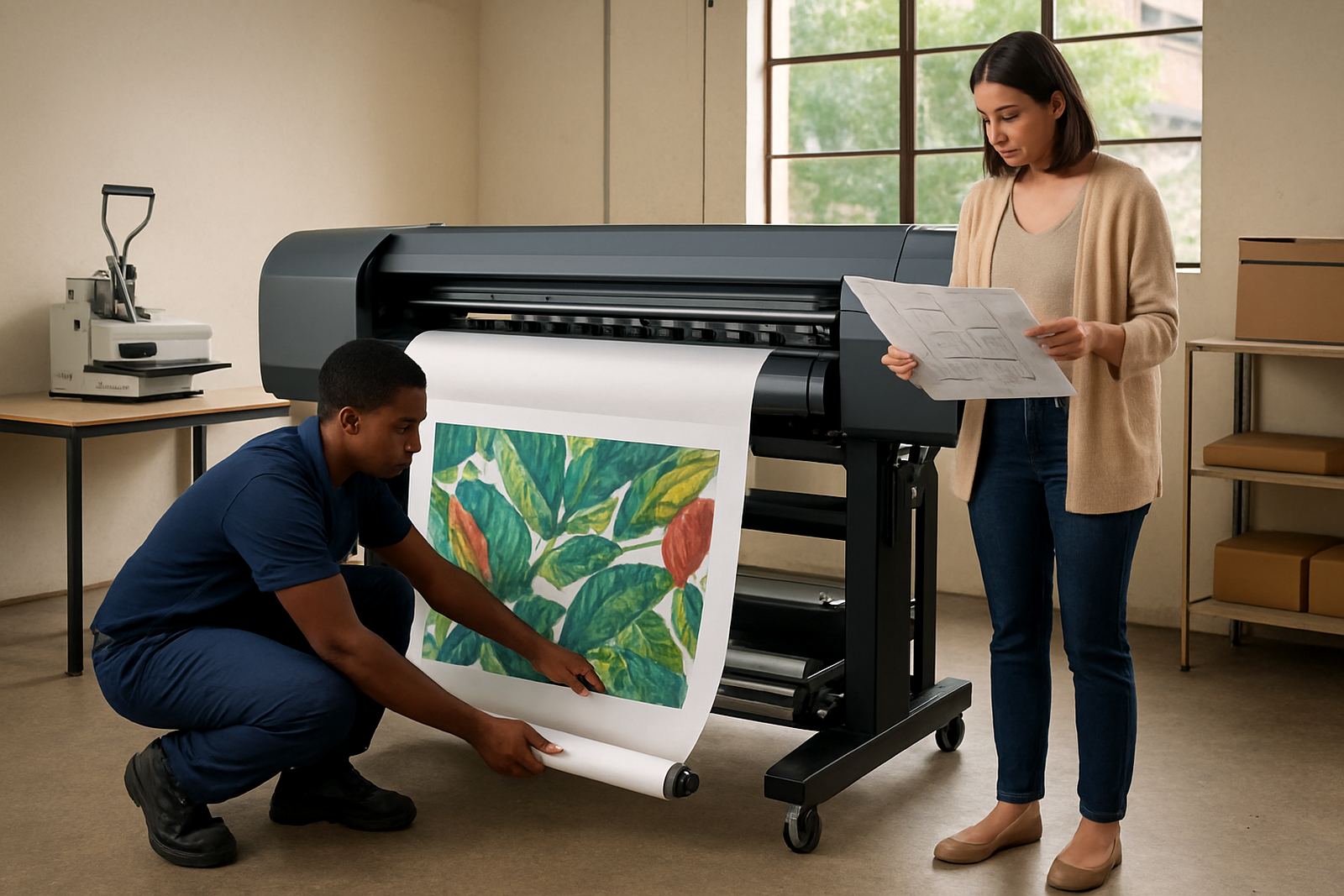
Once the equipment reaches the new site, we focus on placing it correctly, levelling it and checking that the working environment is suitable. The machine is then powered up in stages, with attention to cables, ink flow, head position and control settings. If the installation is rushed, the first signs are usually banding, misfeeds or weak colour output, so we take time to get the base setup right.
We complete sample runs and check that the printer is feeding evenly and that the heat press is reaching stable temperature. If colour consistency is important for repeat orders, we can assist with profiling and test output adjustment once the equipment is back in production. In many cases, the full recommissioning process can be completed within the same day, but more complex moves may need a follow-up visit if there are site power or environmental issues.
The aim is straightforward: get your equipment producing properly at the new address, not just switched on and left to figure itself out.
Turnaround times and pricing approach
Turnaround depends on the machine size, how far it is moving, whether the old site needs full decommissioning, and how ready the new site is. A local move within Germiston or Johannesburg can be quicker than a cross-country move to Bloemfontein or Cape Town, especially if access and power checks are already sorted. If a move is tied to a workshop changeover, we can often work around your production schedule to reduce downtime.
Our pricing is quoted according to scope, not guesswork. That means the cost depends on the number of machines, the complexity of ink systems, the need for packing support, the distance travelled and whether recommissioning includes testing or training. If a machine needs extra fault-finding after relocation, that is quoted clearly before work continues. This keeps the move predictable and avoids surprise costs later.
- Local relocations are usually shorter and more cost effective
- Long-distance moves need extra planning and transport protection
- Multiple machines are quoted as a package where possible
- Any spare parts or corrective work is listed separately
Maintenance after relocation to protect production
After a move, equipment should not be left unchecked for months. We usually suggest an early follow-up inspection after the first few production runs, especially if the printer has travelled far or sat idle during premises changes. This helps pick up loose fittings, changed alignment, early printhead issues and ink system problems before they disrupt orders.
For busy small businesses, a sensible maintenance interval after relocation is a quick check within the first week of production, then another service after the first one to three months depending on volume. If the machine is used daily, a regular preventive servicing plan is worth considering. It reduces unplanned downtime and helps the printer cope better with South African conditions like dust, power interruptions and humidity swings. A machine that has just been moved needs a bit of extra attention, no getting around it.
We can also advise on cleaning routines, safe start-up procedures after load-shedding, and what to watch for if your team notices colour drift or paper feed issues after the move.
Key facts
| Relocation scope | Direct-to-fabric inkjet printers, heat presses, ink systems and related textile print equipment |
|---|---|
| Typical service area | Germiston, Johannesburg, Pretoria, Durban, Cape Town, Bloemfontein and surrounding industrial areas |
| Move types supported | Local site changes, regional transfers and cross-country relocations |
| Recommissioning checks | Levelling, power check, ink flow, feed alignment, test prints and heat calibration |
| Recommended follow-up | Inspection after first production runs, then 1 to 3 months depending on use |
| Pricing method | Quoted to scope, distance, equipment count and level of recommissioning required |