What Our Machine Installation Covers
Machine installation is more than unloading a crate and switching on a unit. We position the equipment, check the floor area, confirm access for ink, media and waste handling, then set up the printer or press so it runs to spec in your workshop, retail space or back-room production area.
For small garment and textile businesses in Johannesburg, Pretoria, Durban, Cape Town and Bloemfontein, this matters because space is tight, power can be unstable during load-shedding, and coastal humidity can affect media handling. We work with that reality, not against it.
- Positioning and levelling of printers and heat presses
- Connection checks for power, data and peripheral equipment
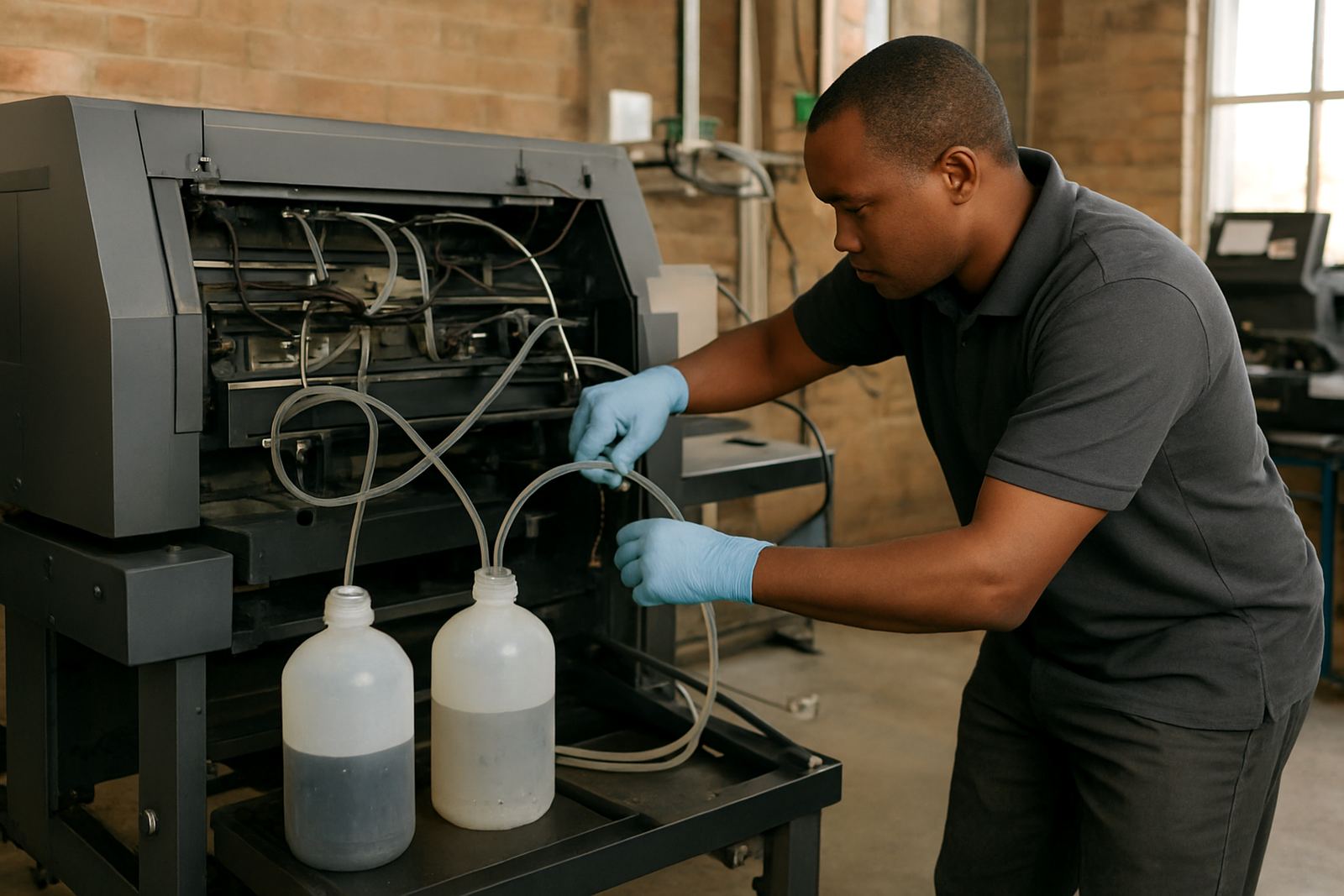
- Initial ink loading, flushing and nozzle checks where required
- Media feed alignment and basic production test runs
- Workspace planning for airflow, access and operator movement
How We Set Up Your Production Area
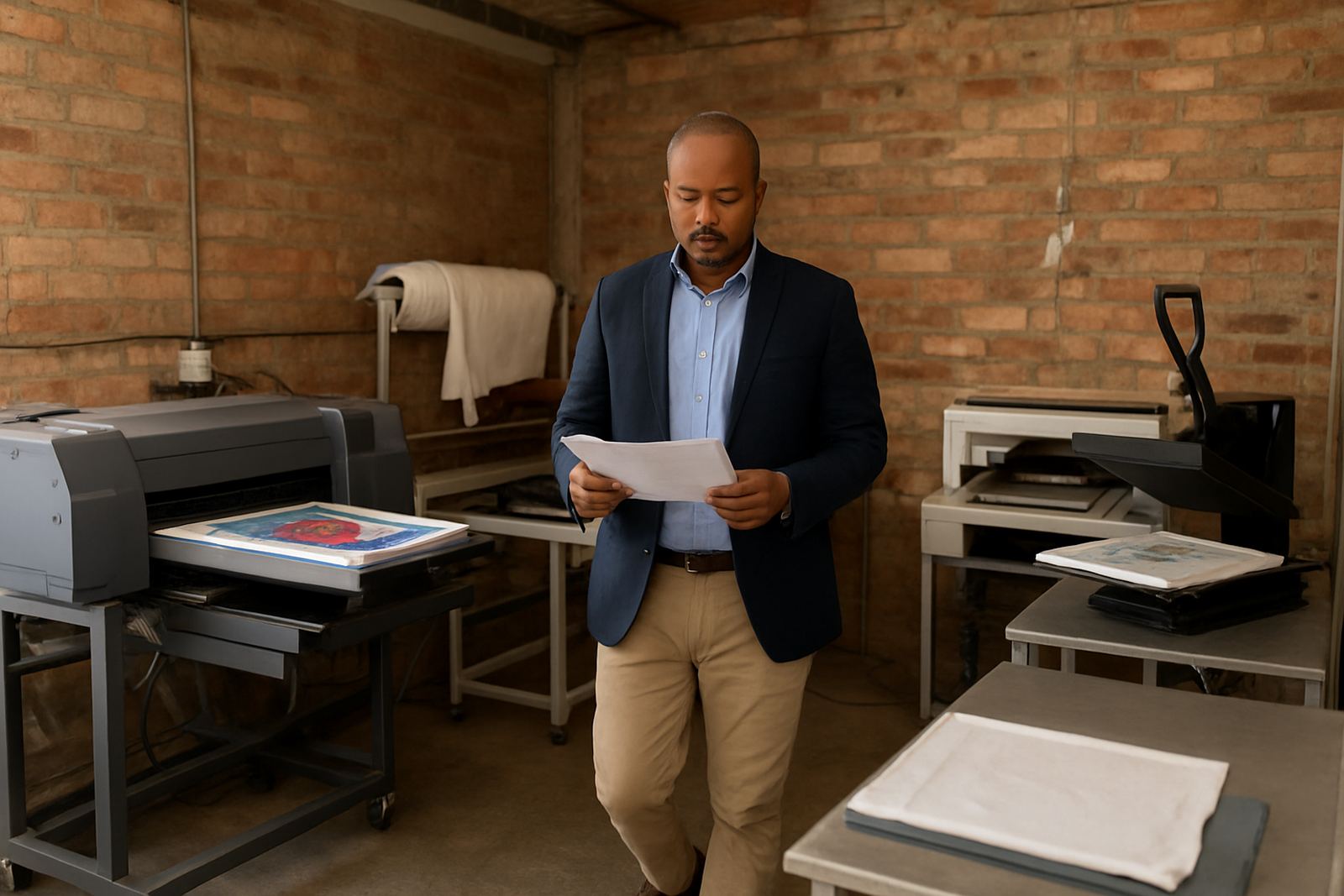
Every site starts with a practical assessment. We look at the room size, doorway access, floor strength, plug points, ventilation and whether your team will run one machine or a small production line. In Germiston and Boksburg, many clients use shared industrial units, so we also check how the equipment will move through the space without causing damage.
Our installation process is suited to direct-to-fabric inkjet printers, heat presses and supporting items such as curing or drying gear, depending on your setup. If you are working in a coastal area like Durban or Cape Town, we take extra care with humidity-sensitive consumables and advise on storage so inks and fabrics stay consistent.
- Site walk-through and setup plan
- Unpacking, inspection and placement of equipment
- Electrical and operating checks before first use
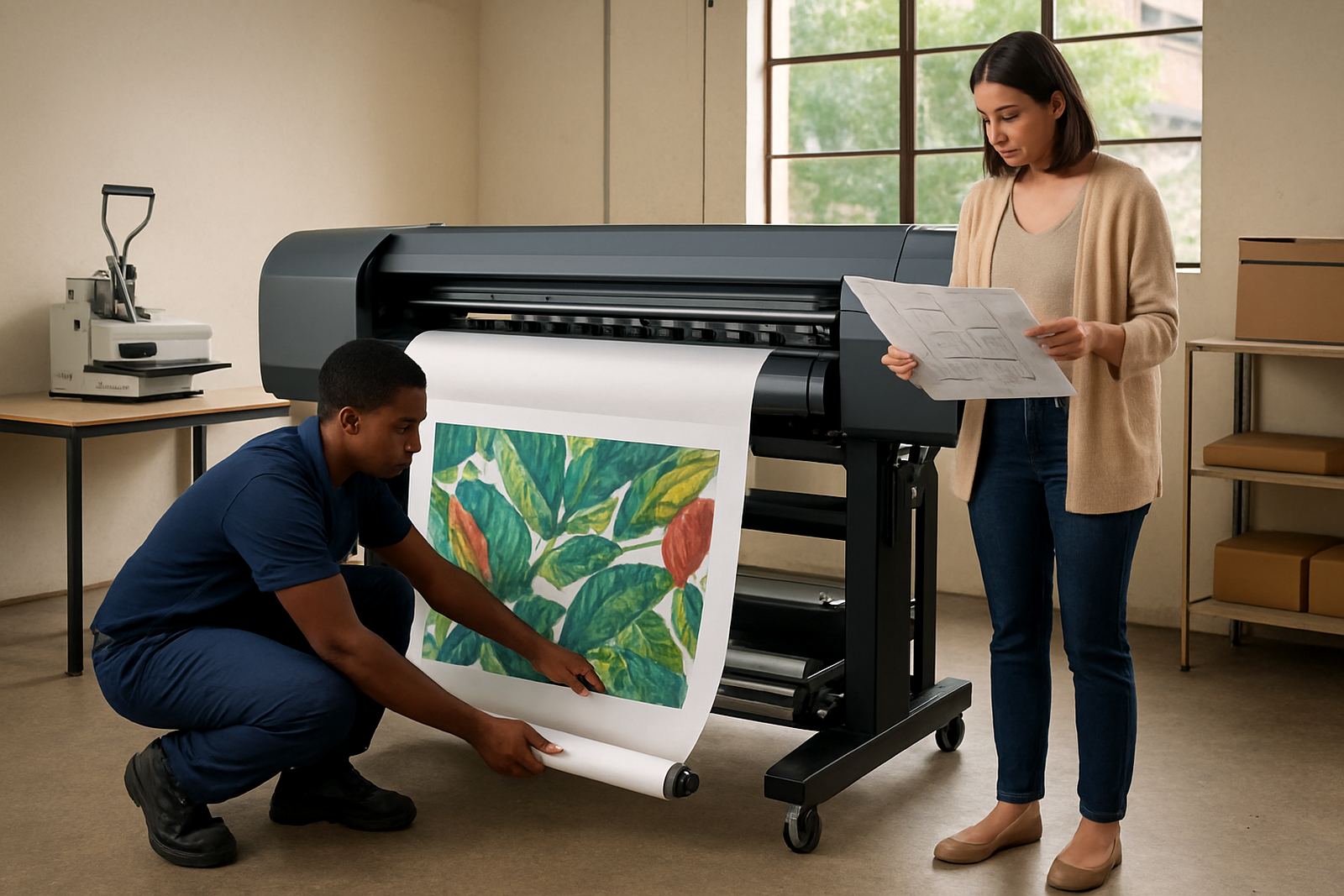
- Alignment, calibration and sample output testing
- Operator briefing on safe daily use and shutdown
Installation Process and Timeframes
Most standard installations are completed in a single day once the site is ready and the machine is on hand. Larger setups, or sites that need extra electrical work, racking or layout changes, can take longer. We confirm the schedule before the visit so you know what to expect and can plan staff time properly.
We start with the machine placement and connection checks, then move into calibration and test printing. After that, we run through the controls with your operator or supervisor. If you have more than one machine, we sequence the work so each unit is tested before we leave, not after the fact.
- Standard printer or press installation: same day where site conditions allow
- Multiple units or production line setup: usually 1 to 2 days
- Training and handover: built into the visit where possible
- Remote follow-up: available after the first production run
What You Need Ready Before We Arrive
A smooth installation depends on basic site preparation. We will tell you what to have ready, but in most cases you should ensure the room is clean, access is clear and the power supply is suitable for the equipment. If your premises are in an area with frequent outages, it helps to have backup power in place before the machine is commissioned.
We also advise having your fabric, ink and any heat transfer media on site so we can test with the actual materials you plan to use. That gives a better result than testing on something else and hoping it behaves the same later.
- Clear access to the machine location
- Stable power supply and enough sockets for the setup
- Clean working area with space for loading and testing
- Consumables on site for live testing
- Operator available for handover and questions
Pricing Approach and Site-Ready Costs
We price installation according to the machine type, number of units, travel distance and whether the site needs extra setup work. A single printer installation in Germiston will usually cost less than a multi-machine setup in another province, especially where overnight travel or extended commissioning is needed.
We do not quote blindly because every workshop is different. Once we know your equipment list and site details, we give a clear installation estimate that covers the work agreed upfront. If there are extra requirements such as relocation support, spare parts fitting or corrective adjustments during commissioning, these are handled separately so there are no surprises.
For small businesses, we try to keep the pricing practical. The aim is to get the machine running properly the first time, so you can start producing without wasting media, ink or labour on avoidable errors.
Maintenance Intervals After Installation
Once the machine is installed, the real value comes from keeping it in good condition. We normally recommend a service schedule based on daily output, ink type, local dust levels and how often the machine stands idle. In busy Gauteng workshops, monthly checks are often sensible. In coastal areas, where humidity can affect components and materials, more regular inspection may be needed.
Preventive servicing helps reduce clogged heads, blocked lines and poor colour consistency. We can set up a maintenance plan that suits your output levels, whether you print a few metres a day or run near-continuous production for fashion, signage or textile sampling.
- Daily cleaning and shutdown routine
- Weekly nozzle and alignment checks
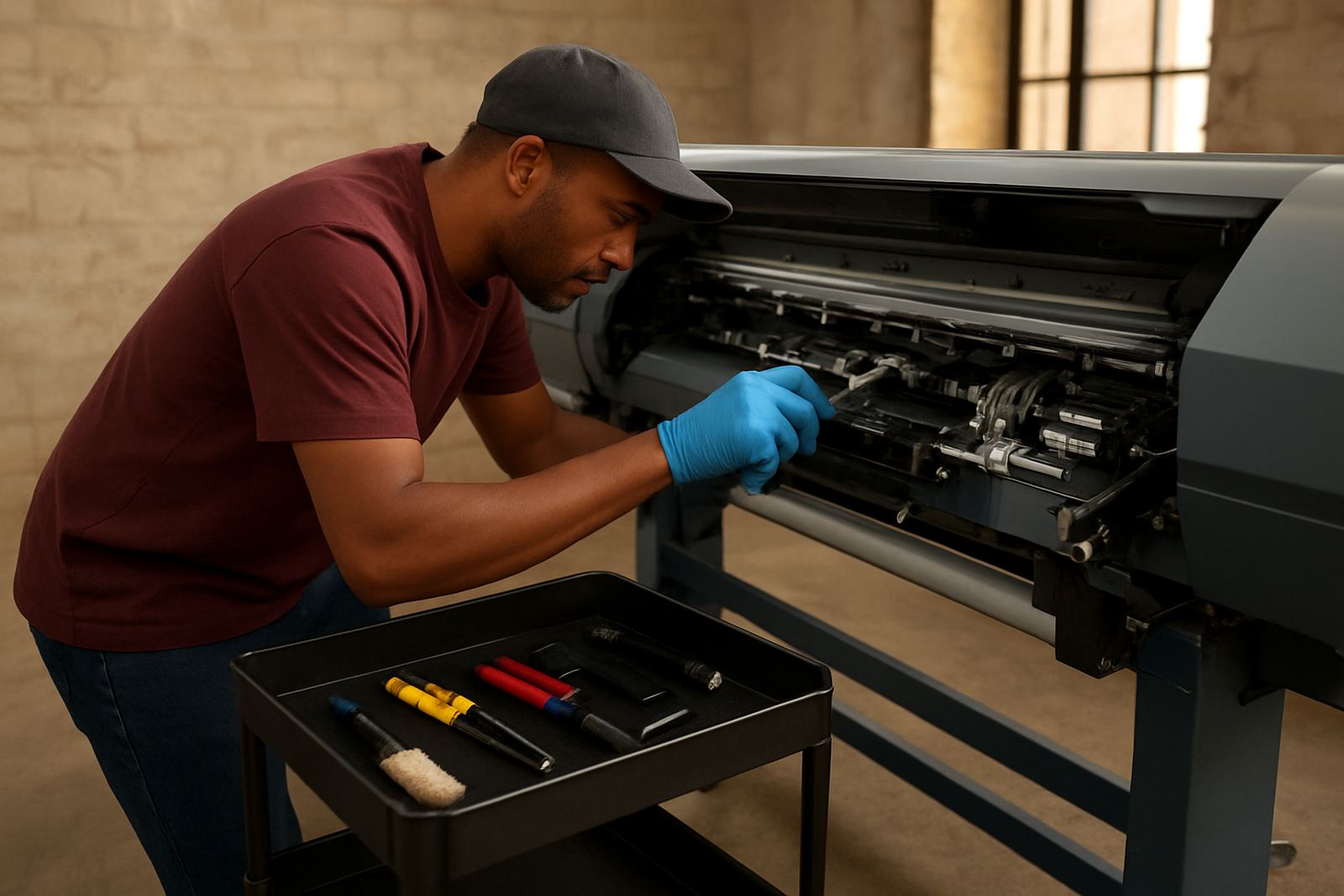
- Monthly inspection for ink flow, belts and moving parts
- Quarterly preventive servicing for higher-use sites
- Immediate review after a power interruption or long idle period
Key facts
| Typical installation time | 1 day for a standard single-machine setup, once the site is prepared |
|---|---|
| Equipment covered | Direct-to-fabric inkjet printers, heat presses and supporting equipment |
| Areas served | Germiston, Johannesburg, Pretoria, Durban, Cape Town and Bloemfontein |
| Site requirements | Clear access, suitable power supply, clean floor space and operator availability |
| Commissioning checks | Levelling, alignment, calibration, test prints and safe shutdown review |
| Follow-up support | Remote troubleshooting, maintenance planning and first-run guidance |