
What a production audit covers on your floor
Our production audits are practical reviews for small garment and textile businesses working with direct-to-fabric inkjet printers and heat presses. We look at the full job path, from artwork handover and colour setup to printing, drying, curing, pressing and packing. The aim is to reduce waste, keep colour more consistent and make day-to-day work easier for your team.
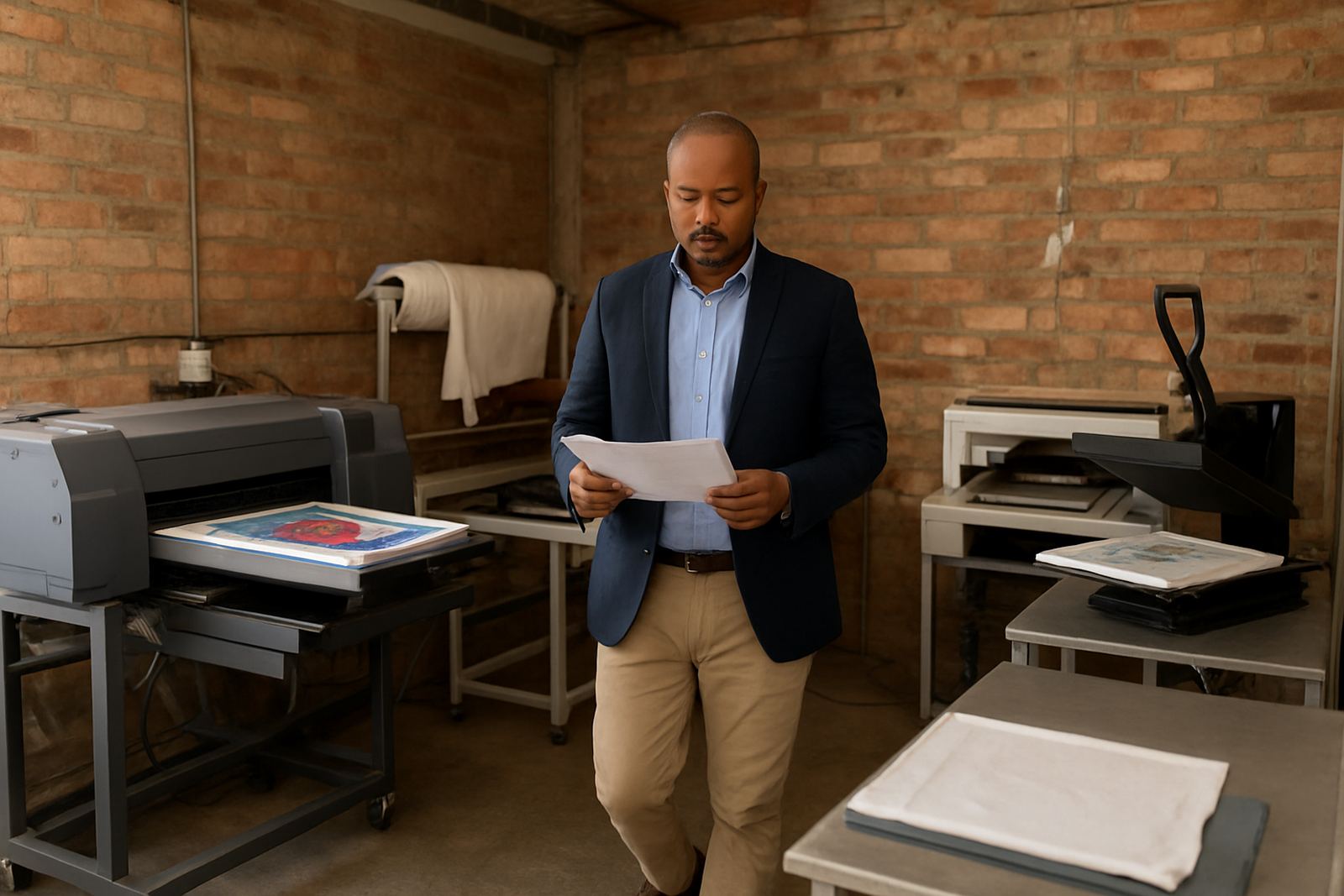
We also check the physical side of the workspace. That includes fabric storage, dust control, humidity, power backup, operator movement and whether the machine layout suits the size of your shop. In Wadeville, Germiston and across Johannesburg, many smaller production rooms are tight on space and run with limited load-shedding backup, so layout and workflow matter as much as machine settings.
- Job flow review from order intake to final pack-out
- Printer, heat press and finishing area inspection
- Colour consistency checks on common fabric types
- Operator handling, safety and housekeeping review
What we check during the review
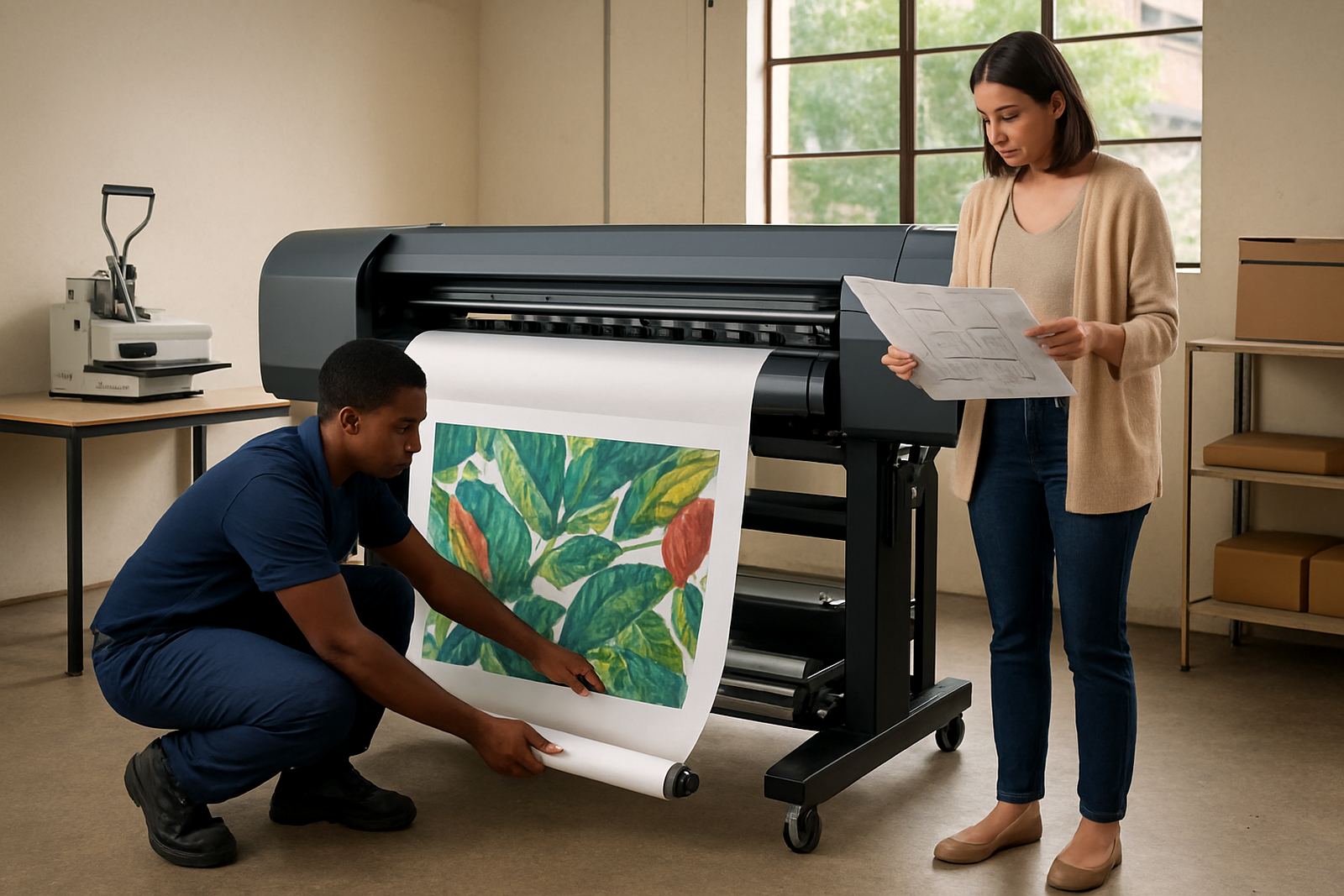
We use your actual production conditions, not a lab setup. That means we assess how the machine performs on the fabrics you print every week, the inks you use, and the way your operators handle rolls, panels and cut pieces. We look for repeated faults such as banding, head strikes, poor curing, colour shift and marks caused by dirty transport paths or poor fabric feeding.
The audit includes practical measurements and observations. For direct-to-fabric inkjet systems, we check head alignment, platen condition, ink delivery stability, media feed tension and drying time between passes. For heat presses, we inspect pressure, temperature accuracy, timer behaviour and whether the press is suited to the size of your garments or textile panels.
- Fabric feed and tension control
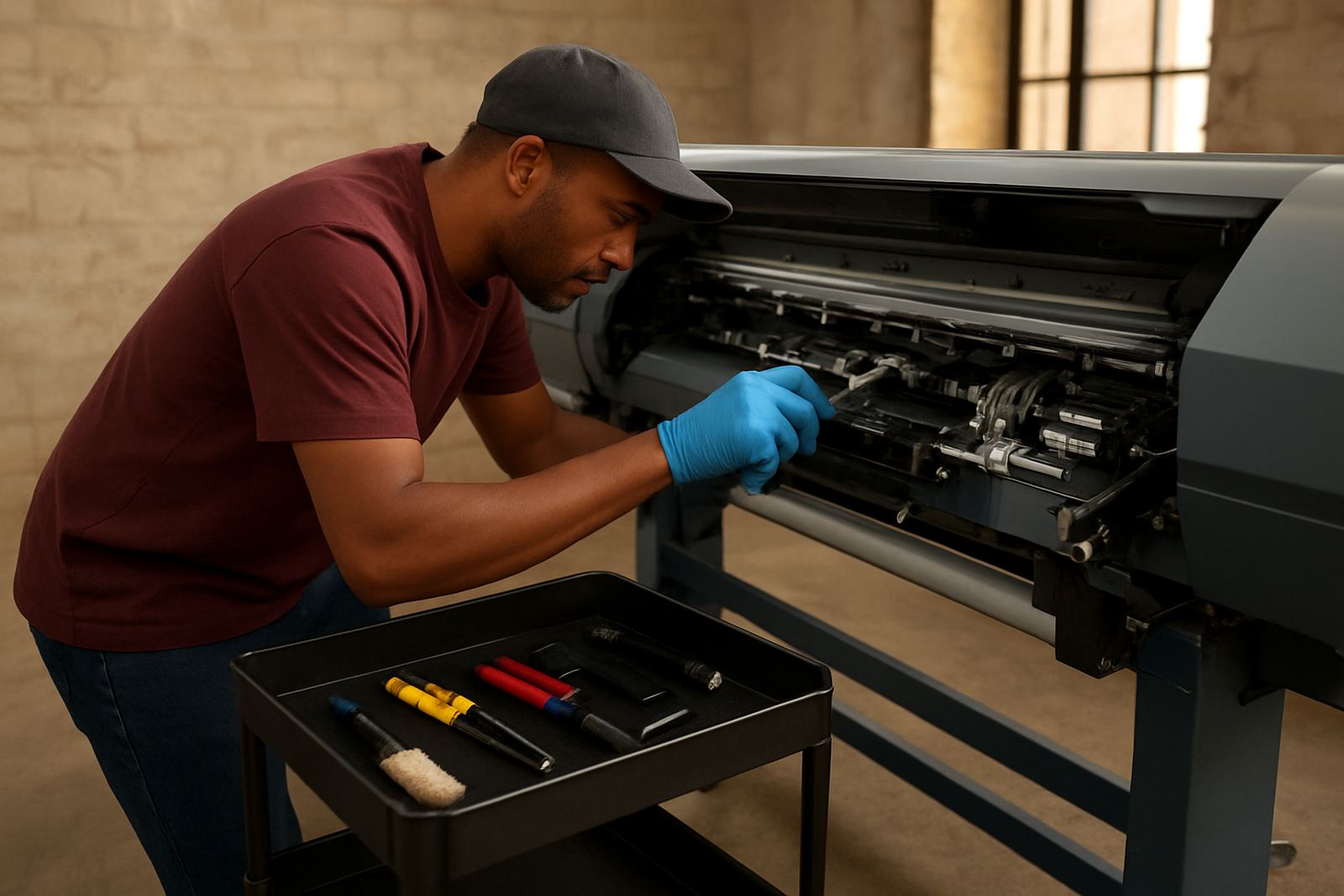
- Nozzle health and printhead condition
- Drying, curing and pressing temperatures
- Airflow, dust, humidity and static build-up
- Basic operator routines and cleaning habits
How the audit process works
The process starts with a short intake so we understand your machines, production volume and the issues you are seeing. After that, we schedule an on-site visit or a remote first check if that is faster for your team. Where needed, we ask for sample prints, recent fault photos or a short video of the problem so we can prepare before arriving.
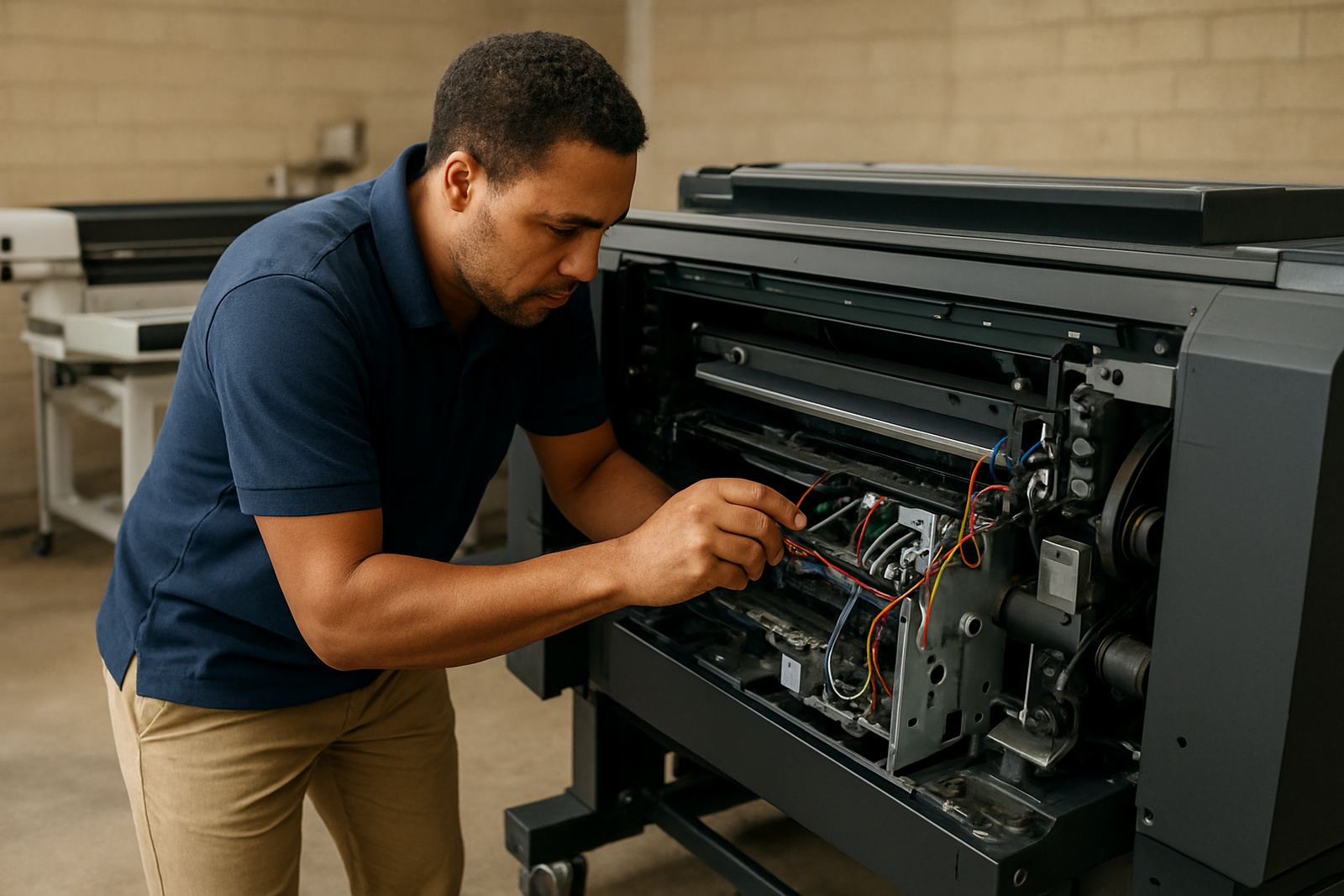
On site, our technician and service team observe live production, then record findings against a simple checklist. We test sample output, review maintenance records and speak with the operator about routine cleaning, ink changes and downtime patterns. At the end, we explain the findings clearly and give you a prioritised action list, with quick fixes first and longer-term improvements second. No jargon, just what needs attention and why.
- Step 1: Intake and problem description
- Step 2: On-site observation or remote pre-check
- Step 3: Live print and finishing review
- Step 4: Findings report with priority ranking
- Step 5: Follow-up support where needed
Turnaround times for busy production rooms
Most standard audits can be arranged within a few working days, depending on location and the size of the site. For clients in Germiston, Boksburg, Midrand and Johannesburg, we often fit audits around active production schedules to avoid stopping the whole line. In Pretoria, Durban, Cape Town and Bloemfontein, lead time can be a little longer when travel needs to be coordinated.
The actual audit usually takes half a day for a small room and a full day for larger or mixed-production setups. If you need a deeper review with colour profiling checks, maintenance planning and relocation advice, we may split the work into two visits. For factories with recurring faults, a follow-up check after a few weeks can show whether the changes are holding.
- Small site audit: about 3 to 4 hours
- Multi-machine site audit: 5 to 8 hours
- Written findings summary after the visit
- Optional follow-up after changes are made
Pricing approach and what affects the fee
We price production audits according to the site size, number of machines, distance travelled and whether you need a basic workflow review or a deeper technical assessment. A single printer and heat press setup will cost less than a workshop with multiple machines, separate finishing areas and several operators. If the audit includes relocation planning, training follow-up or detailed production audits across more than one branch, the fee is adjusted accordingly.
We keep pricing practical and upfront. If spare parts, repairs or profile work are needed after the audit, those items are quoted separately so you can decide what to do first. That helps small businesses manage cashflow without guessing at the final amount. For many clients, the biggest value comes from fewer reprints, better fabric use and less unplanned downtime.
- Single-site or multi-site pricing available
- Travel and site complexity may affect the quote
- Repair work, parts and extra training quoted separately
- Clear scope before the visit, no hidden extras
Maintenance intervals after the audit
Once the audit is complete, we recommend a maintenance rhythm that matches your production volume. A busy shop running daily print jobs will need more frequent checks than a smaller studio doing short runs. As a general guide, printheads, ink systems and media paths should be inspected every 2 to 4 weeks, while a fuller maintenance review should happen every 3 to 6 months.
In coastal areas such as Durban and Cape Town, humidity can affect drying and media handling, so intervals may need to be shorter. In dry inland conditions, dust and static can be a bigger issue, especially when windows stay open and the area is not sealed properly. We can set a maintenance contract after the audit if you want scheduled visits, simple checklists and remote troubleshooting between site calls. That keeps the machine working better for longer and reduces surprises during peak order periods.
- Routine operator checks: daily or weekly
- Light service review: every 2 to 4 weeks
- Deeper maintenance review: every 3 to 6 months
- Optional contract support for ongoing production stability
Key facts
| Service type | Production audits for direct-to-fabric inkjet and heat press operations |
|---|---|
| Main focus | Workflow efficiency, output quality, fabric handling and shop-floor practicality |
| Site coverage | Germiston, Johannesburg, Pretoria, Durban, Cape Town and Bloemfontein |
| Typical audit duration | 3 to 8 hours depending on machine count and workflow size |
| Delivery format | On-site review with findings summary and action list |
| Best suited for | Small garment and textile businesses needing better output and fewer stoppages |