

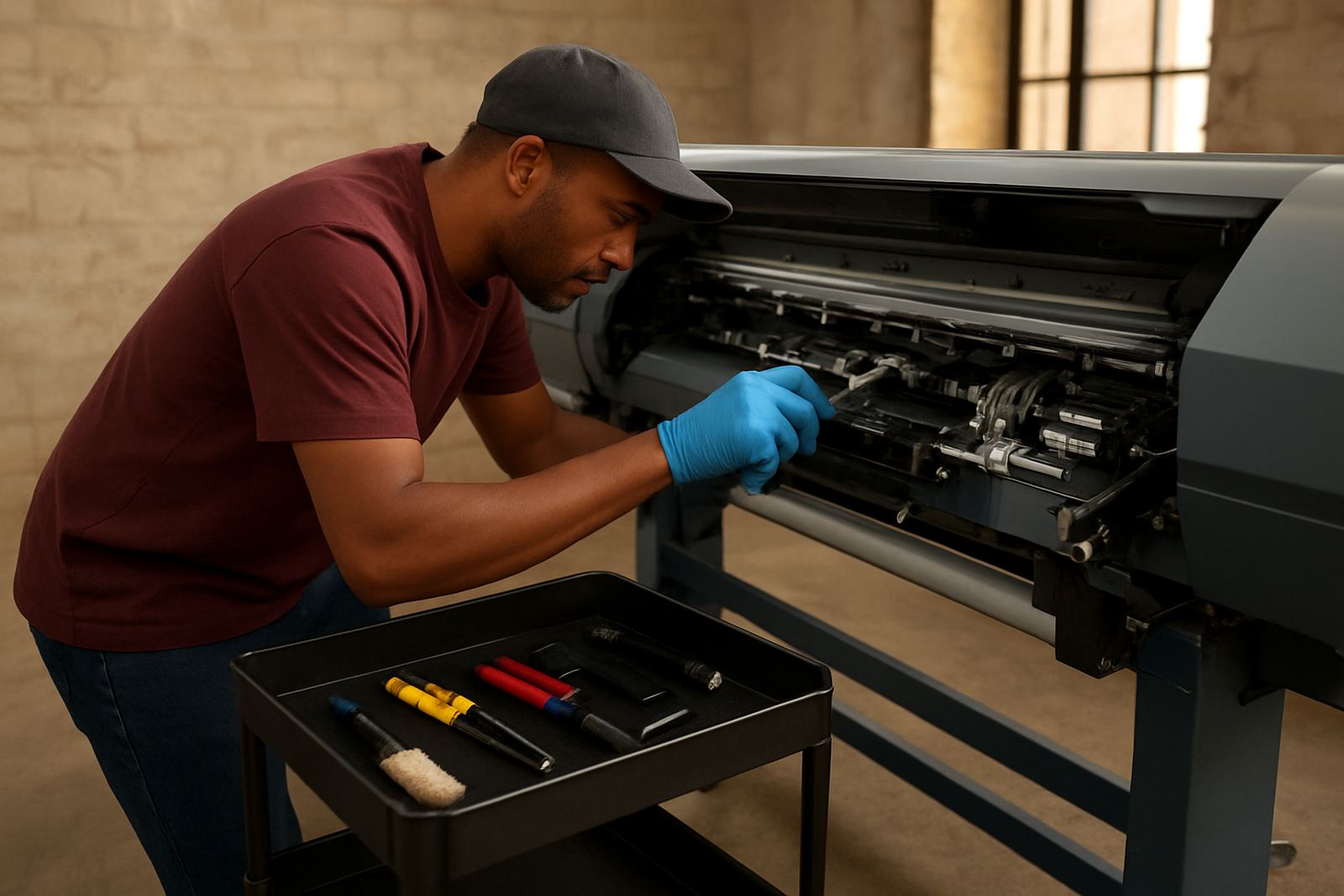
What preventive servicing covers
Preventive servicing is a planned maintenance visit done before problems stop production. For small garment and textile businesses, that usually means checking the parts that wear out first, clearing build-up before it causes blockages, and confirming that your machine is printing and heating within the right settings.
We service direct-to-fabric inkjet printers and heat presses used for custom garments, samples, labels and short production runs. In Wadeville, Germiston and across Johannesburg, Pretoria, Durban, Cape Town and Bloemfontein, we see the same issue often: dust, humidity and irregular running hours can shorten the life of printheads, pumps, heaters and feed systems if servicing is left too long.
- Printhead condition checks and cleaning
- Ink delivery inspection and flushing where needed
- Carriage, belts, rollers and feed path checks
- Heat press platen, pressure and temperature checks
- Electrical, cable and sensor inspection
- Test prints and output verification
What is included on a service visit
A standard preventive service is built around your machine type, usage and production volume. A workshop with one operator doing 20 to 40 prints a day will need a different service plan from a shop running daily batches for uniforms or retail orders.
For most visits, the technician will inspect the machine, clean critical components, confirm ink flow and check that the unit is holding temperature and pressure correctly. If there are signs of wear, we flag them early so you can plan parts and avoid a surprise stoppage later in the month.
- Machine visual inspection and cleaning
- Nozzle and print quality review
- Ink line, damper and filter check
- Waste system and purge path check
- Heat press calibration and temperature spot check
- Minor adjustments and service report feedback
If the machine needs more than routine maintenance, we will advise on the next step such as printhead cleaning, ink system flushing or a breakdown repair. That way you know exactly what was done and what still needs attention.
Our servicing process from booking to sign-off
We keep the process practical and clear. You send an enquiry through the contact page, tell us what machine you have and what symptoms you have noticed, then we schedule the visit based on your area and production urgency. Our support areas include Germiston, Boksburg, Midrand and the main metro regions we cover nationally.
Before the visit, we confirm access requirements, operating hours and whether the machine should be powered down before arrival. On site, the technician completes the inspection, carries out the service tasks and runs test output before handing back to your team.
- Step 1: Send your service request and machine details
- Step 2: We assess urgency and schedule the visit
- Step 3: Technician completes inspection and servicing
- Step 4: Test prints or test heat cycles are run
- Step 5: You receive feedback on condition and next service date
Where needed, we can also support remote troubleshooting first, which helps us arrive better prepared and reduces wasted time on site.
Recommended maintenance intervals for South African workshops
There is no single interval that suits every business, but regular servicing makes a measurable difference to uptime. Workshops that print daily or run long shifts should service more often than seasonal businesses or smaller boutiques. Coastal humidity in Durban and Cape Town, or fine dust in industrial areas, can also mean shorter service intervals.
As a general guide, we recommend planning preventive servicing every 3 to 6 months for active production equipment. High-use printers, or machines working in hot and dusty rooms, may need closer monitoring. Heat presses should be checked regularly if they are used for long periods, especially where temperature consistency matters for transfer quality.
- Light use: every 6 months
- Moderate use: every 4 months
- Heavy daily use: every 3 months
- After relocation or a long shutdown: service before full production resumes
If you have had repeated nozzle loss, uneven heating, feed issues or ink starvation, do not wait for the next standard interval. Early servicing usually costs less than replacing damaged components later.
Turnaround, pricing approach and what affects cost
Preventive servicing is usually quicker than a breakdown repair because the visit is planned and the faults are not yet severe. Turnaround depends on your location, machine condition and whether parts or consumables are needed. In the Johannesburg area we can often schedule faster response times, while other regions may be planned in line with route availability.
Our pricing approach is straightforward. We quote according to the machine type, travel area, service scope and any extra work required during the visit. A standard service is priced differently from a full clean, ink system flush or a unit that needs worn parts replaced. You only pay for the work required, not for unnecessary extras.
- Machine type and size
- Service area and travel requirements
- Condition of printheads, ink system and heat elements
- Whether minor repairs or parts replacement are needed
- Urgency and after-hours requirements where applicable
For businesses that want predictable budgeting, maintenance contracts can be arranged so service visits are planned in advance and downtime is kept under control.
Why scheduled servicing saves money over time
A machine that is serviced on time tends to print more consistently, waste less ink and avoid sudden stoppages during orders. That matters when you are running a small team and every day off the floor affects deliveries, cash flow and customer confidence.
Regular servicing also helps protect the machine itself. Heat, dust and old ink residue all place stress on the system. If those issues build up, the result is often poor print quality, missed deadlines and more costly repairs. A planned visit gives you a chance to catch those issues early, before they affect your busiest week.
For garment and textile businesses in South Africa, that is not theory. It is the difference between finishing a run on time and explaining to a client why their order is late.