What colour profiling covers on a fabric print setup
Colour profiling is the process of tuning your printer, ink set and fabric profile so the image on screen prints more closely to the result on cloth. On textile work, this matters because cotton, polyester, polycotton and coated media all take ink differently. A setting that works on one roll may shift on another batch, especially when fibre content, weave and moisture levels change.
Our support focuses on direct-to-fabric inkjet printers used by small garment and textile businesses in Johannesburg, Pretoria, Durban, Cape Town and Bloemfontein. We look at ink laydown, drying behaviour, pass count, resolution, platen gap and media feed. If your workshop is in Wadeville, Germiston or running from a busy unit with load-shedding interruptions, we also factor in power stability and startup consistency.
- Profile setup for common fabric types and production sizes
- Colour checks for repeat jobs and batch matching
- Support for daylight viewing and indoor production conditions
- Adjustment of ink limits, drying and ink density
What is included in the profiling visit
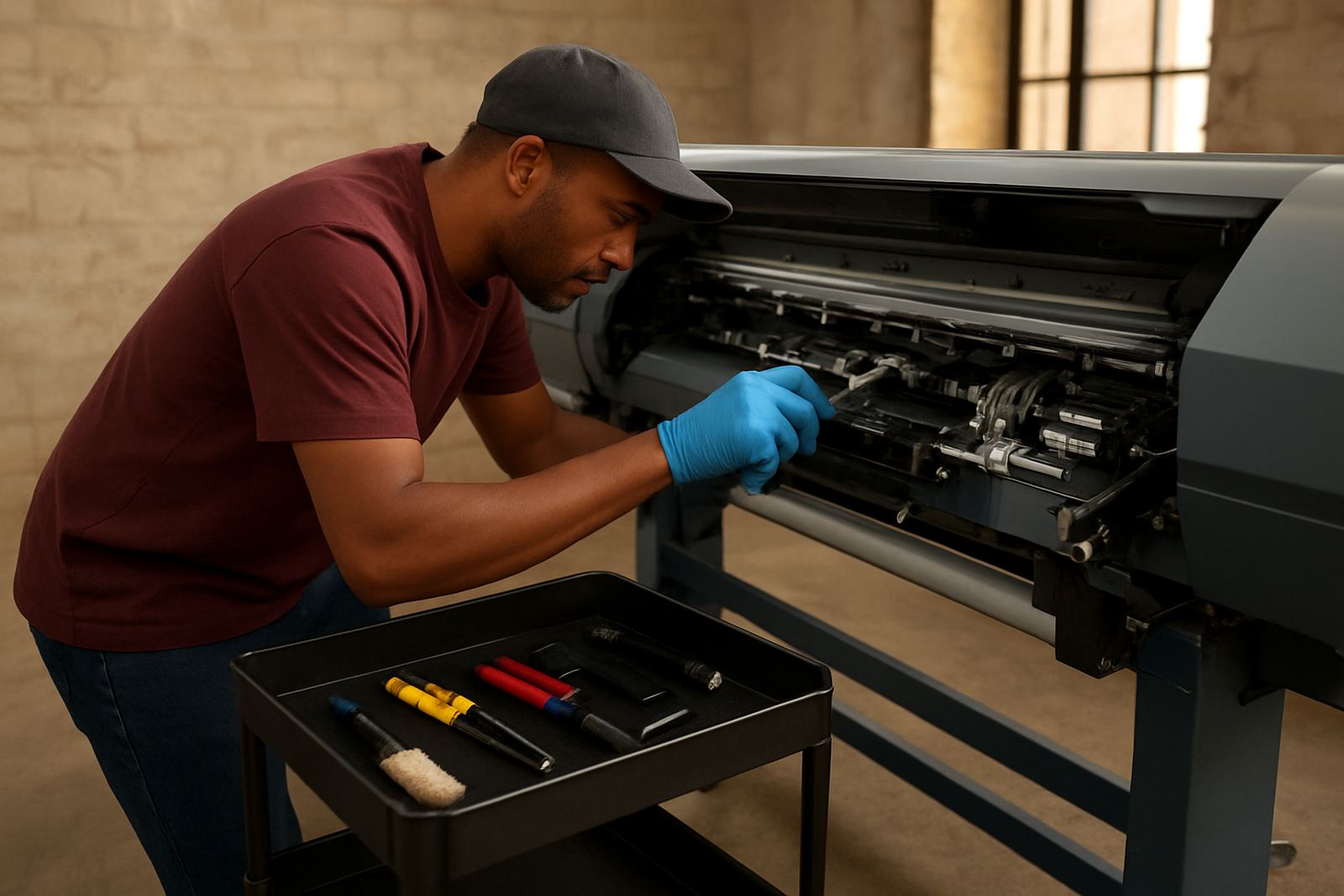
Every setup starts with a proper check of the machine condition, the fabric being used and the way jobs are prepared in your workshop. We do not just load a file and hope for the best. We confirm nozzles are firing correctly, the ink system is flowing as it should and the media is feeding straight. If there is drying inconsistency, excess banding or colour cast, that gets addressed before profiling begins.
The service can include a colour baseline, test prints, profile building guidance and operator handover. If needed, we also review your RIP or print workflow settings so the same job can be repeated later with less variation. This is useful for boutiques, small clothing labels and contract printers who need a cleaner handover between staff members.
- Printer health check before profiling starts
- Ink and media compatibility review
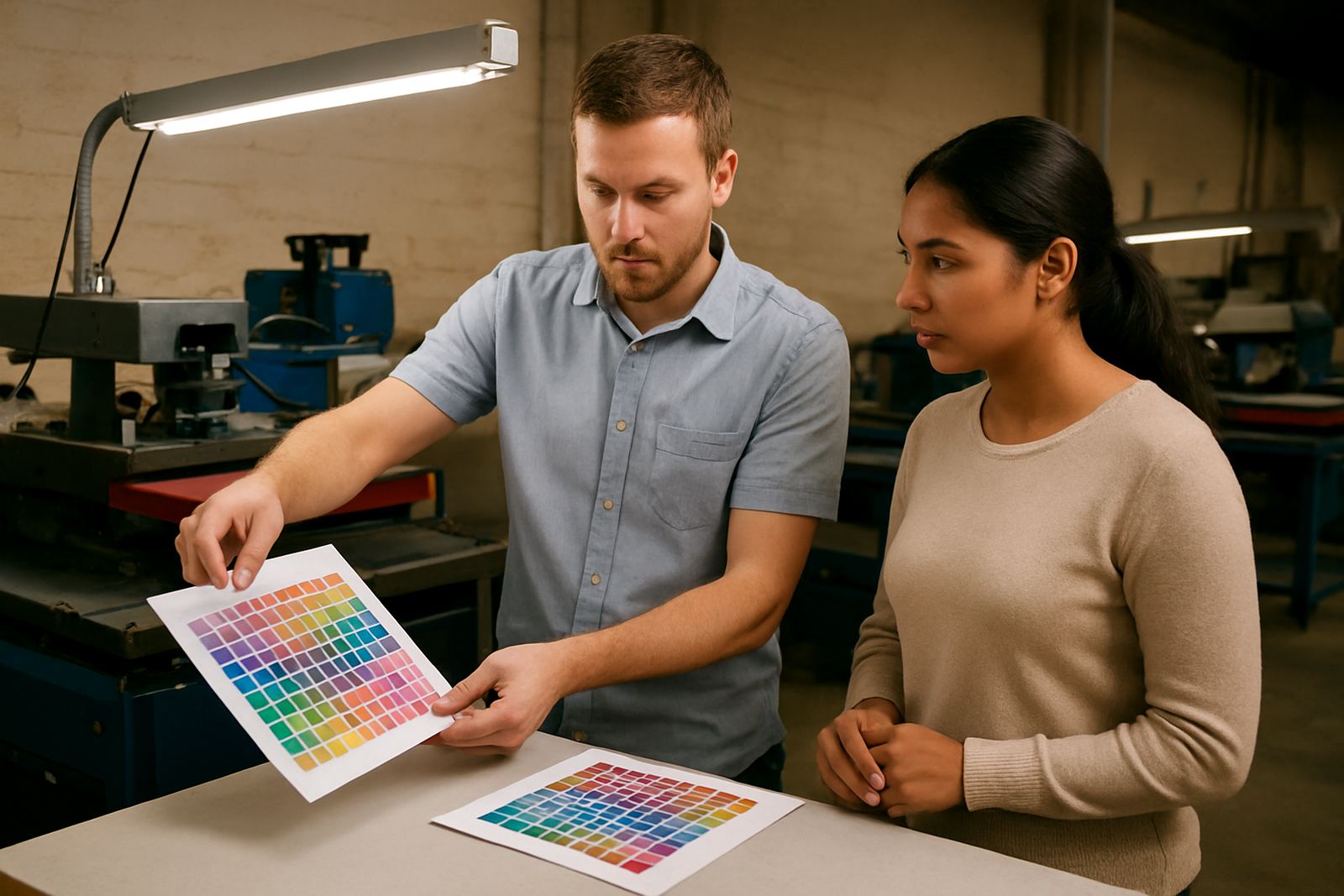
- Test charts and sample print comparisons
- Basic workflow notes for repeat production
Step by step from test print to repeat job
The process is practical and fairly quick when the machine is in good condition. We begin by confirming the fabric type, intended finish and the colour target you want to reach. After that, we print controlled test charts and compare them under consistent lighting. If the machine needs adjustment, we change the print settings first, then retest until the output is within a workable range.
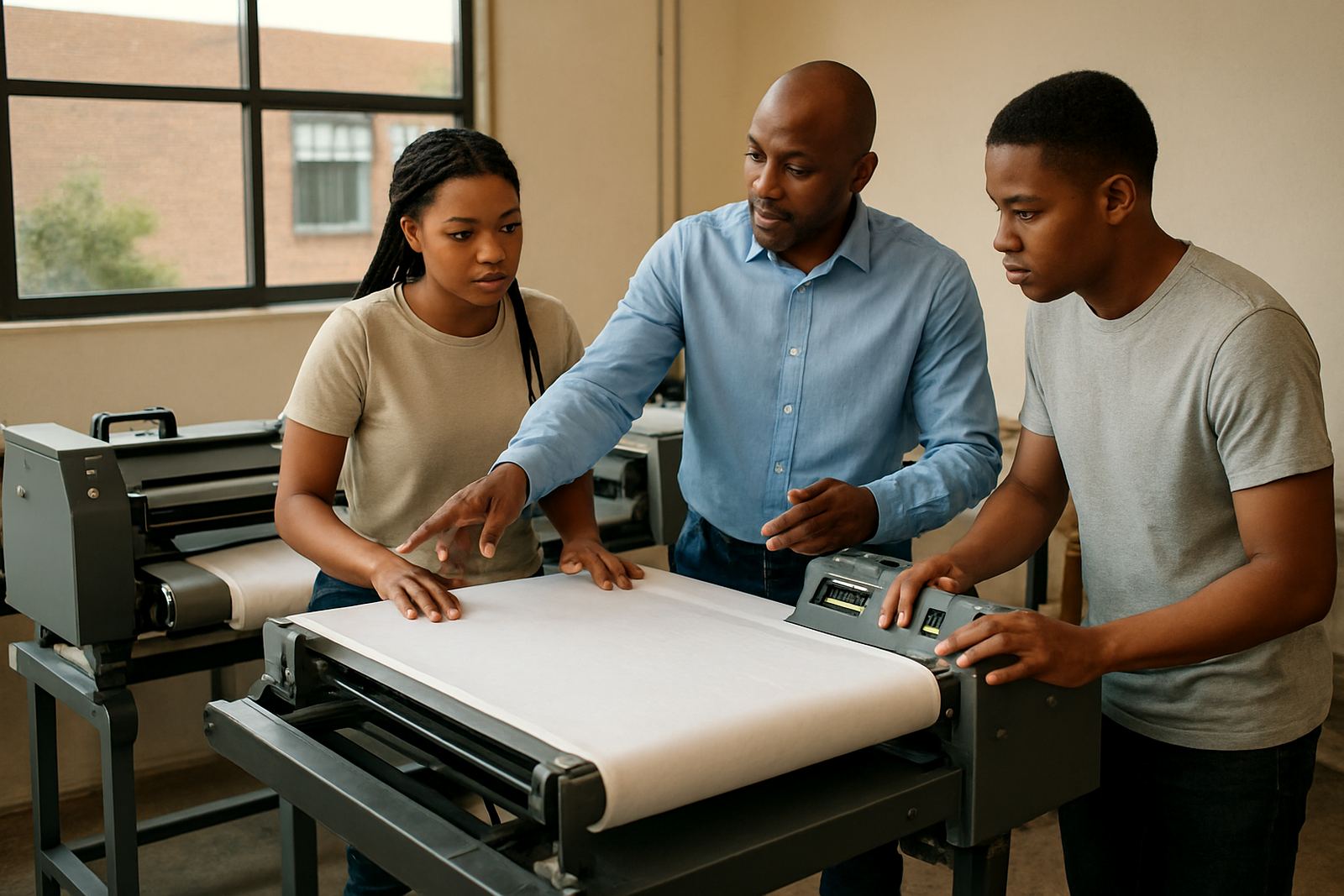
Once the profile is acceptable, we save the settings and show your operator how to keep them stable. That includes checking humidity, nozzle health and fabric prep before each run. In coastal areas such as Durban and parts of Cape Town, moisture in the air can affect drying and colour shift. In hotter inland areas, especially around Johannesburg and Pretoria, temperature swings can also change the result from one shift to the next.
- 1. Inspect printer condition and confirm fabric type
- 2. Print test charts and check colour movement
- 3. Adjust settings and retest for accuracy
- 4. Save job settings and train the operator
Turnaround for profiling work
Turnaround depends on the condition of the machine, the number of fabrics being profiled and whether the printer needs servicing first. For a machine that is already printing well, a basic profiling session can often be completed in one visit. If there are blocked nozzles, uneven ink flow or software settings that need sorting, allow extra time.
For clients outside Germiston, we can schedule support around production days so you do not lose a full week of output. Remote follow-up is available for checks after the visit, which helps if a repeat order is not matching as expected. Where there is ongoing production, we usually recommend rechecking colour after major consumable changes, relocation or a printhead service.
- Basic profiling: same day where the printer is ready
- Full setup with corrections: usually one to two working days
- Remote follow-up after the initial visit
How pricing is approached
Colour profiling is priced according to the actual work required, not by a fixed one-size-fits-all amount. A simple setup on a single fabric type is priced differently from a workshop that needs several media types, operator coaching and print correction. We also take into account travel for Johannesburg, Pretoria, Durban, Cape Town, Bloemfontein and surrounding areas such as Boksburg and Midrand.
Where the printer needs repair before profiling can happen, we separate the service so you only pay for the work done. That makes the quote easier to understand and helps smaller businesses budget properly. If you are running on tight margins, this matters because wasting ink on repeated test runs can cost more than the profiling session itself.
- Quoted after we know the printer model, fabric type and condition
- Travel and site access are included in the estimate where relevant
- Separate pricing for repairs, training and follow-up visits
Keeping colour stable after the setup
Once your profile is in place, maintenance is what keeps it useful. In a fabric print environment, colour can drift when heads wear, ink ages, media batches change or humidity shifts. We suggest checking key settings every 4 to 8 weeks if you print regularly, and sooner after a power cut, relocation or ink change. Workshops near the coast often need more frequent checks because moisture can affect drying and curing times.
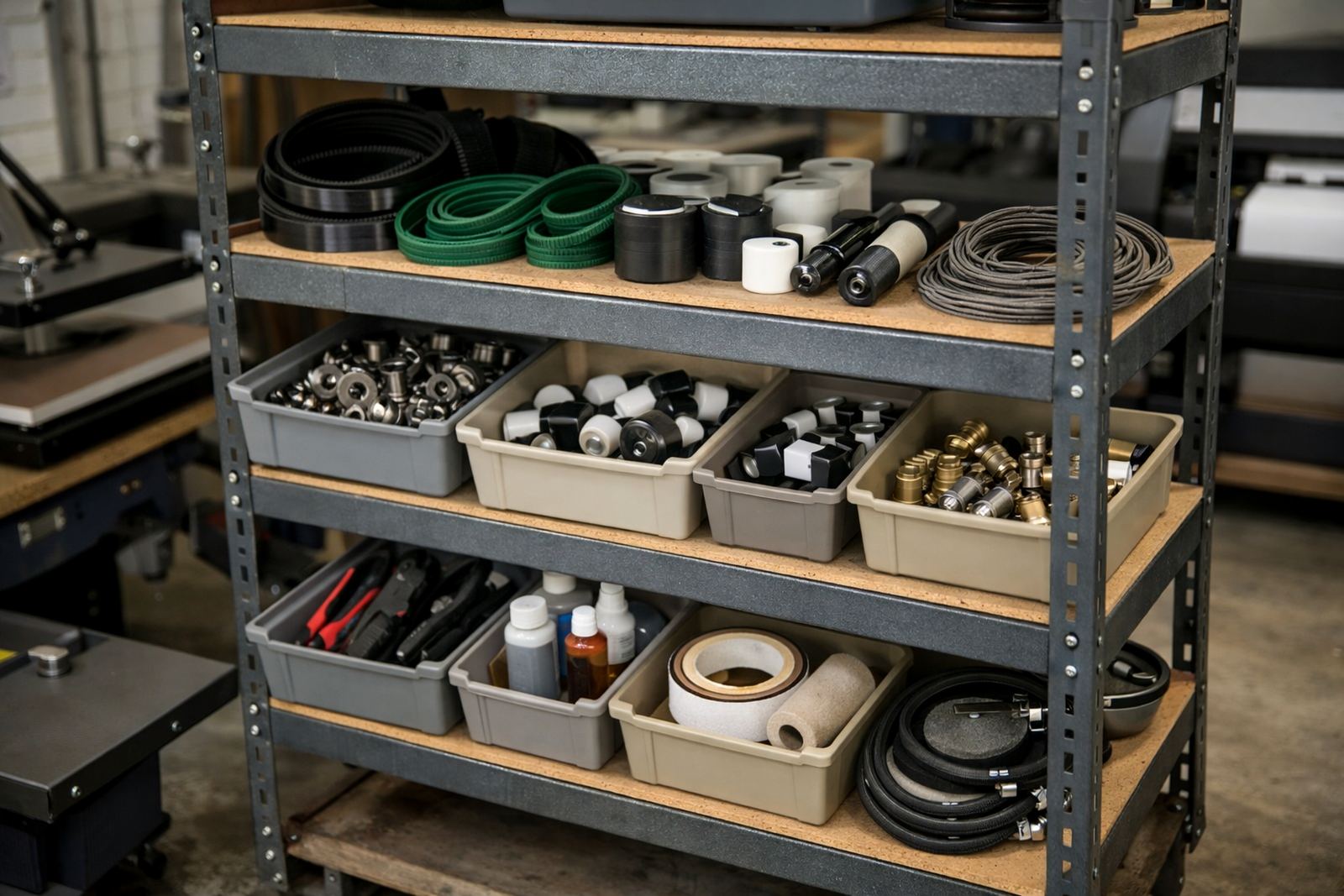
For production teams, a simple maintenance routine is usually enough to keep colour more predictable. That means regular nozzle checks, periodic print tests, clean feed paths and correct storage of inks and media. If you print only once in a while, the interval may be longer, but it still helps to confirm the profile before taking on a paid customer order.
- Check colour after new ink batches or new fabric rolls
- Revisit profiles after servicing or printhead cleaning
- Keep a test swatch from each important job for comparison
- Plan seasonal rechecks if your shop runs in humid or hot conditions
Key facts
| Service type | Colour profiling for direct-to-fabric inkjet printers |
|---|---|
| Compatible output | Cotton, polyester, polycotton and selected coated textile media |
| Typical files | Repeat jobs, batch orders, sample runs and production swatches |
| Output control | Ink density, drying behaviour, pass count and feed alignment |
| Support areas | Germiston, Johannesburg, Pretoria, Durban, Cape Town, Bloemfontein |
| Maintenance interval | Every 4 to 8 weeks for active production, or after major setup changes |