What ink system flushing covers
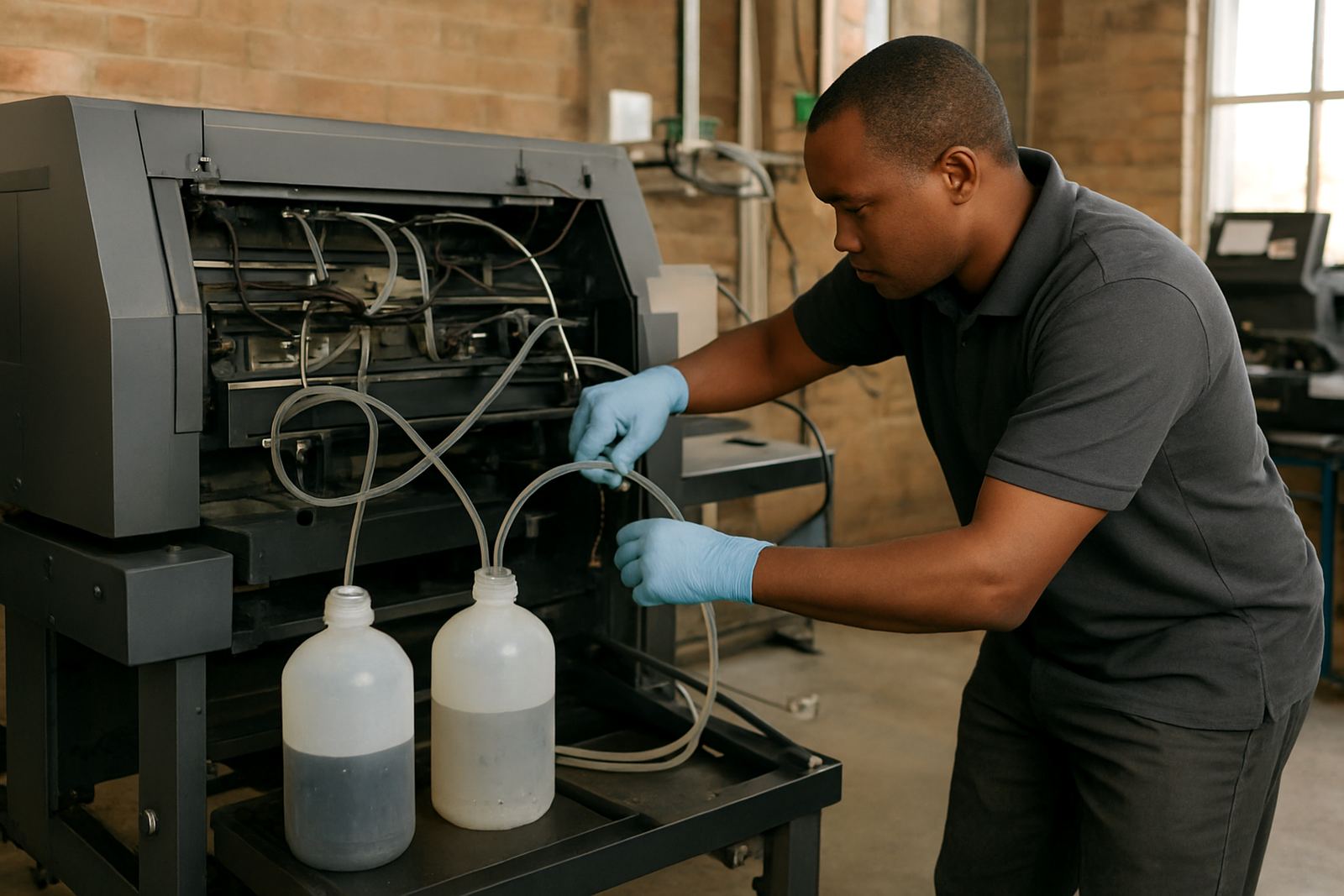
Ink system flushing is the controlled removal of old ink, sludge, sediment and contaminated fluid from the ink path of a direct-to-fabric printer. It includes the ink lines, dampers where fitted, reservoirs, filters, caps and the parts of the system that carry ink from the supply to the printhead. The aim is to clear blocked flow, reduce colour contamination and prepare the machine for a fresh, stable fill.
For small textile businesses in Johannesburg, Pretoria, Durban, Cape Town and Bloemfontein, this is often needed after a colour change, a long shutdown, a move to new ink, or when the system starts showing uneven flow. Coastal humidity, dust in workshop spaces and power interruptions from load-shedding can all make the ink path behave badly if it is left unattended.
- Removal of old or degraded ink from lines and reservoirs
- Cleaning of colour channels affected by contamination
- Preparation for new ink filling after changeover
- Recovery work after poor print quality or poor circulation
When flushing is worth doing
You do not need flushing every time there is a small print issue, but it becomes worthwhile when cleaning cycles no longer restore flow, or when different ink chemistry has been introduced. If a printer has stood idle for weeks, if there is sediment in the bottles, or if a line has hardened at the fittings, a proper flush is usually better than trying to push through the problem.
We also recommend it after a relocation, especially where a machine has been moved between sites in Germiston, Boksburg or Midrand and the reservoirs have been disturbed. In some cases a simple nozzle check or head clean is enough. In others, flushing prevents a much bigger repair bill later on, and keeps production moving without unnecessary down time.
- Ink changeovers between compatible systems
- Contamination from dust, lint, water ingress or mixed fluids
- Blocked or slow supply to one or more channels
- Recovery after long idle periods or storage
Our flushing process step by step
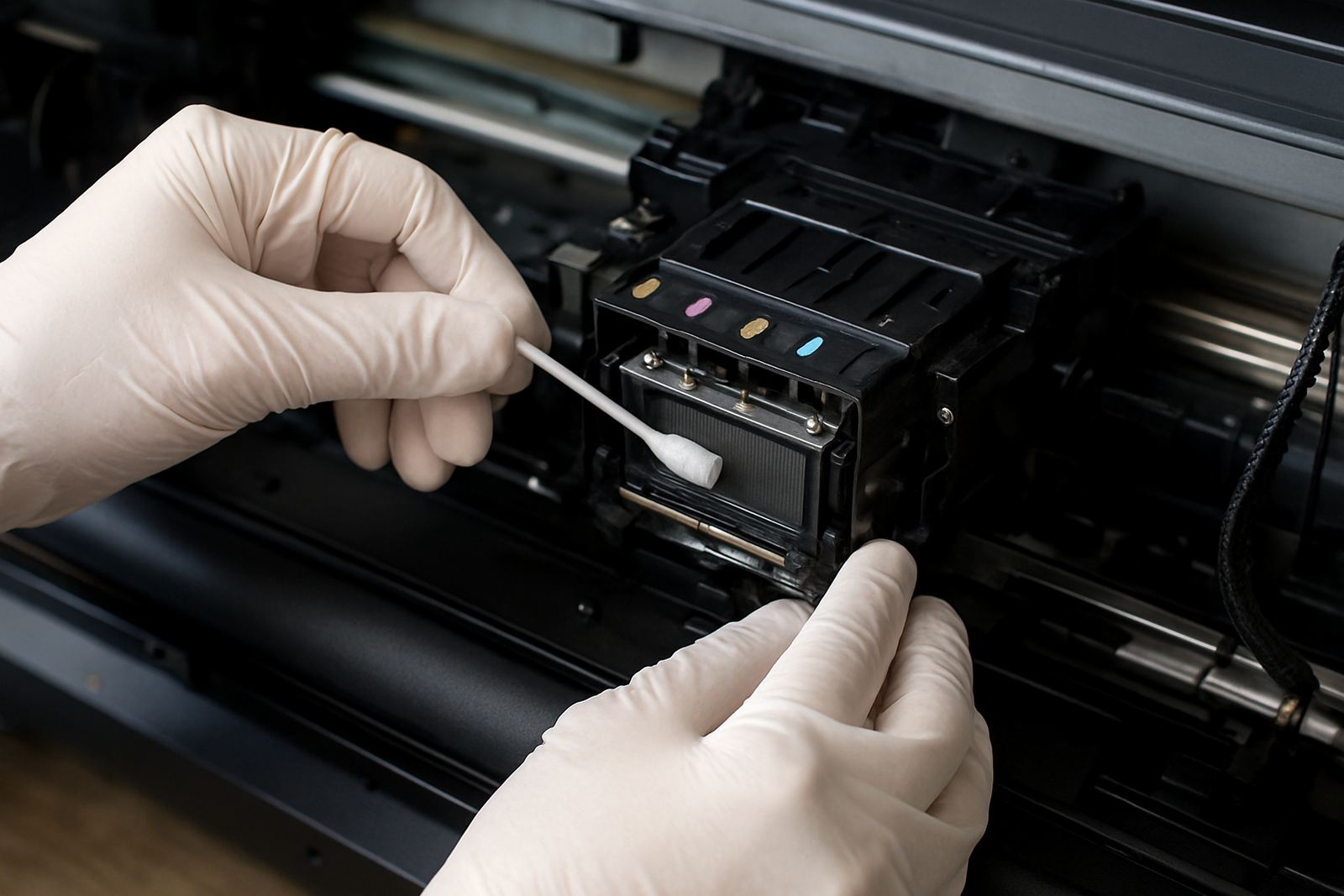
We start with a condition check so we can see whether the issue sits in the supply line, the reservoir, the damper or at the printhead side. The machine is isolated safely and the existing ink path is drained in a controlled way. We then flush each channel with the correct cleaning fluid for that system, checking that the flow is clear before refilling. Where required, we repeat the cycle until residue is no longer present.
Our technicians also inspect seals, tubing bends, clamps and filters while the machine is open. That matters because a line can look clean but still leak or draw air at the connector. After flushing, we prime the system carefully, run test prints and confirm that each colour is returning evenly. If the machine has been struggling after load-shedding, we also check for any signs of dried ink at the head side and advise on the right restart routine.
- Initial inspection and fault confirmation
- Safe draining of existing ink and waste fluid
- Channel-by-channel flush and refill preparation
- Priming, test printing and flow verification
What is included in the service
The service is focused on restoring ink delivery properly, not just washing the machine and hoping for the best. Depending on the condition of the printer, we may include reservoir cleaning, line replacement where tubing has perished, cap inspection, filter checks and a basic print quality assessment once the system is back online. If we find a worn part during the job, we will explain the options before any extra work is done.
For garment and textile businesses handling short runs, school wear, promotional fabric or boutique production, this keeps changeovers practical. It helps avoid colour carry-over on repeat jobs and reduces the risk of damaged stock. Our team can also advise on maintenance intervals so you know when a flush is needed again, instead of waiting for a blockage to turn into a shutdown.
- Ink line and reservoir flushing
- Contamination checks and visible residue removal
- Basic consumable inspection and refill guidance
- Post-service print test and operator advice
Turnaround and downtime planning
Turnaround depends on the number of channels, how badly the system is contaminated, and whether replacement tubing or fittings are needed. A straightforward flush can often be completed the same day, while recovery work on a badly blocked system may take longer. We always try to work around production schedules so you are not left with a machine stripped open while orders are waiting.
If your business is in Durban or Cape Town, where humidity can affect storage conditions, it is often better to book preventative flushing before the system starts hardening. In inland areas like Johannesburg and Pretoria, dusty workshop conditions and irregular printing schedules can make the same job overdue faster than expected. The best timing is usually before the next busy run, not after production has already stopped.
Pricing approach and maintenance intervals
Pricing is based on the machine type, the number of channels, the amount of contamination, and any parts needed to complete the job properly. We do not quote one flat figure for every printer because a light flush on a well kept unit is very different from recovery work on a machine that has been standing for months. For that reason, we assess the system first and then quote according to the actual work involved.
As a general guide, printers in regular use should have their ink system checked during routine servicing, with flushing carried out when colour changes, long idle periods or contamination show up. Small businesses running a few days a week may need this less often, while busy shops with constant production may benefit from scheduled preventative flushing every few months. The right interval depends on your inks, your environment and how often the machine prints.
- Quote depends on condition, channel count and parts required
- Preventative scheduling can reduce emergency repairs
- Flushing is often paired with servicing for better value
- Intervals vary by usage, storage and ambient conditions
Support across Germiston and major centres
Our Wadeville, Germiston base supports small garment and textile businesses across South Africa, with service coverage in Johannesburg, Pretoria, Durban, Cape Town and Bloemfontein. We also assist clients in the Germiston Demo Centre, Johannesburg Support Area, Pretoria Support Area, Durban Support Area, Cape Town Support Area, Bloemfontein Support Area, Boksburg Service Area and Midrand Service Area. When remote guidance is enough, we can talk you through the early checks before a technician visit is arranged.
Because ink systems are sensitive, good handling after the flush matters just as much as the flush itself. We show operators how to keep the machine sealed, how to avoid unnecessary air entering the lines, and what to watch for if print quality begins to drift again. That kind of practical guidance saves time and keeps the printer earning its keep.
Key facts
| Service type | Ink system flushing for direct-to-fabric printers |
|---|---|
| Typical use | Changeovers, contamination recovery, long idle periods and blocked flow |
| Coverage | Johannesburg, Pretoria, Durban, Cape Town, Bloemfontein and surrounding areas |
| System areas | Ink lines, reservoirs, dampers, filters and related supply parts |
| Turnaround | Same day for straightforward flushing, longer for heavy recovery work |
| Pricing | Quoted after inspection based on condition, channel count and parts required |