
When printhead cleaning is needed
If your prints show missing lines, weak colour, striping or fuzzy edges, the printhead may be partially blocked. On fabric printers this often starts after a quiet weekend, a long shutdown, or when ink sits in the system during load-shedding.
We see this often in Johannesburg, Pretoria, Durban, Cape Town and Bloemfontein where workshops run in mixed conditions. Coastal humidity can affect drying while inland dust can build up around caps, wipers and capping stations. A proper clean helps recover output before the blockage turns into a more costly repair.
- Blocked nozzles and nozzle drop-out
- Banding across solid fills and gradients
- Inconsistent colour density from left to right
- Faint or broken details on fine text and logos
What our printhead cleaning service includes
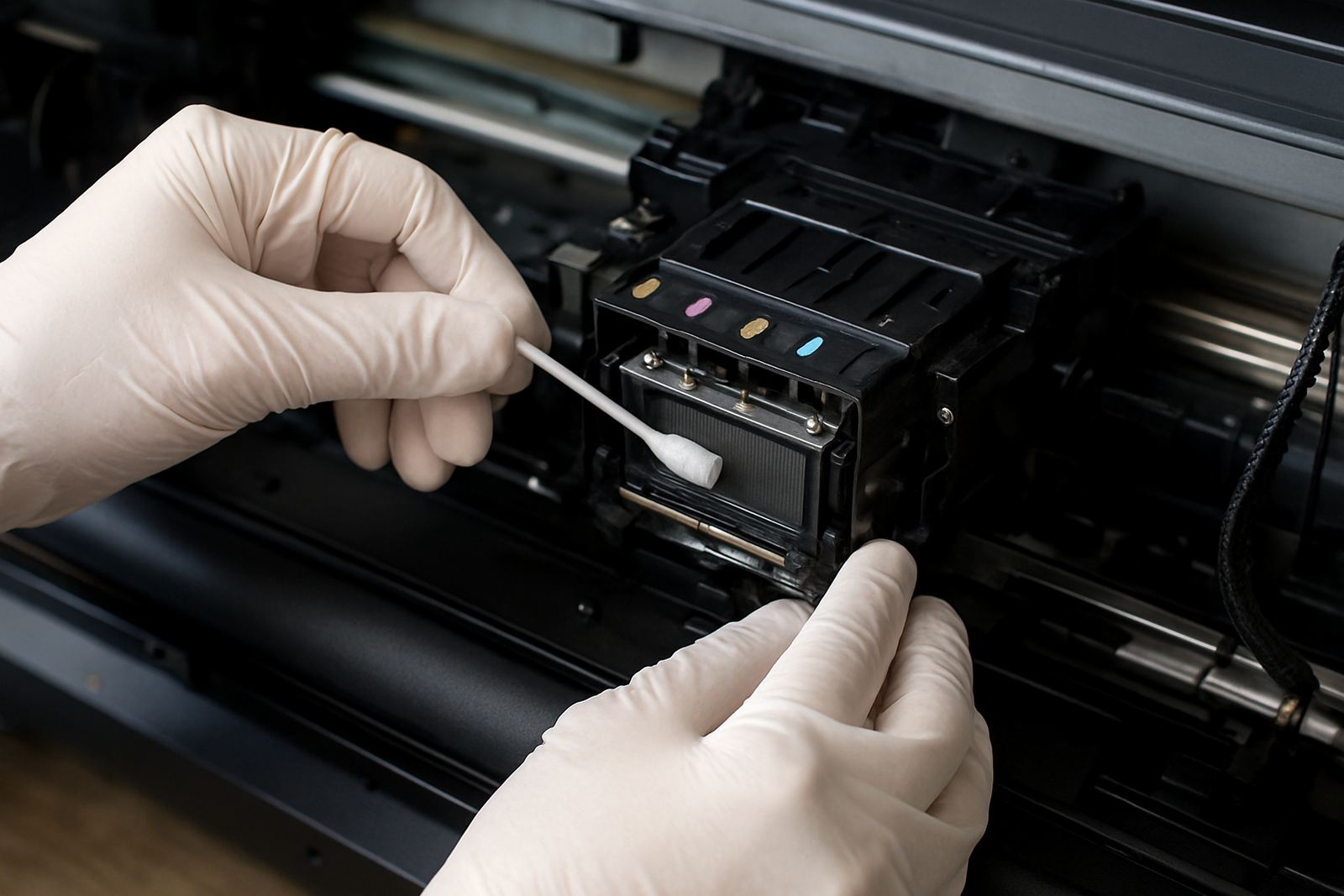
Our service is aimed at direct-to-fabric inkjet systems used by small clothing labels, print studios and textile workshops. We inspect the ink path, clean the printhead area and check whether the problem sits in the head itself or elsewhere in the ink delivery system.
- Nozzle check review and print quality diagnosis
- Manual and assisted head cleaning where suitable
- Cleaning of capping, wiping and surrounding contact points
- Ink line and damper inspection for air, sludge or blockage
- Ink system flushing if contamination is affecting flow
- Recovery advice if the head shows signs of permanent damage
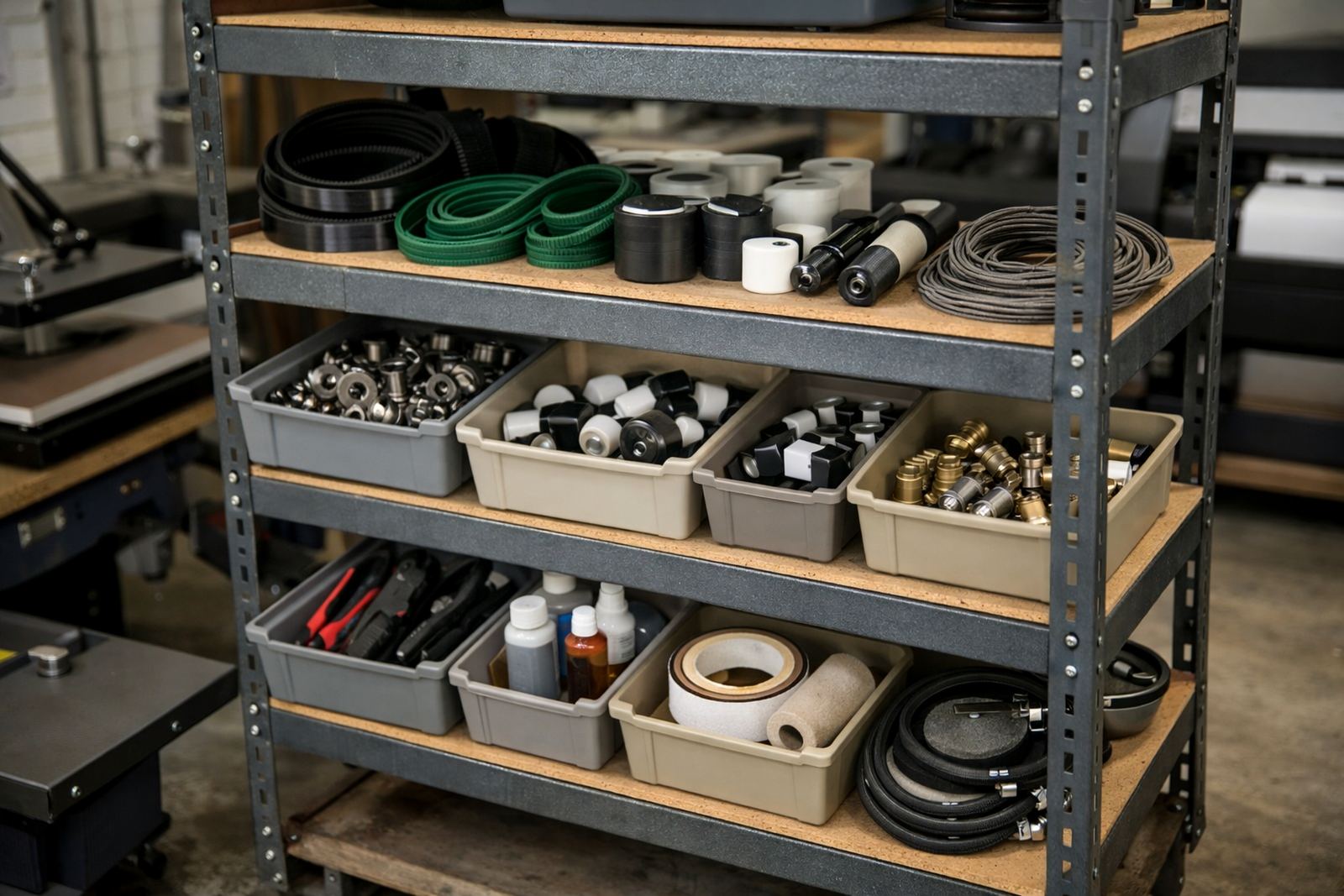
Where needed, we also recommend replacement parts such as dampers, caps or filters so the machine does not return to the same fault a week later.
Our recovery process step by step
We keep the process straightforward so you know what is being done and why. In most cases, the first step is to confirm the fault pattern from a test print, then work through the likely causes in order.
- Receive the fault report and sample print, or view the machine on site.
- Check the nozzle test, carriage movement and ink flow.
- Clean the printhead area and remove built-up residue.
- Flush the ink path if the blockage is deeper in the system.
- Run repeat tests until output is even or the limits of recovery are clear.
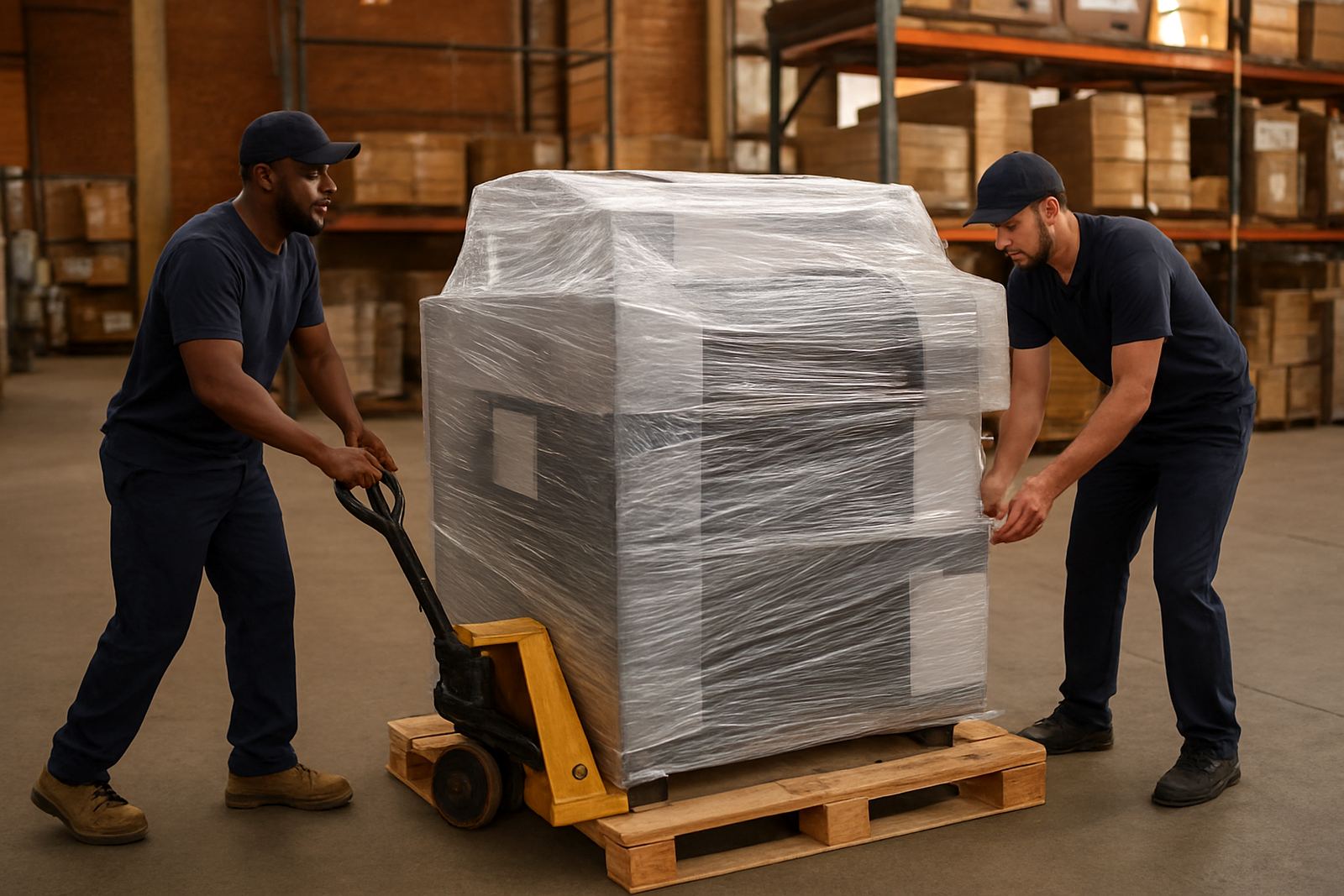
For workshops in Germiston, Boksburg and Midrand, we can often arrange quicker field support. For other areas, we guide the client on what to send with the machine so the first visit or collection is more effective.
Turnaround and production planning
Turnaround depends on the condition of the head and how long the machine has been standing. A light blockage may be sorted on the same day. A more severe recovery job can take longer if repeated flush cycles, soak time or spare parts are needed.
We always try to protect production time. If your business has orders to meet, we will tell you early whether the issue can be recovered quickly or whether you should plan a backup machine, especially during busy periods and seasonal rushes.
- Simple cleaning: often same day where parts and access allow
- Moderate blockage: usually 1 to 2 working days
- Severe recovery or parts replacement: dependent on diagnosis and stock
Pricing approach for blocked heads
We price printhead cleaning based on the machine model, fault level and whether the job is done on site or at our Wadeville base. A basic clean costs less than a full recovery with ink system flushing and parts replacement, so we first assess the fault before confirming the work.
This approach helps you avoid paying for steps you do not need. If the printhead is too far gone, we will say so plainly and explain the next best option. That way you can make a practical choice for your garment or textile line, not a guess.
- Assessment before any major work starts
- Clear separation between labour, consumables and replacement parts
- Options for once-off recovery or planned maintenance support
Keeping the printhead healthy after cleaning
Most blocked nozzles come back because the machine is not being used often enough or the maintenance routine is too light. In South African workshops, a few simple habits make a big difference, especially when electricity cuts interrupt production.
We recommend regular nozzle checks, short ink circulation routines and proper shutdowns if the machine will stand idle. In humid coastal areas the cleaning intervals may need to be shorter, while dusty inland sites may need extra attention around caps and wipers.
- Daily or every-shift nozzle check on active production machines
- Weekly maintenance clean for moderate use
- Full inspection every 1 to 3 months, depending on output hours
- Immediate attention after long idle periods or power interruptions
With the right interval, you reduce banding, save ink and keep colour more consistent across repeat jobs.
Key facts
| Service type | Printhead cleaning and recovery for direct-to-fabric inkjet printers |
|---|---|
| Faults addressed | Blocked nozzles, banding, weak colour, broken lines and inconsistent output |
| Coverage area | Germiston, Johannesburg, Pretoria, Durban, Cape Town and Bloemfontein |
| Turnaround | Same day to 2 working days for most recovery work, depending on fault level |
| Work methods | Nozzle testing, head cleaning, ink path flushing, capping and wiper checks |
| Support options | On-site assistance, remote troubleshooting, spare parts and maintenance advice |