When a small fault can stop a whole production day
For a small garment or textile business, one blocked nozzle, a misfed roll or a heat press that is running hot can put a full day of work behind schedule. If you are making school wear in Germiston, event tees in Johannesburg or boutique runs in Pretoria, there is not much room for downtime. The cost is not only the repair, it is the missed delivery and the extra labour to catch up.
This is where nearby technical help makes a real difference. Instead of waiting while a machine is carted around the country, a local support team can often diagnose the issue quickly, talk you through the basics, and get you back into production with less guesswork.
- Faster response when a printer stops feeding or starts banding
- Less scrap from failed test prints and wasted fabric
- Better advice on daily checks before the first run of the day
- Support that understands South African power cuts and humid coastal conditions
Training that fits the way South African workshops actually work
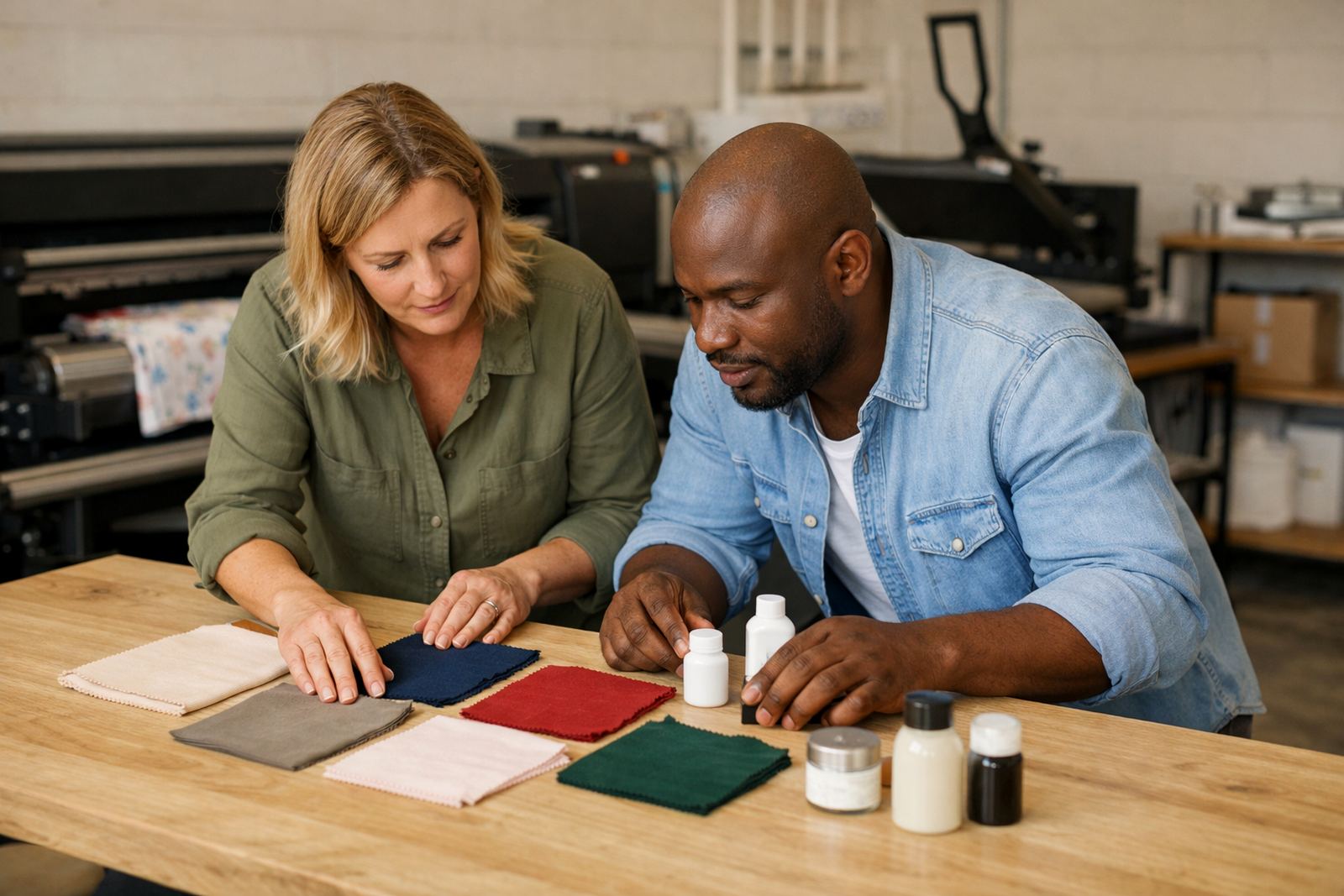
Many new owners do not need theory first, they need clear steps they can use on the floor. That means knowing how to load fabric correctly, set heat and pressure for different substrates, and keep colour stable from one batch to the next. Good local training is hands-on and practical, not a long lecture that is hard to remember once orders start piling up.
Ayesha Patel, who handles training coordination, sees this every week. One team may need help with setup training and operator basics, while another wants colour profiling so a repeat order matches a sample from six months ago. The right support should leave your staff confident enough to run the machine after the trainer has gone.
- Operator training for new staff and shift handovers
- Colour profiling for repeatable colour on garments and fabrics
- Production audits to spot bottlenecks and waste
- Relocation support when a workshop moves within Gauteng or to another province
Consumables matter just as much as the machine
Ink, media and spare parts are not small extras. They decide whether the machine works properly or becomes a source of constant frustration. If the wrong ink is used, or the media is stored badly in a hot storeroom, the result can be blocked heads, patchy colour and unhappy customers. In places like Durban, where humidity can rise quickly, storage and handling matter even more.
A local supplier can guide you on what to keep on the shelf and when to reorder. That includes the right inks, heat press items, and the parts most likely to wear over time. It also helps when your team needs advice on flushing an ink system after a long shutdown, or cleaning a printhead before a busy week of orders.
- Ink system flushing after downtime or a change in production schedule
- Printhead cleaning before quality drops and waste climbs
- Spare parts supply for wear items and urgent replacements
- Clear guidance on storage during load-shedding and hot summer periods
Why local support saves money in the long run
It is easy to focus on the purchase price of a machine and forget the cost of interruptions. Travel time, courier delays, repeated trial and error and poor training all add up. A business in Bloemfontein or Cape Town may not need support every day, but when it does, the value is in getting the right answer quickly.
Preventive servicing is one of the smartest ways to protect that investment. A planned visit can catch wear before it becomes a breakdown, and a maintenance contract gives you a predictable way to budget for care instead of waiting for a crisis. That is especially useful if you are running multiple short jobs each week and cannot afford surprise stoppages.
Many owners find that a small monthly service plan costs less than one badly timed repair. It also keeps staff from making avoidable mistakes because the machine is running within proper settings and not being pushed past its limits.
A local example from Wadeville to the wider market
Imagine a boutique textile maker in Boksburg taking on a mid-size order for custom printed fabric items ahead of a weekend market. The first batch looks sharp, then the colour shifts after a power cut and the operator is not sure whether the issue is ink flow, heat settings or file preparation. A remote call can narrow it down, but having a nearby technician available means the business does not lose the whole order to uncertainty.
That is the practical value of having a Germiston base with support areas across Johannesburg, Pretoria, Durban, Cape Town and Bloemfontein. Johan van der Merwe can handle installation and machine checks, Thabo Nkosi can take care of service work, and Lerato Molefe can help keep the follow-up organised so nothing is left hanging. When a team knows the local roads, local power issues and the pace of South African production, the advice is usually more useful as well.
Nearby support does not remove every problem, but it shortens the distance between a fault and a fix. For a small business, that can be the difference between meeting a client deadline and apologising for a delay.
What to look for in a support partner before you buy
If you are comparing suppliers, ask how they handle installation, operator training and repairs after the sale. Ask whether they can help with colour profiling, whether spare parts are kept locally, and whether they offer remote troubleshooting before sending someone out. Good support should be clear, practical and easy to access through an enquiry form, not buried in promises that are hard to use when a machine stops.
- Do they offer setup training on site?
- Can they help with print quality issues and colour matching?
- Is maintenance available on a planned basis?
- Can they assist with relocation, servicing and breakdown repairs?
- Are consumables and parts supplied with local guidance?
For many South African garment and textile businesses, the best supplier is not just the one with the right machine. It is the one that stays useful after delivery, during production and when the pressure is on.