Why approvals matter before the first metre runs
In fabric printing, a small misunderstanding can spread across metres of cloth. A shade that looked fine on a phone screen, a logo placed 20 mm too low, or a repeat that was not signed off properly can mean scrap, late deliveries and unhappy customers. For small garment and textile businesses in South Africa, that usually means extra ink, wasted fabric and another round of labour costs.
A solid approval process protects both sides. The client knows exactly what they are getting, and the printer has a clear record of what was agreed. That matters whether you are producing stretch wear for a boutique in Sandton, branded polycotton for a school supplier in Pretoria, or custom home textile runs for a shop in Durban where humidity can affect drying times. Good approvals are not about slowing the job down. They stop expensive mistakes before they start.
Start with a written brief, not a voice note
Many problems begin when a job is agreed over a quick call and nobody writes down the details. A proper brief should cover the fabric type, print size, colour expectations, quantity, delivery date and intended use of the finished goods. If the customer wants a soft hand feel for garments, that needs to be stated. If they want bold colour for display fabric, say so clearly.
Keep the brief plain and specific. Avoid vague wording like “make it pop” or “match as close as possible” without giving a reference. If the client supplies a sample, record whether it is a colour reference, a texture reference, or both. In our experience, the simpler the brief, the fewer follow-up calls you need. And that saves time when production is already stacked.
- Name the fabric type and width in metres.
- Confirm the finish expected after pressing or curing.
- Record the exact quantity and any size tolerances.
- Note the delivery town and any collection deadlines.
Show the right proof for the right job
Not every approval needs the same level of detail. A small repeat pattern for scarves may only need a colour proof and size check. A full fashion print, however, should be reviewed for placement, repeat alignment and fine detail. If the job is on a dark substrate or a textured base, that must be shown in the proof process as well.
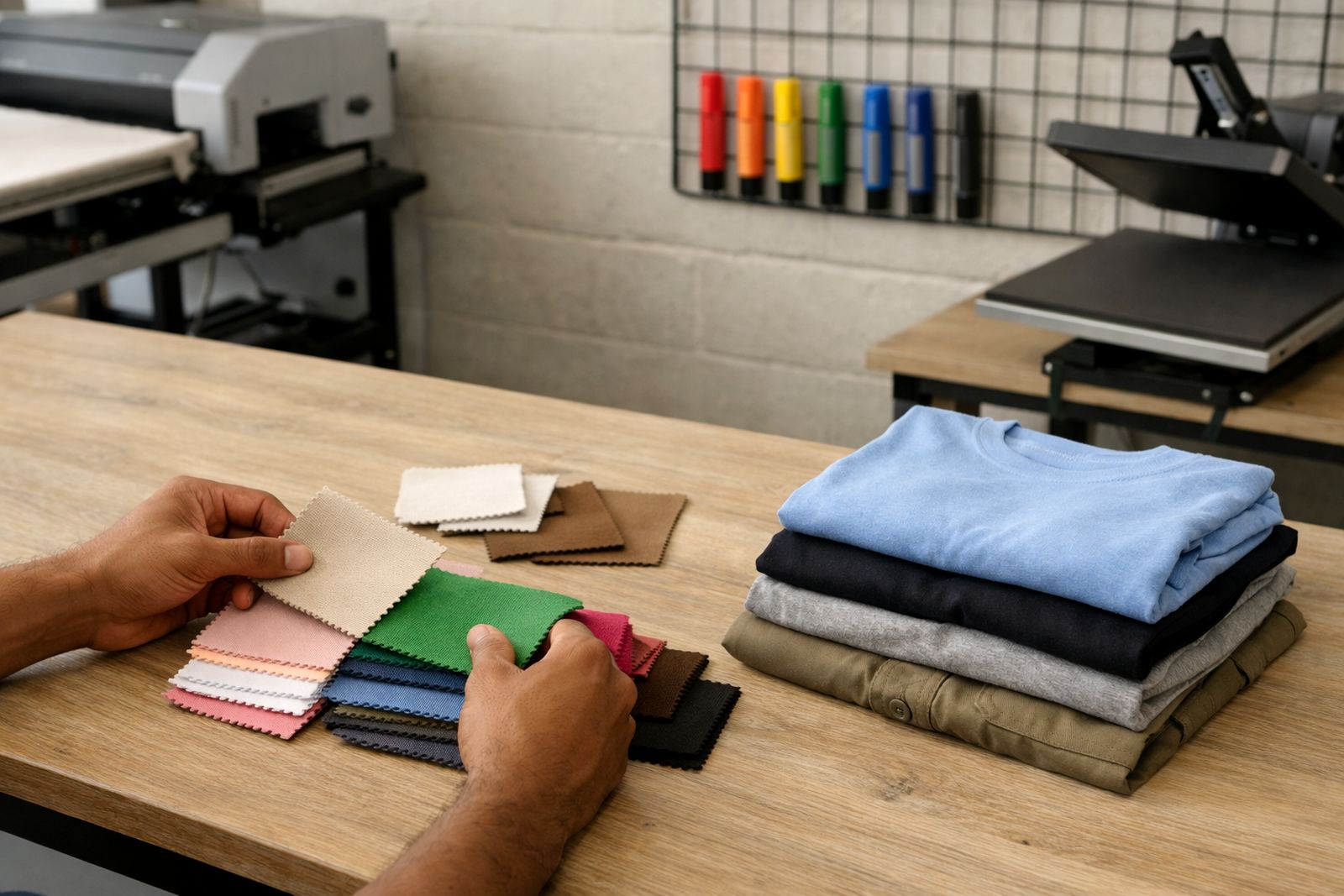
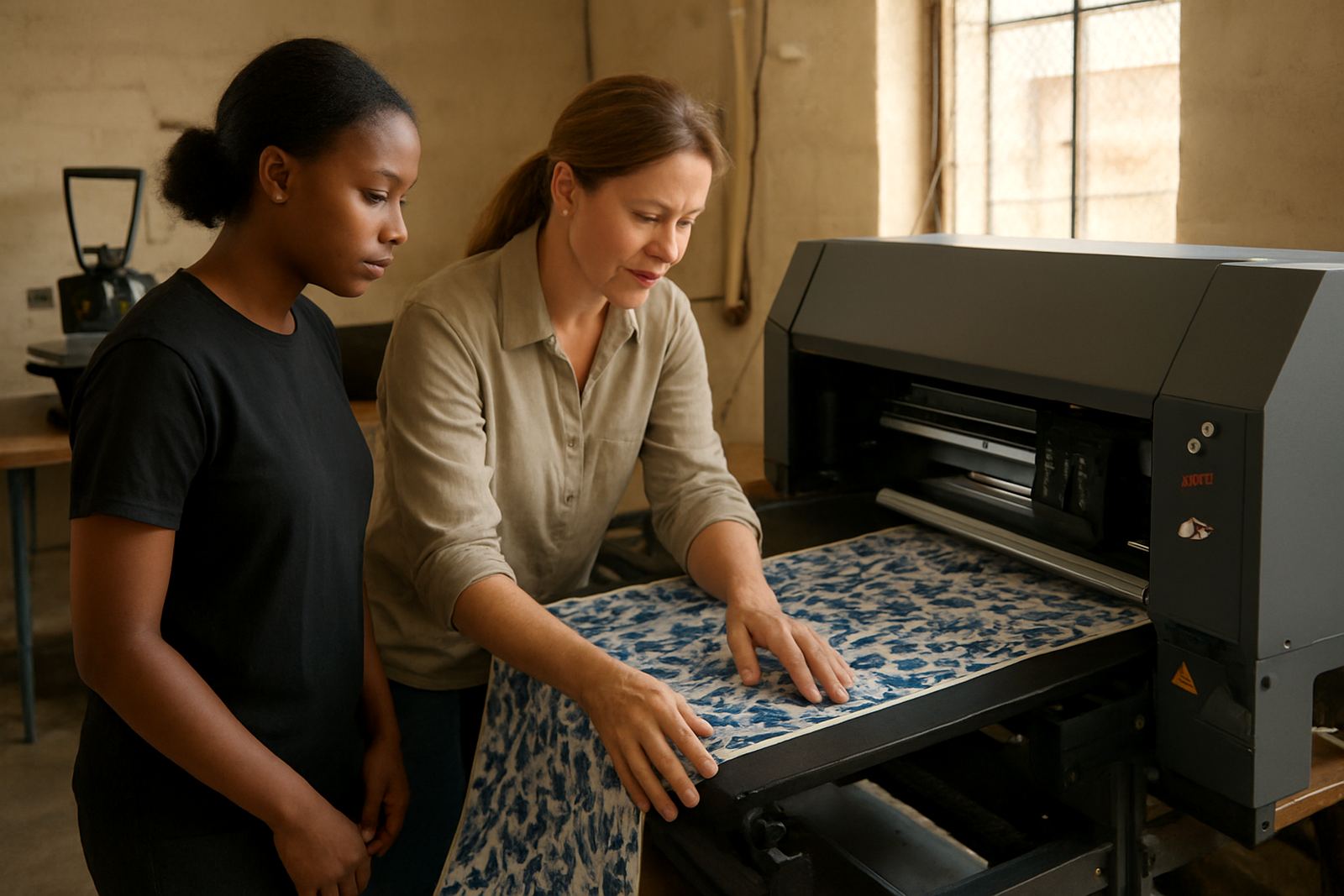
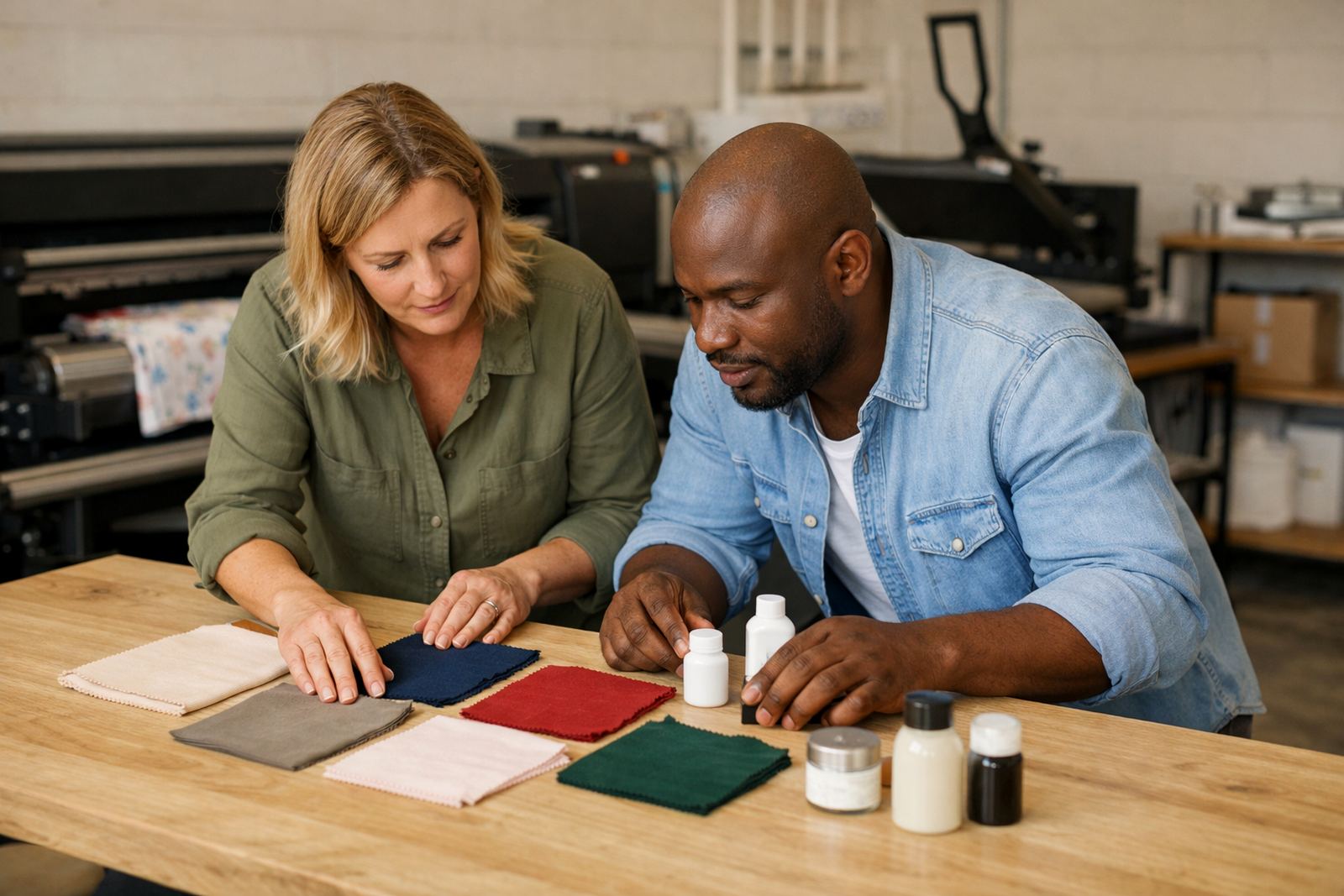
For direct-to-fabric work, proofs should make it easy to compare the expected result against the real substrate. A digital image alone is often not enough because fabric absorbs and reflects colour differently from paper. Where possible, include a printed strike-off or a small production sample. That is especially useful when dealing with pale pastel shades, fine text or photographic artwork. A clear proof helps the client approve what the machine will actually print, not what they hoped it might print.
- Use a labelled sample with job name, date and colour notes.
- Mark the approved side, orientation and repeat direction.
- State whether the proof is for colour, layout or both.
Agree on colour limits before the run starts
Colour is one of the biggest causes of client disputes. Screens vary, lighting changes, and different fabrics behave differently once ink is set. A client in Cape Town may compare a sample under office lighting while the print is used later in a coastal shop window. That can cause disagreement unless the approval step already covered the limits of colour matching.
This is where colour profiling and sample approval earn their keep. Set expectations early by explaining that there will always be a practical tolerance, especially with textured materials or mixed fibre fabrics. If the job is for a repeat customer, keep the previous approved sample on file and compare it against the new batch before starting. A few minutes spent checking colour now can save a full day's production later, and that is worth it.
It also helps to confirm whether the client wants consistency with a previous job or just a strong match to a reference file. Those are not always the same thing. A good approval note should say what was approved, under what light conditions, and by whom.
Use checkpoints on bigger orders
When a job is larger, especially for a chain of boutiques or a schoolwear supplier, approval should happen in stages. Do not wait until the entire order is printed. Break it into checkpoints so changes can be caught early while the cost is still low.
A practical structure looks like this:
- Step 1: artwork and layout approval.
- Step 2: colour and sample approval.
- Step 3: first production batch approval.
- Step 4: final packing and dispatch check.
These checkpoints matter even more when the client has more than one decision-maker. A designer may approve the artwork, but the buyer may later reject the colour. If you know that before production starts, you can insist on one final sign-off from the person who pays the invoice. It is not rude, it is sensible business.
Keep a clear paper trail that staff can follow
Approvals should not sit in one person's memory or disappear into a chat thread. Store them in a way that the sales, production and dispatch teams can all access. That can be a signed sample note, a saved PDF, a photo of the approved print, or a simple job sheet with initials and date. The important part is that there is one agreed record, not three different versions.
For a Wadeville operation handling jobs from Johannesburg, Pretoria and further afield, this is especially useful when work moves between consultation, printing and finishing. If the printer is busy or a technician is checking a machine after a breakdown repair, the team still needs to know what was approved. Clear records also help when a customer calls two weeks later asking for “the version we liked before”.
Good records protect the relationship as much as the job. When a client can see exactly what was signed off, conversations stay factual. That keeps small misunderstandings from turning into arguments.
A local example from a busy Gauteng order
Take a small fashion label in Germiston ordering printed lining fabric for a winter range. The owner wants a deep navy base with a fine repeated motif, but the first artwork file shows the motif too close to the seam line. During approval, the team spots it and adjusts the repeat before production. The owner then signs off a printed sample, not just the screen image. By the time the order moves into full run, there are no surprises.
Now compare that with a rushed order where the client only says “yes, go ahead” on the phone. The print comes out slightly lighter than expected because the cloth behaves differently after heat setting and the client was looking at a backlit screen. One correction turns into a reprint, a delayed collection and an unhappy retailer. The difference is not the machine, it is the approval habit.
In South Africa, where lead times can be squeezed by load-shedding, courier delays and last-minute retail changes, that kind of discipline is worth more than people think. It keeps the job moving even when the week gets messy.