Start with a clear floor and a clear walk path
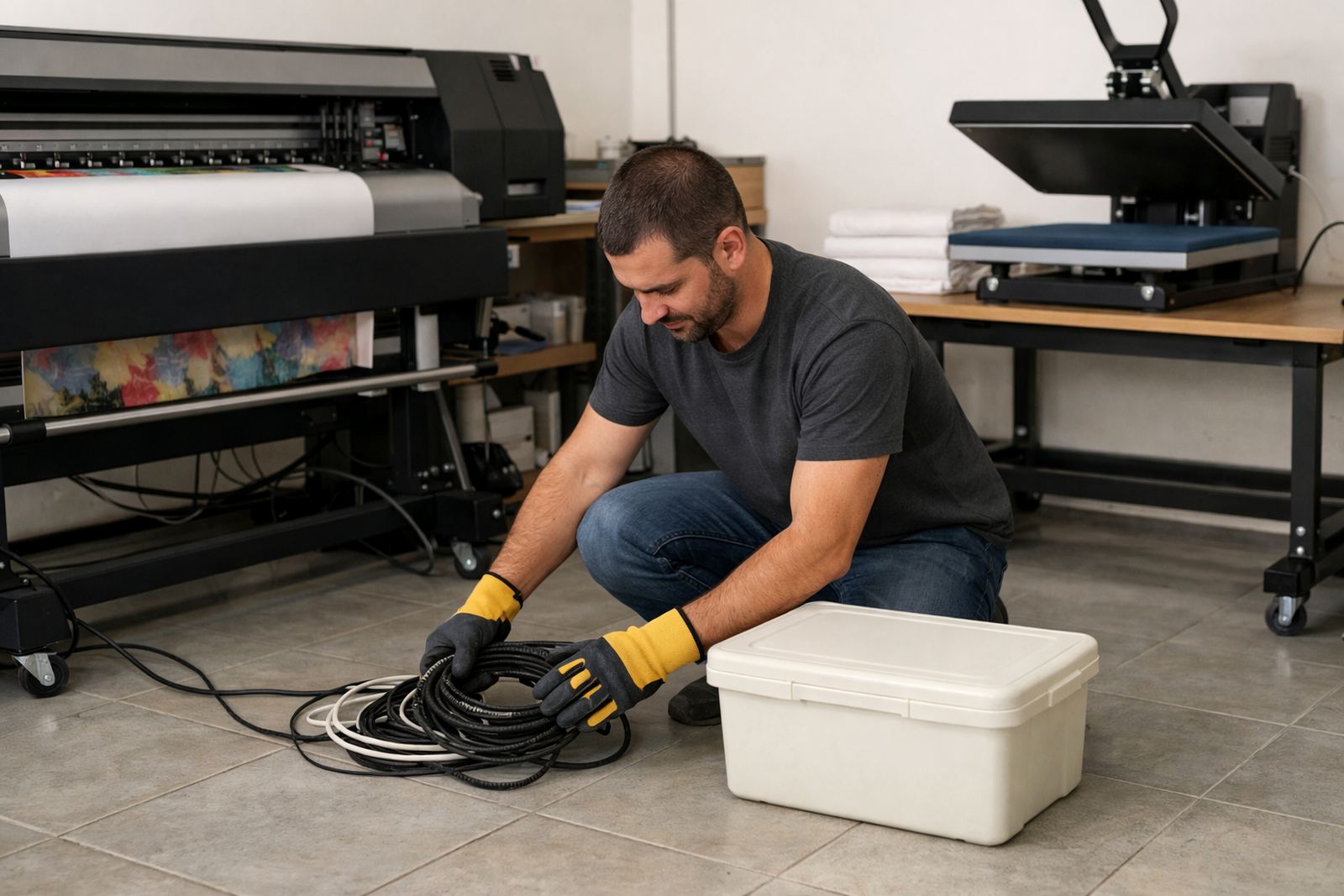
Most print room incidents start with something simple on the floor. Offcuts, empty ink cartons, power leads and wet mop water can turn a busy space into a hazard in seconds. In a small workshop, every person should know where they can walk without stepping over a cable or squeezing past a hot press.
Keep the area around each machine open enough for loading, cleaning and emergency movement. If you are working in a Germiston or Boksburg unit where space is tight, mark out walk paths with tape and keep storage against the wall. That small bit of structure helps when the room is full and someone is carrying a roll of fabric.
- Remove offcuts, packaging and scrap media as soon as a job is done.
- Keep cables off the floor where possible, or secure them with covers.
- Clean spills straight away, especially near presses and power points.
- Leave enough space to access switches, plugs and emergency shut-offs.
Handle heat press work with the same care every time
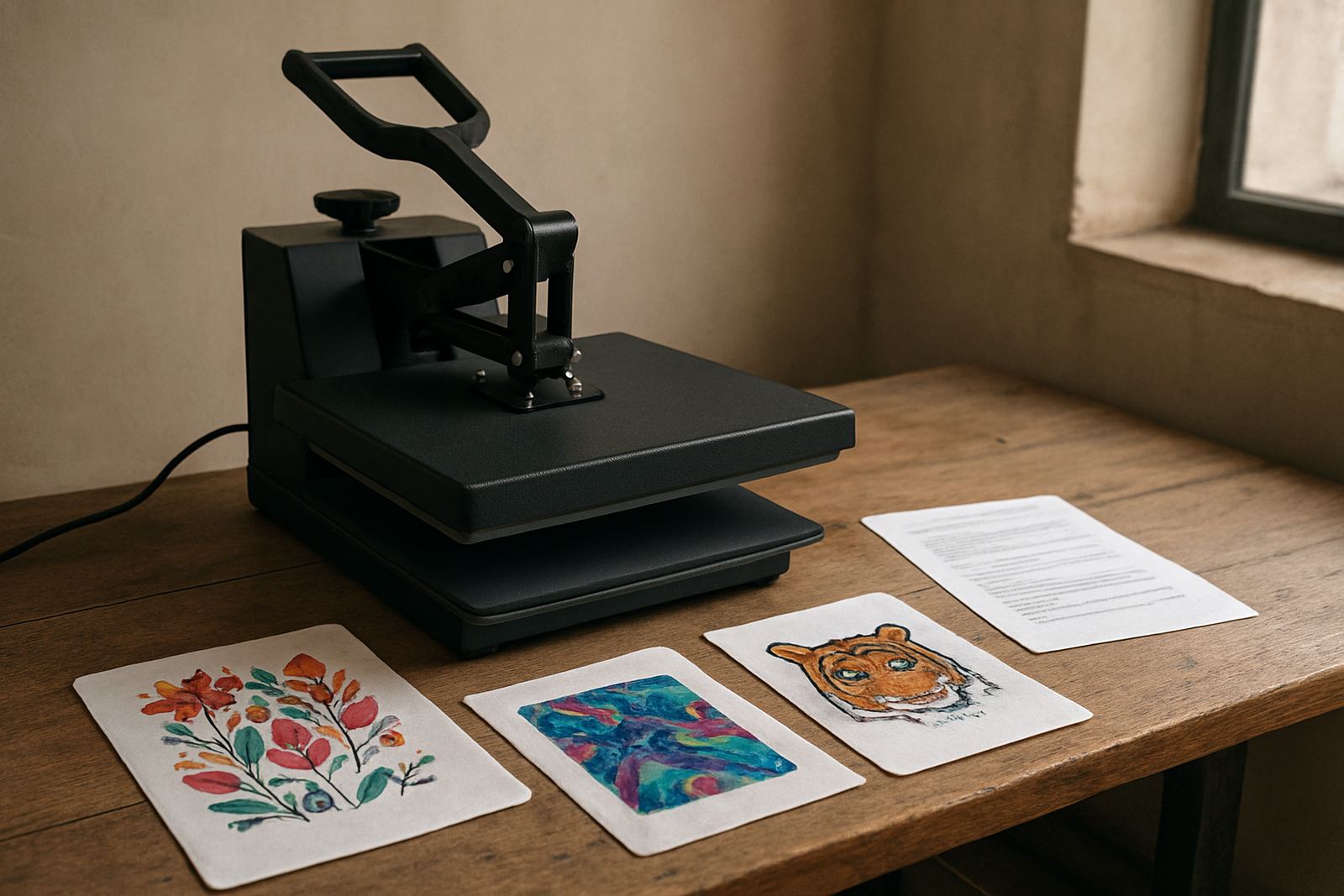
Heat presses are useful, but they are also one of the easiest places for hand burns and rushed mistakes. The platen stays hot long after the job is finished, and operators often reach in too soon when orders are piling up. Build a simple routine and do it the same way each time.
Train staff to keep hands clear of the press edge, use the handles properly and let the machine cool before cleaning. If a job needs a T-shirt or transfer moved by hand, use a heat-resistant glove or a suitable tool rather than fingers. In summer, when a workshop in Durban is already warm and humid, heat fatigue can make people careless so shorter shifts and better airflow help.
- Never leave a press open and unattended while hot.
- Place a warning sign near the press if more than one person shares the room.
- Keep flammable items, solvent wipes and paper stacks away from hot surfaces.
- Let the press cool before wiping or storing it.
Keep inks, cleaners and chemicals stored properly
Inks and cleaning liquids are everyday supplies, but they should be treated as workshop chemicals. Open bottles left on a table can spill, evaporate or get mixed up. In a South African summer, heat can affect storage conditions too, especially in metal rooms or units that sit in full sun.
Use sealed containers, label decanted liquids and store them on a stable shelf away from direct sunlight. Do not keep chemicals next to food, drinks or personal items. If your team uses cleaning cloths or flush solutions, dispose of them in a proper bin and do not leave soaked rags balled up beside a machine.
- Keep all ink bottles upright and tightly closed when not in use.
- Separate cleaning liquids from inks so they cannot be mistaken for each other.
- Store chemicals where children, visitors and delivery staff cannot reach them.
- Use gloves where required and wash hands before eating or touching your face.
Protect machines from dust, damp and careless power use
Direct-to-fabric equipment performs best in a clean, stable environment. Dust gets into moving parts, damp air can affect media and coastal humidity can make storage difficult. For businesses in Cape Town or Durban, that means keeping the room as dry and dust-free as possible and checking machine covers every day.
Power is another safety point. Load-shedding and unplanned outages can interrupt a print run and leave equipment in an awkward state. If machines are switched off and on repeatedly, or if power returns suddenly, staff must know the correct restart process. A surge protector or properly rated backup setup can reduce damage, but only if it is installed and used correctly.
Good practice is simple: switch equipment off in the right order, keep vents clean, and never overload one socket with too many plugs. If you hear unusual noises, smell burning or see a fault warning, stop the machine and report it before trying to push through the job.
Teach one person the job, then teach the second one too
Many small print rooms rely on one experienced operator. That works until the person is on leave, stuck in traffic or busy on another site. Safety improves when more than one team member knows how to load media, check settings and shut down a machine properly. It also reduces panic when something goes wrong.
Keep short written steps near each work area. Not a big manual, just the basics in plain language. Include start-up, stop procedures, cleaning steps and who to call if a fault appears. In places like Pretoria or Bloemfontein where workshops may run with lean teams, this kind of simple handover can prevent mistakes at the worst time.
- Show new staff how to clean around moving parts without forcing anything.
- Explain where the emergency stop and main isolator are located.
- Make sure staff know which jobs need gloves, masks or extra care.
- Keep a log of faults, cleaning and service dates so problems are not repeated.
Use a closing routine before the lights go off
Closing time should not be a rushed afterthought. A proper end-of-day routine lowers fire risk, protects equipment and makes the first shift of the next day easier. This matters even more in areas where load-shedding can hit at short notice, because a room left untidy can become unsafe before staff return.
Before locking up, check that hot equipment has cooled, inks are closed, floors are dry and all machines are in a safe state. If a production audit shows the same issue repeating, such as blocked ventilation or a cluttered corner, fix it once rather than warning staff over and over. A small workshop in Midrand or Johannesburg can stay safe with discipline, not expensive extras.
A good closing routine usually takes less than 15 minutes, but it can save hours of repairs and avoid injuries that stop production for days.