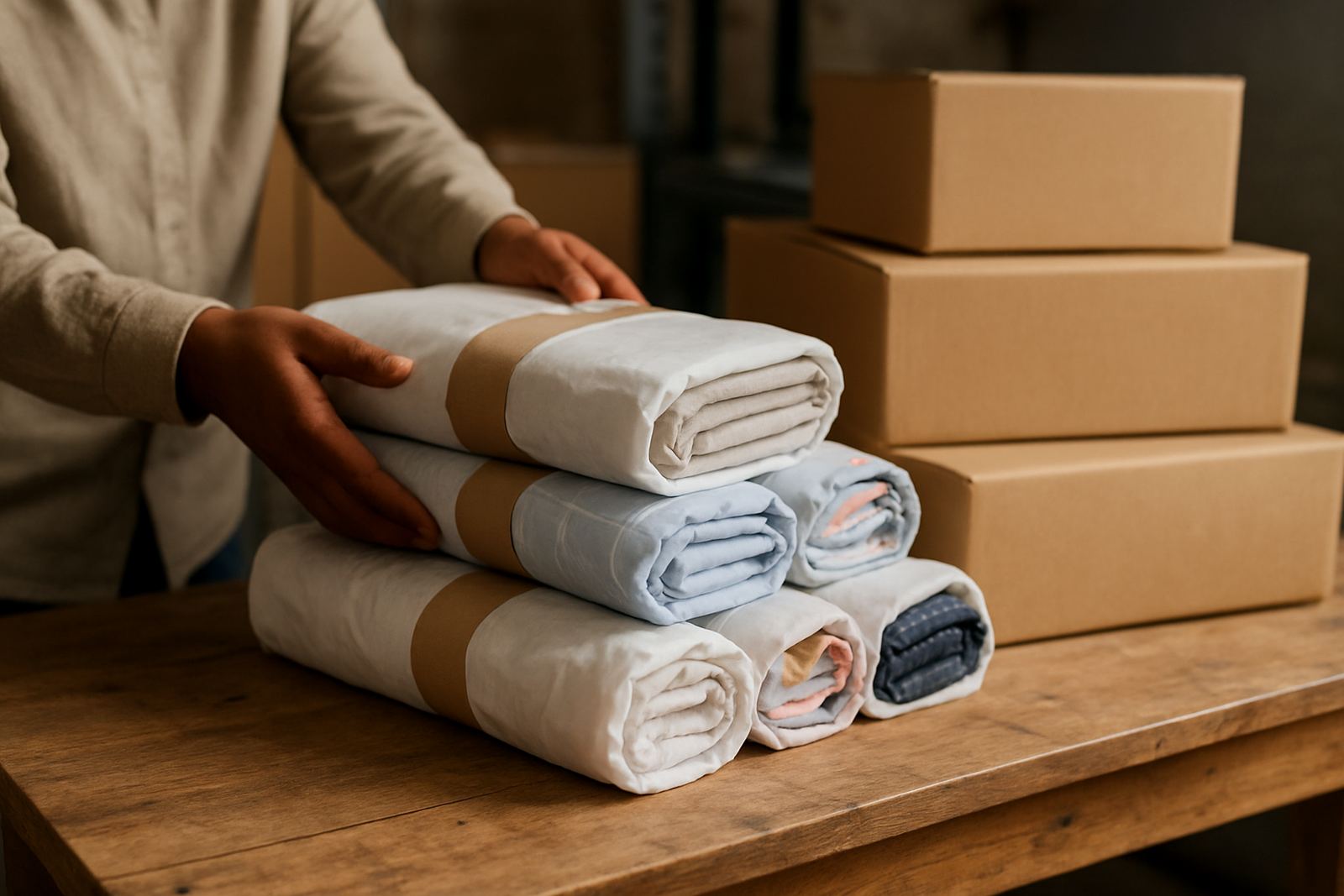
Why packing matters after the last print comes off the machine
Once a fabric job is printed, cured or heat set, the next risk is not the press or the printer. It is handling. A good print can be ruined by damp stacking, rough folding, loose film, or a courier that turns a clean roll into a crushed bundle. For small garment and textile businesses in South Africa, packing is part of production, not an afterthought.
Good packing keeps colours clean, edges neat and surfaces free from dust. It also helps when you are sending work from Wadeville to Sandton, Pretoria, Durban or Cape Town, where parcels may spend a day or two in transit and be handled several times. If the fabric is for a boutique, school uniform maker or market seller, first impressions count. Customers notice flat folds, tidy labels and fabric that opens without chalk marks or lint.
The aim is simple: protect the print, control moisture and make unpacking easy. That means choosing the right fold, the right wrap and the right outer carton or tube for the type of textile you printed.
Fold, roll or tube: choose the format that suits the fabric
There is no single packing method for every textile. Light woven cotton, stretch fabric and heavier canvas all behave differently. The best choice depends on the finish, the width of the cloth and how far it has to travel.
For flat garments panels or short runs, folding with clean tissue between layers can work well. For wider fabric lengths, rolling is often better because it reduces hard crease lines. Tubes are useful when the fabric must stay very flat, while flat cartons suit smaller folded sets that need a neat presentation.
- Folding: Best for cut panels, small orders and items that will be unpacked soon.
- Rolling: Better for longer metres, delicate prints and jobs that must stay smooth.
- Tube packing: Useful for premium presentation and strong crease protection.
- Flat carton packing: Good for stacked bundles, sample packs and retail-ready sets.
Many businesses in Johannesburg think folding saves space every time, but if the fabric is prone to sharp crease lines, a roll often saves the job. In hot weather or humid conditions, especially around Durban, rolled fabric also tends to handle moisture a bit better when packed correctly.
Keep dust, moisture and odour out of the parcel
Printed fabric should be packed as if it will pass through a dusty storeroom and then sit in a warm delivery van. That means the inner wrap must do more than just keep the fabric together. It should keep dirt off the print and limit exposure to moisture.
Use clean inner wrapping before the outer carton or sleeve. If the textile has been heat pressed or cured, allow it to cool properly before packing. Sealing warm fabric too early can trap moisture and create a smell or light marking. For coastal areas like Durban and parts of Cape Town, where humidity can be higher, this step matters even more.
- Use clean kraft paper or soft tissue between printed layers.
- Place a moisture barrier around the bundle when the route is long or damp weather is expected.
- Keep finished goods away from open windows, wet floors and unsealed chemical containers.
- Do not pack fabric that is still warm from finishing, even if the order is urgent.
A simple packing bench near the exit helps. Keep the area free from cutting scraps, loose ink lids and cardboard dust. It sounds basic, but many returns start with contamination at the final stage, not during printing.
Label every bundle so the receiving side does not guess
Clear labelling saves time and reduces mistakes. When printed fabrics arrive at a shop, sewing room or distribution point, the person receiving the parcel should know what is inside without opening every pack. This is especially useful when you are sending mixed orders across Gauteng or splitting stock between Pretoria and Boksburg.
Each packed bundle should carry the job name, fabric type, quantity and any handling notes. If there are colour-sensitive items, say so. If a parcel must stay flat, mark it clearly. If the order is for a repeat run, include the batch reference so the client can match future orders. Small labels prevent a lot of phone calls and confusion.
- Job name or order reference
- Fabric type and width
- Quantity in metres or number of panels
- Packing date and operator initials
- Special handling note such as keep flat or do not stack
For businesses using production audits and maintenance contracts, this is also useful for traceability. If a customer in Midrand reports a mark or a fold issue, you can check exactly how the job was packed and when it left the floor.
Protect printed surfaces from scuffing and pressure marks
Many packing problems happen because the printed face rubs against itself or against rough carton surfaces. Soft prints, dark backgrounds and heavy coverage show scuffs more easily than plain cloth. This is where a little extra care pays off.
When folding, place a clean layer between printed faces so the inked side does not rub during transport. When rolling, keep the printed side facing inward or outward consistently, depending on the fabric and finish. Do not use tape directly on printable areas unless it is absolutely necessary. Even a small bit of adhesive can leave a mark that is hard to remove.
If you are packing a premium order for a boutique in Sandton or a fashion studio in Cape Town, add a final outer sleeve that keeps the parcel neat all the way to handover. For municipal or school-related work, where the client may unpack in a storeroom, a stronger outer layer helps keep dust off during receiving and sorting.
Pressure marks often come from stacking too many parcels on top of each other. Keep heavy cartons off soft fabric packs and avoid tying bundles too tightly. A neat pack should be firm, but not squeezed hard.
Match the packing method to the delivery route
South African delivery conditions are not the same everywhere. A parcel sent from Wadeville to a nearby client may only travel a short distance, while a roll going to Bloemfontein or Durban can spend more time in transit and under different temperatures. Packing should match the route, not just the product.
For local handovers, a clean folded pack in a sealed sleeve may be enough. For long-distance courier work, especially in the heat of summer or during load-shedding delays that slow dispatch, use stronger outer protection. If stock may wait overnight at a depot, add extra moisture control and make sure the label is secure and easy to read.
- Short local delivery: light wrap, clear label, flat stacking
- Courier to another province: stronger outer carton or tube, moisture protection, secure end caps
- Retail display order: tidy presentation sleeve, printed job card, easy-open finish
- Bulk wholesale run: grouped bundles, batch labels, stack-friendly packing plan
A practical approach is to test one or two parcels each month by sending them through the same route your customers use. If the same crease or scuff keeps appearing, change the packing method before the next run.
A simple packing routine for small textile businesses
If your team is small, the packing process should be easy to repeat. A good routine does not need fancy equipment. It needs order, discipline and a clean work area. The best packing flow is usually the same every day, even when the print room is busy and the orders are different.
Start by letting the fabric cool fully. Check the print for marks, dust or loose fibres. Fold or roll it in the same direction every time. Add the inner wrap, then the label, then the outer carton or tube. Close and seal the parcel so it can travel without opening. Record the job before it leaves the floor. That one habit can save hours later.
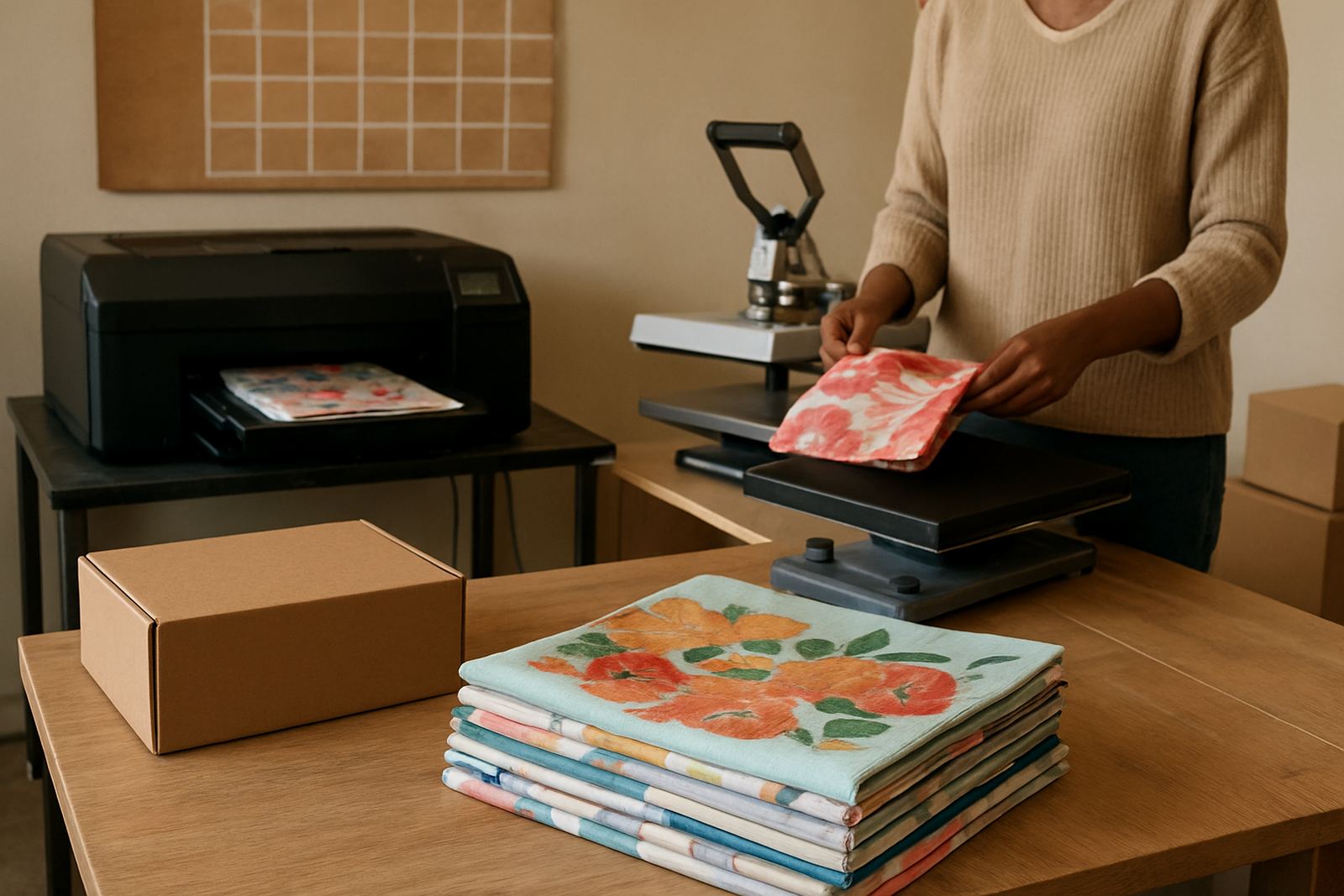
For smaller businesses in Germiston, this process often sits between finishing and dispatch, so it helps to keep the packing area close to the print line. One clear table, one shelf for wraps and one space for finished parcels is enough. Consistency matters more than size. When packing is done well, the customer opens a clean, flat order that looks ready for use straight away.
That is what gives printed fabric its value after production. The print may be the star, but the packing is what gets it there in one piece, neat and presentable.