
Start Every Shift With a Quick Machine Check
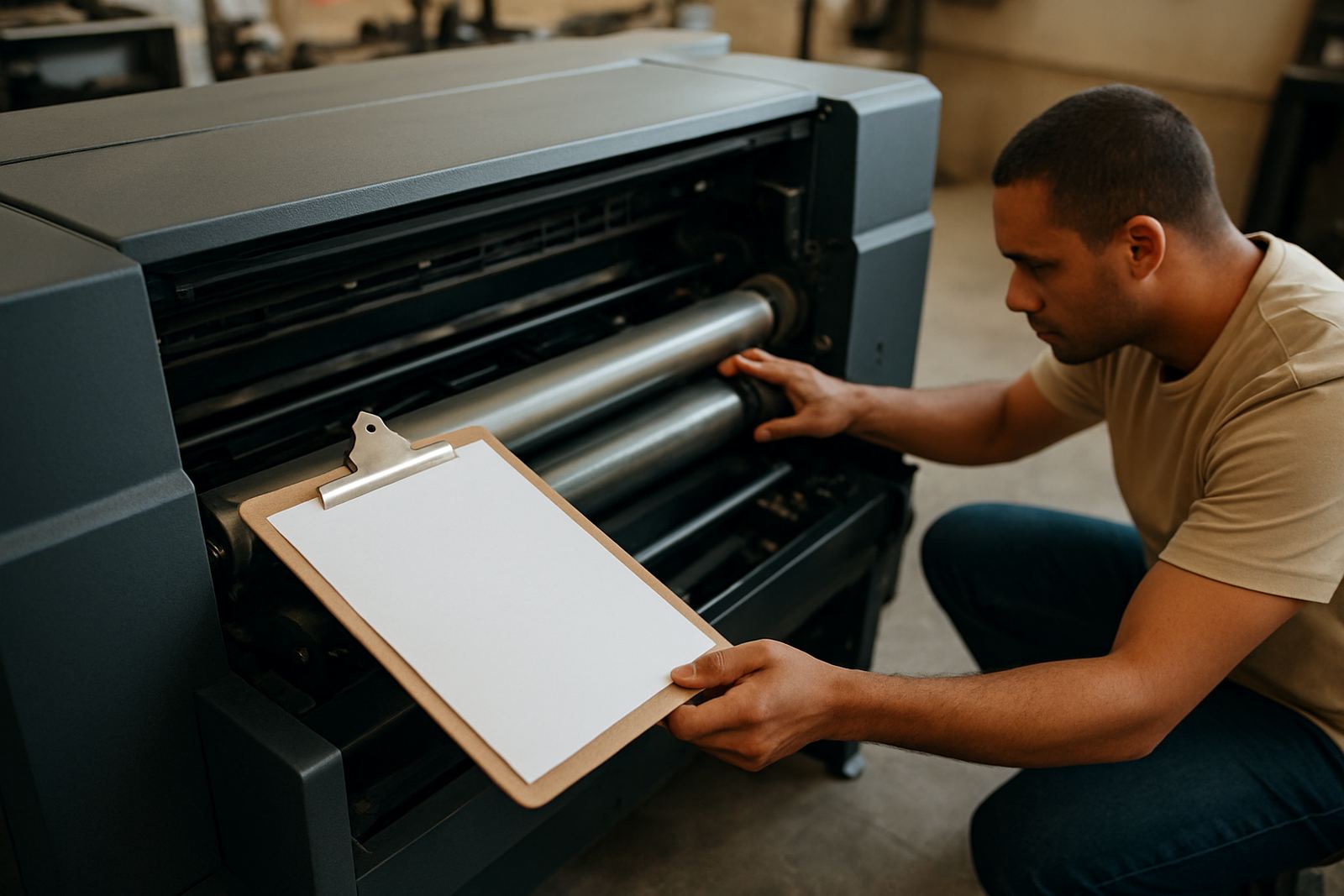
The best operators do a short check before the first job of the day. They look for loose cables, low ink, blocked heads, dirty platens and any warning lights before a production run begins. That five minute habit can save an entire roll of fabric and avoid a rush repair later in the day.
In Germiston and Wadeville, where many small shops start early to catch courier cut-offs, this routine matters even more. A machine that looked fine yesterday can behave differently after a long shutdown, especially during load-shedding or a humid night. An operator who notices a small change early can stop, clean and test before customer stock is affected.
- Check ink levels and expiry dates before loading media.
- Inspect the print path for dust, loose threads and dried ink.
- Run a nozzles test and compare it with the previous day’s result.
- Confirm that the fabric feed is straight and the platen is clean.
Handle Fabric Like the Print Depends on It, Because It Does
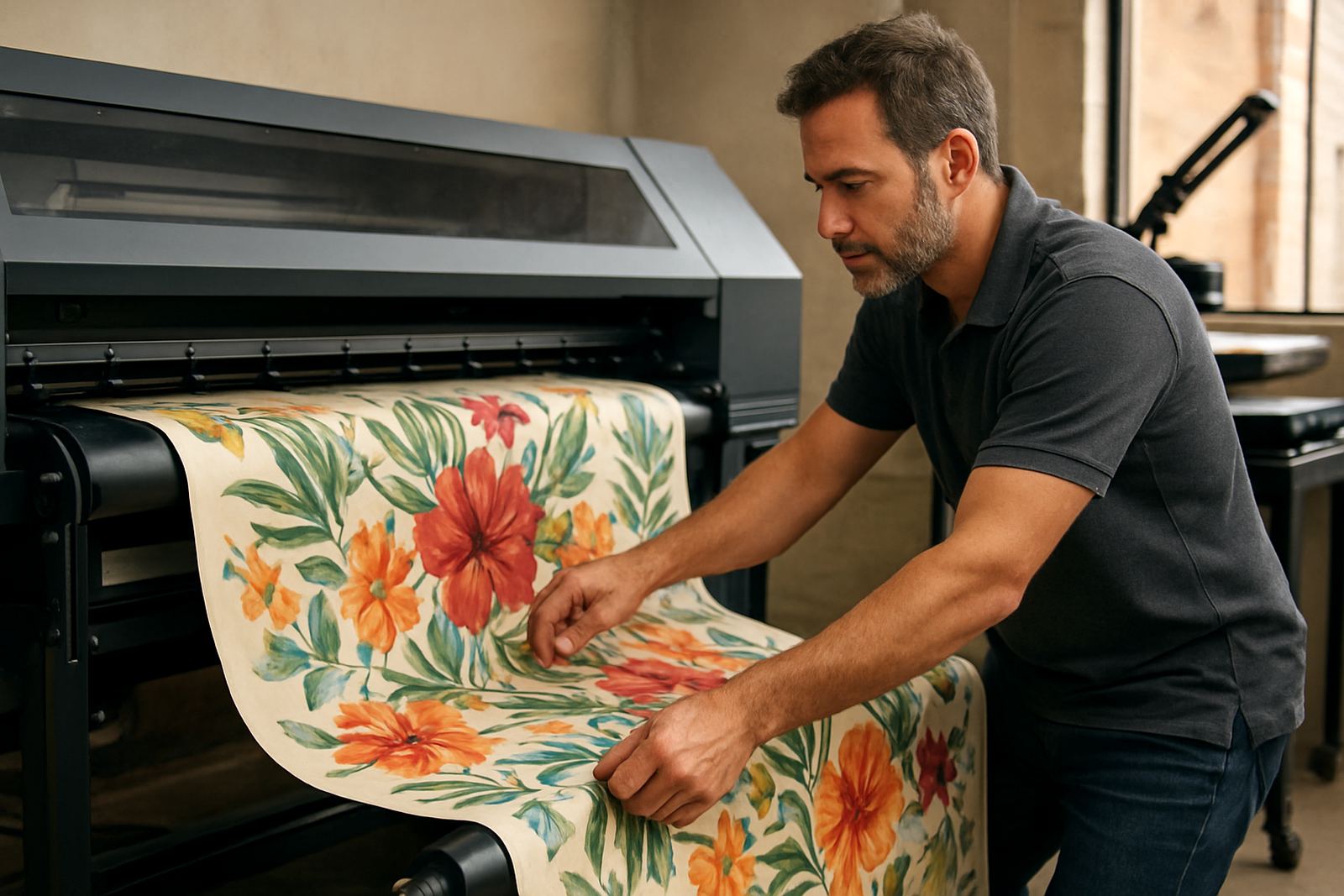
Many print problems begin before the file is sent. Fabric that is damp, dusty or badly folded can shift under heat and tension, which causes banding, misalignment and faded patches. A careful operator understands the material and treats each fabric type differently, whether it is cotton, polycotton or a coated textile for short-run fashion work.
That means checking roll edges, keeping material off the floor, and storing stock away from sunlight and moisture. On the coast, especially in Durban and Cape Town, humidity can soften the handling of some fabrics and make ink behaviour less predictable. In dry inland areas, static can be just as troublesome. Good handling habits keep the print stable. It really is that simple.
- Let incoming fabric acclimatise to the room before printing.
- Keep rolls covered and off concrete floors.
- Use clean gloves when handling white or light materials.
- Match heat press settings to the fabric and transfer method.
Follow Colour Checks Instead of Guessing
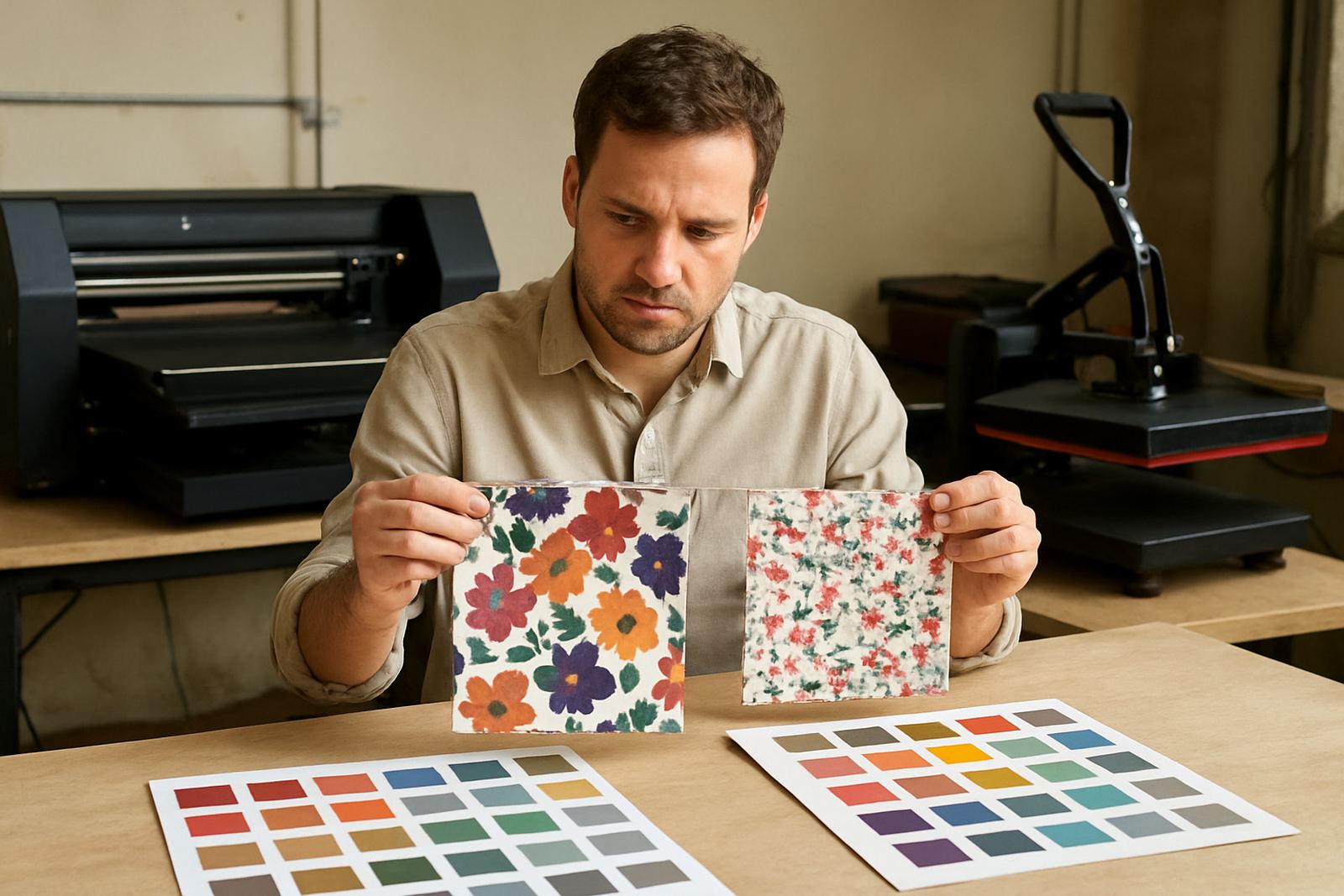
Colour consistency is one of the clearest signs of a skilled operator. The job is not to make every print look pretty in isolation, but to make the same colour repeat from one order to the next. That means using the same lighting, the same test file and the same colour reference every time a run starts.
If the operator guesses, the shop loses time on corrections and reprints. If the operator checks, then records the result, the business builds a repeatable process. A small shop in Pretoria printing school leavers shirts and boutique fabric panels will see the difference quickly, because customers notice when navy turns purple or skin tones shift too warm.
- Print a standard sample before a production run.
- Keep note of fabric type, temperature and humidity for repeat work.
- Do not change profile settings mid-job unless there is a clear reason.
- Compare the sample under the same light every time.
Cleanliness Is a Production Skill, Not Housekeeping
Operators often think cleaning is something to do after the work is finished. In reality, cleaning is part of production and it affects uptime every hour. Dust, lint and dried ink are some of the main reasons printheads clog and heat press surfaces mark the material. If the operator keeps the area tidy as work goes on, the machine stays more predictable.
In smaller shops around Johannesburg and Midrand, where one machine might handle everything from samples to full orders, a messy work area can slow the whole day. Put tools back, keep lids closed and wipe spills straight away. It sounds basic, but basic habits prevent expensive stoppages.
- Wipe the platen, feed rollers and nearby surfaces at set times.
- Keep inks sealed and stored away from direct heat.
- Remove lint from garments and fabric before pressing.
- Empty waste containers before they overflow.
Know When to Stop and Ask for Help
A good operator does not try to power through every fault. If the print starts shifting, if colours drift badly or if a head begins to fail repeatedly, the best action is to stop and report it. Carrying on can turn a small issue into a bigger one and damage stock that was already paid for.
This is especially important in busy periods, when orders are queued and everyone feels pressure to finish fast. A trained operator knows the difference between a minor adjustment and a fault that needs servicing. That judgement saves time, ink and stress. It also keeps customers from waiting on work that will need to be done again anyway.
- Stop the run if the issue repeats on two or three test prints.
- Record what changed before the problem started.
- Note the time, fabric type and machine settings.
- Escalate early when the fault is electrical, mechanical or ink related.
Keep Uptime High With Routine Habits and Records
The best operators do not rely on memory alone. They keep simple notes on cleaning times, nozzle checks, press settings and service history. Those records help spot patterns, like a printhead that struggles after long idle periods or a fabric type that needs different heat. Over time, the shop wastes less material and repairs become more manageable.
For a business serving clients across Johannesburg, Pretoria, Durban, Cape Town and Bloemfontein, that discipline matters. A shop may have different operators on different shifts, and each person needs to work from the same process. When the team follows the same routine, the machine performs better and the finished goods are more consistent.
- Use a simple log for daily checks and cleaning.
- Keep a note of recurring faults and how they were fixed.
- Train every operator on the same start-up and shutdown steps.
- Review the log before new seasonal work or large orders.
A Local Example From a Busy Gauteng Shop
One small garment studio in Germiston was losing time to reprints every week. The machine itself was not the only problem. Different operators were starting jobs with different settings, the fabric was sometimes left uncovered overnight, and no one was doing a proper morning check. After tightening the daily routine and training the team on the same steps, output became steadier and breakdown calls dropped. The biggest change was not a new machine, it was better operator habit s.
That is the real lesson for South African print shops. Quality is not only made by equipment and ink. It is also made by the person loading the fabric, checking the test print and deciding when a job is ready to go. When operators take that role seriously, the whole business runs better.