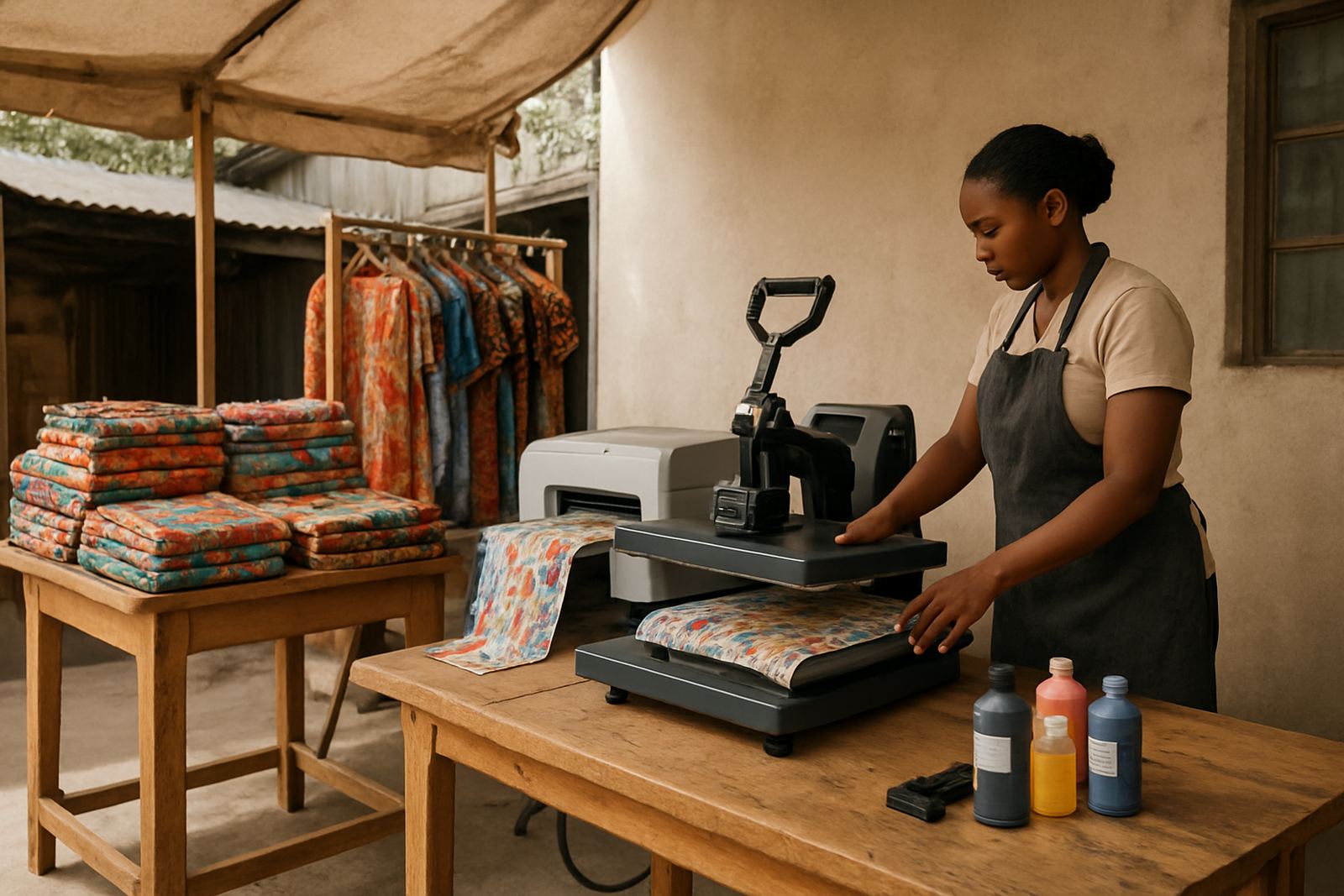
Know When the Market Table Has Outgrown You
A market stall is a good test bed because it shows what sells fast, what sizes move and which colours get picked up first. Once you are reprinting the same designs every week, turning away custom requests, or packing orders in your lounge after load-shedding, the business has probably outgrown the weekend setup.
The move into a dedicated print space is less about fancy fittings and more about control. You need a place where fabric stays clean, prints are consistent, and work can continue even when the power cuts. In places like Germiston, Midrand or Boksburg, many small teams start by converting a spare room, back office or light-industrial bay before moving into a larger unit.
- Look for signs of repeat demand, not just one busy market day.
- Track how long it takes to prepare, print and finish each order.
- Check whether your current space can store rolls, inks and finished work without dust or damp.
Start With the Right Floor Plan, Not the Biggest One
A small studio works best when each task has its own spot. Printing, drying, heat pressing, cutting and packing should not happen on top of one another. Even a compact room can function well if the route is clear and the operator does not need to move heavy rolls across the floor three times a day.
For South African conditions, keep the room dry and well ventilated. Coastal humidity in Durban can affect fabric and ink handling, while the dusty conditions common in some inland areas mean you need good cleaning routines. If your premises are in a light-industrial zone, check municipal rules on ventilation, signage, waste disposal and noise before you set up.
- Leave enough space around the printer for loading fabric and routine cleaning.
- Plan a heat press area away from the main print zone.
- Keep shelves off the floor to protect stock from damp and spills.
Choose Equipment That Matches Your Order Size
The right equipment depends on whether you are printing short runs for local designers or producing steady batches for schoolwear, events and boutique ranges. Direct-to-fabric inkjet printers are suited to makers who need vivid colour, fine detail and the ability to produce small to medium runs without setting up screens for every job. Heat presses remain useful for finishing, sampling and certain transfer applications.
At this stage, it helps to think about labour as well as machine size. A printer that is easy to load and maintain can save hours each week. If only one person is running production, user-friendly controls and clear maintenance steps matter more than extra bells and whistles. For a growing team, the better choice is the machine that keeps output steady when orders pile up before month-end or a busy market weekend.
- Match print width to the sizes you actually sell.
- Ask how much space the machine needs for loading and maintenance.
- Choose a setup that can be supported with spare parts and training locally.
Train the Team Before the Orders Stack Up
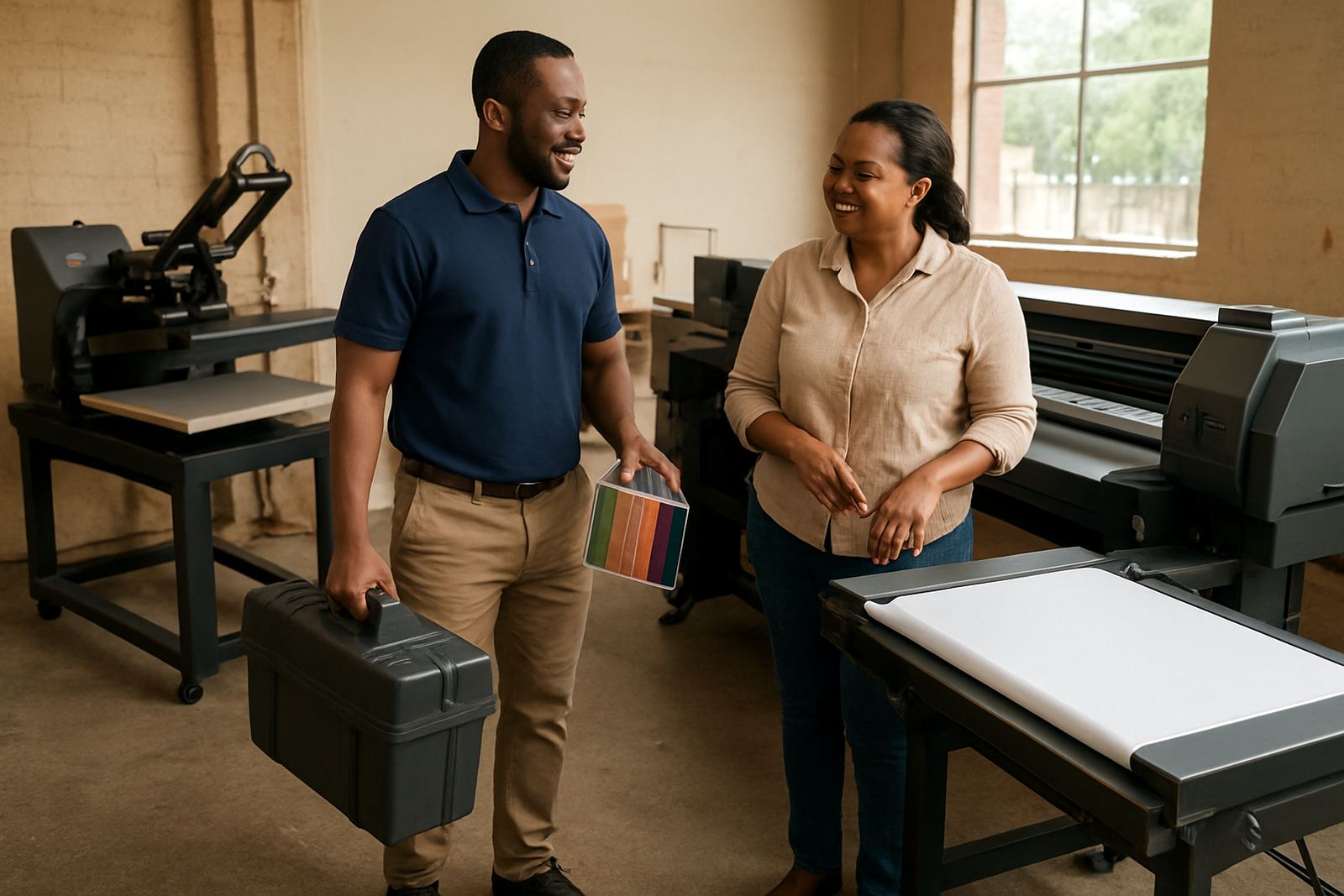
Many small businesses buy equipment and only then realise that colour management, media handling and maintenance all need proper training. A studio works best when the operator understands the basics from day one: how to load fabric, when to clean the printheads, how to spot banding, and how to keep colours consistent from sample to repeat order.
That is where structured set-up training makes a real difference. A team in Pretoria does not want the same advice as a team in Cape Town if the room conditions and work flow are different, so practical guidance should be tied to the actual space and production goals. A clear handover also helps when one person is away and another needs to step in without messing up an order.
- Train at least two people where possible.
- Keep a simple daily checklist for cleaning and startup.
- Record colour settings for repeat customers and popular fabrics.
Protect Print Quality From the Start
Good-looking prints are not only about the machine. Fabric choice, ink handling, colour profiling and curing all affect the final result. If you are selling to boutiques or taking custom orders, the customer will notice if one batch is brighter than the next or if the print feels different on each fabric type.
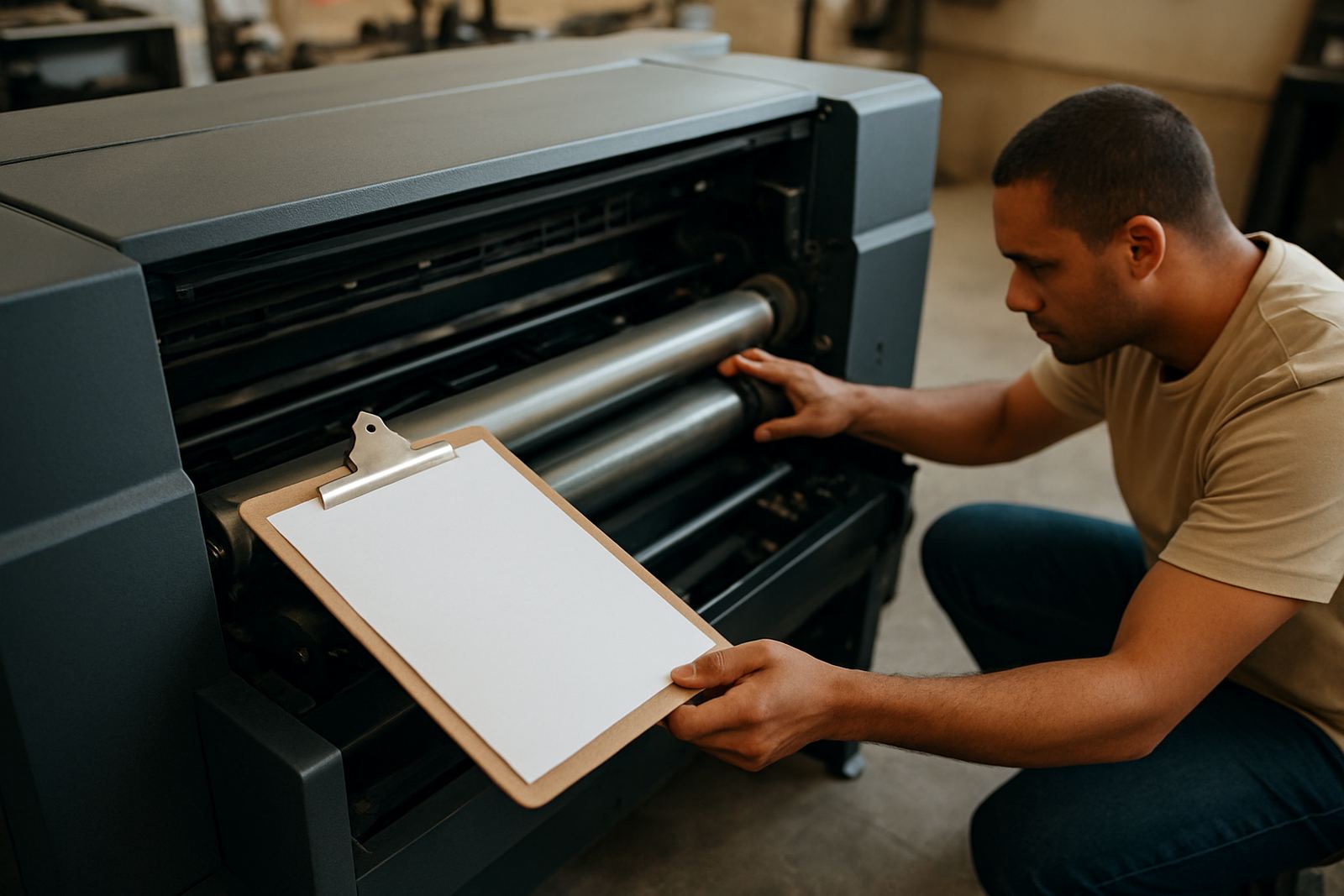
In a small studio, prevention is cheaper than reprinting. A routine service schedule, regular ink system flushing and printhead cleaning will cost less than losing a rush order. If your business is in a coastal area or a dusty industrial pocket, this matters even more because humidity and fine dust can shorten the life of equipment. Keep records of every service so you know when a slowdown is a maintenance issue and not a production problem.
- Test colours on the actual fabric before full production.
- Use one standard process for cleaning and startup every day.
- Schedule preventive servicing before peak seasons, not after a fault appears.
Use a Local Example to Map the Move
Take a Germiston maker who starts by printing scarves and T-shirts for a weekend craft market. At first, the work happens at home and stock is packed in the car the night before. After a few months, repeat customers begin asking for matching prints, larger orders and faster turnarounds. That is the point where a proper print room in Wadeville or a nearby light-industrial area makes sense.
With the right setup, the business can move from one-off sales to a more dependable schedule. Production audits help identify bottlenecks, relocation support helps move machines safely, and remote troubleshooting can keep things moving when an issue appears during a busy week. The goal is not to make the business look bigger than it is, but to make it work better every day.
- Move stock and equipment in stages so sales do not stop.
- Keep one area for samples, one for production and one for packing.
- Review whether your current workspace can still support growth every six months.
From Weekend Hustle to Steady Production
The leap from market stall to studio is really a shift in discipline. Once you have repeat demand, the business needs a place where output is predictable, colours stay true and maintenance is part of the routine. That is what turns a promising side hustle into a proper print operation that can serve clients in Johannesburg, Pretoria, Durban, Cape Town and Bloemfontein without constant fire-fighting.
If you are ready to make that move, start with the basics: the right machine, a workable floor plan, trained staff and support that understands local conditions. For many South African makers, that is the difference between busy weekends and a business that can carry on through the week as well.