Why fabric choice changes the final print
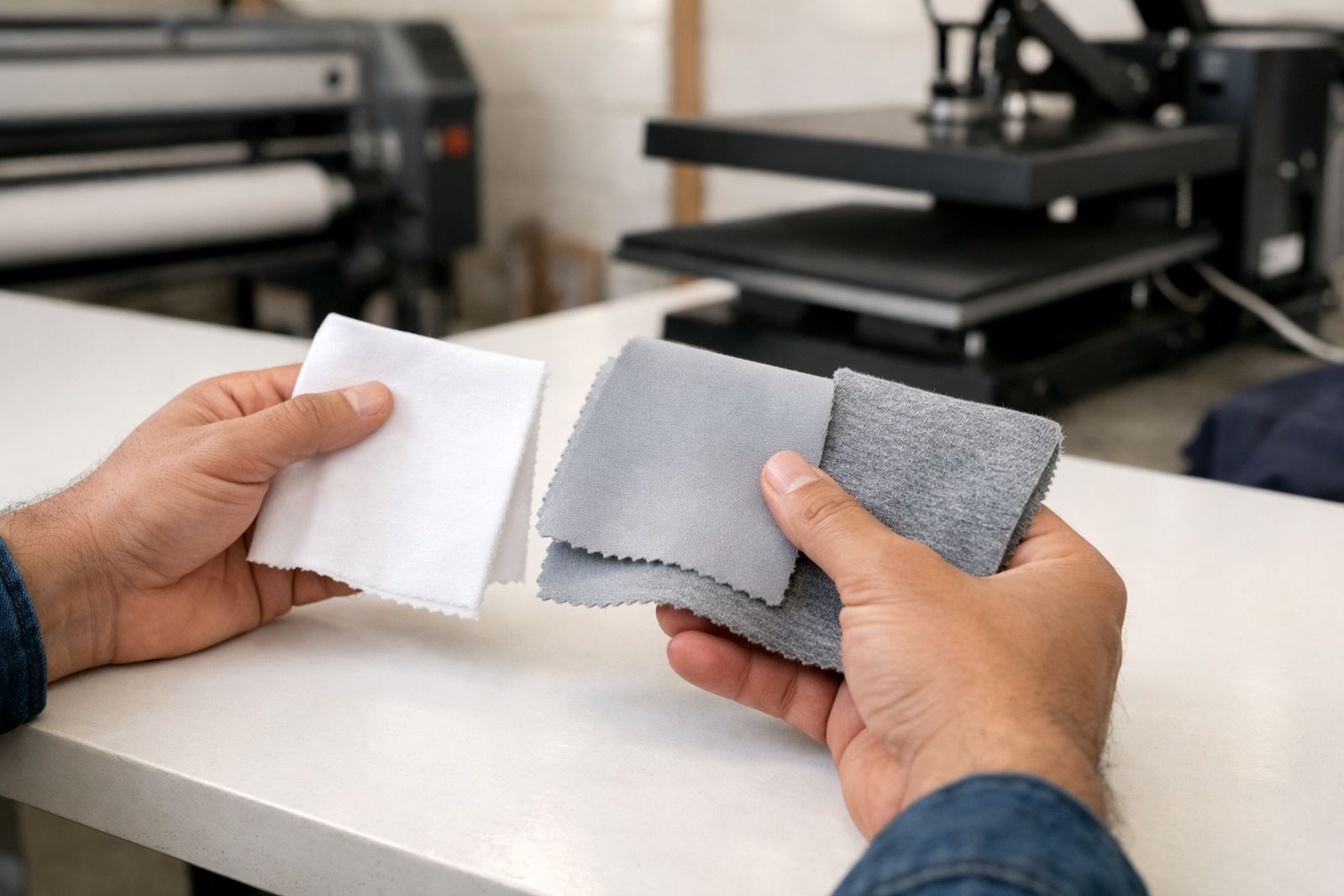
Not every fabric takes ink or heat in the same way. A cotton T shirt, a polycotton work shirt and a stretch sports fabric all behave differently once they go through printing, pressing and washing. That is why the same artwork can look bright on one item and flat on another.
For small garment businesses, the best fabric is not only the one that prints well. It must also match the customer's use, price point and care expectations. A premium event shirt for Sandton, for example, can justify a softer fabric and finer finish. A school or stokvel order in Soweto may need a tougher cloth that holds up to frequent washing and rough handling.
Cotton gives strong colour and a familiar feel
Cotton is often the first choice for custom apparel because it is comfortable, breathable and easy to sell. It usually gives good colour depth and sharp detail, especially on light shades. For T shirts, tote bags, aprons and babywear, cotton remains a practical option for many South African printers and decorators.
- Best for soft hand feel and everyday wear.
- Works well for short runs, samples and boutique orders.
- Can handle detailed artwork if the surface is smooth.
- May shrink if the garment is not pre-treated or washed carefully.
The main point to explain to customers is that cotton can feel premium, but it also needs proper care. If a client wants low maintenance for a restaurant uniform or a market stall apron, you should guide them on washing temperatures and pressing after care.
Polyester suits sportswear and brighter production
Polyester is common in sportswear, promotional clothing and many work garments. It handles moisture well and keeps its shape better than some natural fabrics. On the print side, polyester can produce strong colour, but it needs the right process and temperature control. If heat is too high, the fabric can mark, shine or distort.
This matters in places like Durban where humidity is high, and in coastal towns where garments may be stored in warmer conditions. Polyester also has different finishing needs from cotton. A customer ordering running tops for a club in Pretoria may want fast drying fabric, while a school or events client may care more about durability than softness.
- Good for sports tops, staff shirts and activewear.
- Usually dries quickly and keeps shape well.
- Needs careful heat settings during pressing and finishing.
- Can be a better choice for repeat production where consistency matters.
Blends offer balance for price and wear
Polycotton and other blended fabrics are popular because they give a middle ground between comfort, durability and cost. They can be easier to handle than some pure synthetics and more stable than very soft knits. For many garment businesses, this is where a lot of everyday printing work sits.
Blends are useful when customers want decent colour, decent feel and a price that still allows resale margin. A boutique in Germiston might use a blend for branded staff wear, while a small label in Bloemfontein may prefer it for casual fashion pieces. The fabric may not always give the same richness as pure cotton, but it often offers fewer complaints about shrinking, creasing or shape loss.
When you quote for blended items, be clear about the final look. Some clients expect a deep matte finish, while others want a brighter surface. That conversation saves time and prevents returns later on.
Stretch fabrics need careful handling and honest expectations
Elastane rich fabrics, Lycra blends and other stretch materials are common in fashion tops, leggings and fitted sports items. They move well on the body, but they also respond more sharply to heat, tension and pressure. If pressed badly, the print can crack, stretch or sit unevenly on seams and curves.
For this reason, stretch items should be treated as a special category. The print area needs careful layout, and the operator should check how the garment behaves before full production starts. If a customer in Midrand wants fitted club wear, they should be told upfront that the finish will be different from a standard cotton tee. That is normal and it is better to explain it early than to deal with a complaint after delivery.
- Best for body fitting garments and performance wear.
- Needs controlled heat and even pressure.
- Printing across seams or highly elastic areas can be risky.
- Small test runs are wise before full production.
Finishing, washing and customer care depend on the fabric
The fabric choice also affects finishing steps like curing, folding, packing and pressing. Some fabrics hold creases if they are packed too soon. Others pick up shine if the heat press is too hot. Coastal humidity can also affect drying time and storage, especially if you are running production from a small workshop with limited ventilation.
Customer expectations need to match the fabric. A client buying a premium fashion item may accept a softer, more delicate finish. A client ordering promotional shirts for a busy event company in Johannesburg may want easy washing and quick turnaround. When you sell the right fabric for the use, you reduce breakdowns, complaints and rework.
For small businesses, a simple fabric checklist helps:
- Check fibre content before committing to a large run.
- Match the fabric to the customer's use and budget.
- Test colour on the same cloth, not only on a sample sheet.
- Confirm wash instructions before final delivery.
A Germiston example: choosing fabric for real South African orders
One local example is a small clothing business in Wadeville taking orders for a school event and a corporate family day at the same time. The school shirts needed a durable blend that could handle repeated washing and rough use. The event shirts needed brighter colour and a softer finish for a shorter wear cycle. The artwork was similar, but the fabric choices were not.
That is the practical lesson. The best fabric for printing is not one universal option. It depends on the garment, the budget, the end user and how the item will be cared for. If you are setting up production in Germiston, Johannesburg or Pretoria, it helps to run samples first and keep notes on how each fabric responds to printing, pressing and washing. That way your quotes are better, your output is more consistent and your customers know what they are paying for.