Start With Fabric That Feels Soft and Wears Well
For babywear, the first question is not what looks good on a roll but what feels right against skin. Most small South African brands work with cotton-rich knits, fine interlock, lightweight jersey and soft fleece for cooler months. These fabrics are kinder on sensitive skin and they usually print cleanly when the surface is prepared properly.
If you are selling in Johannesburg or Pretoria, where winter mornings can be dry and cool, a lighter jersey may work for layered baby grows and rompers. In Durban and coastal areas, breathability matters more because humidity can make thicker fabrics feel heavy. For Cape Town and Bloemfontein, where the weather can shift fast, it helps to keep two fabric options on hand so you can move between summer and winter ranges without changing your whole production flow.
Always test the fabric before a full run. A soft hand feel is important, but so is shrinkage after washing and how the cloth behaves under heat pressing. A fabric can look fine on day one and still twist, curl or go dull after the second wash if the fibre mix is wrong.
Print Planning for Tiny Garments and Small Runs
Babywear is often sold in small batches, gift sets and made-to-order runs. That means your print plan should be simple enough to repeat, but detailed enough to keep the range interesting. Before printing, map out where your artwork sits on each size. A design that looks centred on a 3 to 6 month vest may sit too low on a newborn size if you do not adjust the placement.
Direct-to-fabric printing is useful for this kind of work because it supports short runs and fine detail without large setup waste. That matters if you are a small team in Germiston, Boksburg or Midrand trying to keep stock moving and limit dead inventory. It also helps when you want to test a new collection with a local market before committing to a bigger order.
- Keep artwork bold enough to read at small scale.
- Leave breathing room around necklines, sleeve openings and snaps.
- Plan your size grading before you print the first sample.
- Use repeatable colour references for each seasonal colourway.
One extra practical point is colour contrast. Soft pastels are popular for babywear, but a pale print on a pale base can disappear after washing. On cream, sand or light grey garments, darker outlines often hold up better.
Ink Choice, Wash Durability and Skin Comfort
Babywear buyers pay close attention to comfort, so your print system needs to support that expectation. The right ink should bond well to the fabric and still remain flexible after washing. If the print feels stiff or plasticky, parents notice immediately. That is especially true on garments worn next to the skin, like vests and sleepsuits.
For garment businesses in South Africa, wash durability is not a luxury. Many customers wash baby clothes often, sometimes daily, and on hot cycles because of spills and stains. Your print needs to cope with that routine without cracking or fading too quickly. A proper colour test should include several wash cycles and a rub test before you release the item for sale.
Humidity can also affect storage. Along the coast, especially in Durban and Cape Town’s wetter months, inks, pre-treated fabric and finished garments should be stored in a dry area with good air flow. In Wadeville and other industrial areas around Germiston, dust control matters too. Clean handling keeps your whites brighter and reduces specks in pale artwork.
If your output includes very small text, check it under bright light and again after pressing. Tiny lettering can blur on soft knit if the fabric is stretched too tightly or the press temperature is uneven.
Finishing Details Parents Notice First
The print may sell the garment, but the finish is what keeps it out of the return pile. Babywear must feel neat at every edge. Thread tails, rough hems, uneven pressing marks and twisted seams are all more noticeable on small garments because there is less room to hide mistakes.
When you finish babywear, focus on the areas that are touched most: necklines, cuffs, inner seams and snap plackets. A smooth press, clean stitching and accurate folding all matter. If you are using labels, make sure they do not scratch or irritate the skin. Many local brands now prefer printed care details on a separate swing tag rather than a stiff neck label.
- Check seams after pressing so they do not ripple.
- Trim loose threads before packaging.
- Fold consistently so sets look the same on the shelf.
- Use soft packaging that does not crease the print.
For gift packs and boutique retail, presentation matters as much as the garment itself. A tidy finish supports a higher price point without needing loud branding or heavy decoration.
What Small Brands in Germiston Can Learn From Local Demand
A practical example comes from a small babywear brand working from the Germiston side of Johannesburg and selling through weekend markets in Pretoria and online orders across South Africa. Their first range used three fabric bases only: a cotton-rich vest fabric, a light winter knit and a soft blanket cloth for gift sets. That kept their ordering simple and reduced waste. They tested each print on sample garments first, then adjusted the placement for newborn, 3 to 6 month and 6 to 12 month sizes.
They also learned to plan around local conditions. During load-shedding, pressing and drying times stretched out, so they scheduled printing in batches and kept finished items in a dry, covered storage area. In summer, they moved more of their production to earlier in the day because heat can make some fabrics more difficult to handle neatly. The result was fewer rejects and better consistency across the range.
That kind of approach works well for small teams because it keeps the process practical. You do not need a large factory to make babywear properly, but you do need a repeatable method and enough discipline to test before production.
Choosing Equipment That Matches a Babywear Workflow
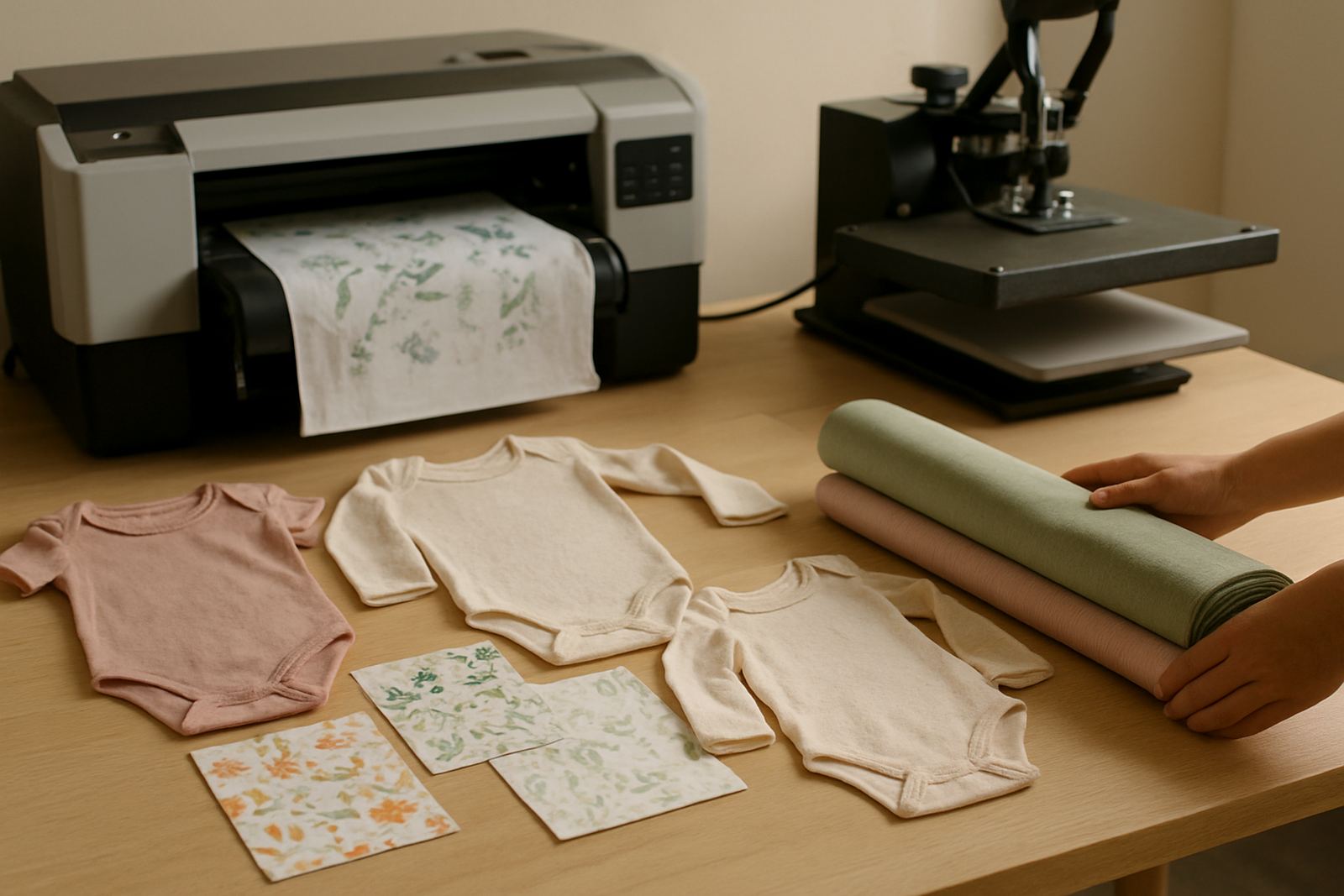
For babywear brands, the best setup is one that handles detail, small volumes and frequent product changes. Direct-to-fabric inkjet printers are useful when you want quick turnaround on custom prints, seasonal drops or small bespoke orders. Heat presses support finishing, sample work and garment preparation. Together they give a small business more control over colour, placement and turnaround times.
Training matters just as much as the machine. A new operator should know how to handle fabric tension, how to check colour profiles and when to stop a job instead of pushing ahead with a bad setup. Preventive servicing also saves money because a blocked nozzle or dirty ink path can waste both fabric and time.
Fabric Printer supplies direct-to-fabric inkjet printers, heat presses, inks and set-up training to babywear and textile businesses across Johannesburg, Pretoria, Durban, Cape Town and Bloemfontein. Our team in Wadeville works with small garment makers who need help with installation, colour profiling, printhead cleaning, ink system flushing and remote troubleshooting when production needs to keep moving. If you are building a babywear range, the goal is simple: soft fabric, clean print and finishing that parents trust.