
Start With the Room Size and the Work Path
Before you move any machine in, measure the room from wall to wall and mark the usable area after doors, pillars, windows and switch panels are counted in. In a small room, a narrow walkway can become a bottleneck fast, so plan a clear route from receiving rolls of fabric to printing, curing, pressing and packing.
Leave enough room for the operator to stand, load media, check the print, and move finished work without turning sideways every time. If the room is in Wadeville, Germiston or a similar light industrial area, also think about truck access, safe unloading and where wet stock will wait when deliveries arrive in the rain.
- Measure the room, not just the floor space you think is free
- Mark door swing, windows, plugs and wall-mounted fittings
- Keep one clear walkway from entrance to exit
- Allow space for loading fabric and handling finished garments
Place the Printer Where Airflow and Power Are Stable
Direct-to-fabric equipment works best in a room with steady temperature, low dust and enough air movement to stop heat build-up. Place the printer away from direct sun, open factory doors and grinding or cutting areas that throw dust into the air. In coastal towns like Durban or Cape Town, humidity control matters too because damp air can affect media handling and storage.
Keep the machine near a proper power point and avoid long extension runs where possible. With load-shedding still a reality in many areas, it helps to plan for backup power and a controlled shutdown process so inks, heads and boards are not caught mid-job. A machine that is easy to reach for daily checks will save time and reduce strain on your team.
- Keep the printer off dusty paths and away from open doors
- Allow access on all sides needed for daily servicing
- Plan for stable power, backup support and safe shutdowns
- Store fabric and inks where heat and moisture are controlled
Use Vertical Storage Instead of Crowding the Floor
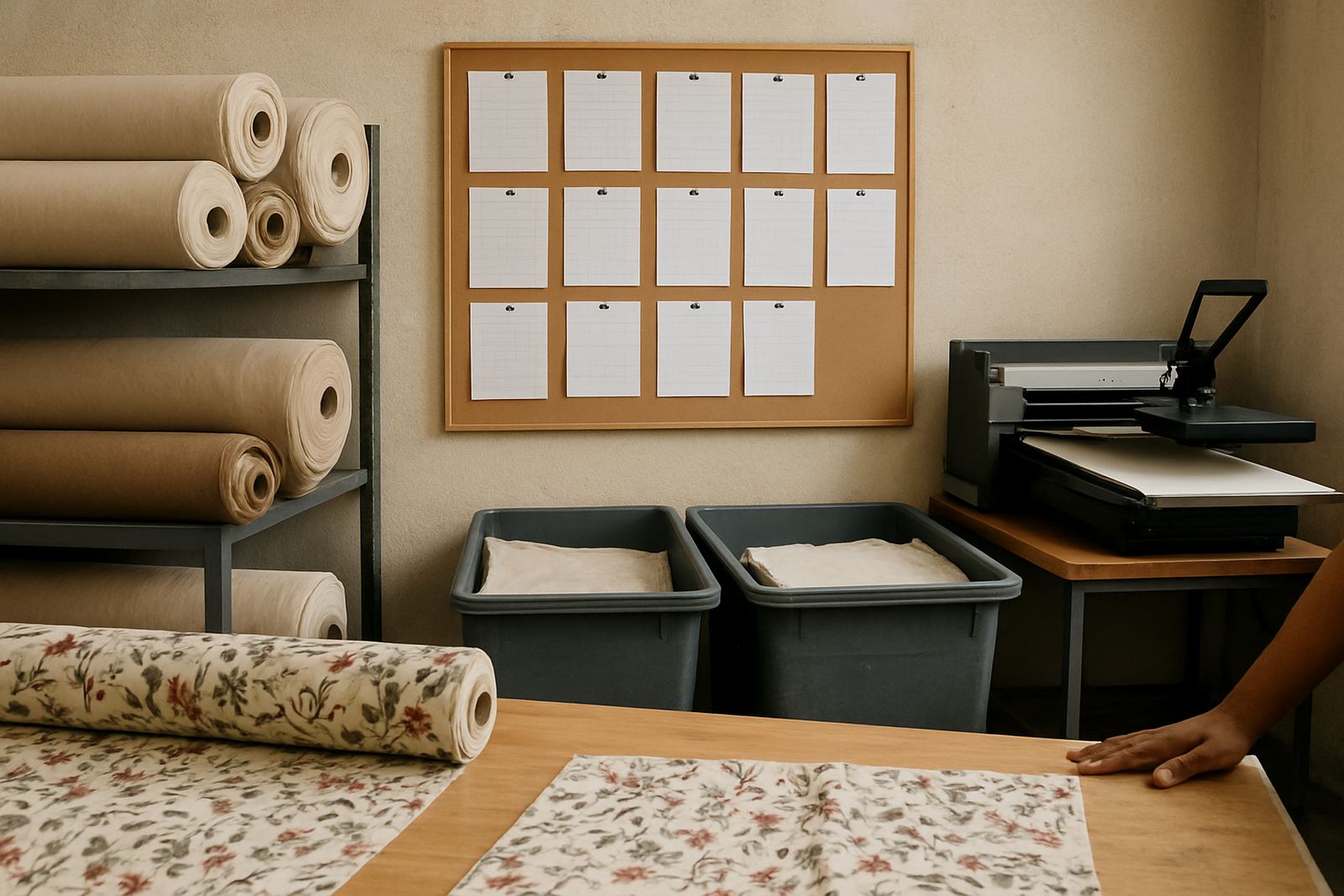
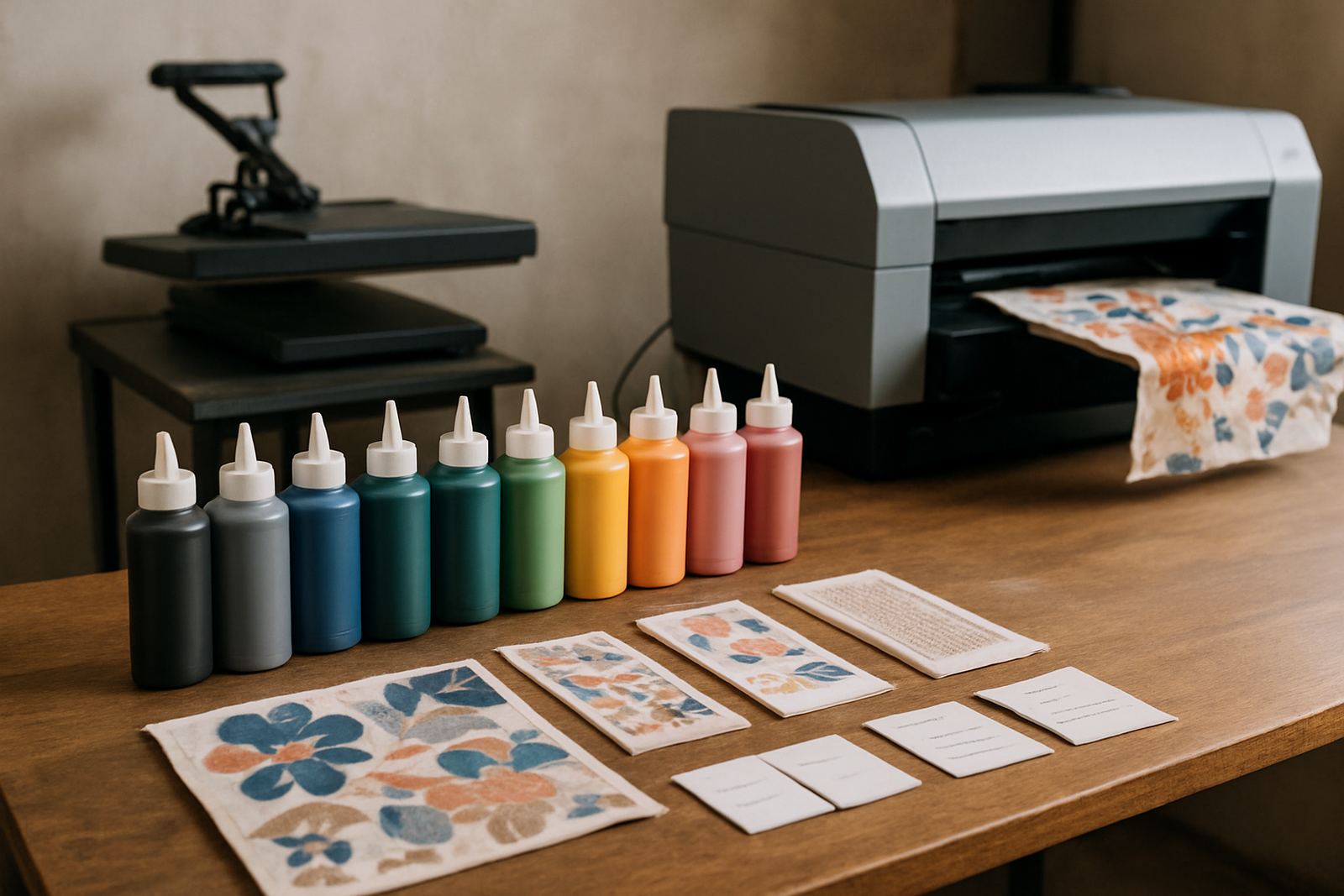
When floor space is limited, the wall is your friend. Shelving, vertical racks and labelled bins free up walking space and make it easier to see what is in stock. Keep inks, pretreatment, spare parts and cleaning materials in separate marked areas so there is no mix-up during busy production runs.
Do not pile rolls of fabric on the floor if you can help it. A small raised rack or wall-mounted storage can stop damage from spills, dust and humidity, especially in areas where winter mornings bring condensation. If the room is shared, make sure storage is fixed and secure so nothing can topple onto the operator or block the fire exit.
- Use wall shelving for inks, tools and small consumables
- Keep fabric off the floor and out of damp corners
- Label each shelf and bin clearly
- Leave fire exits and panels free at all times
Build a Simple Production Flow That Prevents Cross-Traffic
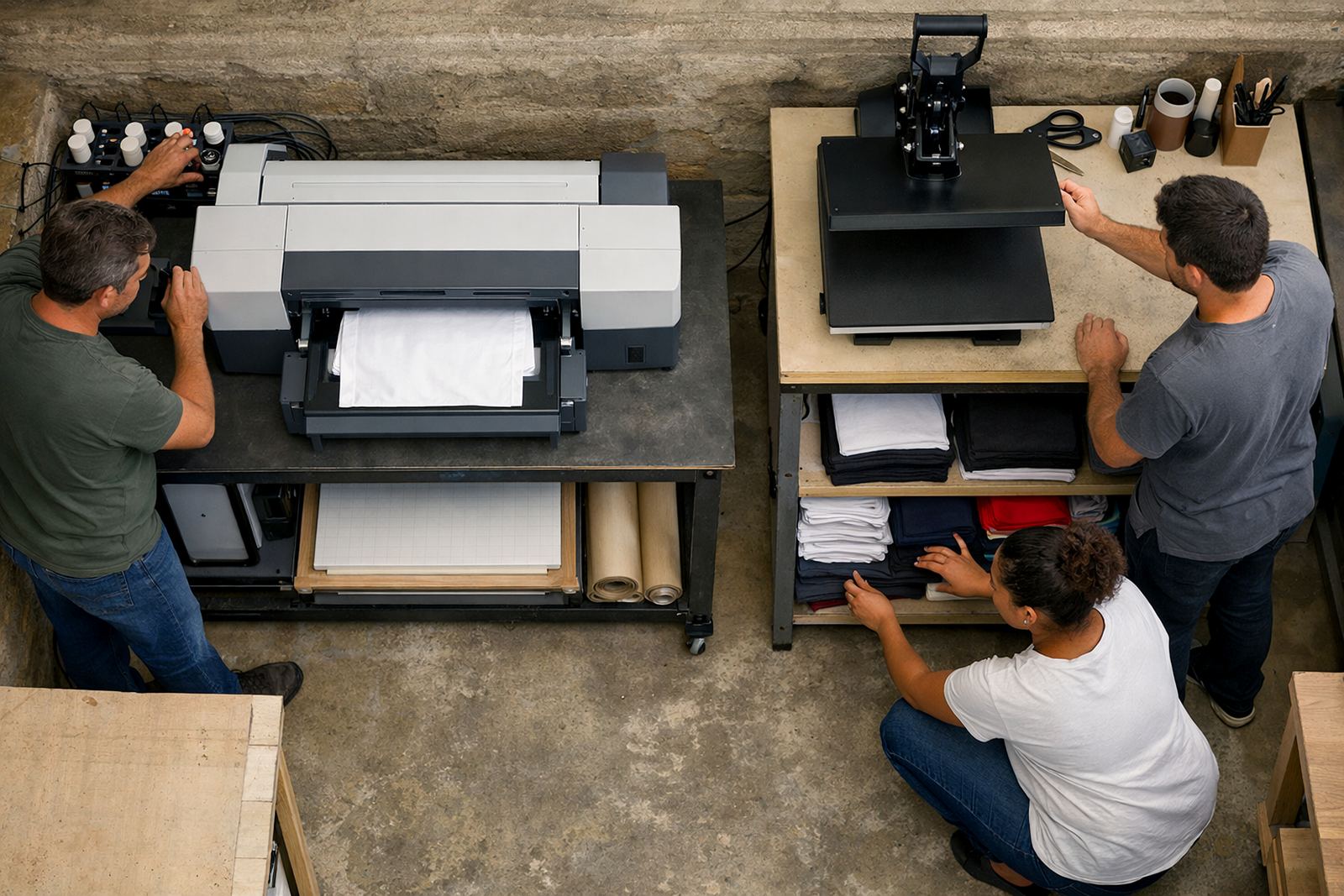
A small print room works better when each step follows the next in one direction. Think receiving, checking, printing, heat pressing, cooling, packing and dispatch. If people must keep walking back and forth across each other, mistakes rise and the room starts to feel cramped very quickly.
Set up your main work table near the printer but not so close that movement becomes awkward. Keep the heat press on a stable surface with enough room to open and close safely, and do not place it where cables or fabric edges can snag. A tidy sequence makes training easier as well, because new operators learn the job faster when the room layout matches the production order.
- Arrange the room in one direction from intake to dispatch
- Separate printing, pressing and packing zones as far as space allows
- Keep cables, offcuts and tools out of walkways
- Use one main table for sorting and checking work
Plan for Safety, Maintenance and Clean-Up
Small rooms need stricter habits because clutter builds up faster. Keep a broom, cloths, spill absorbent and a lidded bin within reach, then make end-of-day clean-up part of the routine. If a room is in Germiston, Boksburg or Midrand, dust from nearby traffic and workshops can enter quickly, so regular cleaning protects print quality and helps equipment last longer.
Make sure the operator can reach maintenance points without moving half the room each time. If a part needs cleaning, replacing or checking, that task should take minutes not an hour. Keep fire equipment visible, do not block electrical panels, and never store solvent-based materials next to heat sources. It sounds basic, but in a tight room those small habits matter.
- Keep cleaning tools on hand and use them daily
- Leave access to panels, switches and service points
- Store heat-sensitive and cleaning materials safely
- Keep fire equipment visible and reachable
Use a Setup Checklist Before You Go Into Production
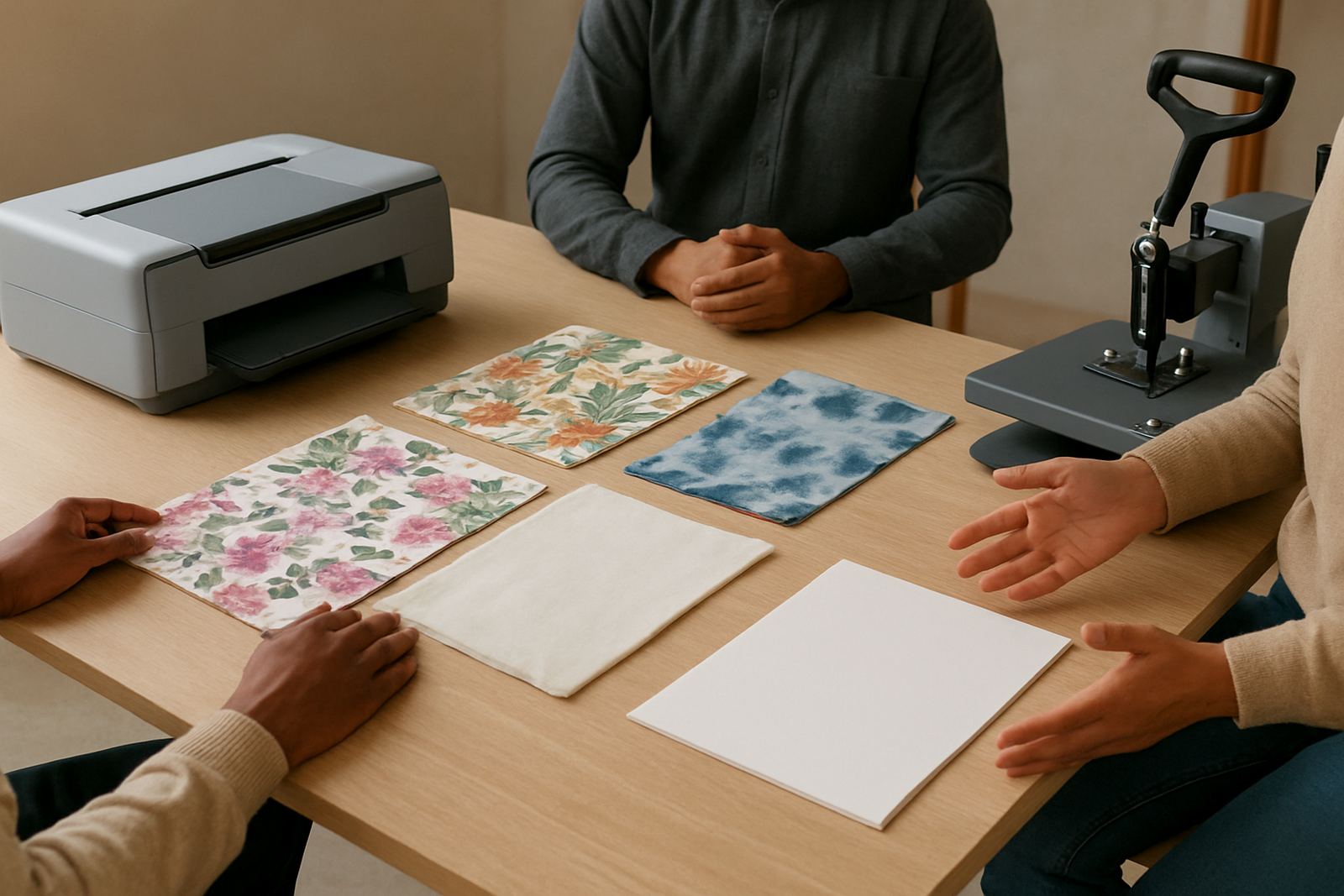
Before you start accepting jobs, run a full test in the room as it will operate on a normal day. Print a sample, press it, pack it, then walk the path yourself and see where the delays happen. A setup that looks fine on paper can still fail if the operator has to twist around a stacked box or step over a cable every ten minutes.
Our team works with small garment and textile businesses across Johannesburg, Pretoria, Durban, Cape Town and Bloemfontein, and the best rooms are usually the ones that stay simple. If you need help with installation, colour profiling, operator training or a production audit, get the layout checked early so the room supports the business from day one.
- Test the full production cycle before live jobs start
- Check access for delivery, cleaning and maintenance
- Review power needs and backup plans
- Get the layout checked if the room feels cramped or unsafe