Start with the fabric you print most often
The first question is not which ink is strongest, but which fabric you print every week. Cotton, polyester, blends, viscose and stretch fabrics all behave differently. A fabric that drinks ink quickly may need a different approach to one with a tighter weave or a synthetic finish.
For small businesses in Johannesburg, Durban or Cape Town, it also helps to think about where the finished item will be used. Apparel, fashion samples, banners, cushions and soft signage each place different demands on the print. If your work includes mixed fabrics, ask for a test on the actual cloth, not just a similar swatch.
- Identify your top 3 fabrics by volume.
- Check whether the fabric is pre-treated or untreated.
- Confirm if the item must be washed often, handled often or exposed to sunlight.
- Keep a fabric record with supplier details and print results.
Match ink type to your output goals
Ink choice should follow the result you need. If you want bright fashion colours and crisp detail on garments, you need one set of properties. If the work is for décor or soft furnishings, durability and coverage may matter more than fine detail. Do not buy ink only because it is cheaper per bottle. The real cost is what happens after printing, when the piece is washed, pressed and delivered.
Also consider how fast your team needs to turn jobs around. A workshop doing short runs and sample work may prefer easier handling and quick setup. A shop doing repeated production batches may need stronger consistency across many metres. In South Africa, load-shedding can interrupt production so it is worth choosing an ink workflow that tolerates pauses without causing blockages or colour drift.
- For fashion and samples: prioritise detail, colour range and quick setup.
- For décor and soft signage: prioritise durability, coverage and repeatability.
- For mixed production: choose a system that supports repeatable colour profiling.
Think beyond colour: drying, wash fastness and feel
A good print is not only about how it looks on the table. It must also pass the real-world tests. Drying speed affects how quickly you can handle the fabric, stack it and move it to finishing. Wash fastness matters for garments that go through repeated laundering. Hand feel matters when the print is for clothing, especially on light fabric and children’s wear.
In humid coastal areas such as Durban or Richards Bay, drying time can change from one day to the next. That affects workflow and can lead to smudging if you rush the finishing stage. In drier inland areas, static and dust can also affect results, especially on open workshop floors.
- Check drying time on your actual production fabric.
- Ask for wash test results on printed samples.
- Feel the print after curing or heat setting, not only when it is fresh.
- Watch for cracking, bleeding or colour fade after washing.
Set up a simple ink testing routine before buying in bulk
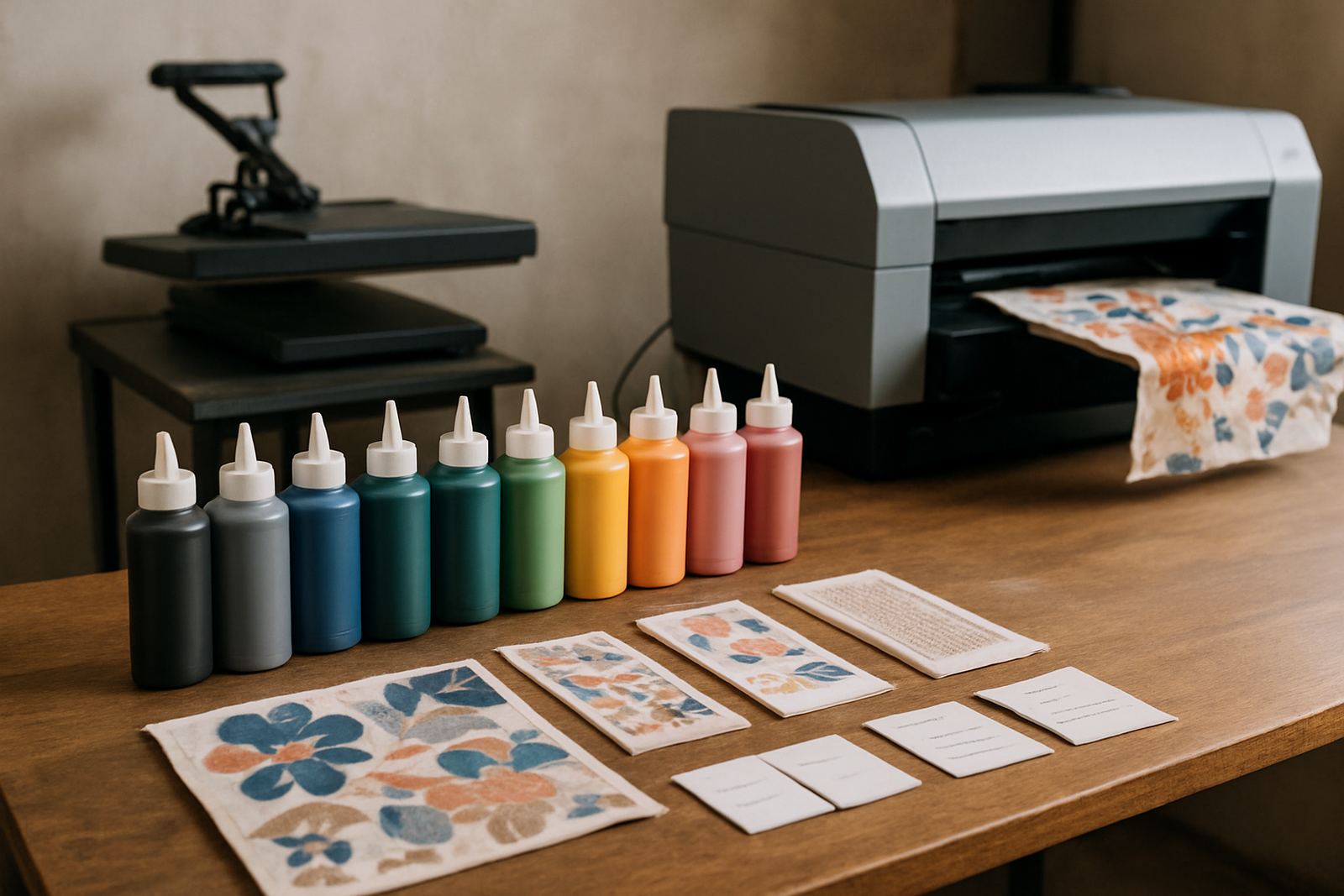
Before you commit to a full batch, run a short test cycle. Use one fabric, one design and one operator. Keep the settings the same so you can compare results fairly. Small businesses often lose money by mixing too many variables at once. A proper test shows whether the ink suits your machine, your heat press and your finishing process.
Write down the date, fabric type, pre-treatment used, curing method and the result after washing. If you are working from Germiston, Pretoria or Midrand and sending jobs between sites, that record will save time when the same fabric is reordered later. It also helps when training new staff, because everyone can follow the same method.
- Print a standard test image with solid blocks, fine text and skin tones.
- Compare colour before and after curing.
- Wash the sample at least once before approving bulk use.
- Keep the approved sample in a labelled folder or bin.
Keep your ink handling and storage practical
Ink performance is affected by storage and day to day handling. Do not leave bottles open near dust or direct sun. Keep them in a cool, dry area and rotate stock so older product is used first. In workshop spaces with power cuts, make sure your equipment can be shut down properly so ink does not settle in the system or dry at the head.
Good housekeeping also reduces waste. Use clean funnels, label each bottle clearly and keep ink off the floor. If you change ink types, flush the system properly before switching over. Mixing the wrong products can cause blocked lines, poor colour or unnecessary servicing. For businesses in Boksburg, Wadeville or across Gauteng, a small storage routine can prevent a much bigger repair bill.
- Store ink in a shaded, dust free area.
- Mark opening dates on every bottle.
- Use one ink type per approved workflow.
- Do not top up old bottles with new stock unless the system is designed for it.
Use a checklist before placing your next order
When you are ready to order, use a checklist rather than guessing. The right question is not simply “which ink is best”, but “which ink works best for this fabric, this machine and this production pace”. That approach keeps your workshop steady and helps you avoid waste on the wrong product.
If you need help selecting ink for your direct-to-fabric setup, our team in Wadeville supports garment and textile businesses across Johannesburg, Pretoria, Durban, Cape Town and Bloemfontein. We can assist with colour profiling, operator training, preventive servicing and remote troubleshooting so your print room stays on track.
- What fabric are you printing most often?
- What finish do you need after washing?
- How fast must the job move through the workshop?
- Do you need training for more than one operator?
- Will the ink suit your local climate and storage conditions?