

Start With The Print Room Routine
Every operator should begin with the same opening routine. Switch on the room in a set order, check the power supply, inspect the work area for dust or loose fabric, and confirm that ink, media and waste bottles are in place. In South Africa, where load-shedding can interrupt production, it is worth training staff to record the last known machine state after any power cut so they can restart safely.
Make the first lesson simple: know where everything is kept, understand what each machine does, and never start a job until the fabric, file and settings match. A clean room saves time, and it also helps reduce nozzle blockage on high-humidity days along the coast.
- Check electrical supply and backup power before switching on equipment.
- Inspect floors, rollers and tables for dust, lint and offcuts.
- Confirm inks, cleaning supplies and media are available for the shift.
- Log any fault, alarm or unusual sound before production starts.
Learn The Machine Controls Before Any Production Run
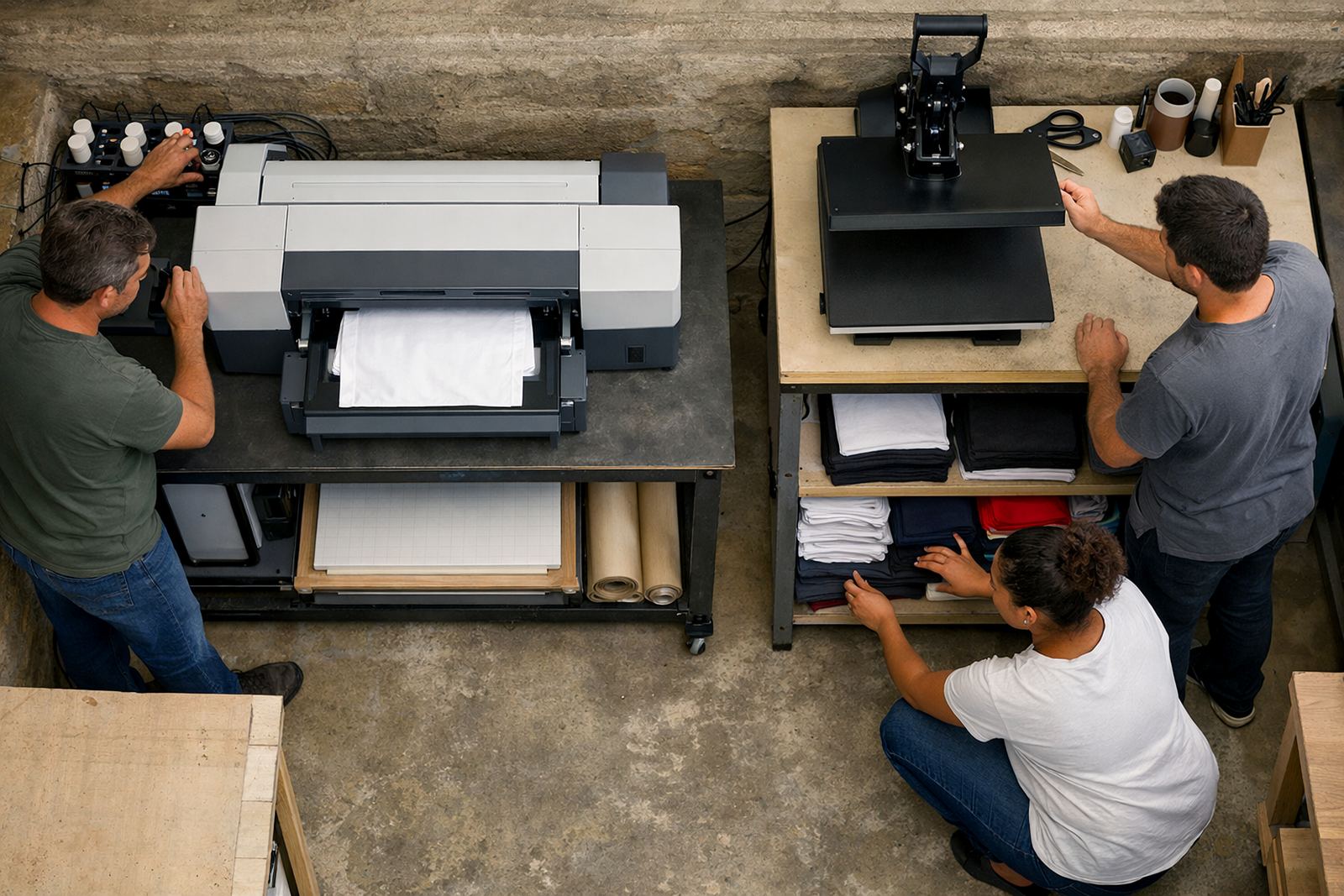
New staff should spend time on the control panel before they print anything valuable. Show them how to load fabric, set media tension, confirm print width and select the correct mode for the job. If the machine has a maintenance menu, explain what each option does and which settings should only be changed by a trained technician.
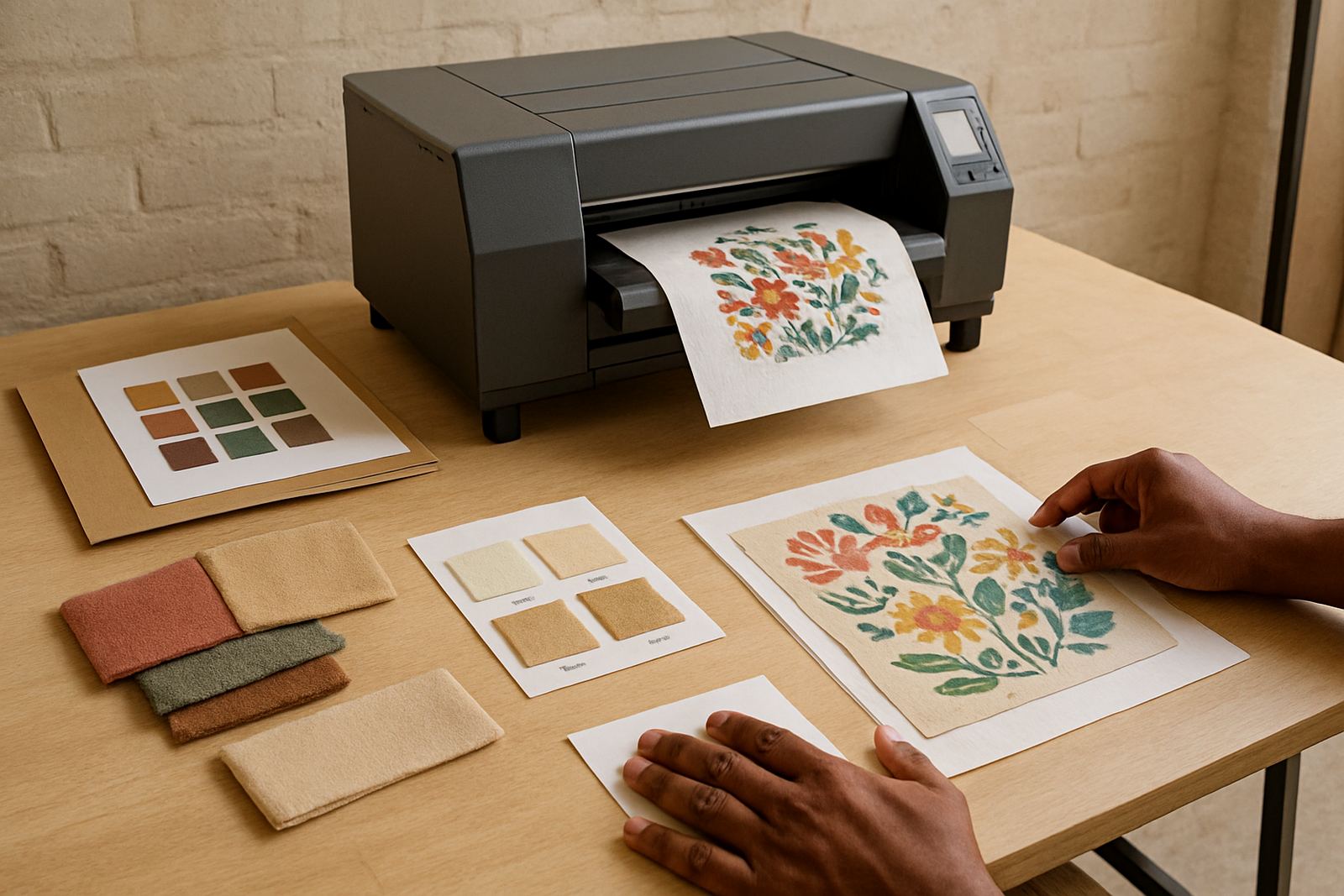
Operators also need to understand the difference between a test print and a production run. A test strip can save metres of fabric and hours of rework. Keep a sample board with approved prints so staff can compare colour, sharpness and placement before they release the full run.
- Load fabric straight and under even tension.
- Check the file dimensions against the fabric width.
- Run a test print before every new job or new fabric type.
- Stop the job immediately if the image shifts, smears or bands.
Teach Colour Control And Fabric Handling
Good print room work depends on colour discipline. Operators must learn how fabric type, coating, moisture and drying time affect the final result. Cotton, polycotton and coated fabrics all behave differently, so the same settings will not always give the same outcome. A small change in humidity can alter drying speed, which is why colour checks should be part of the daily routine.
Train staff to handle rolls and cut pieces with clean hands and dry gloves if needed. Avoid folding freshly printed fabric too soon, especially in warm rooms or coastal areas. For heat pressing, show them how to protect the print surface, apply the correct time and pressure, and let the garment cool before packing. This keeps the finish neat and reduces ghosting.
- Match the fabric type to the correct ink and preset.
- Keep printed fabric flat until fully dry or cured.
- Use approved colour references for repeat orders.
- Record any shade difference before the next batch starts.
Build A Daily Cleaning And Safety Checklist
Training should always include cleaning and safety. Many breakdowns start with simple neglect, like dried ink at the head, dust in the path or neglected rollers. Operators do not need to strip a machine, but they must know how to do daily cleaning properly and when to call for preventive servicing. If the room is busy, assign tasks by shift so nothing gets skipped.
Safety matters just as much. Heat presses can cause burns, moving parts can pinch fingers and wet floors can lead to slips. Keep cleaning cloths, waste containers and tools in their proper places. Operators should also know municipal and site rules for waste ink disposal, especially when working in shared industrial parks or rented units.
- Wipe work surfaces and machine covers at the end of each shift.
- Check that waste containers are not full or leaking.
- Keep hands clear of hot plates and moving rollers.
- Report damaged cables, loose guards or repeated alarms at once.
Use Job Cards To Control Production Quality
Every job should move through the room with a clear job card. The card should show the order number, fabric type, garment count, colour target, machine settings and due date. This helps the team avoid confusion when several jobs are running at once. It also makes it easier for supervisors to see where delays happen and where training is needed.
Teach operators to sign off each stage as they complete it. That includes file check, fabric loading, first print inspection, drying or curing, pressing if needed and final packing. If a batch must be redone, record the reason honestly. A small typo on a card can cause a large mistake, so accuracy matters from the start.
- Use one job card per order or batch.
- Note the operator, date and machine used.
- Record any adjustments made during production.
- Store approved samples with the job record.
Train For Fault Reporting And Shift Handover
Operators should never try to guess their way through a fault. They need a simple reporting process that tells the next person what happened, when it happened and what was done already. Good handover habits reduce lost time, especially when work continues across shifts or over a weekend.
Show staff how to describe a fault clearly: what they saw, what they heard, the error message if there was one, and whether the issue affected one piece or the full run. If the machine was stopped mid-job, mark the fabric and note the remaining metres. That saves confusion later and helps the service team respond faster.
For new staff, repeat the basics often. The best operators are not the ones who rush, but the ones who notice small changes early and keep the print room steady.