Start With What You Will Press Every Week
Before you look at price, list the items you will actually press in a normal week. A shop doing school shirts, sportswear and workwear needs a different setup to a small brand making short runs of fashion tees and tote bags. If you mainly print front logos, a compact press can work well. If you do full chest graphics, apron branding or jacket panels, you will need a larger platen and more even pressure across the surface.
Think about fabric too. Cotton, polyester, polycotton and blends all behave differently under heat. In South Africa many small shops work with dark garments, stretch fabrics and synthetic sports fabric, so consistent temperature control matters. Coastal humidity in Durban and Cape Town can also affect storage of transfer media and the feel of the garment before pressing.
Choose The Right Press Style For Your Workflow
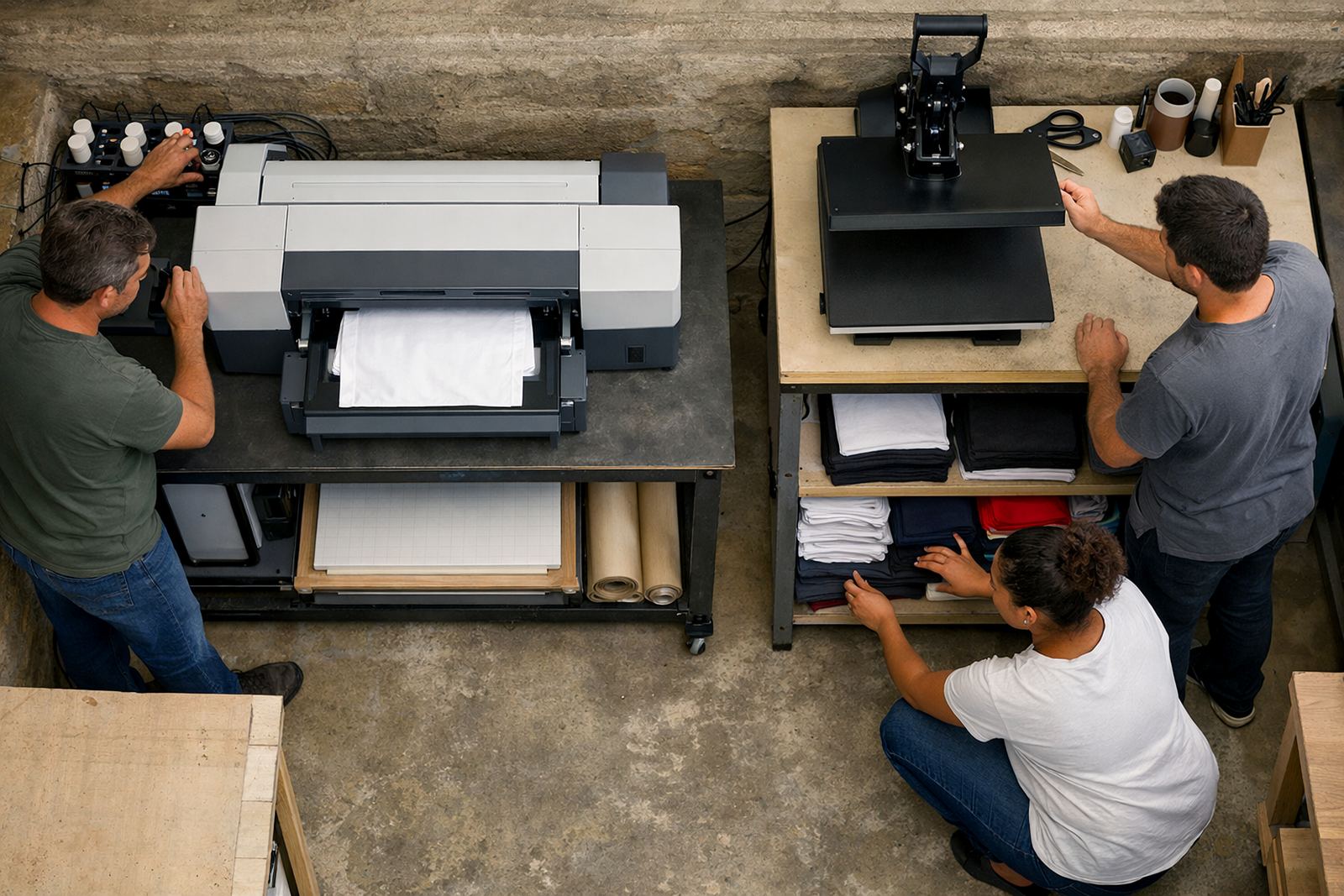
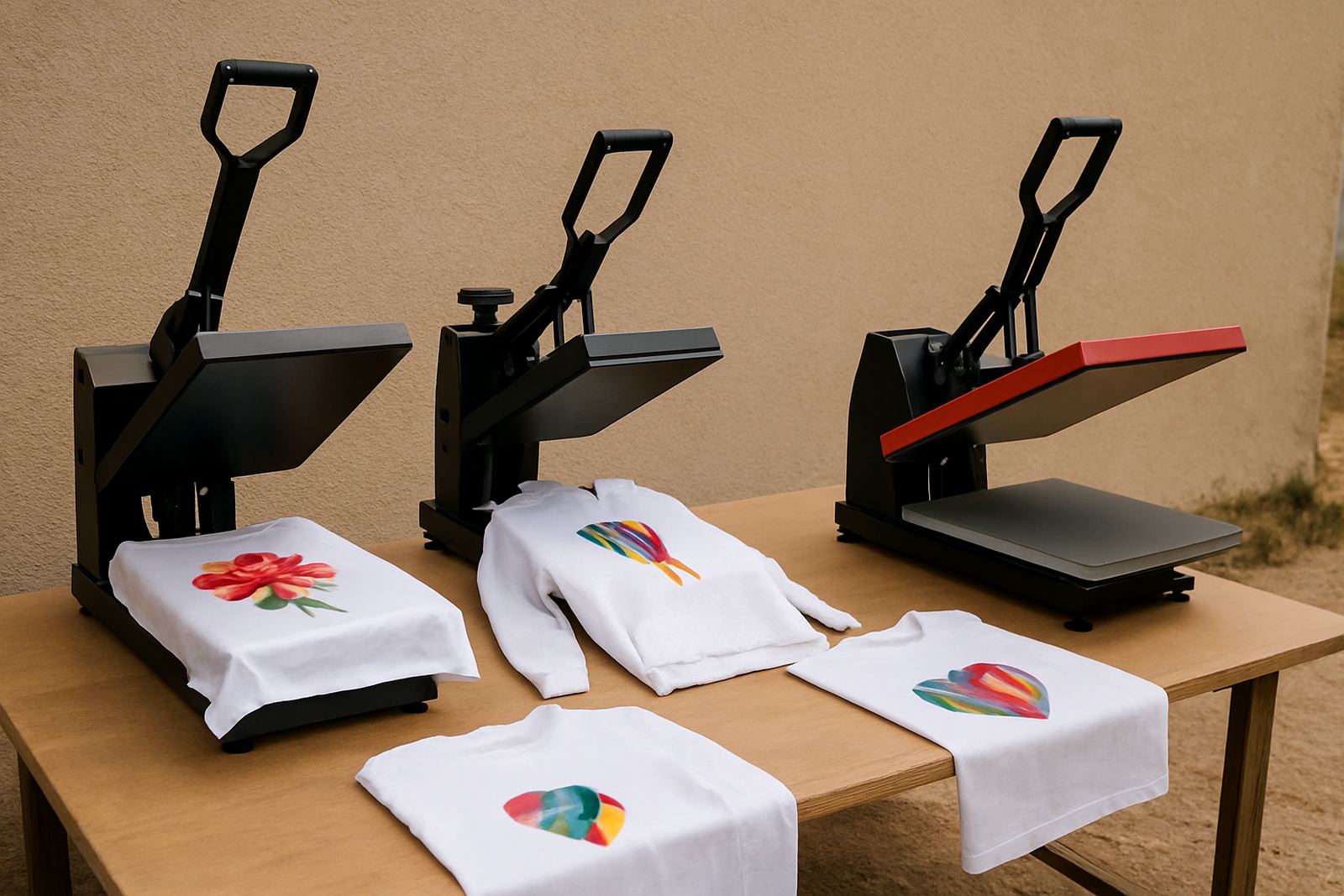
The press style should suit your speed, your operators and the space you have in the workshop. Clamshell presses take up less room and are popular where the bench area is tight. Swing-away presses give more clearance and are useful when you need to position thick items or avoid accidental heat contact. Draw-style presses can make it easier to place garments neatly, especially when you are doing repeated jobs through the day.
If you are training new staff, pick a press with clear controls and simple pressure adjustment. That reduces mistakes during busy periods and helps with consistency when the job is handled by more than one operator. In a small shop in Germiston or Midrand, that kind of repeatability can save a lot of wasted blanks.
- Clamshell: compact, quick, good for smaller spaces
- Swing-away: better clearance for thicker items and careful placement
- Draw-style: easier garment loading for repeat work
- Large-format: suitable for bigger prints and wider production sheets
Pick A Platen Size That Matches Your Product Range
Platen size should be chosen with the biggest item you expect to press regularly, not the smallest. A 38 cm by 38 cm press is common for tees, labels and small branding jobs, while 40 cm by 50 cm or larger gives you more working room for adult garments, hoodies and stacked designs. If you are doing cap badges, sleeve marks or pocket prints, a smaller accessory platen can be handy, but it should not be your only size.
Ask yourself whether you will need one press for many jobs or one press dedicated to a specific product line. A boutique in Pretoria may want a medium platen for general garments, while a sign or promo shop in Bloemfontein may need a larger bed for mixed work. Measure your workspace as well, including clearance for opening, loading and safe movement around the machine.
- Measure the widest print you expect to do
- Allow space for garment loading and operator movement
- Check if you need accessories for caps, sleeves or labels
- Match platen size to your average order, not only your biggest one
Match Capacity To Your Daily Output And Power Supply
Output capacity is about more than speed. You need a press that can hold temperature through repeated cycles and recover quickly between jobs. If you are handling 20 to 50 garments a day, a basic unit may be enough. If you are pushing longer runs for uniforms or event wear, look for a machine that handles pressure and heat consistently over many cycles without slowing down.
Power matters too, especially during load-shedding. Check the wattage, plug type and whether your premises can support the machine together with other equipment such as drying tools, printers or extraction fans. Some workshops run from backup power and need to plan carefully for surge protection and safe switching. A press that draws less power may be a better fit than a bigger unit that trips breakers or struggles on backup supply.
Check Temperature Control, Pressure And Safety Features
Good results depend on stable heat, even pressure and proper dwell time. A machine with a clear temperature display and accurate timing control will make your work more predictable. Pressure should be easy to adjust for thin T-shirts, thicker hoodies and layered garments. If pressure is uneven, you will see poor adhesion on the edges or patchy finishes in the middle.
Look for simple safety features that suit a small production room. Heat-resistant handles, stable base feet and clear alarms are useful when staff are moving quickly. If the press will be used in a busy retail space, make sure operators can work safely around customers and stock. A machine that is awkward to open or close can slow down production and increase the chance of burns or misprints.
Plan For Training, Servicing And Long-Term Running Costs
The purchase price is only part of the story. You also need to think about servicing, spare parts, consumables and the time it takes to train staff. A press that is simple to maintain can save money over the years, especially if you are still building your production process. Ask how often the machine needs cleaning, what to do if the pressure becomes uneven, and how to keep the platen surface in good condition.
For small textile businesses, support after delivery is often the difference between buying confidently and guessing your way through setup. If you are relocating, adding another branch or setting up in a new workshop, make sure the supplier can help with installation and operator training. Our team in Wadeville, Germiston works with businesses across Johannesburg, Pretoria, Durban, Cape Town and Bloemfontein, and we also assist with servicing, repairs and colour-related setup so the press and print side work together properly.
- Ask about preventive servicing intervals
- Confirm spare parts supply and turnaround times
- Plan operator training before the first production run
- Keep a log of temperature, pressure and any faults