Sandton Brief: Sample Workroom Built for Fast Approvals
The client was a small design studio in Sandton serving boutiques, corporate gifting buyers and private label fashion customers. Their main problem was timing. They needed to move from hand-pressed samples and outsourced trial runs to an in-house setup that could produce sharp placement prints, short runs and approval samples in the same week.
The brief was simple but specific: accurate colour on fashion fabrics, repeatable registration for logos and motifs, and enough speed to handle client amendments without delaying a launch. They also wanted a system that would fit into a compact workroom, because space was tight and there was no appetite for large industrial machinery taking over the floor. They asked for support that would work around load-shedding too, since Sandton schedules can be unforgiving when a client wants a sample by Friday afternoon.
- Client type: small designer workroom
- Town: Sandton, Johannesburg
- Use case: placement prints, sampling and short production runs
- Key need: fast approvals with consistent colour
What the Space Could Handle Without Disrupting Production
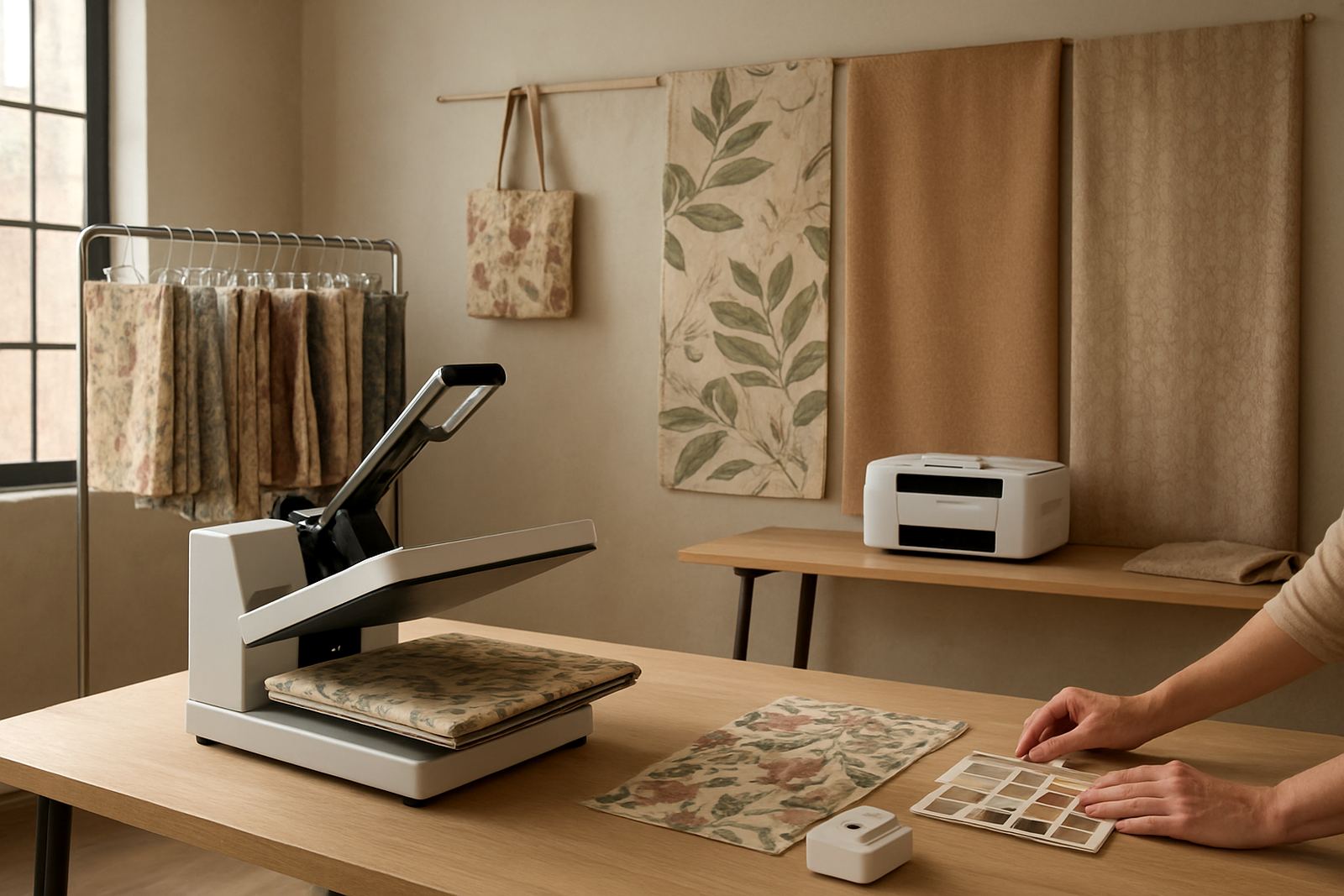
The site had limited floor area, a single clean finishing table and steady foot traffic from staff bringing in garments, trims and artwork for review. Ventilation was adequate, but the room needed better workflow zoning so wet prints, heat pressing and packing did not happen on top of one another. There was also a power stability concern, so the setup had to be practical during outages and safe to switch back on without long delays.
We worked to keep the footprint lean and the process easy to learn. The client did not want a complicated setup that only one person could run. They needed a team-friendly line where a sample could be printed, pressed and checked by the same person without calling three different operators. That meant careful placement of the machine, a proper curing and pressing routine, and clear labelling for inks, media and maintenance items.
- Compact footprint for a small workroom
- Clean separation between printing and heat pressing
- Power-aware workflow for load-shedding conditions
- Simple operator steps for more than one staff member
Equipment and Setup Supplied for Placement Print Work
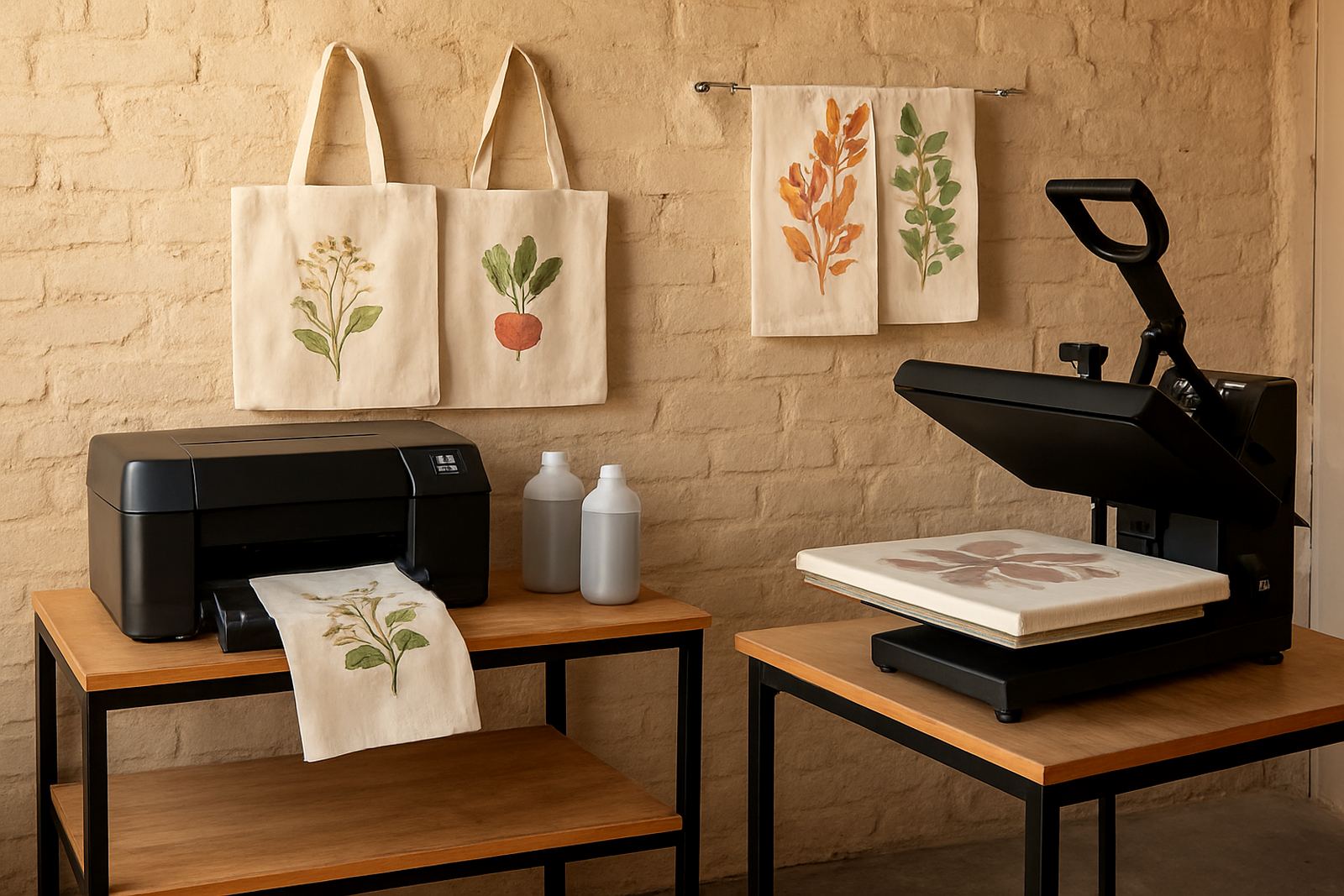
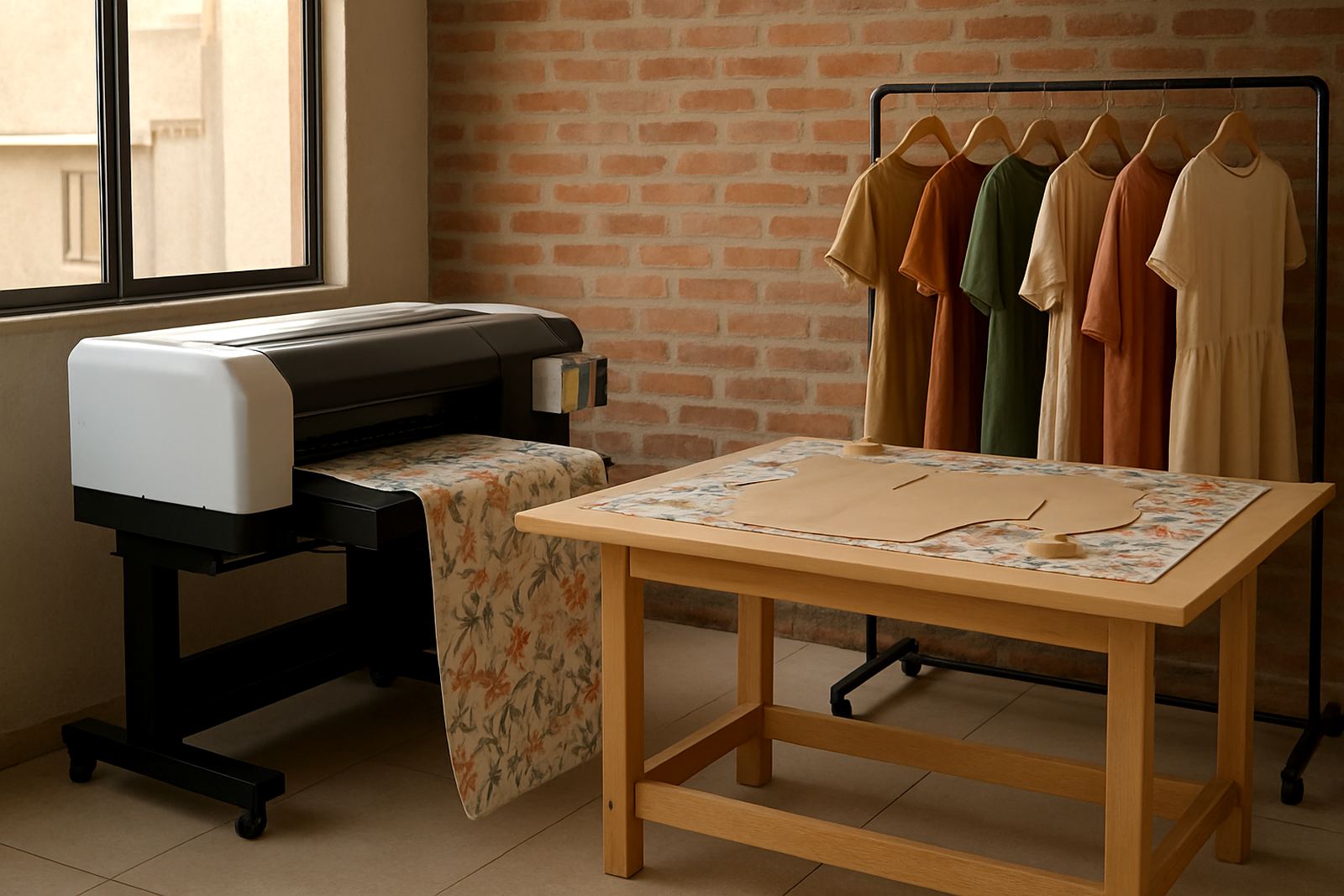
We supplied a direct-to-fabric inkjet printer suited to short-run textile work, plus a heat press for finishing and transfer tasks where needed. The printer was configured for detailed placement work on garment panels, sample yardage and presentation pieces. We also supplied inks, consumables and setup support so the team could start with the right media and not waste early runs chasing colour issues.
The main specs that mattered to this client were print detail, colour consistency and usable width. The machine was set up for fabrics commonly used in local fashion work, including cotton blends and selected polyester textile bases. We also set a sensible daily production routine so the team could keep output moving without overloading the printhead or rushing the drying stage.
- Direct-to-fabric inkjet printer for short runs and samples
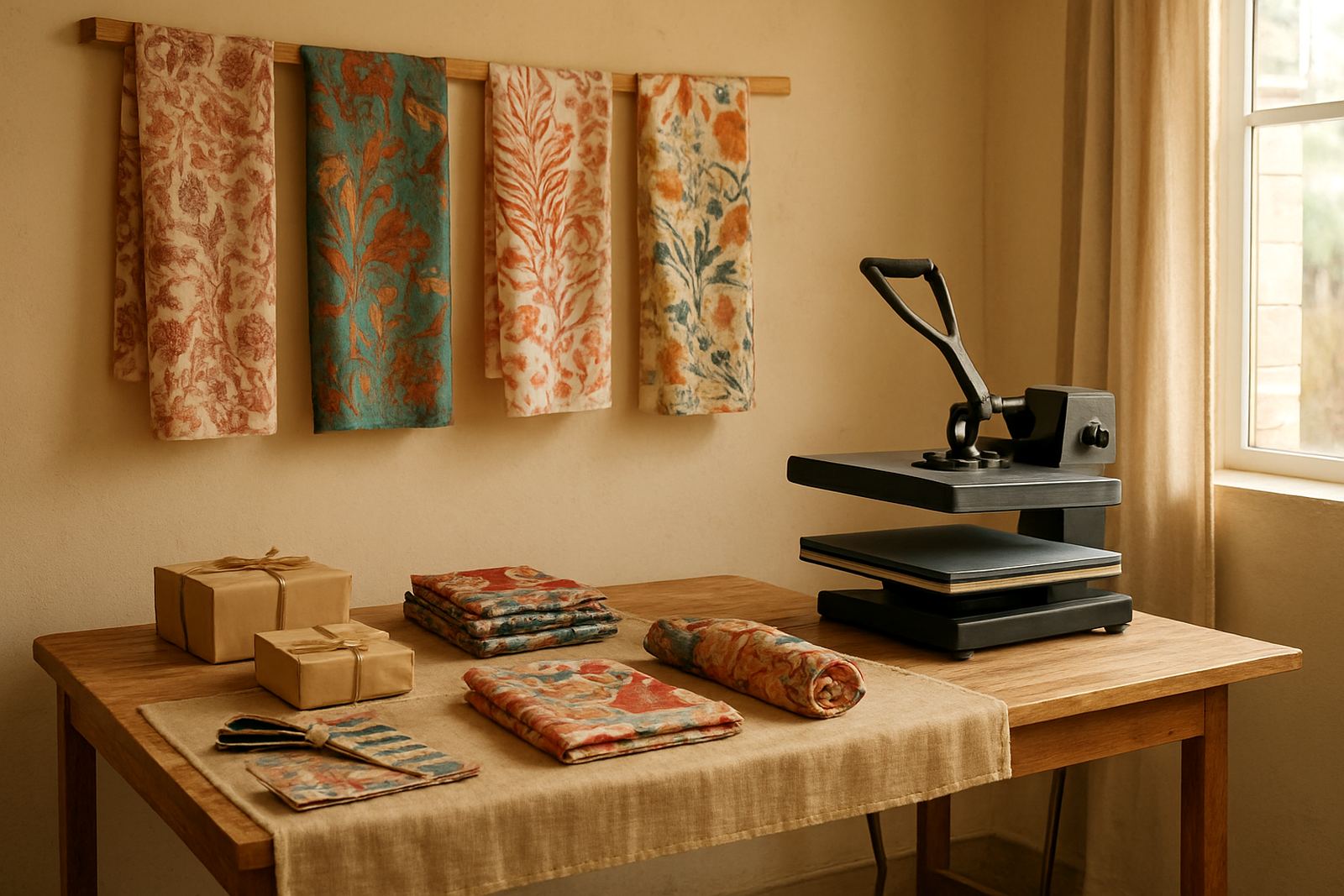
- Heat press for finishing, fixing and sample preparation
- Inks matched to garment and textile production needs
- Operator-friendly controls for a small team
Training, Colour Profiling and the First Production Runs
Once the equipment was in place, we completed machine installation, colour profiling and operator training over two visits. The training covered daily start-up, nozzle checks, fabric handling, prepress basics and how to recognise common print faults before they affect a client approval. We also showed the team how to keep records for repeat orders so the same placement could be produced again later without starting from scratch.
Colour profiling was important because the workroom dealt with branded garments and fashion samples where the client expected strong colour on camera and in person. We adjusted the process to keep reds, navy tones and dark artwork cleaner on the chosen fabric types. After that, we ran test pieces, then moved to live sample jobs. The team were surprised how quickly approvals improved once the settings were locked in and the heat press routine was standardised. A little discipline saved a lot of time.
- Installation and commissioning completed on site
- Colour profiling for repeatable sample approval
- Operator training for print, press and basic fault finding
- Job records introduced for repeat clients
Timeline, Delivery and Service Support in Sandton
The full project took three weeks from first site assessment to sign-off on the first successful production batch. Week one covered the assessment, workflow planning and equipment placement. Week two was installation, profiling and practice runs. Week three focused on production readiness, where the team printed real client samples and checked turnaround against their own targets.
Because the client was in Sandton, they wanted quick response if anything shifted during the first month. We kept support tight through remote troubleshooting, spare parts guidance and follow-up checks on the print workflow. If a nozzle test or press setting looked off, it could be corrected before a deadline was missed. That kind of practical backup matters when a designer has promised samples to a buyer meeting on short notice.
- Week 1: site assessment and workflow planning
- Week 2: installation, profiling and test runs
- Week 3: live samples and production handover
- Ongoing: remote troubleshooting and service follow-up
Results for the Studio and What We Would Repeat
By the end of the project, the studio had a dependable in-house sample process and far less reliance on outside print jobs. They were able to show clients finished placement samples faster, which helped with approvals and reduced back-and-forth. Their staff also gained confidence because the process was consistent, not reliant on one person with one skill set. The workroom was cleaner too, since the team was no longer shifting sample jobs between different sites and waiting on unpredictable collections.
If we were doing this project again, we would keep the same approach: start with a tight workflow, train the whole team not just one operator, and lock in colour settings before the first real order goes out. For a Sandton designer workroom, that combination gives better control over quality and timing. It is practical, it keeps waste down, and it suits the pace of fashion clients who expect quick answers.
- Faster sample approvals
- Less outsourcing and fewer delays
- Better repeatability for placement prints
- More confidence for the whole production team
Key facts
| Project location | Sandton, Johannesburg |
|---|---|
| Client type | Small designer workroom |
| Project duration | 3 weeks |
| Core equipment | Direct-to-fabric inkjet printer and heat press |
| Key services | Installation, colour profiling, operator training |
| Production focus | Placement prints, samples and short runs |