The Bedfordview Brief and What Had to Fit
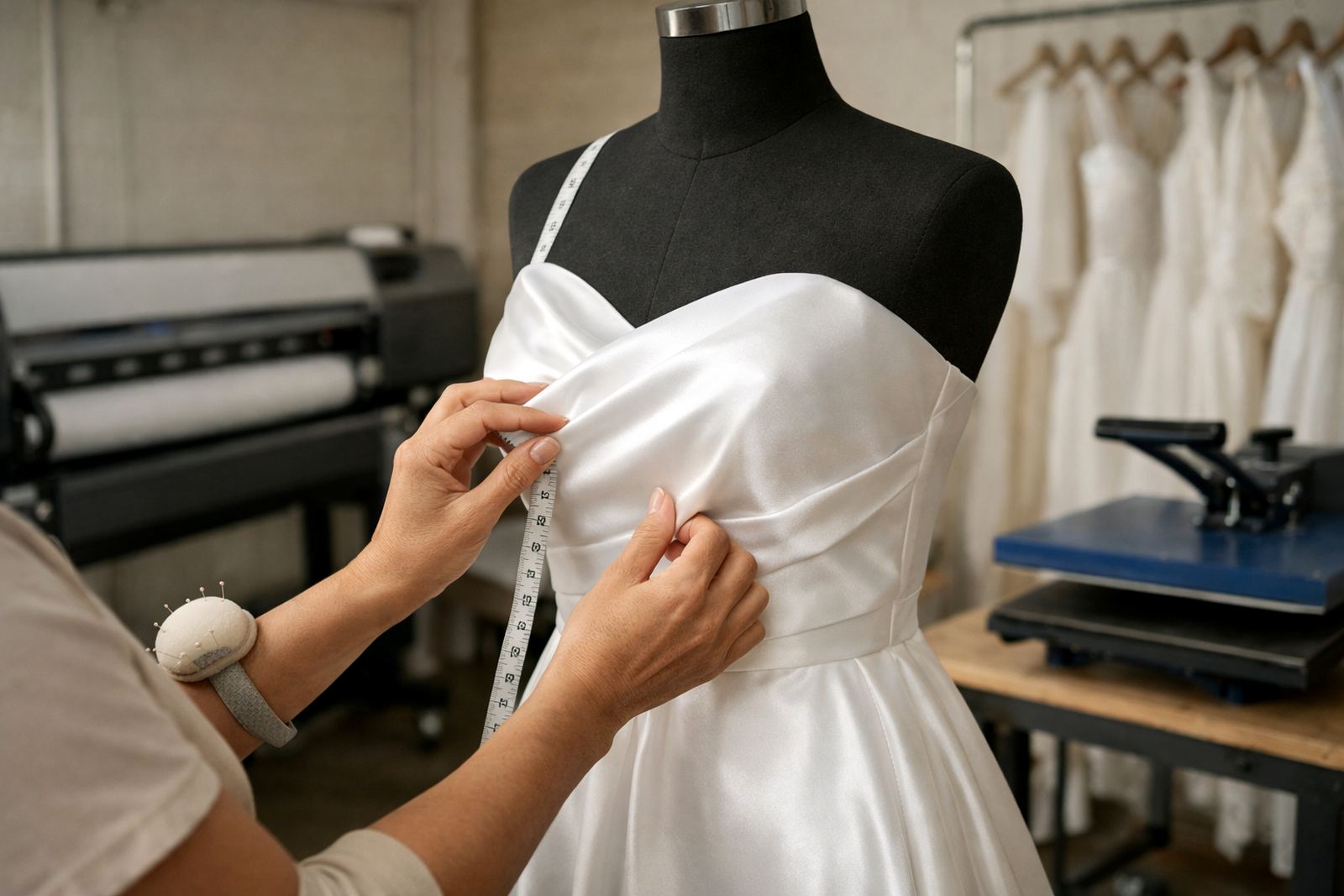
The client was a small fashion studio in Bedfordview making ladieswear samples, test panels and limited local orders for boutiques and private label work. Their aim was clear: print accurate repeat patterns and detailed colour work on fabric without sending every small job out to a separate supplier. They needed a setup that could handle short runs, fit into a tight production space, and cope with the kind of mixed work that changes from week to week.
The unit had limited floor space and the team wanted a system that would not be fussy to run. They were also working around normal South African pressures like load-shedding, stock delays and a busy delivery schedule between Bedfordview, Boksburg and the wider Johannesburg East side. So the brief was not only about print quality, it was about keeping production practical and predictable.
- Custom ladieswear panels for sampling and small production runs
- Fast turnaround for boutique orders and design changes
- Reliable colour matching on cotton-rich fabrics
- Compact footprint for a studio with limited workspace
Equipment Supplied for Small-Run Fabric Work
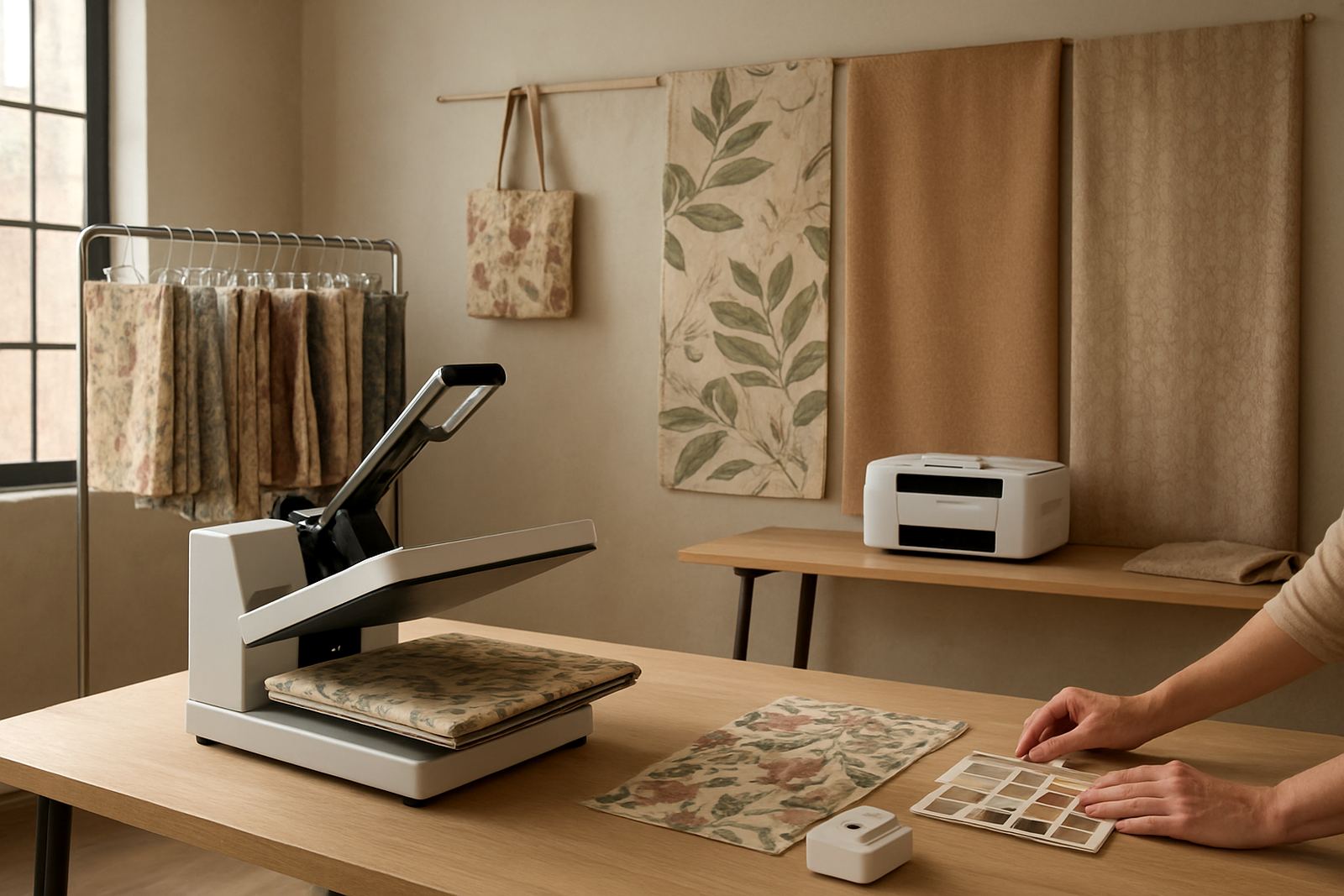
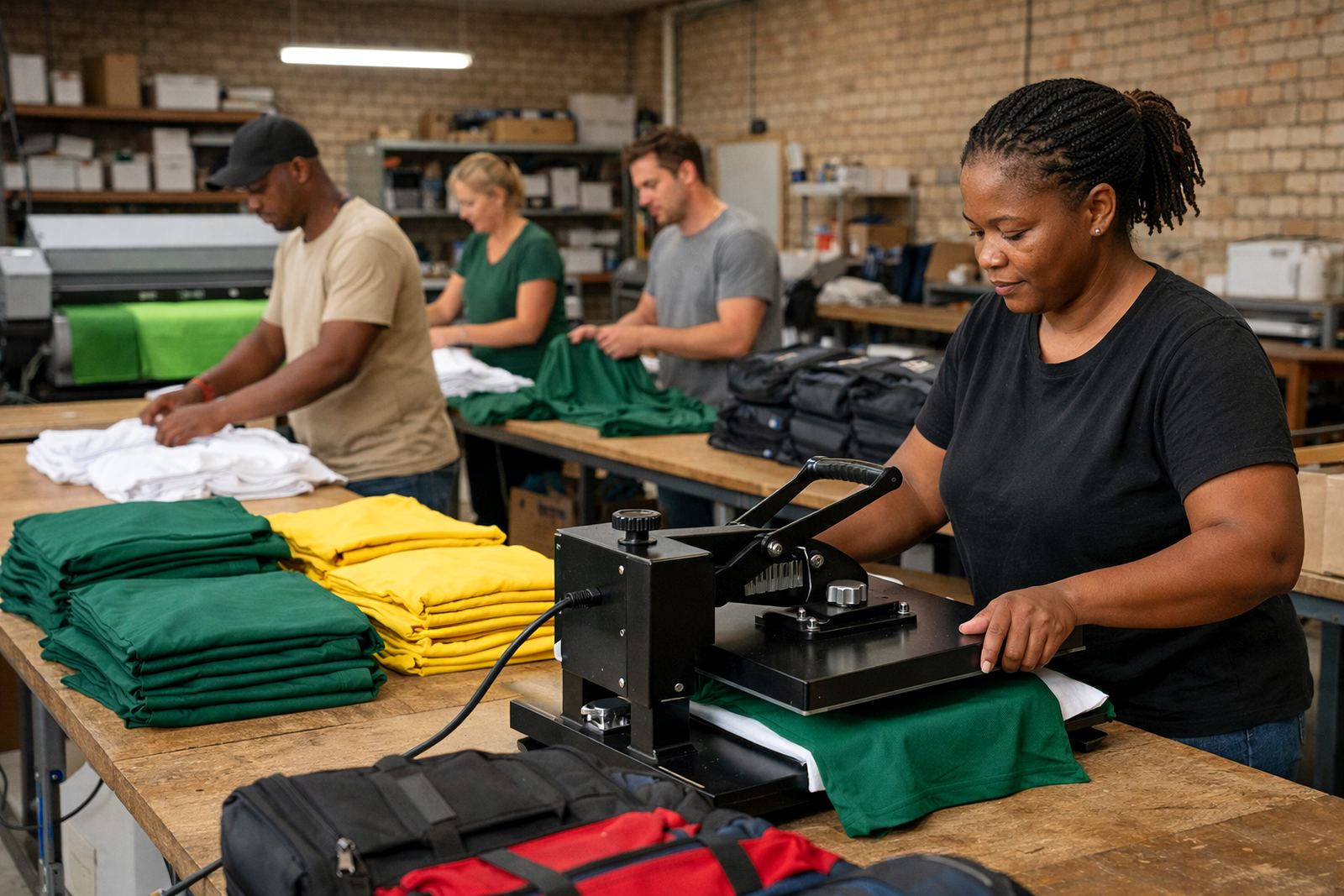
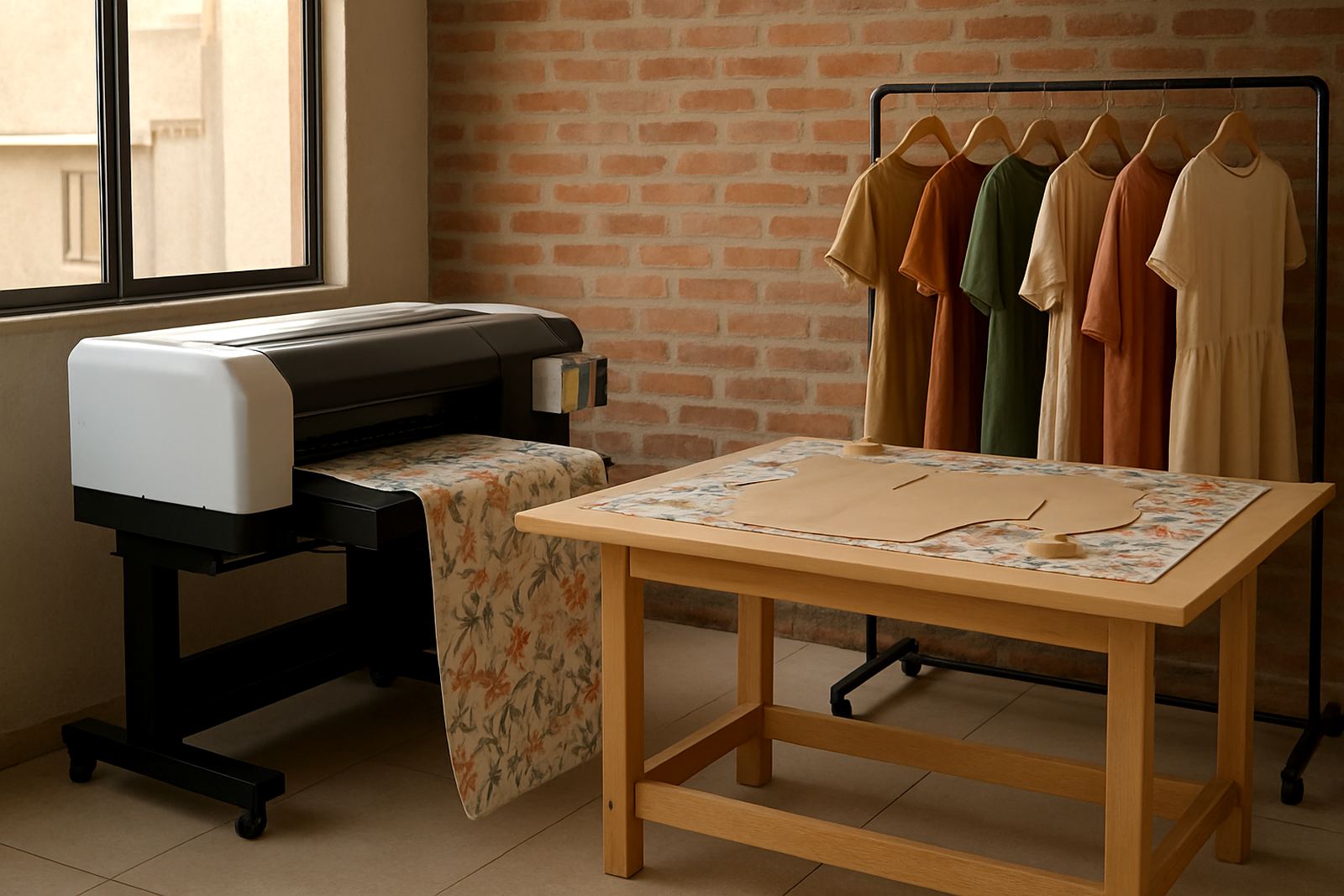
We supplied a direct-to-fabric inkjet printer suited to small garment and textile businesses that need sharp detail, clean colour laydown and repeatable results. Alongside that, we installed a heat press for finishing and fixation work where needed, plus the correct inks and consumables for the studio’s core fabric range. The printer was set up for panel work, sample yardage and short production lines rather than bulk factory output.
The specification was chosen to suit a fashion studio, not a large mill. That meant simpler operator control, manageable daily upkeep and enough flexibility for fine artwork and textural prints. We also included setup support for media handling so the team could avoid creasing, feed issues and wasted fabric during the learning phase.
- Direct-to-fabric inkjet printer for short-run fashion production
- Heat press for finishing and transfer-related work
- Inks matched to the studio’s fabric mix
- Operator guidance for loading, curing and safe handling
Working Around Space, Power and Production Pressure
The studio was operating in a compact room, so layout mattered as much as machine selection. We planned the equipment placement so there was room to move fabric rolls, inspect samples and keep a clean path between printing, pressing and packing. That also helped with day-to-day workflow because the team could move from artwork to print to finishing without crossing over themselves.
Because the site had to deal with occasional power interruptions, we kept the process practical. The staff were shown how to pause work safely, protect partially prepared media and restart without damaging the job. In a small business every metre of fabric counts, so the setup was arranged to reduce waste from the start. The client wanted consistency, not just a nice print on the first day.
- Space planning for a compact Bedfordview studio
- Workflow setup from file prep to finished panel
- Safe pause and restart steps for load-shedding
- Waste reduction on short fabric runs
Training, Colour Control and First Production Runs
Once the equipment was in place, we spent time on operator training and colour profiling. The team needed to understand how different fabric bases respond to ink, how to judge sample output and how to keep colour steady from one run to the next. That part matters a great deal in ladieswear, because a garment panel that looks slightly off under shop lighting can throw off the whole range.
We worked through their first production jobs with them, including small repeat motifs and sample cuts for buyer approval. The aim was to make the studio self-sufficient without overcomplicating the process. After the first few runs, the team was able to manage daily output with much more confidence and far less trial-and-error. There were a few learning curves, but by the end of the week they had a clean routine in place.
- Colour profiling for more accurate repeat results
- Hands-on training for two studio operators
- First-run support on sample panels and test yardage
- Practical cleaning and shutdown steps for daily use
Timeline From Site Check to First Printed Samples
The project took three weeks from the initial site check to the first successful printed samples leaving the studio. Week one covered the needs assessment, layout check and fabric planning. Week two focused on delivery, installation and utility checks. Week three was used for training, colour profiling and live production support on the first jobs.
That pace suited the client because they were preparing for a small launch of new ladieswear styles and needed sample work before full order commitments were made. The staged approach also allowed us to confirm that the room setup was workable, the print quality was stable and the team could handle the routine on their own. It was a careful rollout, not a rushed one.
- Week 1: site assessment and workflow planning
- Week 2: delivery and installation
- Week 3: training, profiling and live production support
What Changed After the Setup Went Live
The biggest change was turnaround time. The studio could now produce local samples in-house instead of waiting on outside suppliers, which meant quicker design decisions and fewer missed opportunities when a buyer asked for a change. They also gained more control over colour consistency, especially on fabric panels that needed to match across multiple pieces. That gave the business a more professional process for boutique work.
There was also a financial benefit. Short runs are often expensive when you outsource them, especially if you keep changing artwork or quantities. With the new setup, the studio could test small batches before committing to larger runs, which reduced costly mistakes. It gave them room to grow without taking on more space than they had. For a Bedfordview fashion business, that balance was exactly what was needed.
- Faster sample turnaround for local buyers
- Better colour consistency across repeated panels
- Lower waste on short runs and design changes
- More control over production scheduling
What We Would Repeat on the Next Fashion Studio Install
If we were doing this project again, we would use the same approach: start with the actual fabric mix, map the room properly and train the operators on the real jobs they will print every week. That is what made this Bedfordview installation work. The machine choice mattered, but the workflow mattered just as much.
For small garment and textile businesses in Johannesburg, Pretoria, Durban, Cape Town or Bloemfontein, the lesson is simple. A good setup should match the size of the studio, the style of the garments and the pressure of daily work. It should be easy to keep running, even when the power is unstable or the order book changes at short notice.
- Begin with fabric testing before full production
- Plan the room around movement, not just machine size
- Train staff on routine cleaning and colour checks
- Keep spare parts and consumables on hand from day one
Key facts
| Project name | Bedfordview Fashion Studio |
|---|---|
| Town | Bedfordview, Johannesburg |
| Client type | Small ladieswear fashion studio |
| Timeline | 3 weeks |
| Main equipment | Direct-to-fabric inkjet printer and heat press |
| Service scope | Installation, training, colour profiling and first-run support |