From market stock to branded fabric orders
The client was a small trader in Boksburg who had built a loyal customer base through market goods, then started getting requests for matching fabric by the metre and short-run branded pieces. The brief was to create a starter print room that could handle test runs, then grow with demand without needing a full factory fit-out.
We planned the room around realistic daily output, not ideal conditions on paper. The space had to fit through standard access points, work on common workshop power and keep colour consistent for repeat orders. Because the business was still learning what would sell, the equipment also needed to be easy to run without a large production team.
What made this project different was the mix of retail pace and production discipline. Orders arrived in small bursts, often with same-week deadlines, so the workflow had to stay simple enough for one operator and stable enough to protect colour on cotton blends and other textile bases.
What the room needed to cope with
Boksburg can be hard on print equipment in summer, with dust in the air and humidity swings that affect inks, cloth handling and drying. The client also wanted to avoid stoppages during load-shedding, so we planned the layout to reduce waste and keep restart times short when power returned.
The main constraints were clear:
- Limited floor space in a small back room
- Single-phase power supply with voltage variation
- Short lead time before the first customer launch
- Low operator experience at the start
- Need for clean colour on repeat print runs
We also took into account the local use case. The client was not chasing huge export volumes. They needed dependable short-run work for labels, fashion samples, display fabric and small garment pieces, with enough control to price orders properly and avoid reprinting.
Equipment supplied and setup details
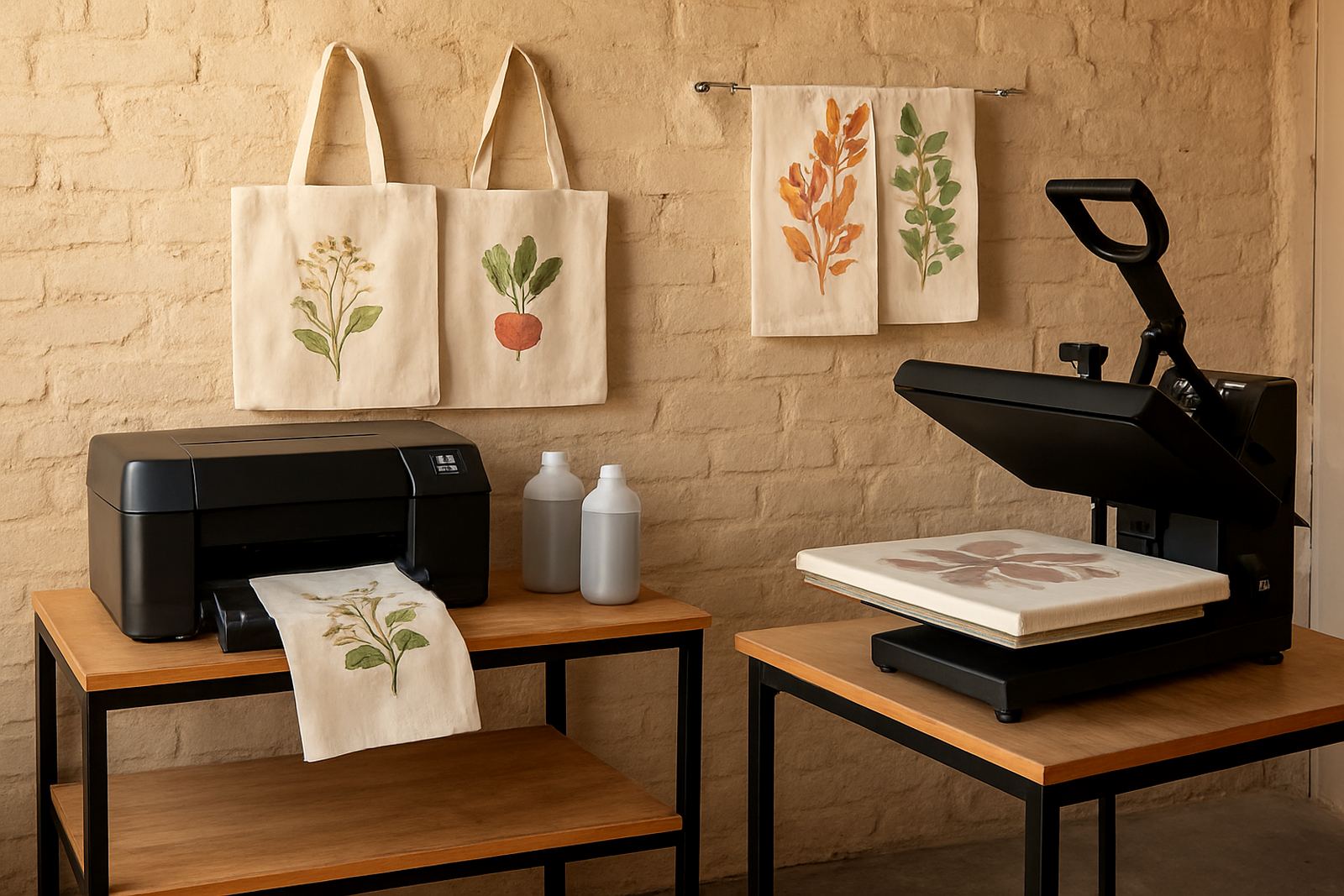
We supplied a direct-to-fabric inkjet printer sized for entry-level commercial use, plus a matching heat press for finishing and setting work where needed. We also provided textile inks suited to controlled daily production, a basic colour profiling process, and the consumables needed for first jobs and testing.
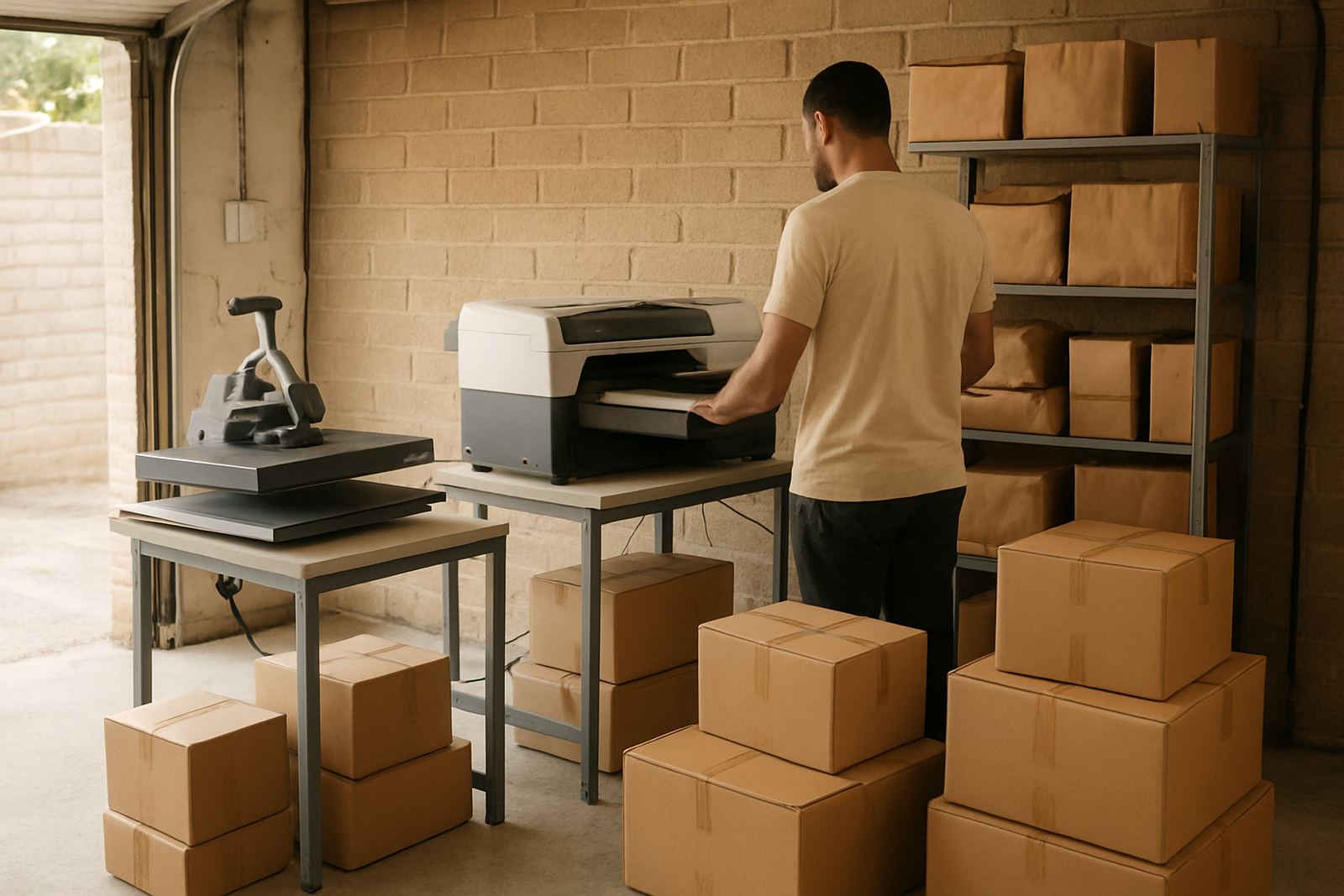
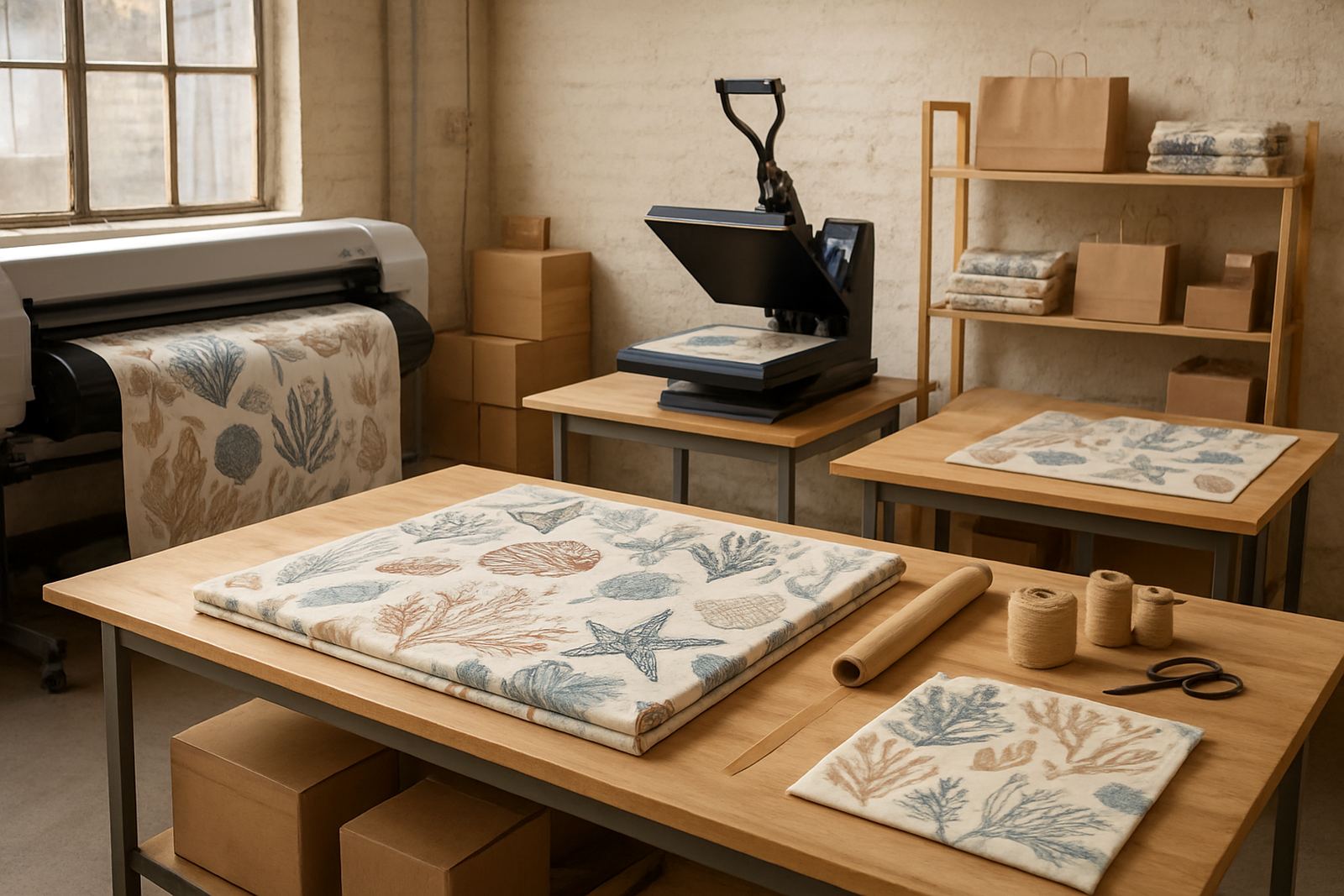
The installed print room was set up to handle fabric widths up to 1.6 metres, with a practical production rhythm of short runs rather than long factory lengths. The heat press area was positioned close to the printer to reduce handling time and keep the workflow tidy. Cables, media storage and cleaning items were arranged so the operator could maintain the room without wasting time looking for parts.
We ran the installation in a way that allowed for future expansion. If the client later adds a second printer or increases finishing volume, the layout can be adjusted without starting again from scratch.
- Direct-to-fabric inkjet printer for short-run textile production
- Heat press for finishing and set-up support
- Ink supply matched to daily use and repeat colour work
- Basic spare parts pack for common wear items
- Colour profiling for the first production profiles
Training that matched the business stage
The client did not need classroom theory, they needed hands-on confidence. We split training into practical blocks so the team could learn loading, cleaning, daily checks and print preparation without getting lost in technical language. The aim was to get the operator producing sellable fabric quickly while knowing when to stop and call for help.
Training covered artwork preparation, fabric handling, nozzle checks, cleaning routines, basic colour control and safe heat press use. We also showed the team how to recognise early signs of blocked heads, ink flow issues and media movement problems before those faults became costly.
- Operator setup and machine start-up
- Daily cleaning and shutdown routines
- Colour control for repeat orders
- Heat press handling and finish checks
- Simple fault reporting and remote troubleshooting steps
The client wanted staff who could learn quickly and keep production moving even on busy market weeks. After training, they had a clear checklist for opening, printing and packing, which made the room easier to manage from the first month.
Timeline from delivery to first sale
The full project took three weeks from final approval to first production run. Week one covered room planning, power checks and equipment selection. Week two was delivery, installation and colour profiling. Week three focused on training, test prints and the first small customer orders.
That timeline worked because the client kept the brief focused. There was no need for extra civil work or specialist fitting out, only a clean setup and proper guidance. We were able to commission the system, test the output and make the first adjustments before the business started taking paid orders.
By the end of the third week the studio was producing small batches for launch customers, and the client had enough confidence to quote from stock samples rather than guesswork.
Results and what we would repeat
The immediate result was a practical print room that gave the business a new product line without overextending cash flow. The client could move from sample work to small sales runs, test fabric demand and keep control of quality. The setup also reduced reliance on outside printers, which helped protect margin on small orders.
We would repeat the same approach for another market seller making the jump into branded fabric: start with the real sales pattern, not the dream volume. Keep the layout compact, build around one trained operator first, and choose equipment that can cope with South African conditions such as power cuts, dust and seasonal humidity.
For this kind of business, the best result is not a fancy room. It is a room that prints well on Monday, still prints well on Friday and can be serviced without shutting the whole operation down.
Key facts
| Project location | Boksburg, East Rand |
|---|---|
| Client type | Market goods seller expanding into branded fabric lines |
| Timeline | 3 weeks from approval to first production run |
| Print width | Up to 1.6 metres |
| Power planning | Single-phase setup with load-shedding aware workflow |
| Deliverables | Printer supply, heat press, colour profiling, installation and training |