What the Pretoria client needed
The client was a small garment business in Pretoria making babywear and soft accessories for local boutiques and online orders. Their work involved fine repeats, gentle colour palettes and short runs across different fabric bases, so they needed equipment that could hold detail without making the process complicated.
The brief was clear: build a print room that could handle sample swatches, small production batches and careful finishing for delicate items. They also needed a setup that would be practical during load-shedding, manageable for a small team and reliable in Pretoria’s dry climate, where static and dust can become a nuisance if the room is not organised properly.
They wanted to print in-house instead of outsourcing the work to Johannesburg, which would have added transport time and cut into margins. The site had limited floor space, so every metre had to earn its keep and the workflow had to stay tidy from file prep through to curing and packing.
Site constraints and room layout
The room was in a light-industrial unit with basic power and ventilation, and the client had to keep production running around existing storage and cutting tables. The floor space was tight, so we planned the line of work in a straight flow: file prep, fabric feed, print, drying, heat pressing and final inspection. That helped reduce movement and kept the babywear pieces from being handled too much.
We also had to factor in power interruptions and the need for controlled temperature around inks and media. In Pretoria, a hot afternoon can affect workflow quickly, so we planned the placement of the machines away from direct sun and left enough space for safe access during maintenance. The room was arranged so the operator could work alone on quieter days, but still have enough room for a second person during peak runs.
- Space planned for short runs and sample work
- Clear access for cleaning, maintenance and media changes
- Workflow arranged to reduce handling of soft fabrics
- Allowance made for load-shedding and backup power use
Equipment supplied and set-up work
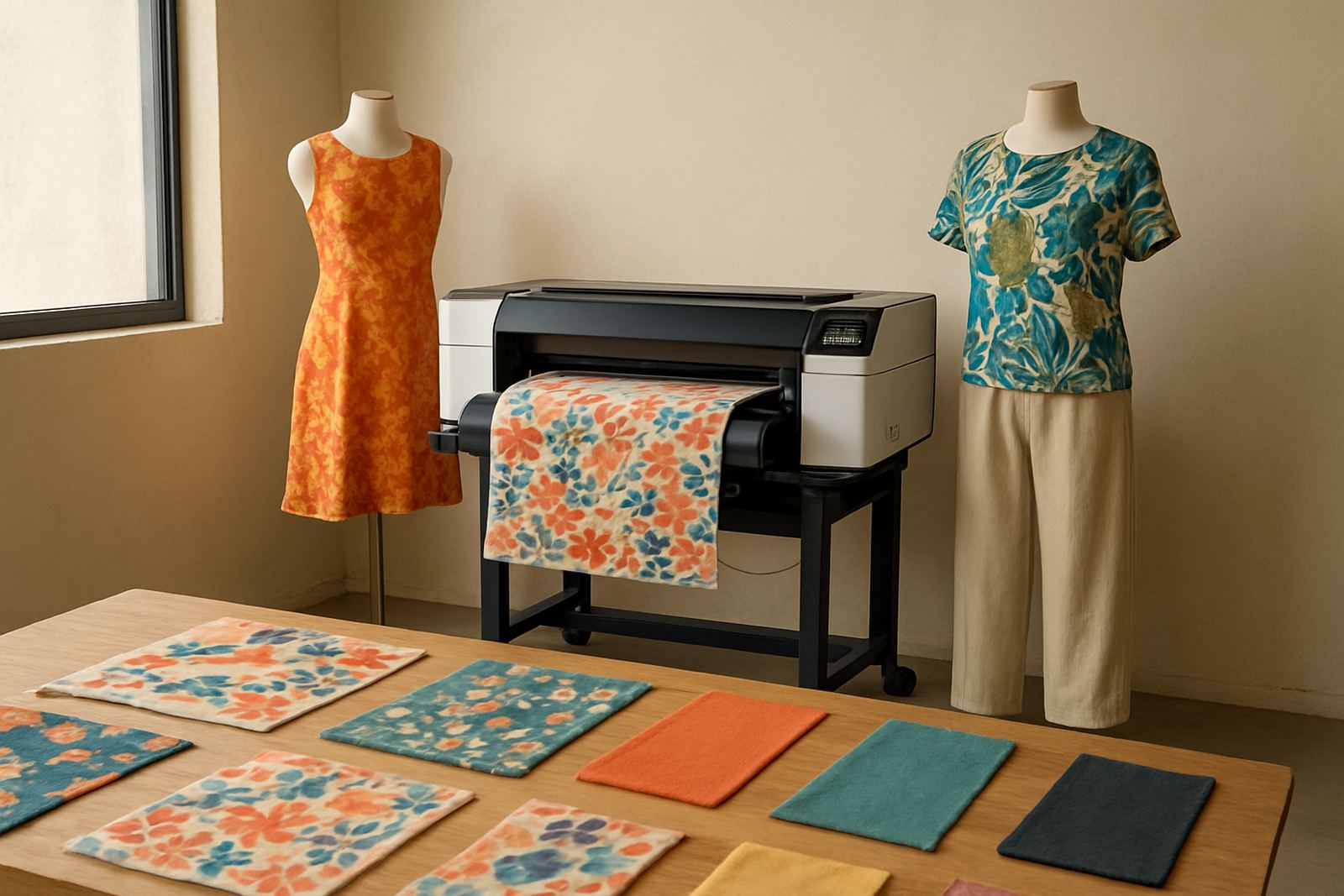
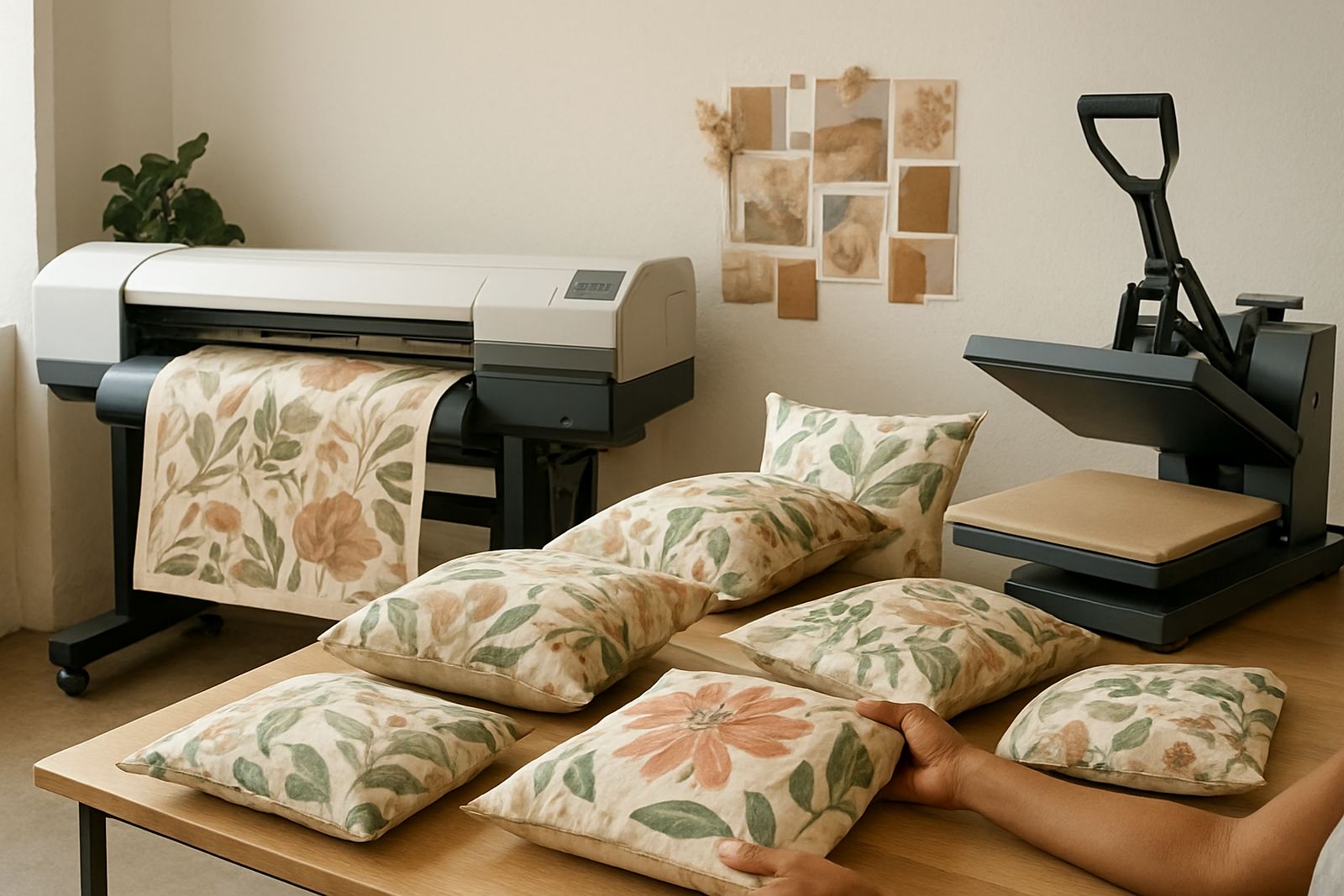
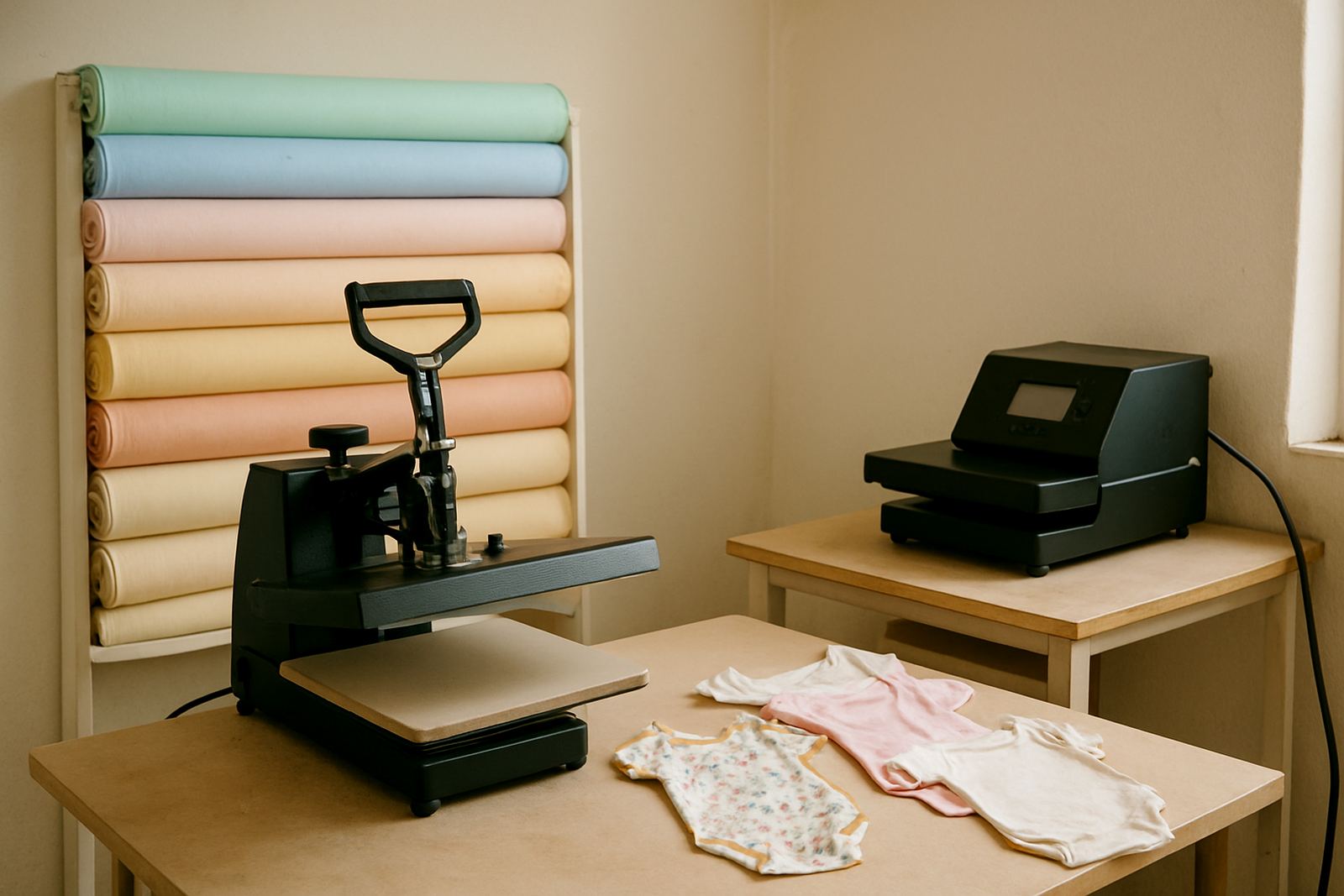
We supplied a direct-to-fabric inkjet printer suited to small garment and textile production, together with a heat press for finishing and curing. The printer was configured for fine detail, accurate repeat work and smooth tonal transitions, which matters on babywear where prints need to stay clean and soft looking rather than heavy. We also supplied textile inks, media guidance and the consumables needed to get the first production runs moving.
Our installation technician handled the machine placement, levelling and initial checks. We then completed colour profiling so the client could match soft pastel shades and consistent branding across swatches, trims and garments. The set-up was tested on different fabric weights to make sure the print quality stayed consistent on the lighter cottons they used most often.
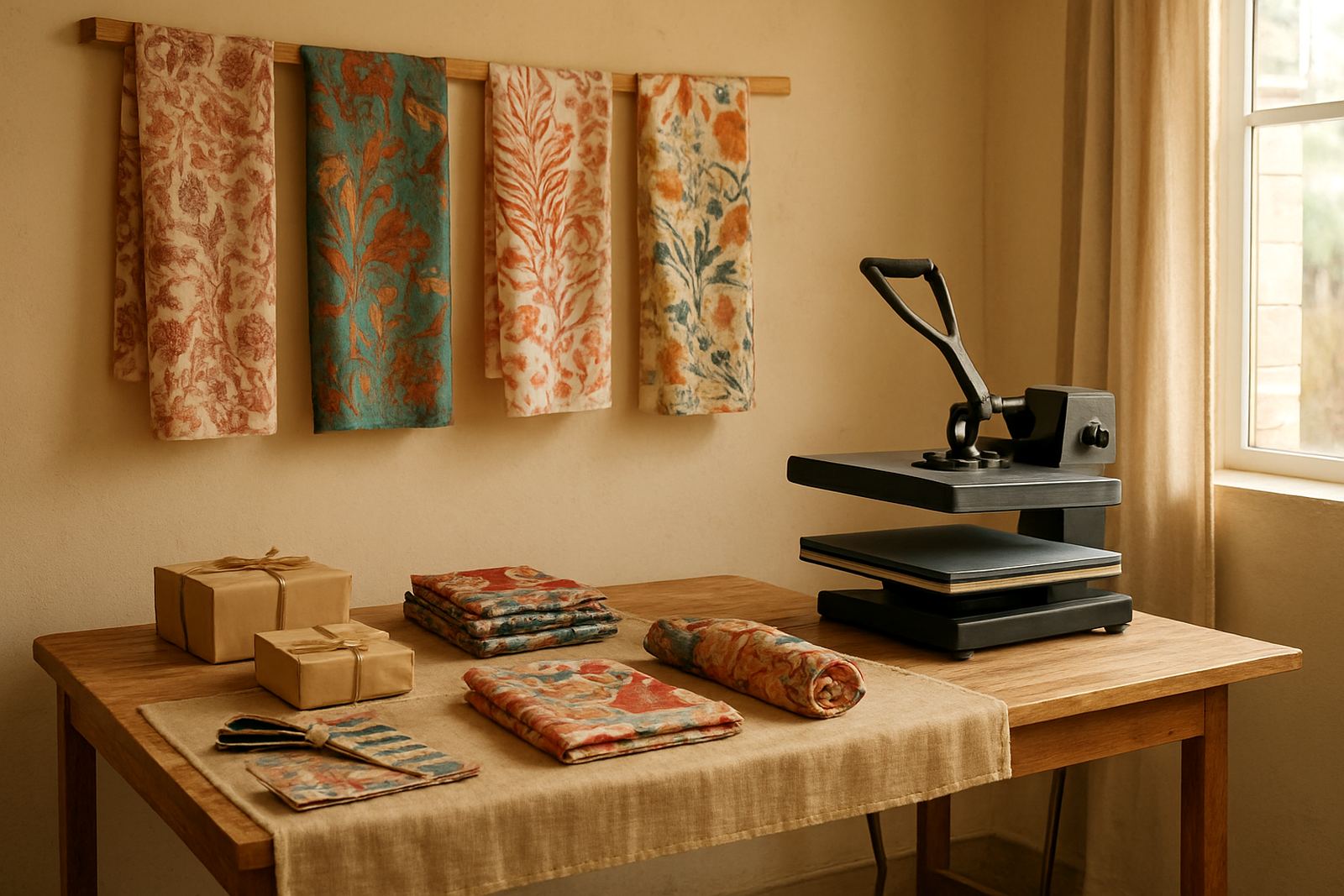
The heat press was positioned for straightforward finishing, with settings recorded for the client’s common fabric types. We explained the print order, drying time and pressing sequence so the team could keep production stable even when orders varied from a handful of sample cards to a full small batch.
- Direct-to-fabric inkjet printer for short runs and detailed repeats
- Heat press for curing and finishing
- Ink supply matched to the client’s fabric range
- Colour profiling for soft tones and repeat consistency
Training for a careful babywear workflow
Babywear demands patience, especially where the fabric is light and the print must stay neat on seams, cuffs and small panels. Our training focused on practical steps the team could repeat every day: media handling, alignment, nozzle checks, basic cleaning and the correct order for pressing. We kept the instructions simple and measured, because the operator needed to get to work without guessing.
We spent time on print room discipline too. That included keeping inks sealed, storing media away from dust and checking fabric moisture before production starts. In a city like Pretoria, where indoor conditions can swing from dry to hot in one afternoon, this kind of routine helps avoid waste and keeps colours consistent from one batch to the next.
The team were shown what to do when a run needs a quick adjustment, and how to spot a print issue before it spreads through the batch. That meant they could manage the room with confidence, even when orders changed at short notice. There was no need for complicated steps, just a clear routine and good habits.
Timeline and commissioning
The project took three weeks from first site visit to handover. Week one covered the brief, space check and workflow plan. Week two covered delivery, machine placement and initial set-up. Week three was used for colour profiling, operator training and production testing on the client’s babywear fabrics and sample swatches.
By the end of commissioning, the print room was ready for live orders and the client had a clear production routine. We stayed available after handover for remote troubleshooting and practical guidance while the team settled into the new setup. That extra support mattered because the first few weeks of in-house printing usually reveal small adjustments that are easier to sort early.
- Week 1: site review and workflow planning
- Week 2: delivery and installation
- Week 3: profiling, training and live testing
Results for the Pretoria production floor
The client gained a cleaner and faster way to produce babywear prints locally instead of sending work out of town. Sampling became easier, and the team could test colours, fabric response and finishing in the same room rather than waiting on outside turnaround. That improved control over the final look and reduced the risk of delays on short orders.
They also saw better consistency across swatches and garment panels, especially on lighter fabrics where fine detail matters most. Because the workflow was set up for short runs, the team could take on smaller boutique orders without tying up the whole room. The print area was easier to keep tidy as well, which matters when you are working with delicate stock and small components.
If we were doing this project again, we would use the same layout logic and the same focus on training first, hardware second. For this kind of Pretoria babywear space, a calm workflow and proper colour control are worth more than complicated extras. The room now suits the business they actually run, not a bigger operation they may not need yet.
Key facts
| Project type | Soft-goods print room for babywear fabrics and swatches |
|---|---|
| Town | Pretoria |
| Timeline | 3 weeks |
| Main equipment | Direct-to-fabric inkjet printer and heat press |
| Core services | Installation, colour profiling, operator training and remote support |
| Typical output | Short runs, sample swatches and small batch garment printing |