
What the Cape Town décor team needed
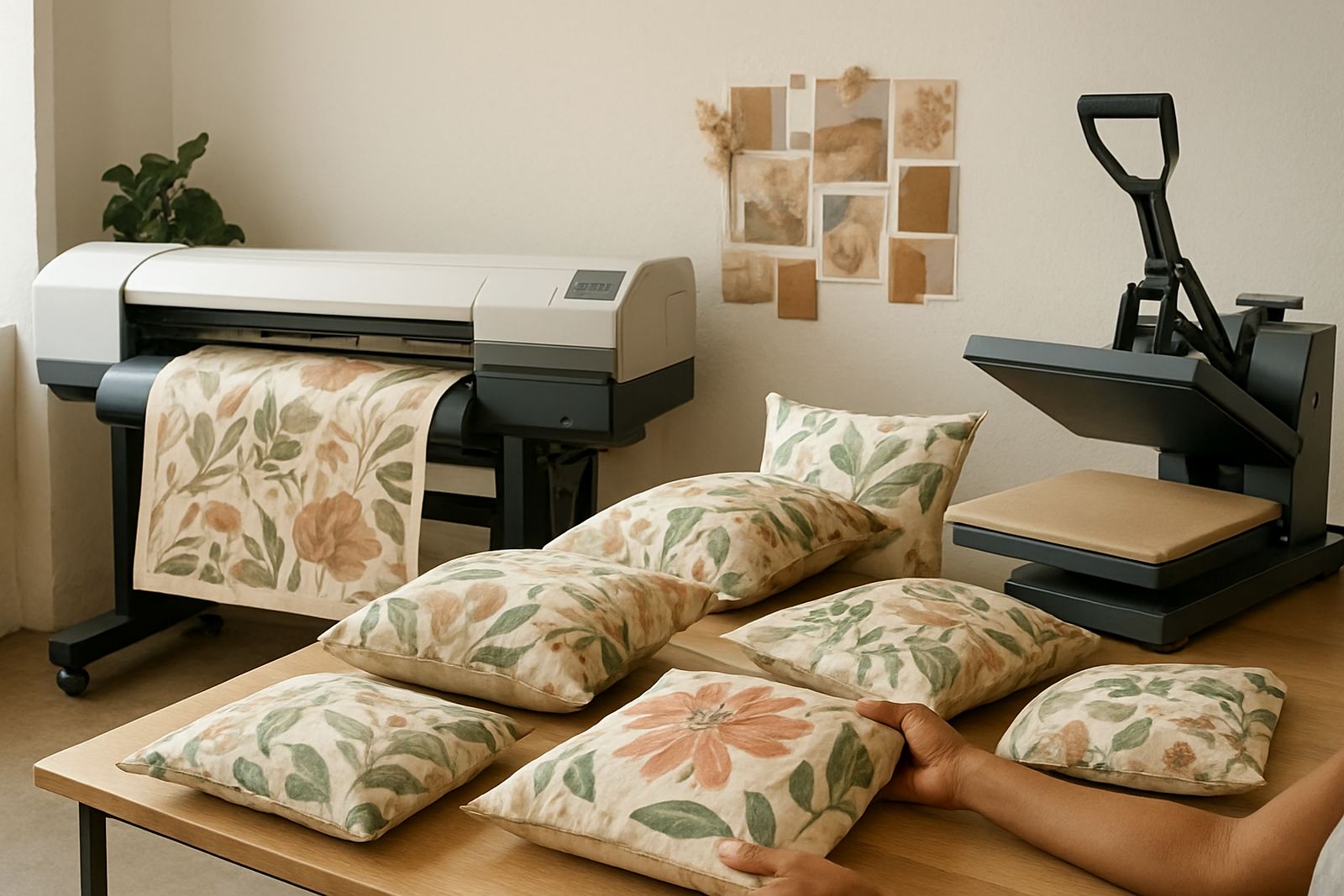
The client was a small interior décor studio in Cape Town making cushions, table runners and limited textile ranges for local retail and hospitality orders. They wanted a print room that could handle repeatable colour, fine detail and short production runs without taking over the whole workshop.
The brief was straightforward on paper but strict in practice. The room had to fit into a tight industrial unit, allow for clean handling of printed fabric, and cope with the realities of Cape Town conditions such as winter damp, salty air in some areas and occasional load-shedding. They also needed the team to learn the process quickly so work could start without long delays.
- Product focus: cushions, runners and small décor lengths
- Run sizes: short to medium batches, often same-week
- Priority: accurate colour and repeatable output
- Location: Cape Town industrial workspace with limited floor space
Equipment and setup we supplied
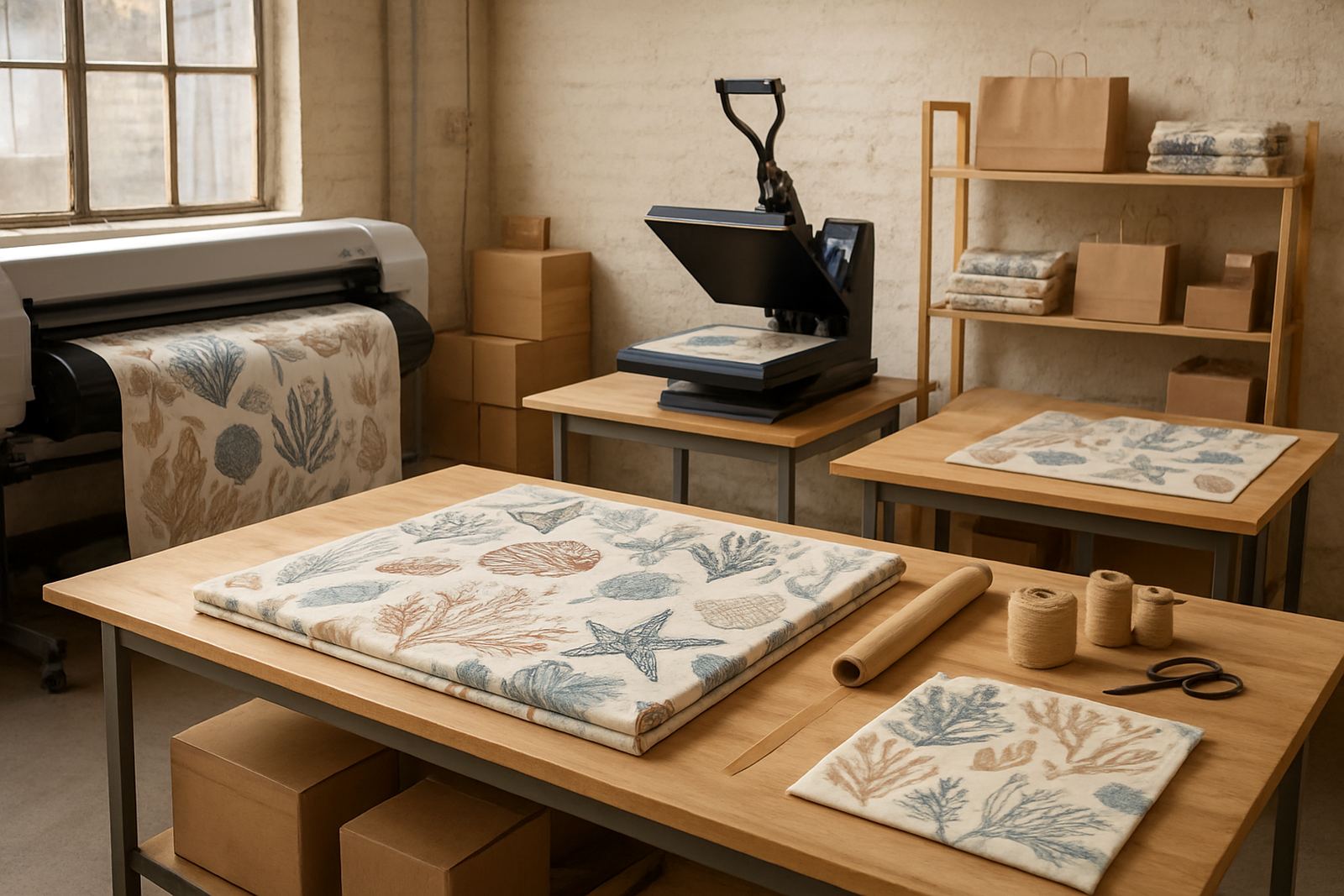
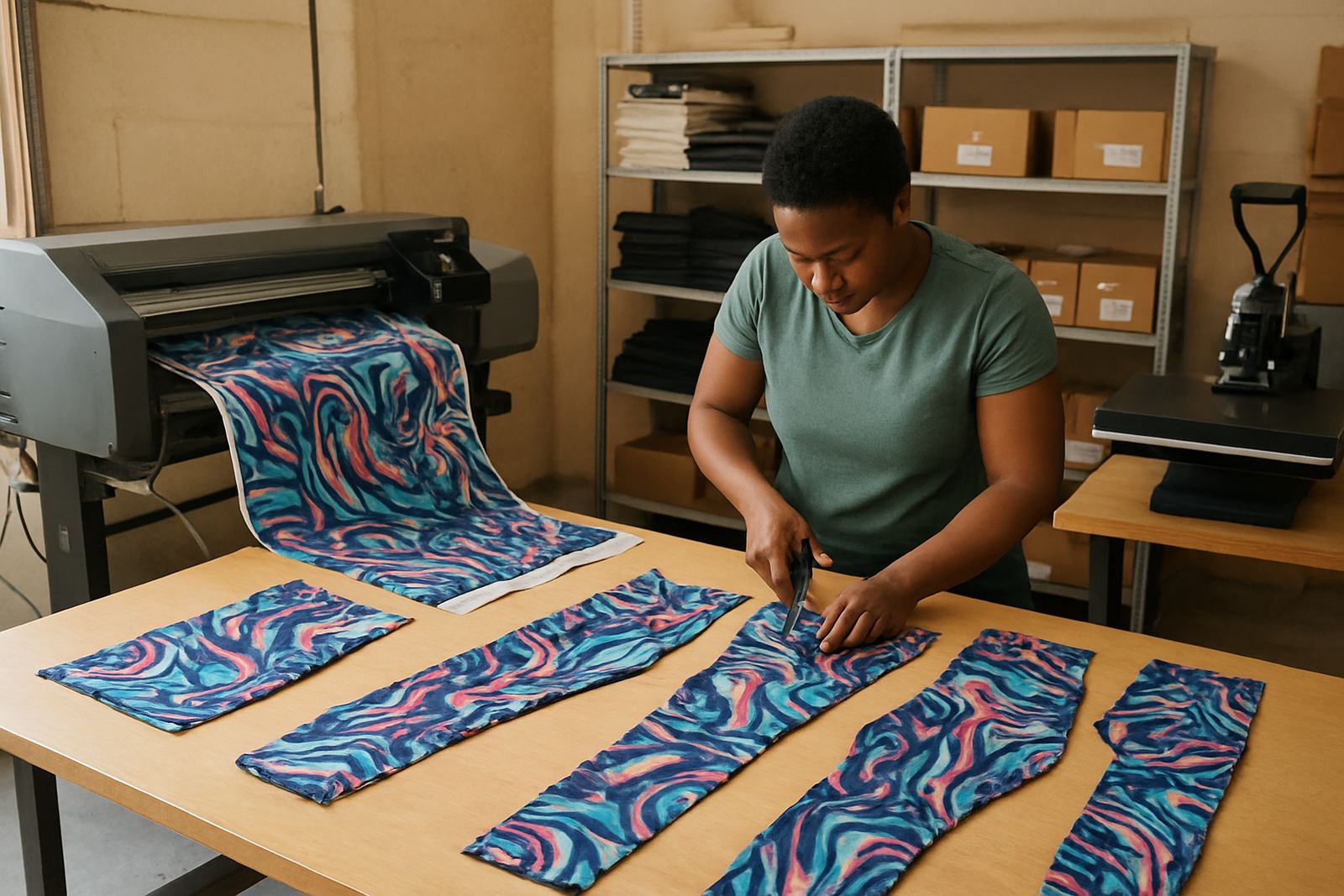
We supplied a direct-to-fabric inkjet printer matched to small-batch textile work, a heat press for fixing and finishing, and the ink and media needed for daily production. The setup was planned around simple operator flow, with enough space for loading, printing, curing and inspection without cross-contamination from cut fabric or packaging.
The printer was specified for detailed colour work on decorated cloth, with stable feed control for narrow and medium-width textile runs. We also set up colour profiling so the studio could keep repeat orders consistent across different fabrics and production days. In Cape Town, that mattered because customers often reorder seasonal ranges months later and expect the same shade again.
- Direct-to-fabric inkjet printer for small textile collections
- Heat press for curing and finishing
- Inks matched to fabric production needs
- Colour profile setup for repeatable results
- Operator station layout for a compact room
Constraints in the room and how we worked around them
The biggest challenge was space. The room had to support printing, drying and packing without becoming crowded, so we arranged the equipment in a practical sequence that reduced walking back and forth. There was also a need to manage dust, which can affect fine fabric prints if the room is not kept tidy.
Power stability was another issue. Like many small businesses in South Africa, the team could not afford downtime every time the electricity went off. We planned the installation so that the core workflow could recover quickly after interruptions, and we trained staff on safe shutdown and restart steps. The setup also had to be simple enough for more than one operator to use, especially when orders came in at the same time.
- Compact room layout for print, cure and pack workflow
- Dust control and clean handling procedures
- Load-shedding ready operating routine
- Multi-operator training for busy production days
Training and handover in the first two weeks
The project ran over three weeks from final approval to handover. In week one we confirmed the room layout, power points and fabric handling route. Week two was installation, machine testing and initial colour profiling. By week three the team was printing live orders with support on site and remote follow-up after hours when needed.
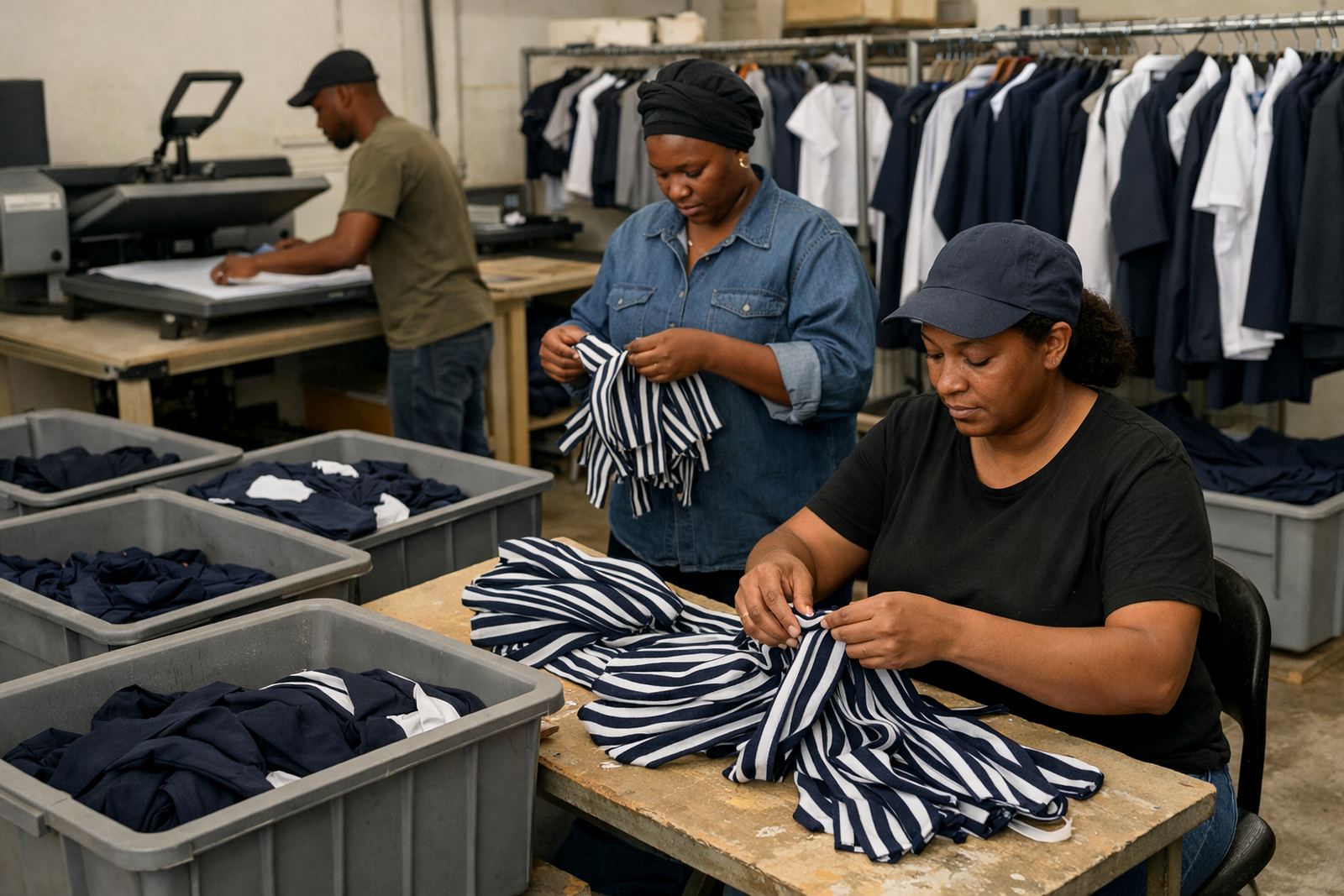
Training covered printer start-up, shutdown, daily cleaning, heat press use and basic fault checks. We also went through ink handling, fabric preparation and how to keep the print room organised during busy periods. The client team picked it up quickly, and once the process was clear they could take on small production runs without waiting for outside help for every step. That saved time and reduced waste, which was important for a business working on tighter décor margins.
- Week 1: site check, room planning and workflow confirmation
- Week 2: installation, testing and colour profiling
- Week 3: live production, handover and support follow-up
Results for décor production
After the install, the studio had a dependable print room for short-run décor work. Colour stayed more consistent from batch to batch, details held well on cushions and runners, and the team could move from sample to production without a long lead time. The change also made quoting easier because they could plan around known print capacity rather than guessing how much external work would cost.
The client reported less waste from misprints and better control over turnaround times. For a décor business serving Cape Town customers and shipping to other cities, that helped with seasonal orders and replacement runs. It also gave them the confidence to accept smaller custom jobs that would previously have been too awkward to handle in-house.
- More consistent colour across repeat orders
- Less waste from setup and test runs
- Faster turnaround on small décor collections
- Better control over in-house production costs
What we would repeat on the next décor room
If we were doing this again, we would keep the same approach: small-footprint layout, clear fabric flow, and training built into the install from day one. For décor clients, that is usually better than adding too much equipment too soon. A compact room that works properly is more useful than a large room full of underused machines.
We would also keep the emphasis on colour profiling early in the process. That gives the team a known standard before they start taking orders and reduces back-and-forth later. In a coastal city like Cape Town where workshop conditions can shift with the weather, it is worth setting up the room to be practical from the start, not after problems appear.
- Keep the room compact and easy to clean
- Build colour profiling into the first week
- Train operators before full production starts
- Plan for humidity and power interruptions from the outset
Key facts
| Project type | Décor print room for cushions, runners and small interior textile collections |
|---|---|
| City | Cape Town |
| Timeline | 3 weeks from approval to handover |
| Supplied equipment | Direct-to-fabric inkjet printer, heat press, inks and setup support |
| Support included | Installation, operator training, colour profiling and remote troubleshooting |
| Working conditions | Compact room, coastal humidity considerations and load-shedding ready workflow |