The brief from a Roodepoort garment workshop
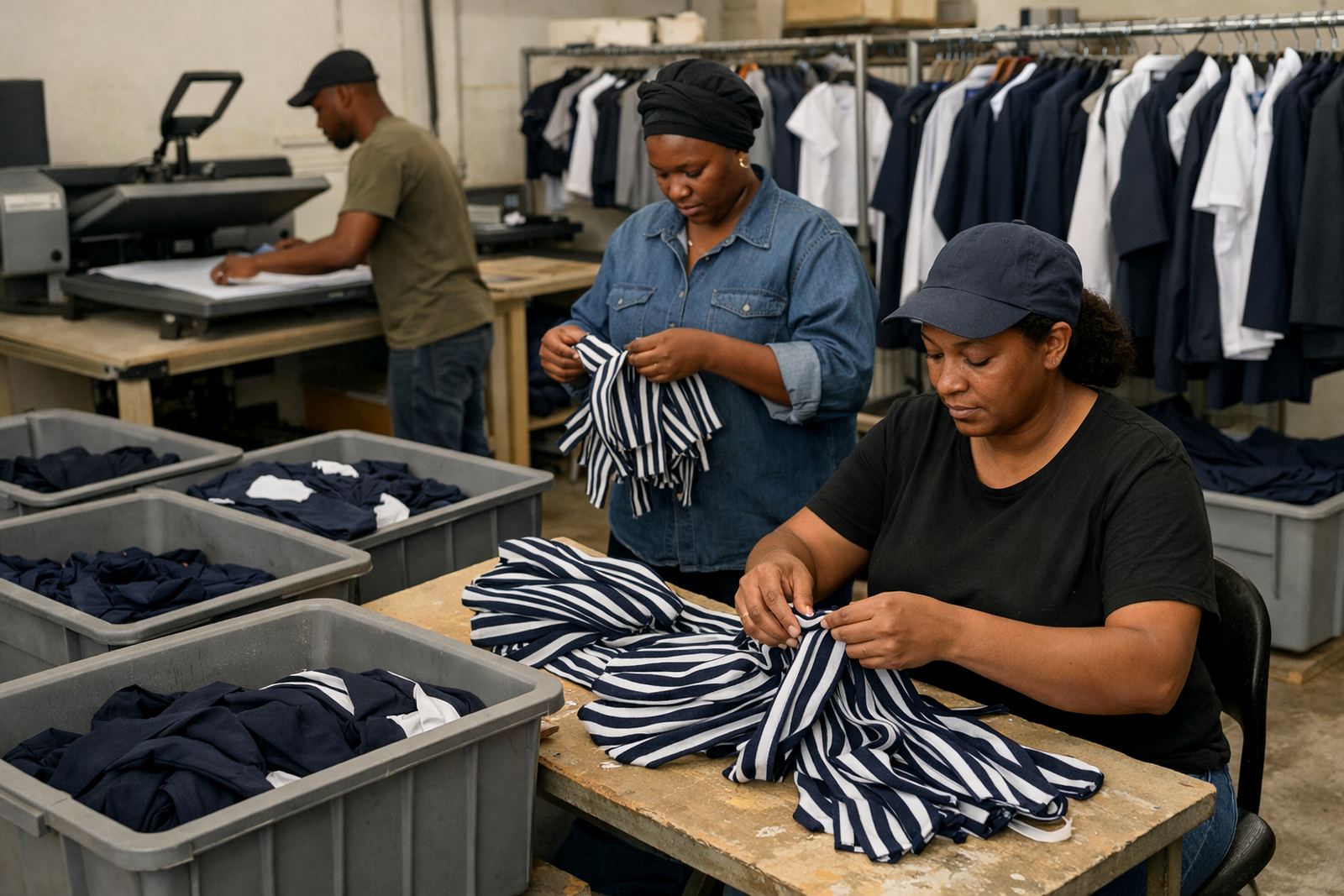
The client was a family-run schoolwear workshop in Roodepoort serving local schools, sports clubs and uniform shops across the west of Johannesburg. They needed a support room that could handle repeat runs for shirts, skirts, tracksuits and accessory trims without slowing down the main cutting and sewing area.
The main challenge was seasonal demand. January and the fourth term were busy, but the same room still had to work during quieter months for short runs, sample production and replacement items. They also needed a setup that could cope with load-shedding, because stop-start power can ruin a print cycle and waste fabric.
- Location: Roodepoort, Gauteng
- Client type: small schoolwear and garment workshop
- Main output: schoolwear graphics, trims, labels and repeat orders
- Priority: reliable daily use with easy operator handover
Space, power and seasonal pressure points
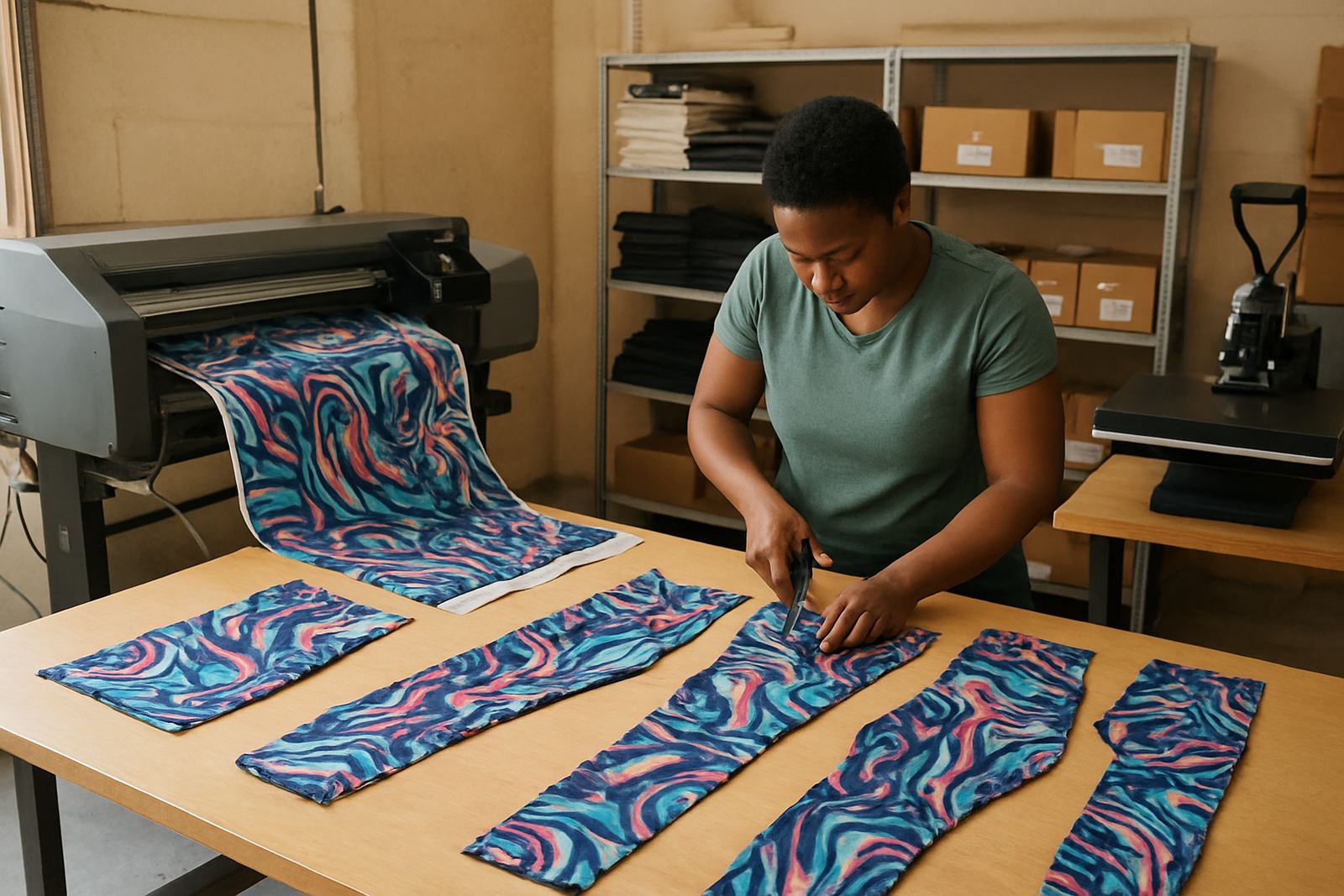
The room itself was compact, so we had to plan around material flow as much as machine placement. There was limited wall space, one main work table and a narrow route for moving rolls, cut panels and finished stock in and out. We kept the layout practical, with a clear print zone, heat press zone and packing corner so operators could move without crossing wet or freshly pressed items.
Power stability was another consideration. The client had already lost time during municipal outages, so we set the line up to recover quickly after interruptions and avoid half-finished jobs sitting in the machine. In Roodepoort the air is generally dry, but dust from nearby traffic and open doors can affect fabric handling and finished stock, so we also planned for covered storage and regular cleaning routines.
- Working area planned for a narrow production room
- Clear separation between printing, pressing and packing
- Storage for fabric rolls, inks and spare media
- Procedure for safe shutdown during load-shedding
What we supplied and installed
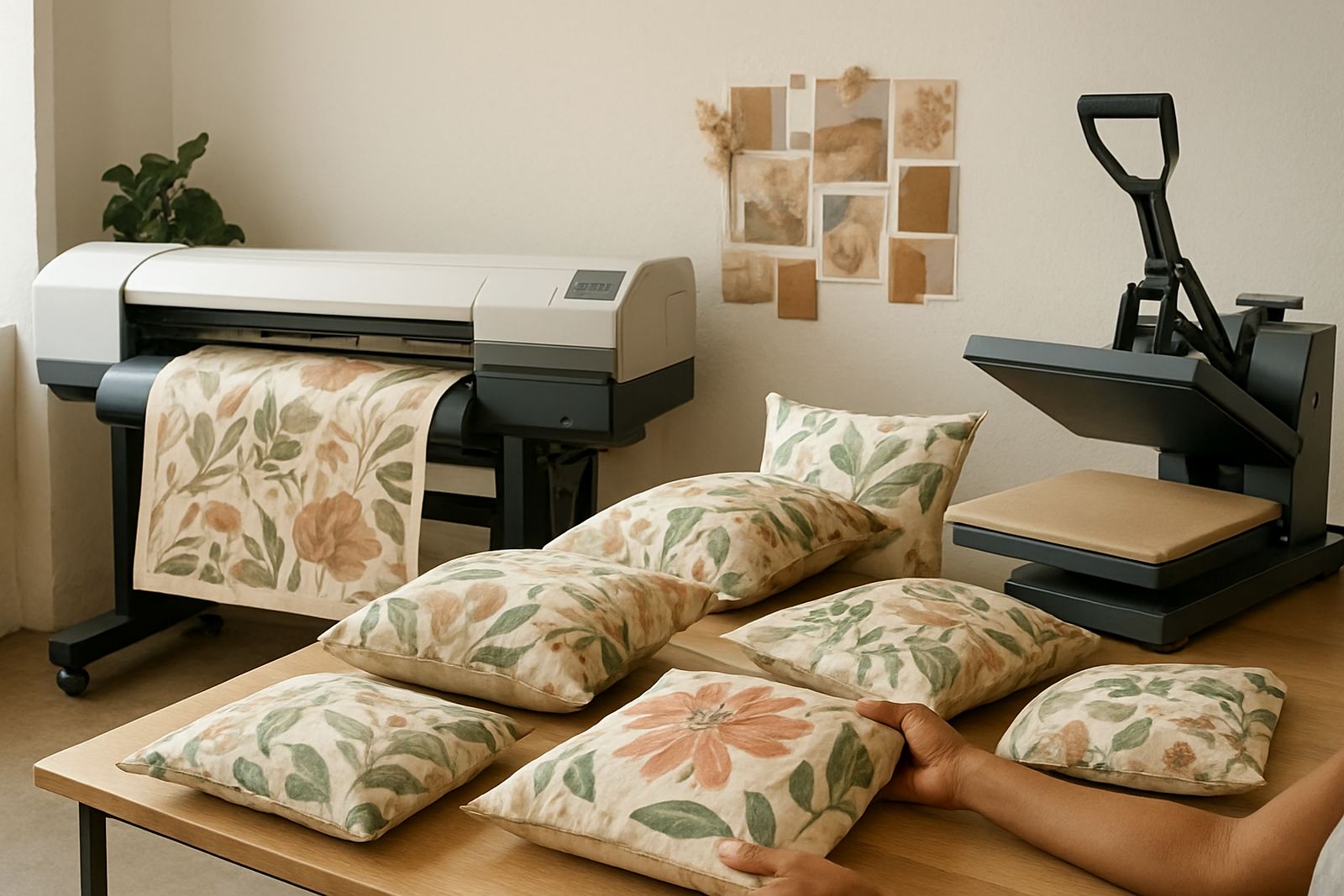
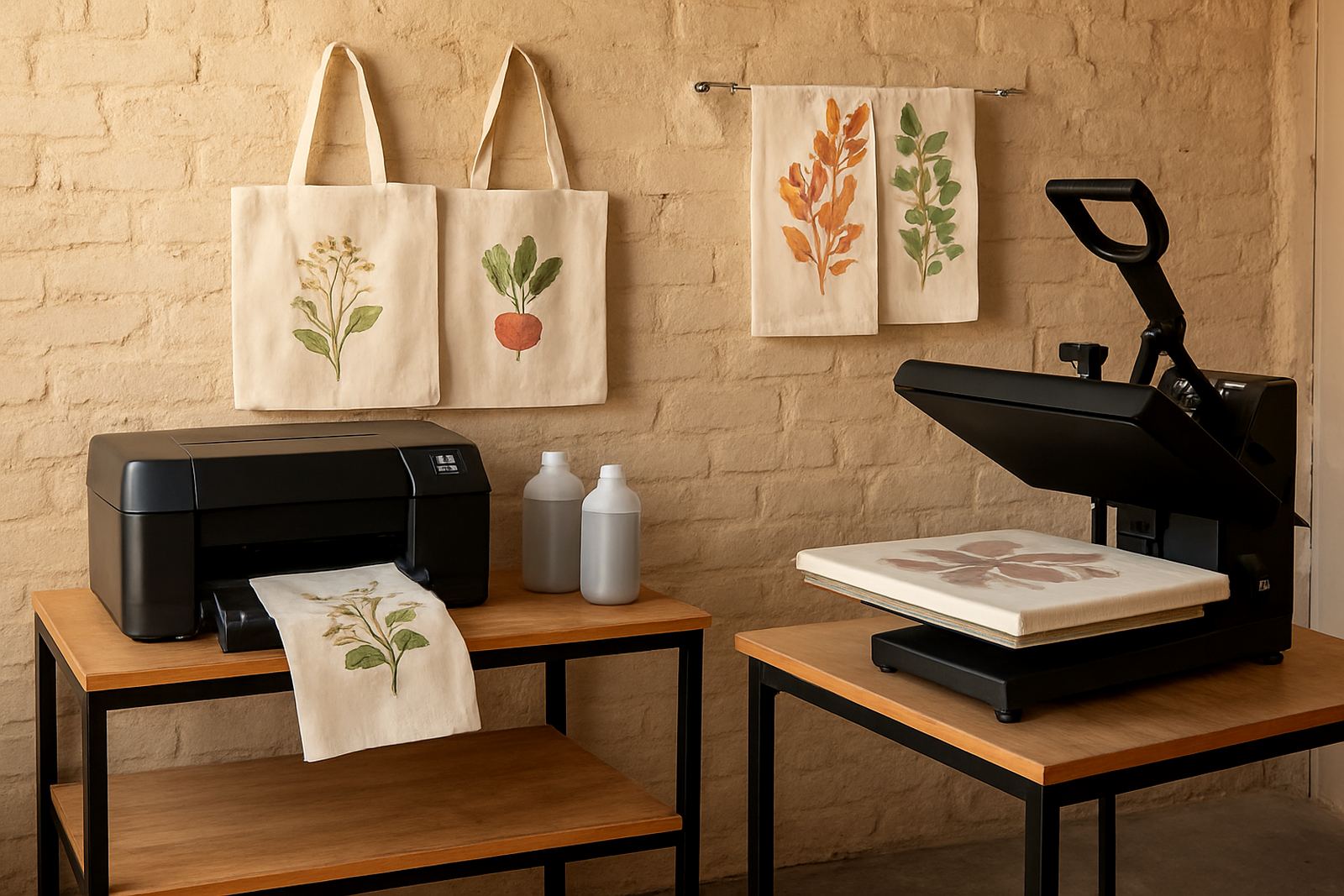
We supplied a direct-to-fabric inkjet printer suited to short and medium production runs, together with a heat press for finishing and bonding work. The printer was configured for fine detail and solid colour coverage, which matters when school logos, piping, badges and lettering all need to match from one batch to the next.
We also supplied the inks, basic consumables and the set-up support needed to get the room into production. That included machine installation, print alignment, colour profiling and a first-pass workflow check so the team could move from sample to full order with less trial and error. The client wanted a room that could be run by one trained operator when needed, and that was built into the setup from the start.
- Direct-to-fabric inkjet printer for repeat schoolwear runs
- Heat press for finishing, bonding and controlled transfer work
- Ink supply matched to fabric type and production volume
- Operator handover notes for daily use and shutdown steps
Training for schoolwear production under pressure
Training was done on site over two weeks, with the first visit covering machine basics, safe loading and the print sequence, then a follow-up session focused on colour control and routine cleaning. For schoolwear, the work is not just about getting a logo onto fabric. It has to hold up after washing, match the same tone across batches and arrive on time for term openings.
We showed the team how to handle common production issues before they become downtime, including nozzle checks, ink circulation routines and quick recovery steps after a power cut. The operator team also needed guidance on fabric handling because stretched panels and damp stock can throw off a clean finish, especially when orders are moving quickly. It is the sort of room that works best when everyone knows the sequence and keeps it consistent. One missed step can cost a whole bundle.
- Week 1: installation and basic operator training
- Week 2: colour profiling and repeat-run checks
- Follow-up: cleaning routines, daily startup and shutdown
- Support material: simple job sheets and maintenance reminders
Timeline, rollout and handover
The full project ran over three weeks from first site visit to sign-off. The first week was used for layout planning and equipment placement, the second for installation and testing, and the third for training, production checks and handover. That pace worked well because the client could keep normal sewing work going while the room was brought online.
By the end of the rollout, the unit was able to take on schoolwear orders in batches rather than one off jobs. That made scheduling easier for the workshop and reduced the rush at the start of each term. The client also appreciated that the machine settings were documented in a way that could be followed by more than one staff member, which is useful when one person is on leave or pulled into another section.
We would approach the same type of project the same way again: keep the room layout simple, train for routine maintenance early, and plan for power interruptions before the busy season starts. It saves time, avoids panic and keeps the production line moving when stock has to leave on a fixed date.
Results for the Roodepoort unit
The finished room gave the workshop a cleaner production flow and a more dependable way to handle seasonal schoolwear demand. Orders could now be separated by run size, with smaller reorders moving through quickly and larger batches kept organised for pressing and packing. That helped reduce handling mistakes and improved consistency across the set.
The biggest practical gain was confidence. The team knew what to do at startup, how to clean the system, and when to call for support if a fault needed attention. That matters in garment work because a small delay can affect delivery to schools, especially in January when stock has to be ready before classes begin. The room now gives them a proper base for repeat work, branded trims and add-on items throughout the year.
What we would do again on a similar project
If we were setting up another schoolwear unit in Roodepoort or anywhere else in Gauteng, we would use the same approach. Start with the room layout, then match the machine size to the actual order pattern, not the wish list. We would also build in enough time for staff training, because a good machine still depends on clean handling and steady routines.
For small garment businesses, the best setup is usually the one that is easy to run every day. Not oversized, not complicated, just dependable and ready for the school calendar. That is what this project needed and that is what it delivered.
Key facts
| Project location | Roodepoort, Gauteng |
|---|---|
| Client type | Small schoolwear and garment workshop |
| Timeline | 3 weeks from site visit to handover |
| Printer format | Direct-to-fabric inkjet system for short and medium runs |
| Pressing equipment | Heat press for finishing and bonding work |
| Training delivered | Installation, colour profiling, daily cleaning and operator handover |