Project brief for a Bloemfontein clothing business
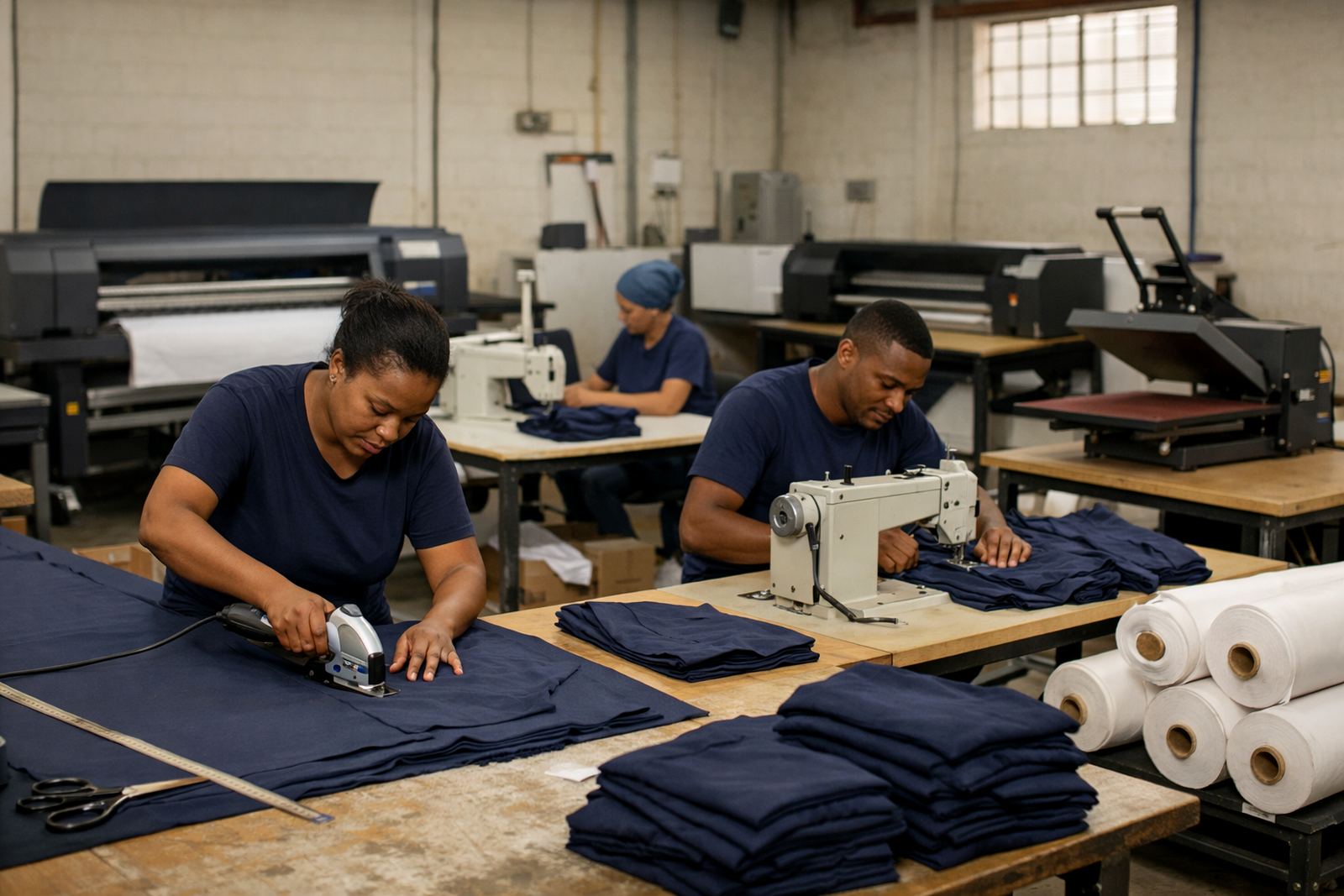
The client was a small but growing clothing business in Bloemfontein making lifestyle garments and limited runs for local shops, school events and corporate orders. Their main need was simple: produce sample pieces quickly, check colour on the actual fabric, and approve prints before moving into bigger quantities.
The brief called for a sample room that could sit inside a working workshop without taking up too much floor space. It also had to be easy for a small team to operate, since the business did not have a full-time technician on site. They wanted equipment that could cope with small batches, changing designs and day-to-day power interruptions without creating a backlog.
Constraints we had to work around
Like many businesses in the Free State, the client had to plan around load-shedding, dust control and limited space. The room had a narrow footprint, so the layout had to allow safe movement between the printer, pressing area and curing space without bottlenecks. We also had to keep the working area tidy because fabric dust and loose thread can affect print quality over time.
- Small room with limited wall and floor space
- Power cuts that interrupted longer print jobs
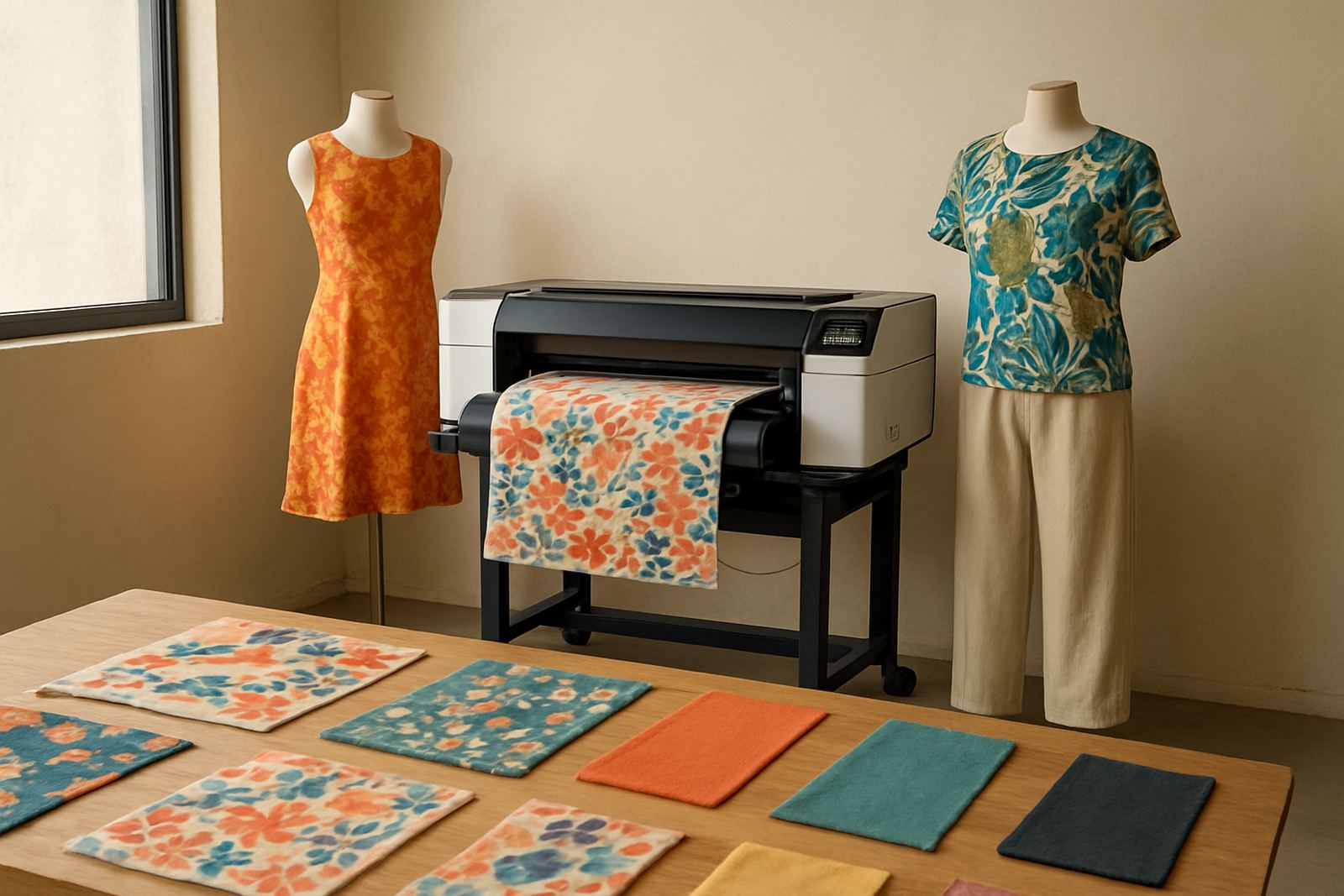
- Need for accurate colour on different fabric types
- Staff who needed a clear, repeatable process
- Short turnaround on sample approvals
What we supplied and installed
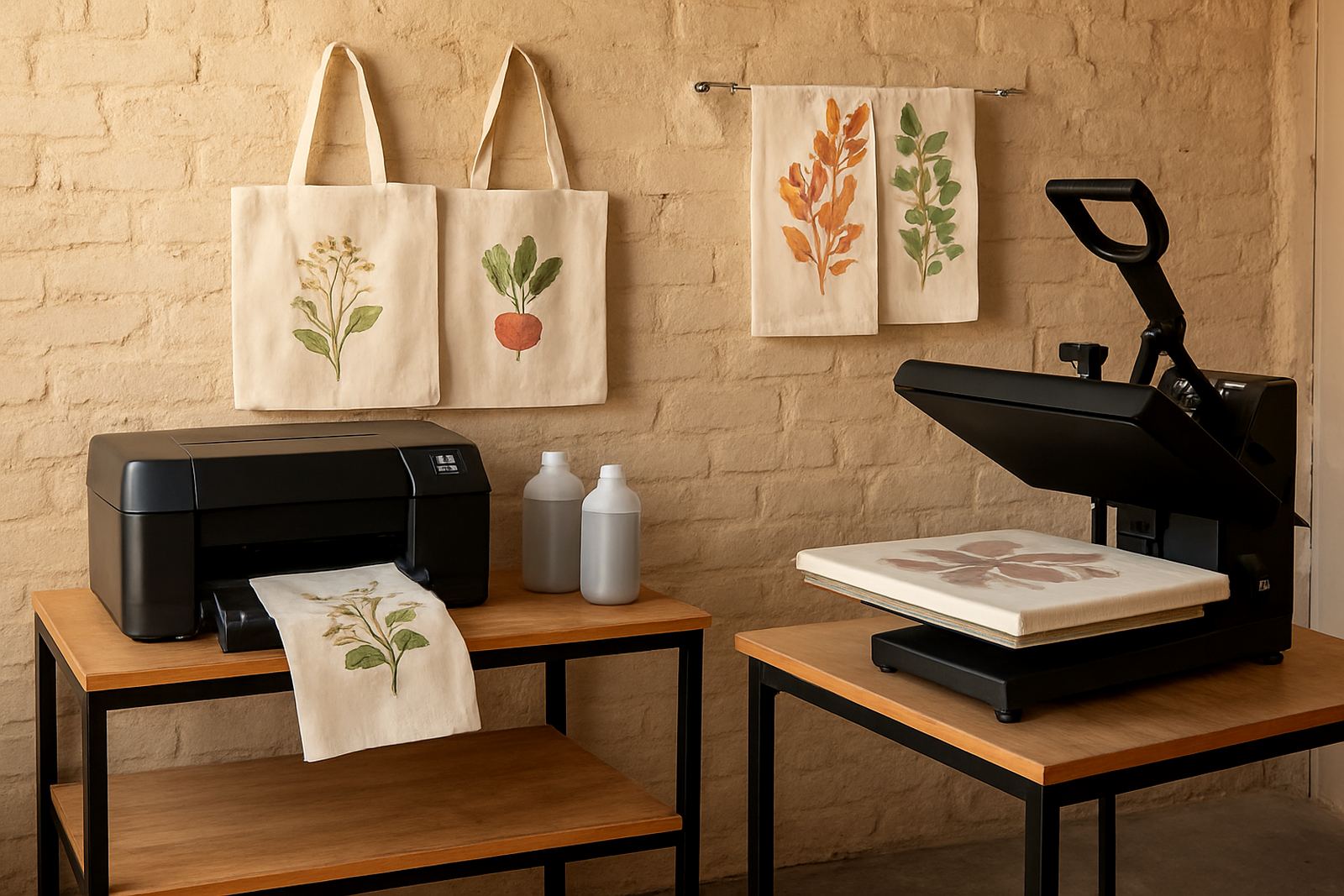
We supplied a direct-to-fabric inkjet printer suited to short-run sampling, a heat press for finishing, and the inks and media needed for day-to-day testing. The printer was chosen for consistent detail on patterned artwork, logos and small text, which matters when a buyer wants to see exactly how a garment will look before a larger order is approved.
We also handled installation, colour profiling and operator training. That meant the client could move from first setup to real sample production in one week rather than spending days guessing at settings. The team was shown how to load fabric correctly, check nozzle condition, store inks in a stable place and keep the machine clean between runs.
- Direct-to-fabric inkjet printer for sample and short-run work
- Heat press for post-print finishing and transfer work
- Initial ink supply and media matching for sample production
- Colour profiling for reliable repeat prints
- Setup training for operators and supervisors
Room layout and operating setup
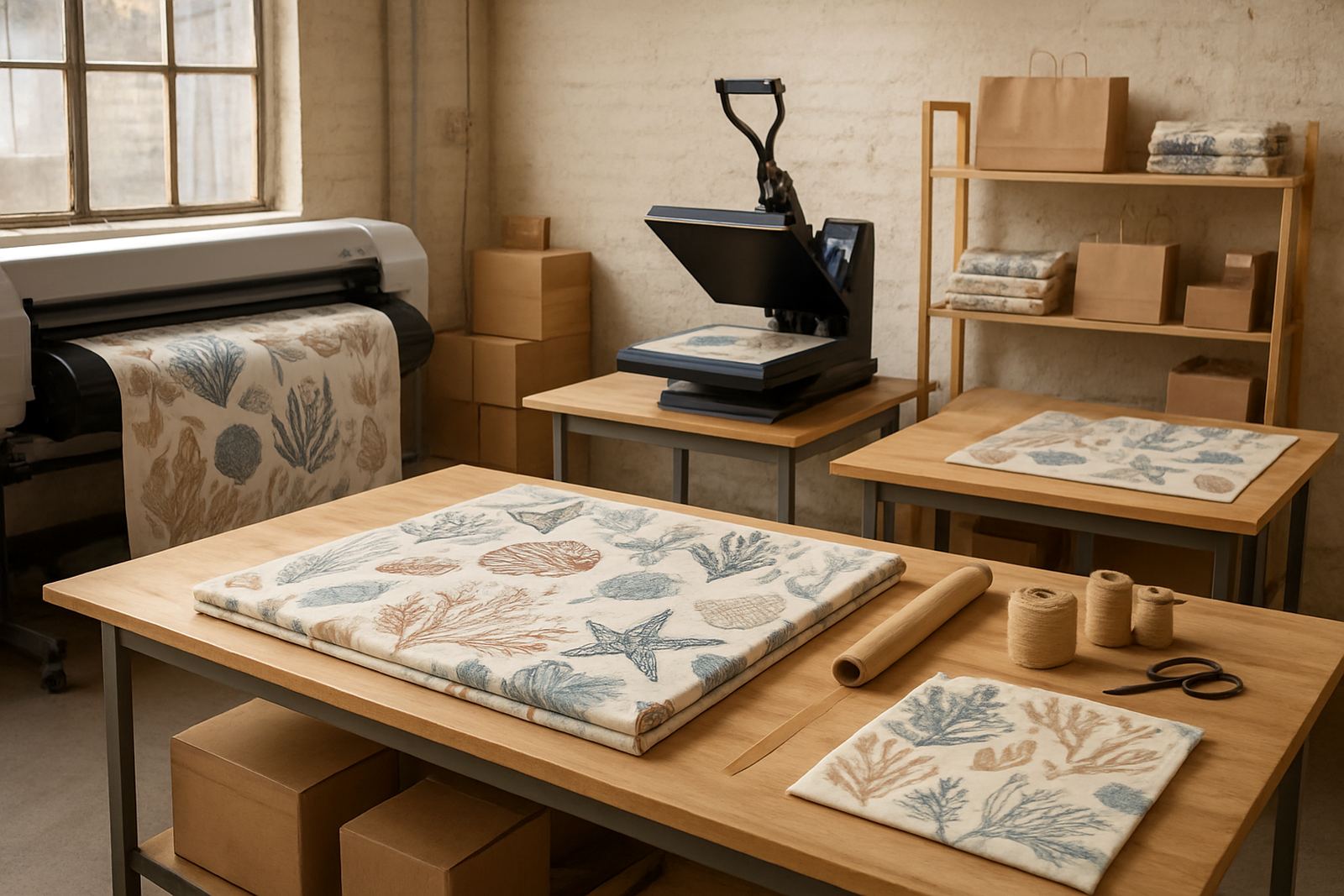
The room was arranged in three clear zones: intake and fabric prep, printing, then pressing and inspection. This reduced movement and helped the team keep track of each sample from start to finish. We placed the printer where airflow was stable and away from open windows, because Bloemfontein wind and dust can affect both fabric handling and clean working conditions.
The client also needed a setup that could recover quickly after power interruptions. We recommended a simple start-up routine, safe shut-down steps and a small backup plan for unfinished work. That way a print in progress could be paused and resumed with less risk of waste. The result was a room that stayed organised even when the production day changed unexpectedly.
Timeline and delivery in weeks
The full project took three weeks from site assessment to handover. Week one covered the room check, equipment selection and process planning. Week two covered delivery, installation and initial test prints. Week three focused on operator training, colour matching and live sample production with the client team.
By the end of the third week, the business was already producing sample garments for customer sign-off. The team could print, press and inspect in one place, which cut down on delays caused by sending samples out for approval elsewhere. It also gave them a much clearer cost picture before accepting larger orders.
Results after handover
After the setup was in use, the client reported faster sample turnaround and fewer rejected prints. They were able to test different fabric bases, compare colour on light and darker cloth, and show buyers finished pieces that looked close to the final production run. That made quoting easier, because the team could estimate fabric use and print time with more confidence.
- Shorter sample approval cycle
- Better colour consistency across repeat jobs
- Less waste from incorrect settings
- More confident quoting for larger orders
- Cleaner workflow for a small team
The business also gained a practical way to manage seasonal work. During busy periods, the sample room became the place where new artwork was checked before the workshop committed cloth and labour to full production.
What we would repeat on the next sample room
If we were doing the same type of project again, we would keep the same approach: keep the layout compact, train the operators early, and match the printer settings to the actual fabrics being used in the workshop. For a small clothing business, that combination matters more than complicated features.
We would also make space for a simple maintenance routine from day one, including printhead cleaning, ink system flushing and regular checks on humidity, dust and electrical stability. In Bloemfontein, a room that is easy to keep clean and consistent saves time every week and reduces avoidable stoppages.
Key facts
| Project type | Sample room for small garment production |
|---|---|
| Location | Bloemfontein, Free State |
| Timeline | 3 weeks from assessment to handover |
| Core equipment | Direct-to-fabric inkjet printer and heat press |
| Services included | Installation, colour profiling, training and first-run support |
| Main outcome | Faster sample approval and reduced fabric waste |