What the Durban team needed
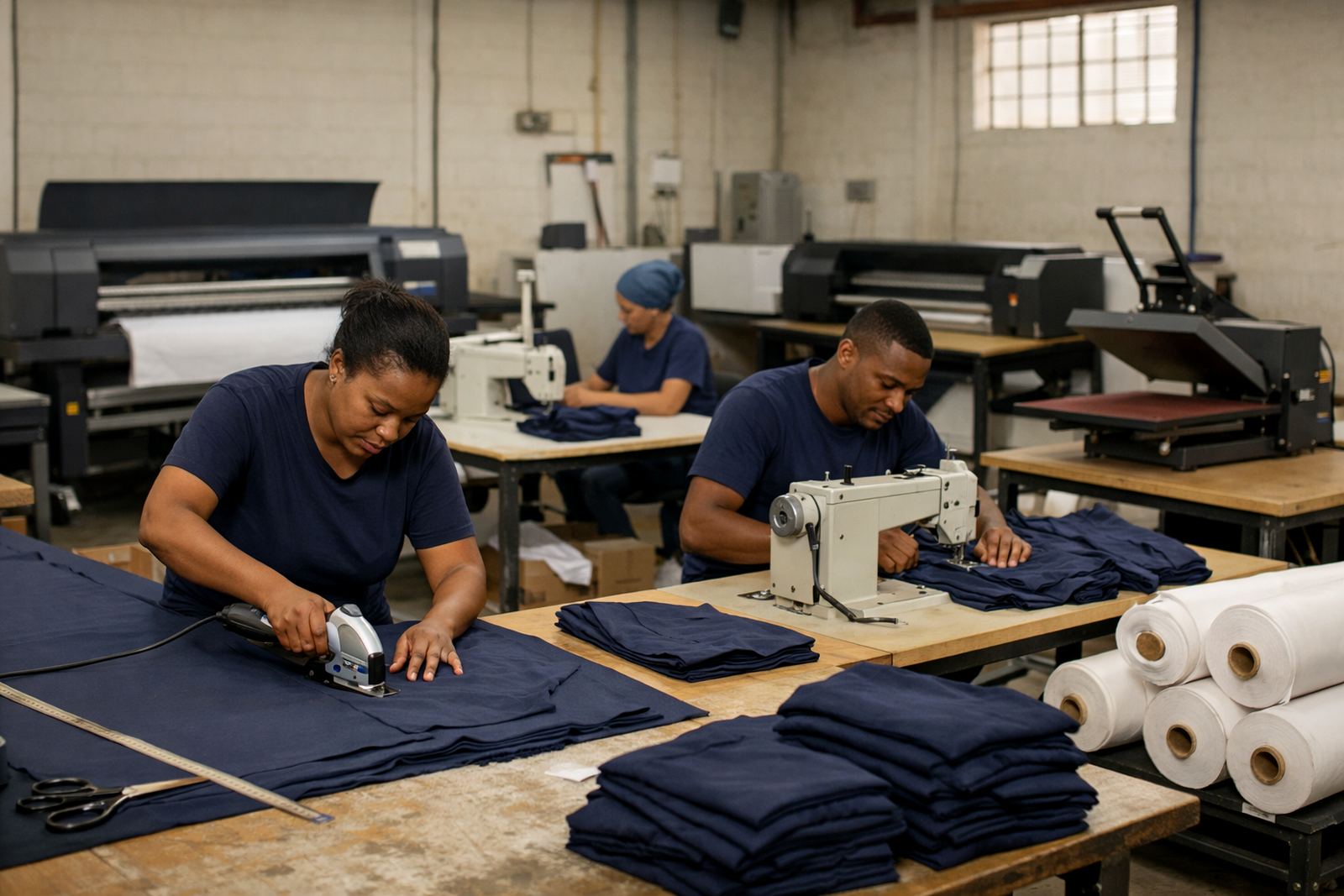
The client was a small uniform workshop in Durban serving schools, security staff and local businesses that needed printed textile components on a regular basis. Their brief was straightforward: produce sharp, repeatable prints on fabric parts, work from a modest floor space, and keep operating during load-shedding without losing production time.
The room had to handle a mix of short runs and routine reorders, with clean colour on garment panels, badges and heat applied details. They also needed a setup that staff could learn quickly, because the operation had a small team and no time for long downtime when orders came in before term starts.
Site constraints we planned around
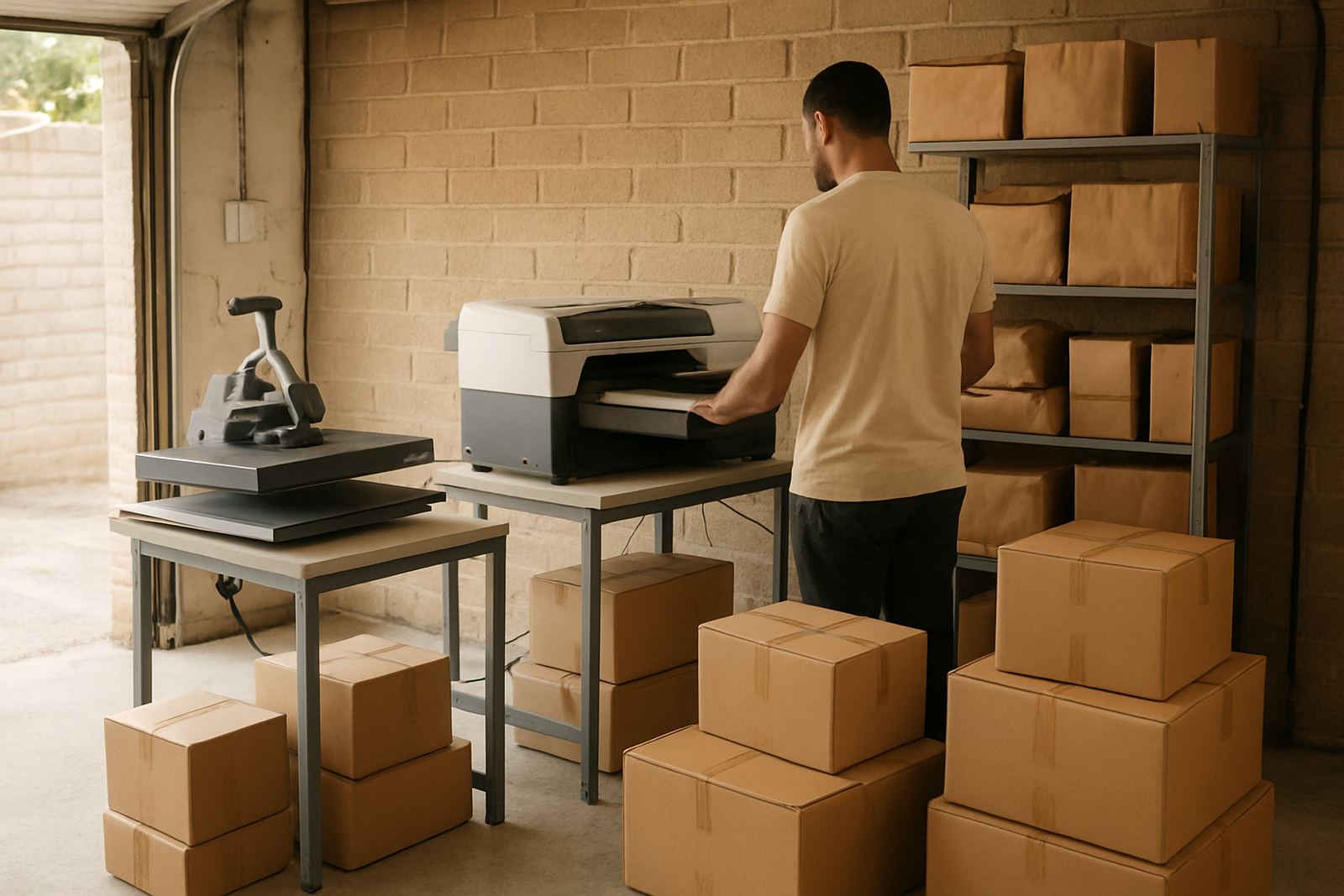
The workshop was in a busy Durban industrial area with coastal humidity, so moisture control and ink care were part of the plan from day one. The room had limited free wall space and a single main power point arrangement, which meant equipment placement had to be practical and safe for daily movement around tables, stock and finishing areas.
We also worked around municipal workflow limits and the fact that the client could not afford a long shutdown. The installation had to be staged so they could keep prep work going while we set up, and the team needed a simple process for powering down equipment properly during outages.
- Coastal humidity management for inks and media storage
- Compact footprint for a small production room
- Load-shedding safe start-up and shut-down steps
- Low training overhead for a small staff team
Equipment supplied for the uniform line
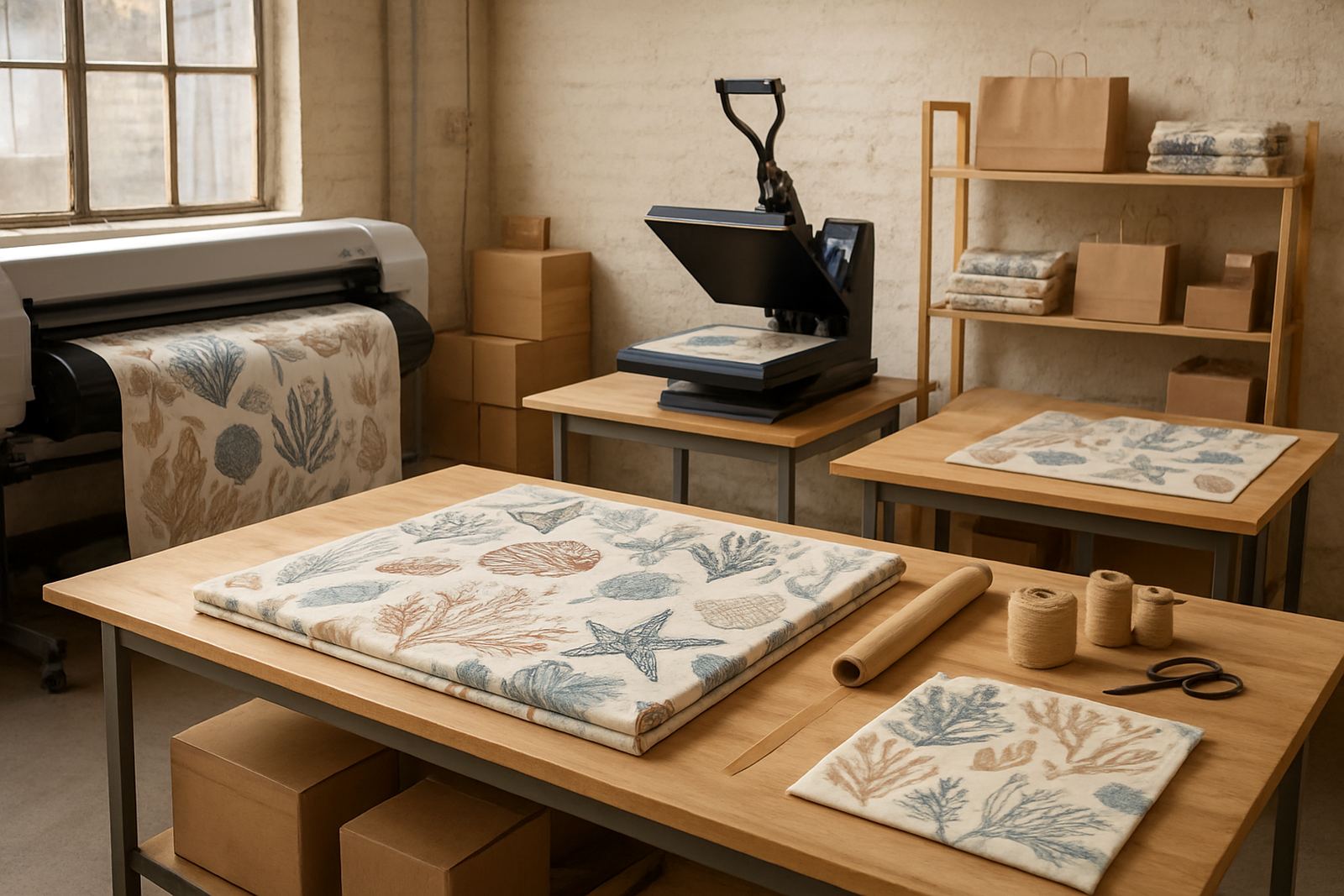
We supplied a direct-to-fabric inkjet printer sized for small garment and textile work, together with a matching heat press for setting transfers and finishing components. The printer was configured for fine detail and solid colour fill, which matters when you are handling school names, staff identifiers and repeat production across different fabric panels.
Along with the main units, we supplied the ink set, media guidance and a starter pack for setup testing. The client also received spare consumables advice so they could avoid interruptions when one order ran into the next. The equipment spec was chosen to suit a room that prints regularly but not at factory scale.
- Direct-to-fabric inkjet printer for textile component output
- Flat heat press for applying and finishing printed pieces
- Ink supply matched to the fabric workflow
- Media and handling guidance for repeat jobs
Installation, profiling and training in one week
The project ran over two weeks from site check to handover. In week one we completed placement, power checks and initial machine installation. We then carried out colour profiling so the Durban team could get accurate output on their most used textile bases, instead of guessing from job to job.
Week two focused on operator training, print checks and basic maintenance routines. Our installation technician and training coordinator worked with the team on daily start-up, nozzle checks, cleaning steps and heat press handling. The goal was to make the room self-sufficient quickly, and to leave them with a process they could follow without calling for help every time a print looked slightly off.
- Week 1: site assessment, delivery, placement and installation
- Week 1: power planning and machine commissioning
- Week 2: colour profiling and test production
- Week 2: operator training and handover
How the workshop performed after handover
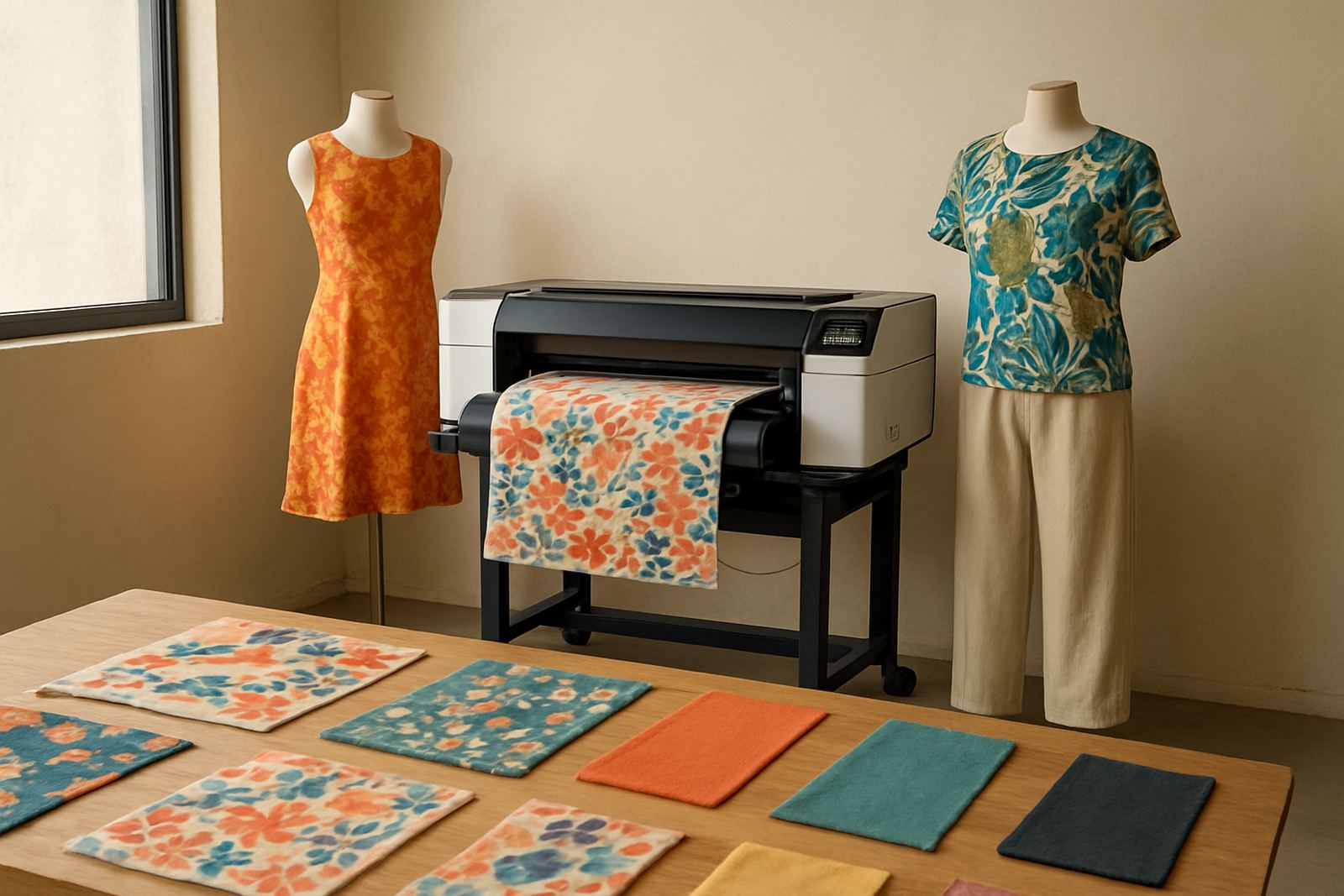
After the handover the workshop was able to produce cleaner, more consistent textile components for school and staff uniforms, with less waste from misprints and colour drift. The team reported quicker turnaround on repeat jobs because the same settings could be reused, and the print quality stayed steady across different batches.
The client also benefited from having a clearer maintenance routine. Instead of waiting for a blockage or a colour issue to stop the line, they now do scheduled cleaning, flushing and basic checks before the week gets busy. That has helped them keep the room active through peak ordering periods and keep customers informed with realistic lead times.
What we would repeat on the next Durban project
If we were doing the same kind of Durban uniform workshop again, we would keep the same approach: start with the room layout, match the machine size to the actual order volume, and build in humidity control from the start. For coastal sites, that saves time later and reduces the risk of ink trouble when the weather turns damp.
We would also keep the training practical and focused on the jobs the team does every day. In a small production room there is no value in overcomplicating the process. The best results come from clear steps, simple maintenance, and equipment that fits the pace of the workshop.
- Plan around humidity before the machine arrives
- Match printer capacity to actual weekly output
- Train staff on the jobs they repeat most often
- Keep maintenance steps short and visible
Key facts
| Project type | Durban production room for school and staff uniform textile components |
|---|---|
| Location | Durban, KwaZulu-Natal |
| Timeline | 2 weeks from site visit to handover |
| Main equipment | Direct-to-fabric inkjet printer and flat heat press |
| Key services | Installation, colour profiling, operator training and preventive maintenance guidance |
| Operating constraints | Load-shedding, coastal humidity and a compact production floor |