A small Benoni studio with online orders coming in
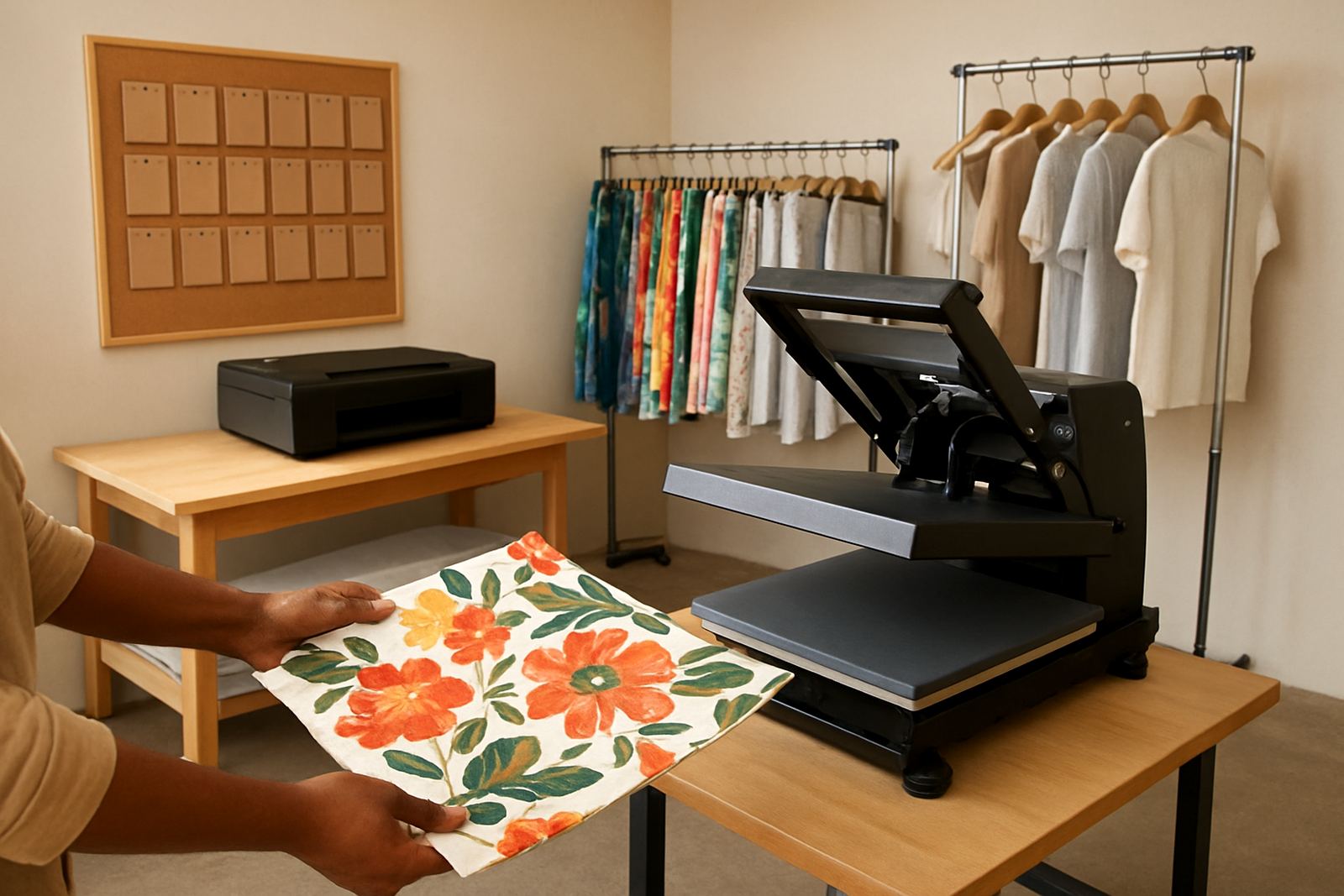
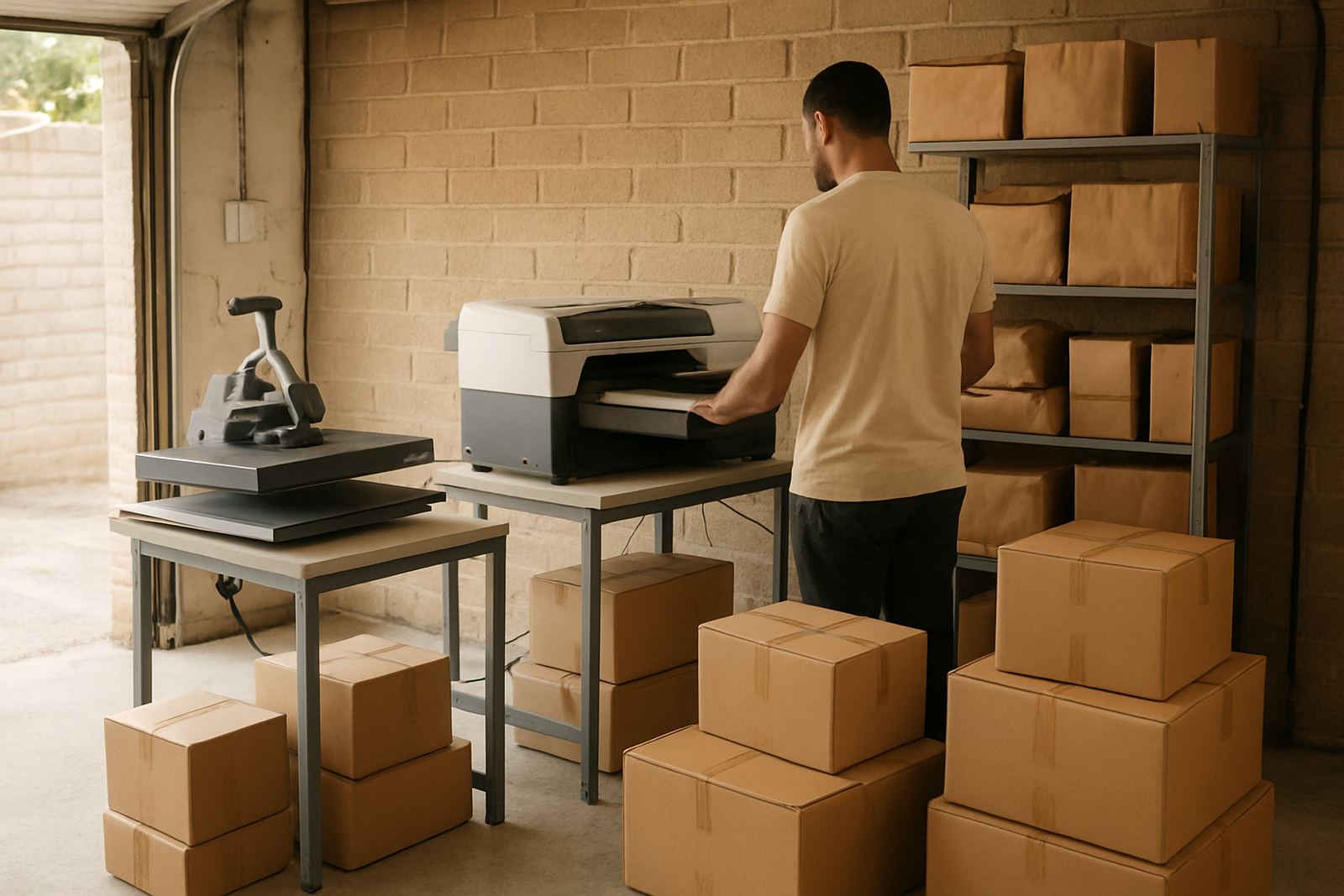
The client was a home-based garment maker in Benoni working from a spare room and a garage conversion. Most orders came through social media and local word of mouth, with a mix of T shirts, fashion pieces, tote bags and short custom runs for birthdays, launches and small brand drops.
The brief was clear. They wanted a setup that could produce clean, repeatable prints in low volumes, keep setup costs sensible, and be easy enough for one person to run during evenings and weekends. They also needed equipment that would still behave properly in Gauteng winter dryness and not become a headache during load-shedding.
What had to fit into the home environment
The space was limited, so the plan had to respect household power, storage and airflow. The studio needed a stable work surface, safe cable routing, room for inks and media, and a heat pressing area that would not cause unnecessary heat build-up in the room. There was also a neighbour concern, so the workflow had to stay neat and quiet enough for residential use.
We worked around three main constraints:
- Single-phase domestic power with backup planning for outages
- Limited floor space, so every metre had to earn its place
- Humidity swings in Benoni, which can affect media handling and curing consistency
Because the business was shipping to customers across South Africa, the process also had to produce print results that looked consistent in photos and on the final garment, not just on the first sample.
Equipment and setup supplied
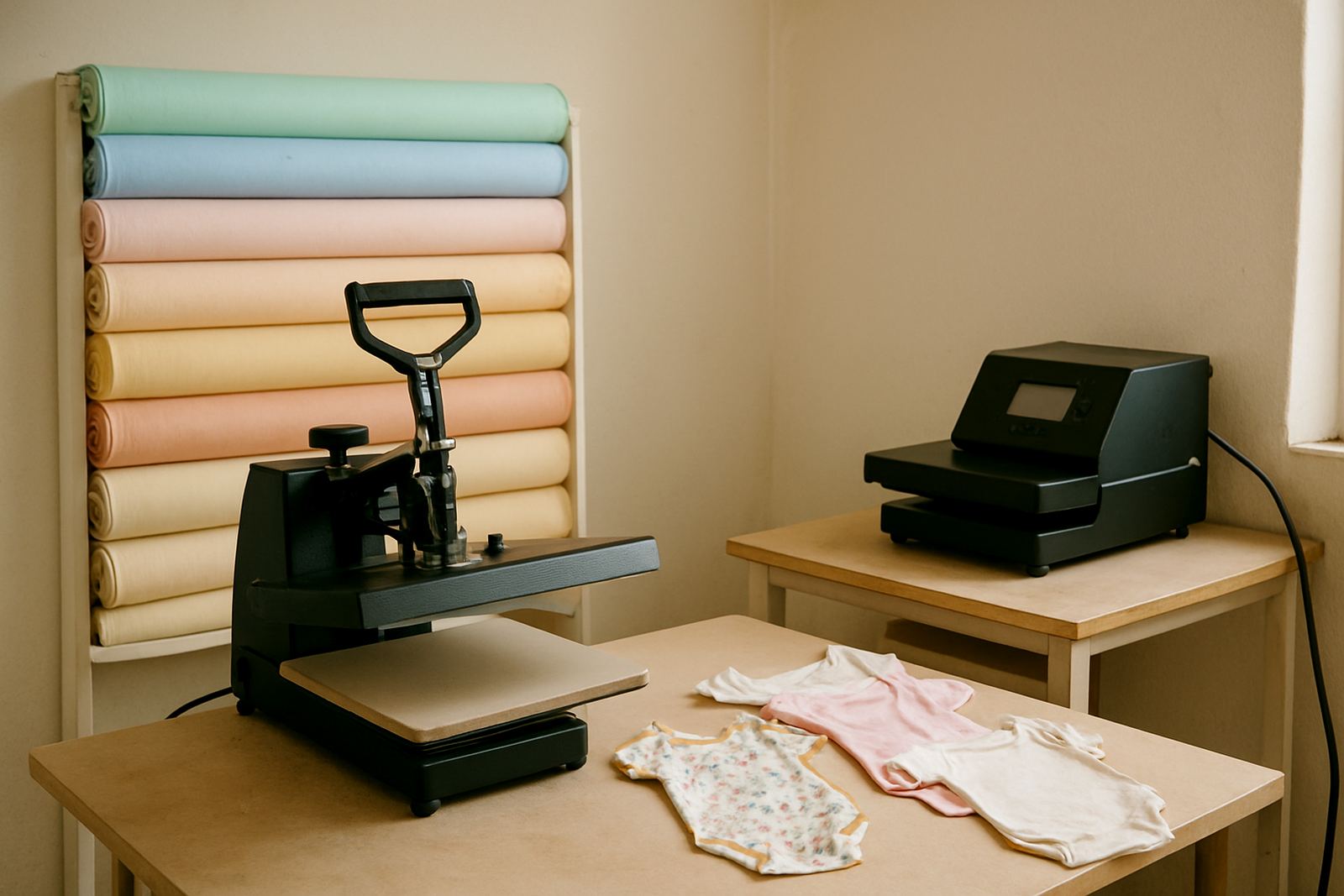
We supplied a compact direct-to-fabric inkjet printer sized for short production runs, together with a heat press for curing and transfer work. The setup included inks, starter media, basic maintenance items and a practical layout for daily use. We also assisted with colour profiling so the client could get steadier results on different fabric types.
The key specs for the home studio were kept simple and workable:
- Direct-to-fabric inkjet printer for small batch textile work
- Heat press sized for garments and flat items up to standard fashion panel sizes
- Set-up training for printing, pressing and routine cleaning
- Ink system flushing and head cleaning process for end-of-day care
- Colour control steps for repeat orders and short reprints
- Remote troubleshooting support for production days when time was tight
We also helped the client think through stock placement, so inks, media and finished pieces would stay separated and easy to access. That sounds simple, but in a home studio it saves a lot of time and mess.
Installation and training over two weeks
The project ran over two weeks from first assessment to handover. In week one we checked the room, mapped the power points and agreed on the workflow. The printer and press were installed, then tested with sample garments and fabric offcuts. Week two focused on operator training, cleaning routines, colour adjustments and simple production planning for online orders.
The client needed confidence more than theory, so the training stayed hands-on. We covered what to do before a print run, how to manage ink checks, how to spot blocked nozzles early and how to avoid waste when order quantities changed at the last minute. By the end of the second week the studio was running independently, with a clear process for setup, printing, pressing and packing.
Results for small runs and quick dispatch
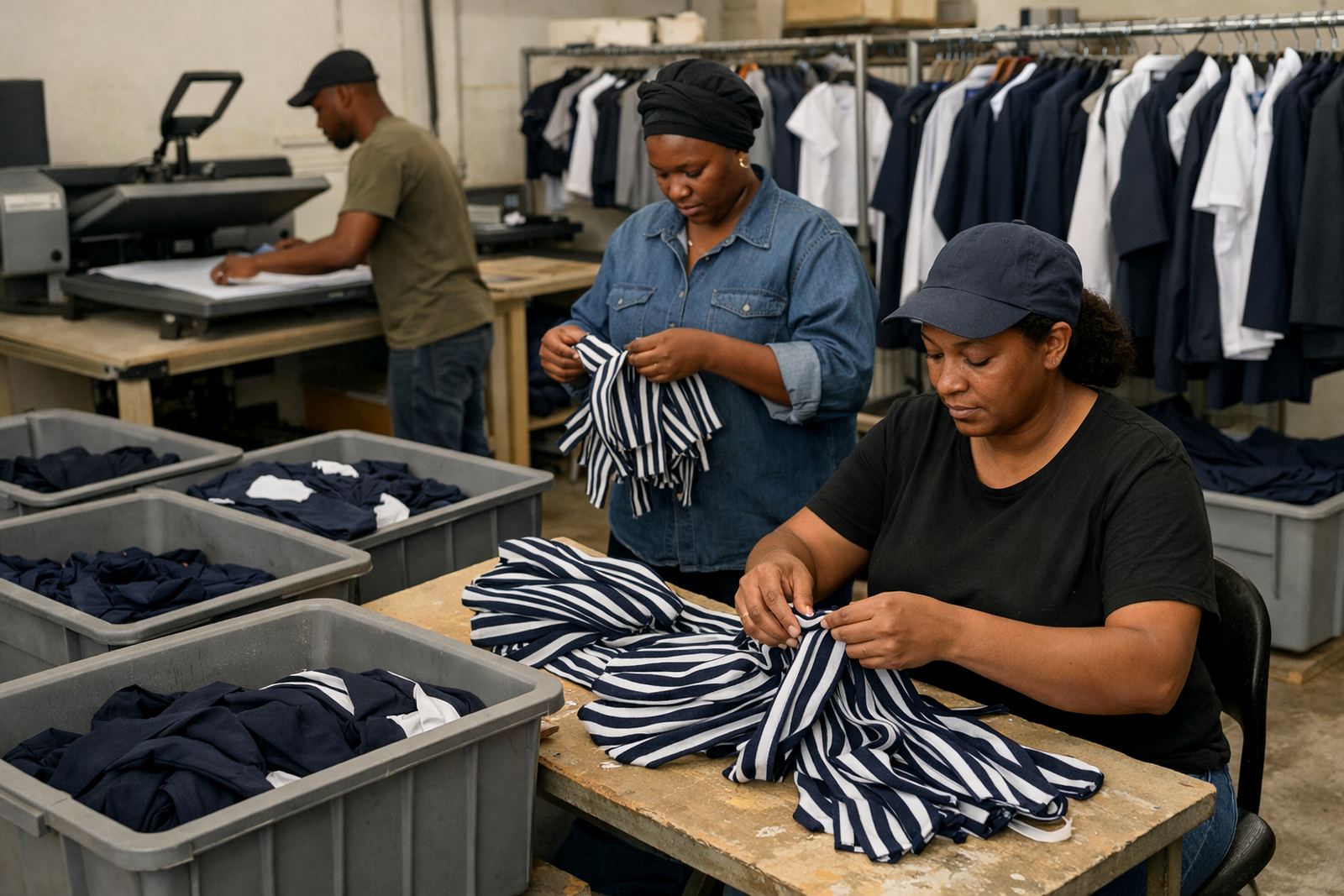
The biggest result was control. The client could now print low-volume orders in-house instead of waiting on outside suppliers, which cut delays and made it easier to accept urgent work. Colour consistency improved, repeat orders became easier to match, and the home studio could handle a fuller weekly schedule without overloading the space.
For online fulfilment, this made a real difference. Orders could be printed, pressed, checked and packed on the same day when needed. That helped the business keep customers informed and reduced the risk of missed dispatch deadlines. It also meant the owner could test new designs in small batches before committing to larger runs.
- Shorter turnaround times on local and courier orders
- Less reliance on outside print suppliers
- Better control over quality checks before packing
- More confidence taking on custom work and reorders
What we would repeat for another home studio
If we were doing this again for another Benoni home studio, we would follow the same approach. Start with the room, not the machine. Plan for electricity, storage and ventilation first, then match the printer and press to the real order volume. That keeps the business practical and avoids overspending on kit that sits idle.
We would also keep the training short, direct and tied to real jobs the client expects to produce that week. Home studios work best when the workflow is simple enough to repeat after a long day, and when preventive servicing is built into the routine from the start. In our experience, that is what keeps a small textile business moving steadily instead of scrambling after every issue.
For a setup like this, the smartest move is usually a clean start, a clear print process and support that can step in when needed. That is what made the Benoni project work well from the beginning.
Key facts
| Project town | Benoni, Gauteng |
|---|---|
| Client type | Home-based garment maker and online order fulfilment studio |
| Setup scope | Direct-to-fabric printer, heat press, inks, media, colour profiling and training |
| Project duration | 2 weeks |
| Main output | Small-batch fashion pieces, custom orders and repeat prints |
| Support included | Installation, operator training, remote troubleshooting and maintenance guidance |