Fourways brief: short runs, frequent file changes
The client was a small garment and textile business in Fourways, Johannesburg, serving walk-in requests, gifting jobs and local boutique orders. The brief was simple on paper but strict in practice: print small batches with sharp detail, swap artwork often, and keep the room organised so the operator could move from sampling to production with minimal downtime.
They needed a print-on-demand room that could handle mixed job sizes from one-off pieces to repeat orders of 20 to 50 units, with consistent colour across reprints. Space was limited, so every metre had to work hard. The room also had to cope with load-shedding, dust from nearby activity and the usual pressure of tight customer deadlines in Gauteng.
- Location: Fourways, Johannesburg
- Use case: personalised textile and garment orders
- Batch size: one-off samples to small production runs
- Key requirement: fast artwork changes with repeatable output
What we supplied for the POD room
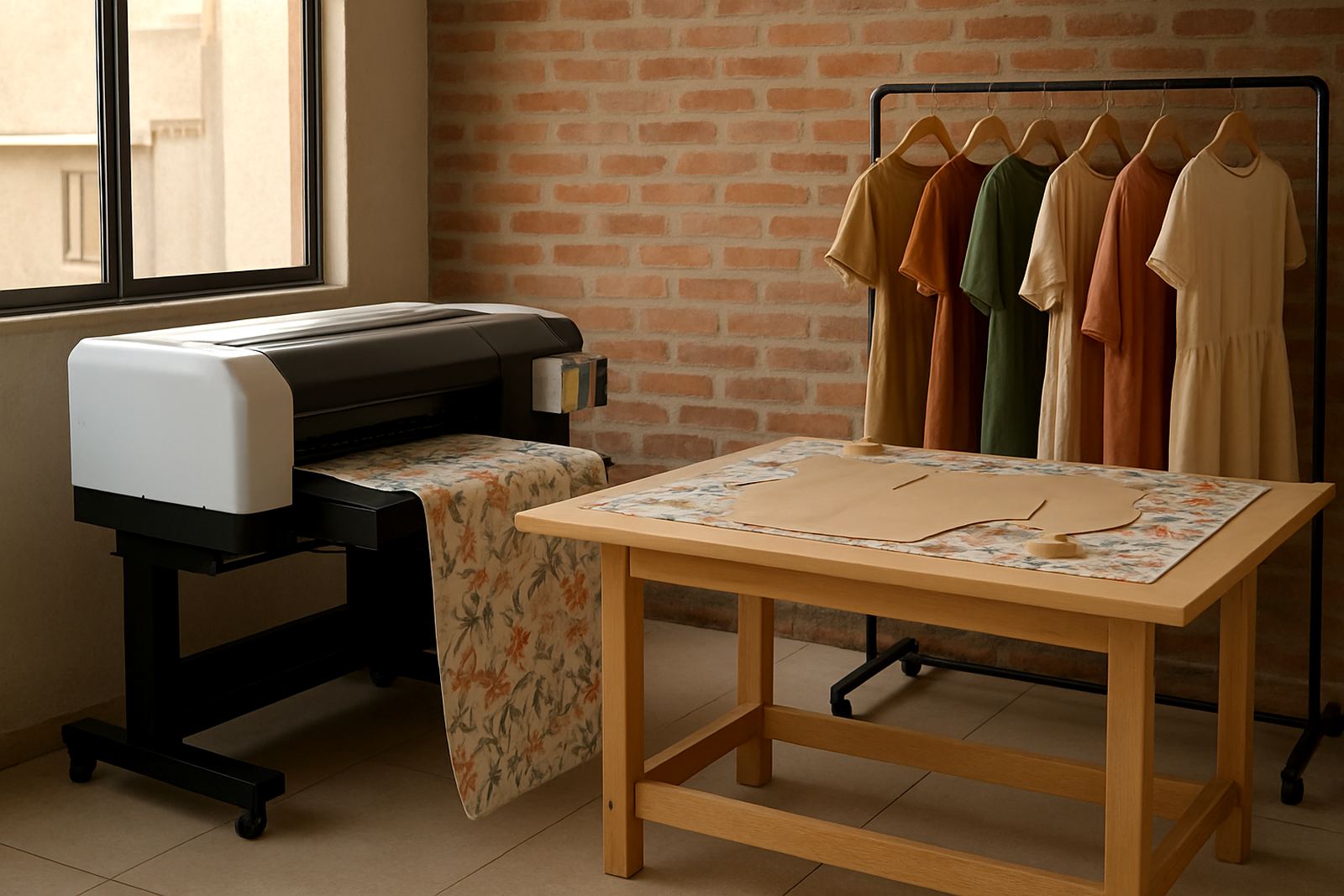
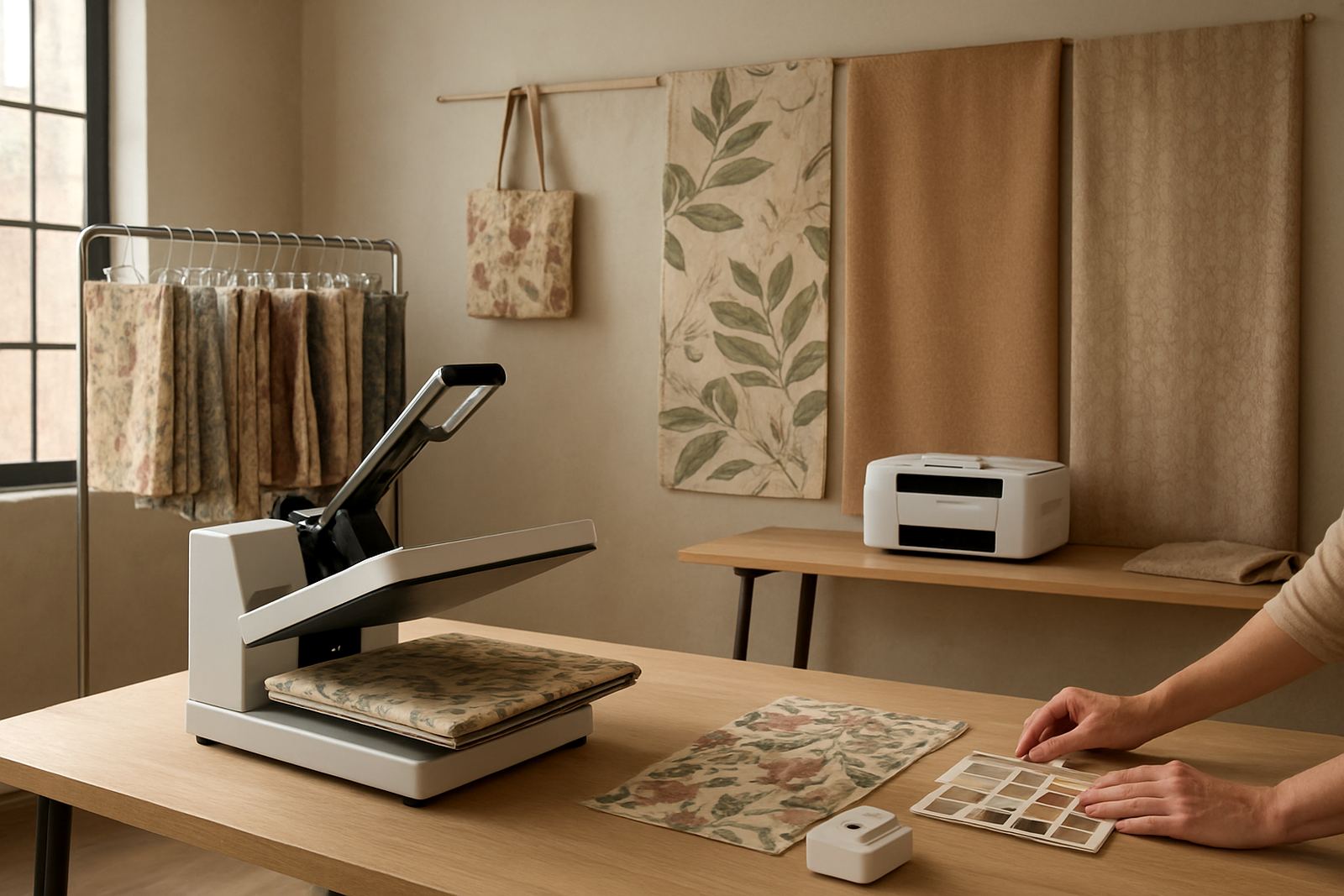
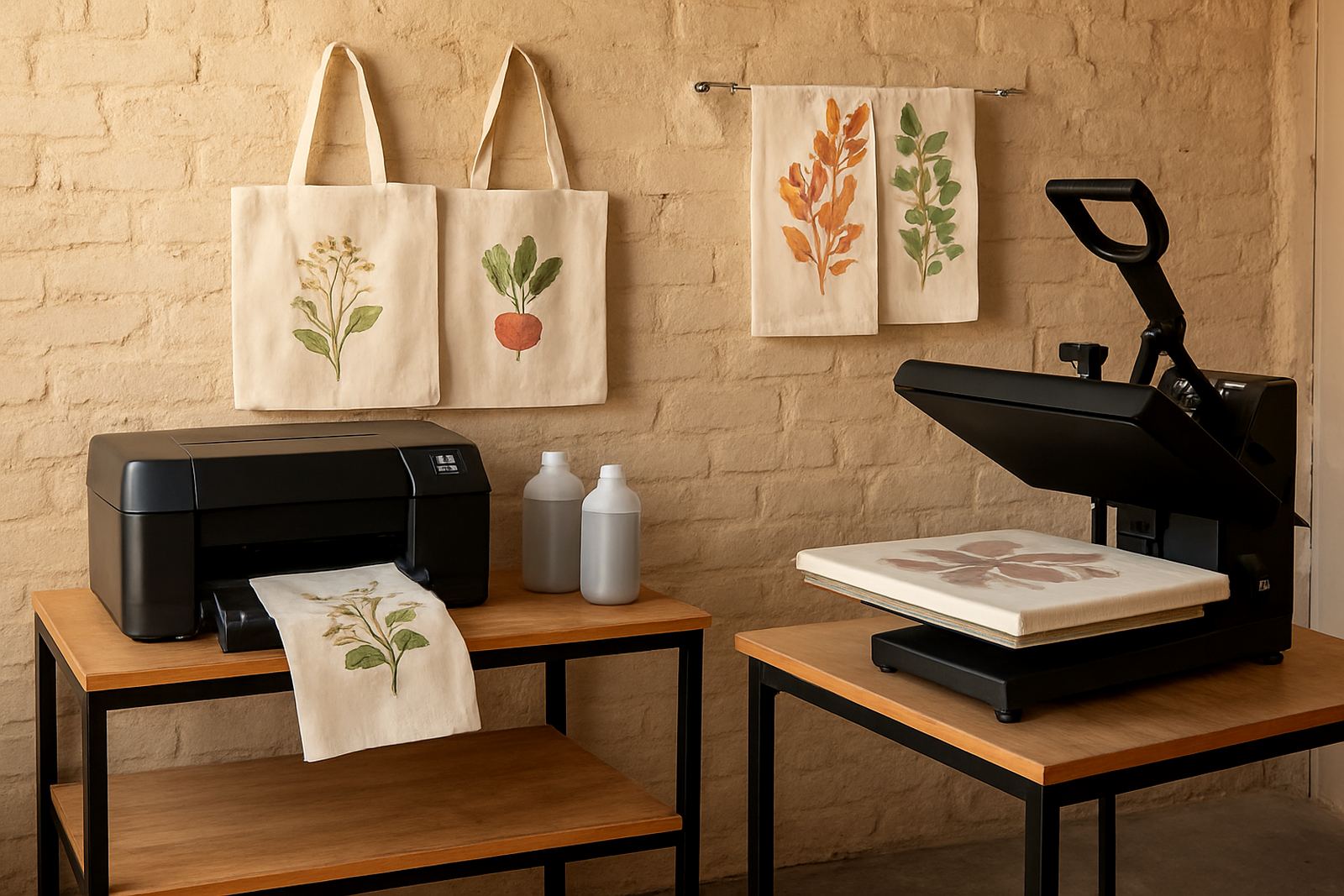
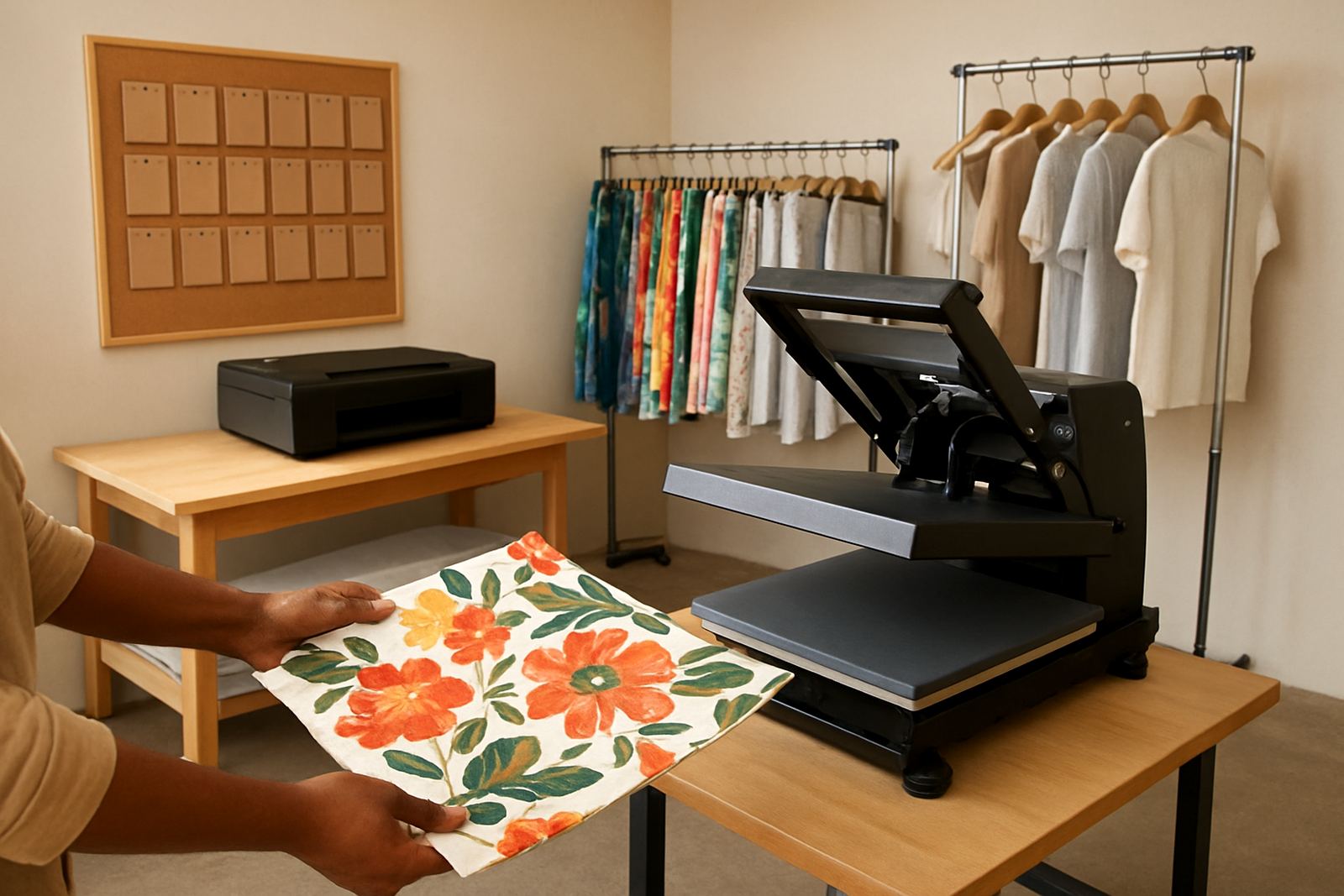
We supplied a direct-to-fabric inkjet printing setup sized for small business production, plus a heat press for finishing and curing support where required by the workflow. The installation included ink supply setup, media handling guidance, colour profiling and operator training so the team could start work with a practical process instead of trial and error. We also set up basic maintenance routines because in a room like this, a blocked nozzle or skipped cleaning can throw off the whole day.
The equipment specification was chosen for fast turnaround rather than oversized output. That meant accurate detail, reliable feed handling and easy access for cleaning and daily checks. We also planned for a backup power routine because in Johannesburg a room that depends on constant uptime cannot ignore load-shedding, even if the rest of the building tries to.
- Direct-to-fabric inkjet printer for short-run production
- Heat press for finishing and transfer support
- Inks matched to the chosen fabric workflow
- Set-up training for operators and supervisors
- Colour profiling for repeat jobs and reprints
Room layout, power and day-to-day flow
The room had to stay compact and practical. We mapped the space so the printer, curing area and finishing point could be reached in a straight line, with enough space for fabric rolls, cut pieces and finished garments. That reduces mistakes and keeps the operator from crossing the room all day with half-prepared jobs. It sounds small but it makes a real difference once orders start stacking up.
Because the client was in a suburban business area, the room also had to stay tidy and quiet enough for neighbours and shared premises. We advised on ventilation, dust control and where to keep consumables so they would not absorb moisture. In Gauteng this matters less than at the coast, but humidity still creeps in during rainy weeks and can affect media handling and storage if nobody pays attention.
We also built the workflow around power recovery. After a supply interruption the team needed a clear restart routine, not guesswork. That included how to park the printer, what to check before restarting, and how to confirm that the first test print was clean before production resumed.
Installation and training in two weeks
The project ran over two weeks from site assessment to handover. The first week covered room measurements, workflow planning and equipment positioning. The second week covered installation, colour setup, practical operator training and a few test jobs using the client's own artwork. We prefer that approach because it shows whether the room works with real jobs, not just sample files.
Ayesha handled the training side with a focus on daily use, while Johan managed the installation and physical setup. Megan checked ink handling and media storage recommendations, and Thabo went through cleaning and service points that the team should watch from day one. Lerato stayed on the customer success side to make sure the client knew who to contact for follow-up support if anything changed after commissioning.
- Week 1: assessment, layout and workflow planning
- Week 2: installation, profiling, training and test production
- Handover included cleaning routine, restart checks and production notes
- First live jobs were run under supervision
Results after the first production cycle
Once the room was running, the client could move from artwork approval to printed output much faster. Frequent design changes no longer caused long delays because the team had a clear process for file checking, colour adjustment and job changeover. Reprints matched better too, which mattered for repeat customers who wanted the same shade and finish on later orders.
The owner also reported fewer stoppages caused by operator uncertainty. Training made the biggest difference here. When the team knows how to clean the print path, prepare media and check a test strip before a run, the room stays productive. We also saw less waste on the early jobs because the operators were no longer learning by burning through material.
For a small business, the real result was control. They could quote more confidently, plan daily output around actual capacity and handle urgent requests without scrambling. That is the value of a properly set up POD room - not just a machine in a corner, but a working space that supports the business every day.
What we would do again on a similar job
We would take the same approach again: measure the room properly, design the workflow before installation, and train the staff on real production jobs rather than only theory. In a print-on-demand room, the biggest savings come from getting the sequence right at the start. That includes where consumables are stored, how waste is removed and how the operator resets after a fault or power cut.
We would also keep the maintenance plan simple. Daily checks, weekly cleaning and scheduled servicing are enough for a small team if they are followed properly. The biggest mistake is waiting until a print problem becomes an urgent repair. A short preventive routine is cheaper than replacing damaged parts and losing a day of orders, especially when customers are expecting quick turnaround.
- Plan the room around the actual job flow
- Train staff on cleaning and restart routines
- Store inks and media away from heat and dust
- Keep a clear maintenance schedule from the start
Key facts
| Project | Fourways POD Room |
|---|---|
| Client type | Small garment and textile business |
| Town | Fourways, Johannesburg |
| Timeline | 2 weeks |
| Main equipment | Direct-to-fabric inkjet printer and heat press |
| Services included | Installation, training, colour profiling and preventive support |